NANOMATERIALS
FOR
GASTRO RETENTIVE DRUG DELIVERY
Presented At
The 4th International Online-Conference on Nanomaterials, 5–19 May 2023; 11.
Available online: https://iocn2023.sciforum.net/.
Presented By:-
Mr. Ravindra Popat Mali,
Research Scholar, PSG Vidya
Prasarak Mandal's College of
Pharmacy, Shahada, Tal-
Shahada, Dist-Nandurbar
(M.S.), 425409, India.
ravi.mali.55@gmail.com
Co Presented By:-
Dr. Javesh Kashinath Patil,
Associate Professor, Department of
Pharmacognosy & Phytochemistry,
PSG Vidya Prasarak Mandal's
College of Pharmacy, Shahada, Tal-
Shahada, Dist-Nandurbar (M.S.),
425409, India.
javesh4u@gmail.com
1
Contents of Presentation
1. Introduction
2. Need and Rationale
3. Advantages
4. Disadvantages
5. An Overview of Gastro Retentive Drug Delivery System
6. Approaches for Gastro Retentive Drug Delivery System
7. Evaluation of Gastro Retentive Drug Delivery System
8. Commercial Formulations of GRDD’s
9. References
2
1. Introduction:-
Drug delivery via the oral route is one of most preferred route in
state of patient compliance among the other routes. The absorption window is
the influential parameters due to which most commercially available modified
release dosage forms are acting in this physiological region for their desired
effect.
Gastro Retentive Drug Delivery System’s (GRDD’s) aims to
hold the dosage form in this stomach to attain desired activity by the formulator
against the challenges involved with the body. Improvised Control Drug
Delivery System(CDD’s) before reaching its site of absorption as compared to
conventional drug delivery, GRDD’s comparably prevails in this process of
sustaining in the GI tract influenced by the nature of excipients driven by the
type of formulation to attain therapeutic goal. Solid oral dosage forms are the
on leading class of preferred modified release system in action which
minimizes the frequency of dosing on an account to minimize multiple dosing
to attain this desired release profile [1].
3
2. Need & Rationale:-
Oral route has numerous challenges, unpredictable gastric emptying rate, a brief
gastrointestinal transit time (8-12 Hrs.), every drug candidate have its absorption window
in GIT, solubility aspects, pH dependent factors, stability, physiological region etc.
Contributing to barriers of this system still numerous products have been produced on this
account.
These difficulties have prompted researchers to design a drug delivery system which can
stay in the stomach for prolonged and predictable period. Attempts are being made to
develop a drug delivery system which can provide therapeutically effective plasma drug
concentration for a longer period, reducing the dosing frequency and minimizing
fluctuation in plasma drug concentration at steady state by delivering the drug in a
controlled and reproducible manner. One novel approach in this area is GRDDS’s. Dosage
forms that can be retained in the stomach are called GRDDs. GRDDSs can improve the
controlled delivery of drugs that have an absorption window by continuously releasing the
drug for a prolonged period of time before it reaches its absorption site [2].
4
3. Advantages:-[2, 3, 4]
 Drug delivery with narrow absorption windows in the area of the small intestine.
 A longer residence time in the stomach may be beneficial for local effect in the upper part of the small intestine.
E.g. to treat peptic ulcer disease.
 Drugs that are easily absorbed after release in the gastrointestinal tract, such as cyclosporine, captopril, ranitidine,
amoxicillin, ciprofloxacin, etc., are expected to improve their bioavailability.
 Compliance is achieved through treatment once a day.
 Reduces the frequency of administration.
 Targeted treatment for local disease of the upper digestive tract.
 The bioavailability of therapeutic drugs can be significantly improved especially drugs metabolized in the upper
GIT by this gastro retentive drug delivery method compared to administration of non-gastro retentive drugs.
 Gastric retention drug delivery can produce prolonged and sustained release of drugs from dosage forms for local
treatment in the stomach and small intestine.
 Therefore, they can be used to treat diseases related to stomach and small intestine.
 The drug delivery of gastric retention can minimize the side effect of human body, thereby improving the
efficiency of the drugs.
 Extend the retention time of the dosage form at the absorption site.
 Excellent accessibility.
 Due to first pass metabolism, drug bioavailability increases.
 By slowly releasing the drug at a controlled rate, drug minimized mucosal irritation.
5
4. Disadvantages:-[2, 3, 4]
 Need to increase the level of gastric juice.
 Not suitable for the following drugs: Problems with solubility in gastric juice,
Causing G.I stimulation, Inefficient in acidic environment.
 Drugs intended for selective release in the colon.
 Due to the constantly updated state of gastric mucus wall lead to unpredictable
compliance.
 Hydrogel based swelling system require longer time to swell.
 After multiple administrations, the increased size of the drug delivery systems
poses a threat to life due to the potential danger of permanent retention in stomach.
 Super porous systems have disadvantages such as problematic storage of easily
hydrolyzed, biodegradable polymers.
 Drugs that absorb equally well through GIT. E.g. Isosorbide dinitrate, Nifedipine.
 Floating drug delivery systems require high fluid level in stomach to float and work
effectively.
6
5. An Overview of Gastro Retentive Drug Delivery System:-
Oral route has been the most important route of drug delivery route because of its easiness of
administration, low cost of therapy, patient compliance and flexibility in its formulation. But drugs that
are simply absorbed from gastrointestinal tract (GIT) and have short half-life are quickly eliminated
from the systemic circulation. Frequent dosing of these drugs is required to achieve suitable
therapeutic activity.
To avoid this limitation gastro retentive novel drug delivery system has been introduced.
The main benefits of gastro retentive drug delivery systems include improved bioavailability, which
leads to dosage reductions and eventually a reduction in GI disorders. They also include particular sites
for drug administration for gastrointestinal ailments. One of them is creating dosage formulations with
mucoadhesive properties. Gastric mucosal adhesion, a phenomena where the medicine attempts to mix
with stomach mucosa, is the main strategy for overcoming issues with gastric emptying time [3].
To formulate a site specific orally administered controlled release dosage form, it is desirable to
achieve a prolong gastro residence time by the drug delivery. Prolonged gastric retention time in the
stomach could be advantageous for local action in the upper part of the small intestine e.g. treatment of
peptic ulcer.
In recent year, oral dosage forms for gastric retention have drown more and more attention for their
therapeutic advantage in permitting command over the time and site of drug release. Many drugs
categorized as once a day delivery have demonstrated on transit time of dosage form. Therefore, a
system designed for longer gastric retention will extend the time within which drug absorption can
occur in small intestine [2].
7
Conventional Drug Delivery System Vs Gastro Retentive Drug Delivery System:-[2]
Sr. No. Parameters Conventional DD’s GRDD’s
1. Toxicity High risk of toxicity Low risk of toxicity
2. Patient Compliance Less Improves patient
compliance
3. Drug with narrow absorption
window in small intestine
Not Suitable Suitable
4. Drugs having rapid absorption
through GIT
Not much
advantageous
Very much
advantageous
5. Drug which degrades in the
colon
Not much
advantageous
Very much
advantageous
6. Drugs acting locally in the
stomach
Not much
advantageous
Very much
advantageous
7. Drugs which are poorly soluble
at an alkaline pH
Not much
advantageous
Very much
advantageous
8. Dose dumping High risk of dose
dumping
No risk of dose
dumping
8
Anatomy and Physiology of Gastrointestinal Tract:-[1, 2, 5, 6]
Figure 1 Anatomy of the Stomach
9
Anatomy & Histology of Stomach:-[5, 6]
Stomach has four main regions,
1) Cardia 2) Fundus 3) Body & 4) Pyloric,
Cardia is located on superior region of the stomach projects as opening region. Further
extending downward the upper curve to the left of the cardia is called fundus which is store
of undigested material just below the fundus the central part of the stomach is called body.
The pyloric region an essential region of mixing of food in the stomach consist of the parts
pyloric antrum, pyloric canal and pylorus which connects to the duodenum. The
communication between the pylorus and small intestine happens with pyloric sphincter.
The concave region is called lesser curvature and the convex as greater curvature.
Stomach consist of 4 basic layers i.e. Mucosa, submucosa, muscular & serosa.
Mucosa layer contains surface mucosa cells, Lamina propria. Epithelial cells protrude
through lamina propria and muscularis mucosae which leads to formation of gastric glands
and when this glands arranged in an manner were pits are produced which are called as
gastric pits.
Gastric gland contains three types of exocrine gland cells, parietal cells mucus neck cells,
parietal cells & chief cells. These cells contribute to the section of gastric fluid accounts
for 2 to 3 liters .The submucosa of the stomach.
10
Physiology of Digestion:-[2]
Mixing waves pass over stomach every 15-25 seconds. This waves are responsible for food
maceration called chyme, More vigorous mixing and this chyme and then it reaches reach pylorus, as
soon food reaches pyrolus each mixing wave periodically force 3 ml of chyme into duodenum, this
phenomena is called gastric emptying.
A series of electrical events occur during this whole process in this fasting state between stomach
and intestine every 2 to 3 hours governed by enteric nervous system called as migrating myoelectric cycle
(MMC) which has 4 phases.
Sr. No. Phases Name Functioning
1. Phase I Basal It is a quiescent period lasting from 30 to 60 minutes with no contractions.
2. Phase II Pre-burst
phase
It consists of intermittent contractions that gradually increase in intensity
as the phase progresses, and it lasts about 20 to 40 minutes. Gastric
discharge of fluid and very small particles begins later in this phase.
3. Phase III Burst
phase
This is a short period of intense distal and proximal gastric contractions
(4–5 contractions per minute) lasting about 10 to 20 minutes; these
contractions, also known as ‘‘house-keeper wave,’’ sweep gastric contents
down the small Intestine.
4. Phase IV -- This is a short transitory period of about 0 to 5 minutes, and the
contractions dissipate between the last part of phase III and quiescence of
phase I.
11
Factors Affecting Gastro Retention:-[7, 8]
 Size
 Shape of dosage form
 Particle size
 Density
 Fed or unfed state
 Frequency of feed
 Nature of meal
 Caloric content
 Gender
 Age
 Posture
 Nature of drugs
 Formulation related factors (Polymer type, nature & conc. of excipients)
 Single unit/multiple unit
 Patient related factors (BMI, Chronic disease, Physical activity)
12
Ideal drug candidate for GRDD’s:-[7, 8]
 Locally acting drugs in stomach
 Drugs having narrow absorption window in GI tract
 Drugs having narrow absorption window in intestine or colonic
conditions
 Drugs having a low solubility in GI
Drugs those are unsuitable for GRDD’s:-[2]
 Drugs that have very limited acid solubility e.g. Phenytoin etc.
 Drugs that suffers instability in the gastric environment e.g.
Erythromycin, Rabeprazole, Clarithromycin, Esomeprazole etc.
 Drugs intended for selective release in the colon e.g. 5-amino
salicylic acid and corticosteroids etc.
13
6. Approaches for gastro retentive drug delivery system:-[9, 10]
6.1 Pharmacological approach:
Co-administration of drugs with GI altering agents such as Ant-
muscarinic agents e.g. atropine, benztropine which delay gastric
emptying.
6.2 Physiological approach:
Use of fat derivatives e.g. Triethanolamine myristate which stimulate
duodenal or Jejunal receptors which slow gastric emptying.
6.3 Pharmaceutical approach:
Pharmaceutical approach is one of the most relevant approach used to
attain gastric retention as first two approach pose alteration to
physiology of the body and may lead to undesired consequences to
circadian rhythm of the body.
14
6.3.1 High Density System:
Approach involves use of heavy materials with formulation strategy of
coating it with heavy material or mixing it with iron powder, Zinc oxide,
Barium Sulphate which tends the formulation to settle in the stomach
giving retard action due to high density of formulation. The formulation
of this system is challenging and no such marketed formulation exists in
market.
6.3.2 Low Density System/Floating System:
It is also known as low density system. They are also considered as one
of the most developed formulations as they do not change the motility
activity of the GIT. Many commercial formulations are available
worldwide with this approach.
15
6.3.2.1 Effervescent System:
The use gas generating system which involve combination of acid base reaction generating CO2 which reduce the density of the
system leads to floating on the gastric media. The other alternative involves use of liquid which generates gas at body temperature.
They are classified into 2 types, Gas generating system & volatile liquid containing system.
6.3.2.1.1 Gas generating system:
This delivery system utilizes the effervescent reaction between carbonate/bicarbonate salts with citric/tartaric acid to generate CO2
which reduces the density of the system allowing it to float on the gastric media.
6.3.2.1.1.1 Single layer floating tablets:
This tablets are formulated using matrix based system with polymers forming colloidal gel barrier incorporated with effervescent
system as the density decreases due to generation of CO2 allowing it to retain on gastric media causing retention of the system in GIT
6.3.2.1.1.2 Bilayer floating tablets:
It involves same mechanism as of single layer system but the modification is with respect to immediate release and sustained release
layer of the system.
6.3.2.1.1.3 Multiple unit floating pills:
This are seeds having two layers one with initial core made of effervescent system while the outer layer is of made of swellable membrane layer.
6.3.2.1.1.4 Ion exchange resins:
A multiple unit dosage form drug is complexed with system having bicarbonate moiety having hydrophobic layer. This system when comes in contact
with GI fluid chlorine ions are exchanged with bicarbonate ions leading to generation of CO2 in the system.
16
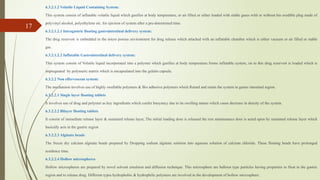
6.3.2.1.2 Volatile Liquid Containing System:
This system consist of inflatable volatile liquid which gasifies at body temperature, or air filled or either loaded with stable gases with or without bio erodible plug made of
polyvinyl alcohol, polyethylene etc. for ejection of system after a pre-determined time.
6.3.2.1.2.1 Intragastric floating gastrointestinal delivery system:
The drug reservoir is embedded in the micro porous environment for drug release which attached with an inflatable chamber which is either vacuum or air filled or stable
gas.
6.3.2.1.2.2 Inflatable Gastrointestinal delivery system:
This system consist of Volatile liquid incorporated into a polymer which gasifies at body temperature forms inflatable system, on to this drug reservoir is loaded which is
impregnated by polymeric matrix which is encapsulated into the gelatin capsule.
6.3.2.2 Non effervescent system:
The mechanism involves use of highly swellable polymers & Bio adhesive polymers which Retard and retain the system in gastro intestinal region.
6.3.2.2.1 Single layer floating tablets
It involves use of drug and polymer as key ingredients which confer buoyancy due to its swelling nature which cause decrease in density of the system.
6.3.2.2.2 Bilayer floating tablets
It consist of immediate release layer & sustained release layer, The initial loading dose is released the rest maintenance dose is acted upon by sustained release layer which
basically acts in the gastric region
6.3.2.2.3 Alginate beads
The freeze dry calcium alginate beads prepared by Dropping sodium alginate solution into aqueous solution of calcium chloride. These floating beads have prolonged
residence time.
6.3.2.2.4 Hollow microspheres
Hollow microspheres are prepared by novel solvent emulsion and diffusion technique. This microsphere are balloon type particles having properties to float in the gastric
region and to release drug. Different types hydrophobic & hydrophilic polymers are involved in the development of hollow microsphere.
17
6.3.3 Super porous Hydrogels:
This dosage forms have polymers pore size less than 100 which rapidly causes swelling of polymer
which is primary properties of this formulation as delayed swelling may lead to premature evacuation of the
dosage form.
6.3.4 Mucoadhesive system:
This system in charge retain the dosage form by adhering in the gastric region different natural,
synthetic & semi-synthetic polymers are used for the development of muco-adhesive system. This adhesion leads
to retention in GRDD’s with the desired release profile with appropriative tailoring of the formulation.
6.3.5 Magnetic system:
This system simply implies placement of magnetic system inside the formulation variable and the other
magnetic system which will be placed above the abdomen to retain in the formulation in the gastric region to
achieve gastric residence time.
6.3.6 RAFT forming system:
RAFT forming system are preventive formulation gaining hold over gastro esophageal refluxes irritating
the esophageal region, this formulations form thick viscous layer above the gastric content restricting the
gastric contents to reach lower esophageal sphincter which provide a preventive action for GERD’s patients.
This formulation actually float on water which are either thick or thin having density lower than the gastric
contents such type of system termed as RAFT system which.
This RAFT forming system consist of Gel forming, swell able polymer, viscous gums etc. and CO2
driven system to make this polymer float over the gastric media. As soon as the formulation comes in contact
with the gastric media it forms a viscous layer of thick or thin type of jellified structure with some partial
entrapment of CO2 bubbles having reduced density forming RAFT system. This RAFT acts as a barrier
between stomach and its esophagus layers [9, 10].
18
7. Evaluation of Gastro Retentive Drug Delivery System:-[11, 12]
7.1 In Vitro Evaluation Parameters:-
 Particle size and morphology
 Drug entrapment study
 Measurement of tablet tensile strength
 Floating lag time (FLT), Total floating time (TFT), Floating strength
 Swelling studies
 Viscosity and Rheology
 In vitro unfolding study
 Ion exchange capacity, moisture content
 In vitro drug release
 Gel strength
 Drug-excipient interaction study
7.2 In Vivo Evaluation Parameters:-
 GRT and bioavailability of the drug
 Various diagnostic imaging techniques including gamma scintigraphy, radiology,
gastroscopy, ultrasonography, and magnetic resonance imaging (MRI) can be applied for
in vivo evaluations of GRDD’s.
19
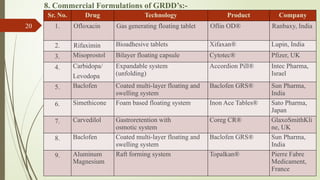
8. Commercial Formulations of GRDD’s:-
Sr. No. Drug Technology Product Company
1. Ofloxacin Gas generating floating tablet Oflin OD® Ranbaxy, India
2. Rifaximin Bioadhesive tablets Xifaxan® Lupin, India
3. Misoprostol Bilayer floating capsule Cytotec® Pfizer, UK
4. Carbidopa/
Levodopa
Expandable system
(unfolding)
Accordion Pill® Intec Pharma,
Israel
5. Baclofen Coated multi-layer floating and
swelling system
Baclofen GRS® Sun Pharma,
India
6. Simethicone Foam based floating system Inon Ace Tables® Sato Pharma,
Japan
7. Carvedilol Gastroretention with
osmotic system
Coreg CR® GlaxoSmithKli
ne, UK
8. Baclofen Coated multi-layer floating and
swelling system
Baclofen GRS® Sun Pharma,
India
9. Aluminum
Magnesium
Raft forming system Topalkan® Pierre Fabre
Medicament,
France
20
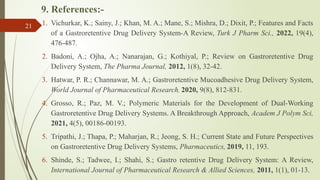
9. References:-
1. Vichurkar, K.; Sainy, J.; Khan, M. A.; Mane, S.; Mishra, D.; Dixit, P.; Features and Facts
of a Gastroretentive Drug Delivery System-A Review, Turk J Pharm Sci., 2022, 19(4),
476-487.
2. Badoni, A.; Ojha, A.; Nanarajan, G.; Kothiyal, P.; Review on Gastroretentive Drug
Delivery System, The Pharma Journal, 2012, 1(8), 32-42.
3. Hatwar, P. R.; Channawar, M. A.; Gastroretentive Mucoadhesive Drug Delivery System,
World Journal of Pharmaceutical Research, 2020, 9(8), 812-831.
4. Grosso, R.; Paz, M. V.; Polymeric Materials for the Development of Dual-Working
Gastroretentive Drug Delivery Systems. A Breakthrough Approach, Academ J Polym Sci,
2021, 4(5), 00186-00193.
5. Tripathi, J.; Thapa, P.; Maharjan, R.; Jeong, S. H.; Current State and Future Perspectives
on Gastroretentive Drug Delivery Systems, Pharmaceutics, 2019, 11, 193.
6. Shinde, S.; Tadwee, I.; Shahi, S.; Gastro retentive Drug Delivery System: A Review,
International Journal of Pharmaceutical Research & Allied Sciences, 2011, 1(1), 01-13.
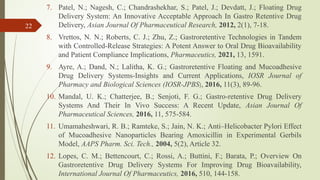
21
7. Patel, N.; Nagesh, C.; Chandrashekhar, S.; Patel, J.; Devdatt, J.; Floating Drug
Delivery System: An Innovative Acceptable Approach In Gastro Retentive Drug
Delivery, Asian Journal Of Pharmaceutical Research, 2012, 2(1), 7-18.
8. Vrettos, N. N.; Roberts, C. J.; Zhu, Z.; Gastroretentive Technologies in Tandem
with Controlled-Release Strategies: A Potent Answer to Oral Drug Bioavailability
and Patient Compliance Implications, Pharmaceutics, 2021, 13, 1591.
9. Ayre, A.; Dand, N.; Lalitha, K. G.; Gastroretentive Floating and Mucoadhesive
Drug Delivery Systems-Insights and Current Applications, IOSR Journal of
Pharmacy and Biological Sciences (IOSR-JPBS), 2016, 11(3), 89-96.
10. Mandal, U. K.; Chatterjee, B.; Senjoti, F. G.; Gastro-retentive Drug Delivery
Systems And Their In Vivo Success: A Recent Update, Asian Journal Of
Pharmaceutical Sciences, 2016, 11, 575-584.
11. Umamaheshwari, R. B.; Ramteke, S.; Jain, N. K.; Anti–Helicobacter Pylori Effect
of Mucoadhesive Nanoparticles Bearing Amoxicillin in Experimental Gerbils
Model, AAPS Pharm. Sci. Tech., 2004, 5(2), Article 32.
12. Lopes, C. M.; Bettencourt, C.; Rossi, A.; Buttini, F.; Barata, P.; Overview On
Gastroretentive Drug Delivery Systems For Improving Drug Bioavailability,
International Journal Of Pharmaceutics, 2016, 510, 144-158.
22
Thank You!
23
24
Any
Questions?

GRDDS Drug Delivery System powerpoint.pptx

  • 1.
    NANOMATERIALS FOR GASTRO RETENTIVE DRUGDELIVERY Presented At The 4th International Online-Conference on Nanomaterials, 5–19 May 2023; 11. Available online: https://iocn2023.sciforum.net/. Presented By:- Mr. Ravindra Popat Mali, Research Scholar, PSG Vidya Prasarak Mandal's College of Pharmacy, Shahada, Tal- Shahada, Dist-Nandurbar (M.S.), 425409, India. ravi.mali.55@gmail.com Co Presented By:- Dr. Javesh Kashinath Patil, Associate Professor, Department of Pharmacognosy & Phytochemistry, PSG Vidya Prasarak Mandal's College of Pharmacy, Shahada, Tal- Shahada, Dist-Nandurbar (M.S.), 425409, India. javesh4u@gmail.com 1
  • 2.
    Contents of Presentation 1.Introduction 2. Need and Rationale 3. Advantages 4. Disadvantages 5. An Overview of Gastro Retentive Drug Delivery System 6. Approaches for Gastro Retentive Drug Delivery System 7. Evaluation of Gastro Retentive Drug Delivery System 8. Commercial Formulations of GRDD’s 9. References 2
  • 3.
    1. Introduction:- Drug deliveryvia the oral route is one of most preferred route in state of patient compliance among the other routes. The absorption window is the influential parameters due to which most commercially available modified release dosage forms are acting in this physiological region for their desired effect. Gastro Retentive Drug Delivery System’s (GRDD’s) aims to hold the dosage form in this stomach to attain desired activity by the formulator against the challenges involved with the body. Improvised Control Drug Delivery System(CDD’s) before reaching its site of absorption as compared to conventional drug delivery, GRDD’s comparably prevails in this process of sustaining in the GI tract influenced by the nature of excipients driven by the type of formulation to attain therapeutic goal. Solid oral dosage forms are the on leading class of preferred modified release system in action which minimizes the frequency of dosing on an account to minimize multiple dosing to attain this desired release profile [1]. 3
  • 4.
    2. Need &Rationale:- Oral route has numerous challenges, unpredictable gastric emptying rate, a brief gastrointestinal transit time (8-12 Hrs.), every drug candidate have its absorption window in GIT, solubility aspects, pH dependent factors, stability, physiological region etc. Contributing to barriers of this system still numerous products have been produced on this account. These difficulties have prompted researchers to design a drug delivery system which can stay in the stomach for prolonged and predictable period. Attempts are being made to develop a drug delivery system which can provide therapeutically effective plasma drug concentration for a longer period, reducing the dosing frequency and minimizing fluctuation in plasma drug concentration at steady state by delivering the drug in a controlled and reproducible manner. One novel approach in this area is GRDDS’s. Dosage forms that can be retained in the stomach are called GRDDs. GRDDSs can improve the controlled delivery of drugs that have an absorption window by continuously releasing the drug for a prolonged period of time before it reaches its absorption site [2]. 4
  • 5.
    3. Advantages:-[2, 3,4]  Drug delivery with narrow absorption windows in the area of the small intestine.  A longer residence time in the stomach may be beneficial for local effect in the upper part of the small intestine. E.g. to treat peptic ulcer disease.  Drugs that are easily absorbed after release in the gastrointestinal tract, such as cyclosporine, captopril, ranitidine, amoxicillin, ciprofloxacin, etc., are expected to improve their bioavailability.  Compliance is achieved through treatment once a day.  Reduces the frequency of administration.  Targeted treatment for local disease of the upper digestive tract.  The bioavailability of therapeutic drugs can be significantly improved especially drugs metabolized in the upper GIT by this gastro retentive drug delivery method compared to administration of non-gastro retentive drugs.  Gastric retention drug delivery can produce prolonged and sustained release of drugs from dosage forms for local treatment in the stomach and small intestine.  Therefore, they can be used to treat diseases related to stomach and small intestine.  The drug delivery of gastric retention can minimize the side effect of human body, thereby improving the efficiency of the drugs.  Extend the retention time of the dosage form at the absorption site.  Excellent accessibility.  Due to first pass metabolism, drug bioavailability increases.  By slowly releasing the drug at a controlled rate, drug minimized mucosal irritation. 5
  • 6.
    4. Disadvantages:-[2, 3,4]  Need to increase the level of gastric juice.  Not suitable for the following drugs: Problems with solubility in gastric juice, Causing G.I stimulation, Inefficient in acidic environment.  Drugs intended for selective release in the colon.  Due to the constantly updated state of gastric mucus wall lead to unpredictable compliance.  Hydrogel based swelling system require longer time to swell.  After multiple administrations, the increased size of the drug delivery systems poses a threat to life due to the potential danger of permanent retention in stomach.  Super porous systems have disadvantages such as problematic storage of easily hydrolyzed, biodegradable polymers.  Drugs that absorb equally well through GIT. E.g. Isosorbide dinitrate, Nifedipine.  Floating drug delivery systems require high fluid level in stomach to float and work effectively. 6
  • 7.
    5. An Overviewof Gastro Retentive Drug Delivery System:- Oral route has been the most important route of drug delivery route because of its easiness of administration, low cost of therapy, patient compliance and flexibility in its formulation. But drugs that are simply absorbed from gastrointestinal tract (GIT) and have short half-life are quickly eliminated from the systemic circulation. Frequent dosing of these drugs is required to achieve suitable therapeutic activity. To avoid this limitation gastro retentive novel drug delivery system has been introduced. The main benefits of gastro retentive drug delivery systems include improved bioavailability, which leads to dosage reductions and eventually a reduction in GI disorders. They also include particular sites for drug administration for gastrointestinal ailments. One of them is creating dosage formulations with mucoadhesive properties. Gastric mucosal adhesion, a phenomena where the medicine attempts to mix with stomach mucosa, is the main strategy for overcoming issues with gastric emptying time [3]. To formulate a site specific orally administered controlled release dosage form, it is desirable to achieve a prolong gastro residence time by the drug delivery. Prolonged gastric retention time in the stomach could be advantageous for local action in the upper part of the small intestine e.g. treatment of peptic ulcer. In recent year, oral dosage forms for gastric retention have drown more and more attention for their therapeutic advantage in permitting command over the time and site of drug release. Many drugs categorized as once a day delivery have demonstrated on transit time of dosage form. Therefore, a system designed for longer gastric retention will extend the time within which drug absorption can occur in small intestine [2]. 7
  • 8.
    Conventional Drug DeliverySystem Vs Gastro Retentive Drug Delivery System:-[2] Sr. No. Parameters Conventional DD’s GRDD’s 1. Toxicity High risk of toxicity Low risk of toxicity 2. Patient Compliance Less Improves patient compliance 3. Drug with narrow absorption window in small intestine Not Suitable Suitable 4. Drugs having rapid absorption through GIT Not much advantageous Very much advantageous 5. Drug which degrades in the colon Not much advantageous Very much advantageous 6. Drugs acting locally in the stomach Not much advantageous Very much advantageous 7. Drugs which are poorly soluble at an alkaline pH Not much advantageous Very much advantageous 8. Dose dumping High risk of dose dumping No risk of dose dumping 8
  • 9.
    Anatomy and Physiologyof Gastrointestinal Tract:-[1, 2, 5, 6] Figure 1 Anatomy of the Stomach 9
  • 10.
    Anatomy & Histologyof Stomach:-[5, 6] Stomach has four main regions, 1) Cardia 2) Fundus 3) Body & 4) Pyloric, Cardia is located on superior region of the stomach projects as opening region. Further extending downward the upper curve to the left of the cardia is called fundus which is store of undigested material just below the fundus the central part of the stomach is called body. The pyloric region an essential region of mixing of food in the stomach consist of the parts pyloric antrum, pyloric canal and pylorus which connects to the duodenum. The communication between the pylorus and small intestine happens with pyloric sphincter. The concave region is called lesser curvature and the convex as greater curvature. Stomach consist of 4 basic layers i.e. Mucosa, submucosa, muscular & serosa. Mucosa layer contains surface mucosa cells, Lamina propria. Epithelial cells protrude through lamina propria and muscularis mucosae which leads to formation of gastric glands and when this glands arranged in an manner were pits are produced which are called as gastric pits. Gastric gland contains three types of exocrine gland cells, parietal cells mucus neck cells, parietal cells & chief cells. These cells contribute to the section of gastric fluid accounts for 2 to 3 liters .The submucosa of the stomach. 10
  • 11.
    Physiology of Digestion:-[2] Mixingwaves pass over stomach every 15-25 seconds. This waves are responsible for food maceration called chyme, More vigorous mixing and this chyme and then it reaches reach pylorus, as soon food reaches pyrolus each mixing wave periodically force 3 ml of chyme into duodenum, this phenomena is called gastric emptying. A series of electrical events occur during this whole process in this fasting state between stomach and intestine every 2 to 3 hours governed by enteric nervous system called as migrating myoelectric cycle (MMC) which has 4 phases. Sr. No. Phases Name Functioning 1. Phase I Basal It is a quiescent period lasting from 30 to 60 minutes with no contractions. 2. Phase II Pre-burst phase It consists of intermittent contractions that gradually increase in intensity as the phase progresses, and it lasts about 20 to 40 minutes. Gastric discharge of fluid and very small particles begins later in this phase. 3. Phase III Burst phase This is a short period of intense distal and proximal gastric contractions (4–5 contractions per minute) lasting about 10 to 20 minutes; these contractions, also known as ‘‘house-keeper wave,’’ sweep gastric contents down the small Intestine. 4. Phase IV -- This is a short transitory period of about 0 to 5 minutes, and the contractions dissipate between the last part of phase III and quiescence of phase I. 11
  • 12.
    Factors Affecting GastroRetention:-[7, 8]  Size  Shape of dosage form  Particle size  Density  Fed or unfed state  Frequency of feed  Nature of meal  Caloric content  Gender  Age  Posture  Nature of drugs  Formulation related factors (Polymer type, nature & conc. of excipients)  Single unit/multiple unit  Patient related factors (BMI, Chronic disease, Physical activity) 12
  • 13.
    Ideal drug candidatefor GRDD’s:-[7, 8]  Locally acting drugs in stomach  Drugs having narrow absorption window in GI tract  Drugs having narrow absorption window in intestine or colonic conditions  Drugs having a low solubility in GI Drugs those are unsuitable for GRDD’s:-[2]  Drugs that have very limited acid solubility e.g. Phenytoin etc.  Drugs that suffers instability in the gastric environment e.g. Erythromycin, Rabeprazole, Clarithromycin, Esomeprazole etc.  Drugs intended for selective release in the colon e.g. 5-amino salicylic acid and corticosteroids etc. 13
  • 14.
    6. Approaches forgastro retentive drug delivery system:-[9, 10] 6.1 Pharmacological approach: Co-administration of drugs with GI altering agents such as Ant- muscarinic agents e.g. atropine, benztropine which delay gastric emptying. 6.2 Physiological approach: Use of fat derivatives e.g. Triethanolamine myristate which stimulate duodenal or Jejunal receptors which slow gastric emptying. 6.3 Pharmaceutical approach: Pharmaceutical approach is one of the most relevant approach used to attain gastric retention as first two approach pose alteration to physiology of the body and may lead to undesired consequences to circadian rhythm of the body. 14
  • 15.
    6.3.1 High DensitySystem: Approach involves use of heavy materials with formulation strategy of coating it with heavy material or mixing it with iron powder, Zinc oxide, Barium Sulphate which tends the formulation to settle in the stomach giving retard action due to high density of formulation. The formulation of this system is challenging and no such marketed formulation exists in market. 6.3.2 Low Density System/Floating System: It is also known as low density system. They are also considered as one of the most developed formulations as they do not change the motility activity of the GIT. Many commercial formulations are available worldwide with this approach. 15
  • 16.
    6.3.2.1 Effervescent System: Theuse gas generating system which involve combination of acid base reaction generating CO2 which reduce the density of the system leads to floating on the gastric media. The other alternative involves use of liquid which generates gas at body temperature. They are classified into 2 types, Gas generating system & volatile liquid containing system. 6.3.2.1.1 Gas generating system: This delivery system utilizes the effervescent reaction between carbonate/bicarbonate salts with citric/tartaric acid to generate CO2 which reduces the density of the system allowing it to float on the gastric media. 6.3.2.1.1.1 Single layer floating tablets: This tablets are formulated using matrix based system with polymers forming colloidal gel barrier incorporated with effervescent system as the density decreases due to generation of CO2 allowing it to retain on gastric media causing retention of the system in GIT 6.3.2.1.1.2 Bilayer floating tablets: It involves same mechanism as of single layer system but the modification is with respect to immediate release and sustained release layer of the system. 6.3.2.1.1.3 Multiple unit floating pills: This are seeds having two layers one with initial core made of effervescent system while the outer layer is of made of swellable membrane layer. 6.3.2.1.1.4 Ion exchange resins: A multiple unit dosage form drug is complexed with system having bicarbonate moiety having hydrophobic layer. This system when comes in contact with GI fluid chlorine ions are exchanged with bicarbonate ions leading to generation of CO2 in the system. 16
  • 17.
    6.3.2.1.2 Volatile LiquidContaining System: This system consist of inflatable volatile liquid which gasifies at body temperature, or air filled or either loaded with stable gases with or without bio erodible plug made of polyvinyl alcohol, polyethylene etc. for ejection of system after a pre-determined time. 6.3.2.1.2.1 Intragastric floating gastrointestinal delivery system: The drug reservoir is embedded in the micro porous environment for drug release which attached with an inflatable chamber which is either vacuum or air filled or stable gas. 6.3.2.1.2.2 Inflatable Gastrointestinal delivery system: This system consist of Volatile liquid incorporated into a polymer which gasifies at body temperature forms inflatable system, on to this drug reservoir is loaded which is impregnated by polymeric matrix which is encapsulated into the gelatin capsule. 6.3.2.2 Non effervescent system: The mechanism involves use of highly swellable polymers & Bio adhesive polymers which Retard and retain the system in gastro intestinal region. 6.3.2.2.1 Single layer floating tablets It involves use of drug and polymer as key ingredients which confer buoyancy due to its swelling nature which cause decrease in density of the system. 6.3.2.2.2 Bilayer floating tablets It consist of immediate release layer & sustained release layer, The initial loading dose is released the rest maintenance dose is acted upon by sustained release layer which basically acts in the gastric region 6.3.2.2.3 Alginate beads The freeze dry calcium alginate beads prepared by Dropping sodium alginate solution into aqueous solution of calcium chloride. These floating beads have prolonged residence time. 6.3.2.2.4 Hollow microspheres Hollow microspheres are prepared by novel solvent emulsion and diffusion technique. This microsphere are balloon type particles having properties to float in the gastric region and to release drug. Different types hydrophobic & hydrophilic polymers are involved in the development of hollow microsphere. 17
  • 18.
    6.3.3 Super porousHydrogels: This dosage forms have polymers pore size less than 100 which rapidly causes swelling of polymer which is primary properties of this formulation as delayed swelling may lead to premature evacuation of the dosage form. 6.3.4 Mucoadhesive system: This system in charge retain the dosage form by adhering in the gastric region different natural, synthetic & semi-synthetic polymers are used for the development of muco-adhesive system. This adhesion leads to retention in GRDD’s with the desired release profile with appropriative tailoring of the formulation. 6.3.5 Magnetic system: This system simply implies placement of magnetic system inside the formulation variable and the other magnetic system which will be placed above the abdomen to retain in the formulation in the gastric region to achieve gastric residence time. 6.3.6 RAFT forming system: RAFT forming system are preventive formulation gaining hold over gastro esophageal refluxes irritating the esophageal region, this formulations form thick viscous layer above the gastric content restricting the gastric contents to reach lower esophageal sphincter which provide a preventive action for GERD’s patients. This formulation actually float on water which are either thick or thin having density lower than the gastric contents such type of system termed as RAFT system which. This RAFT forming system consist of Gel forming, swell able polymer, viscous gums etc. and CO2 driven system to make this polymer float over the gastric media. As soon as the formulation comes in contact with the gastric media it forms a viscous layer of thick or thin type of jellified structure with some partial entrapment of CO2 bubbles having reduced density forming RAFT system. This RAFT acts as a barrier between stomach and its esophagus layers [9, 10]. 18
  • 19.
    7. Evaluation ofGastro Retentive Drug Delivery System:-[11, 12] 7.1 In Vitro Evaluation Parameters:-  Particle size and morphology  Drug entrapment study  Measurement of tablet tensile strength  Floating lag time (FLT), Total floating time (TFT), Floating strength  Swelling studies  Viscosity and Rheology  In vitro unfolding study  Ion exchange capacity, moisture content  In vitro drug release  Gel strength  Drug-excipient interaction study 7.2 In Vivo Evaluation Parameters:-  GRT and bioavailability of the drug  Various diagnostic imaging techniques including gamma scintigraphy, radiology, gastroscopy, ultrasonography, and magnetic resonance imaging (MRI) can be applied for in vivo evaluations of GRDD’s. 19
  • 20.
    8. Commercial Formulationsof GRDD’s:- Sr. No. Drug Technology Product Company 1. Ofloxacin Gas generating floating tablet Oflin OD® Ranbaxy, India 2. Rifaximin Bioadhesive tablets Xifaxan® Lupin, India 3. Misoprostol Bilayer floating capsule Cytotec® Pfizer, UK 4. Carbidopa/ Levodopa Expandable system (unfolding) Accordion Pill® Intec Pharma, Israel 5. Baclofen Coated multi-layer floating and swelling system Baclofen GRS® Sun Pharma, India 6. Simethicone Foam based floating system Inon Ace Tables® Sato Pharma, Japan 7. Carvedilol Gastroretention with osmotic system Coreg CR® GlaxoSmithKli ne, UK 8. Baclofen Coated multi-layer floating and swelling system Baclofen GRS® Sun Pharma, India 9. Aluminum Magnesium Raft forming system Topalkan® Pierre Fabre Medicament, France 20
  • 21.
    9. References:- 1. Vichurkar,K.; Sainy, J.; Khan, M. A.; Mane, S.; Mishra, D.; Dixit, P.; Features and Facts of a Gastroretentive Drug Delivery System-A Review, Turk J Pharm Sci., 2022, 19(4), 476-487. 2. Badoni, A.; Ojha, A.; Nanarajan, G.; Kothiyal, P.; Review on Gastroretentive Drug Delivery System, The Pharma Journal, 2012, 1(8), 32-42. 3. Hatwar, P. R.; Channawar, M. A.; Gastroretentive Mucoadhesive Drug Delivery System, World Journal of Pharmaceutical Research, 2020, 9(8), 812-831. 4. Grosso, R.; Paz, M. V.; Polymeric Materials for the Development of Dual-Working Gastroretentive Drug Delivery Systems. A Breakthrough Approach, Academ J Polym Sci, 2021, 4(5), 00186-00193. 5. Tripathi, J.; Thapa, P.; Maharjan, R.; Jeong, S. H.; Current State and Future Perspectives on Gastroretentive Drug Delivery Systems, Pharmaceutics, 2019, 11, 193. 6. Shinde, S.; Tadwee, I.; Shahi, S.; Gastro retentive Drug Delivery System: A Review, International Journal of Pharmaceutical Research & Allied Sciences, 2011, 1(1), 01-13. 21
  • 22.
    7. Patel, N.;Nagesh, C.; Chandrashekhar, S.; Patel, J.; Devdatt, J.; Floating Drug Delivery System: An Innovative Acceptable Approach In Gastro Retentive Drug Delivery, Asian Journal Of Pharmaceutical Research, 2012, 2(1), 7-18. 8. Vrettos, N. N.; Roberts, C. J.; Zhu, Z.; Gastroretentive Technologies in Tandem with Controlled-Release Strategies: A Potent Answer to Oral Drug Bioavailability and Patient Compliance Implications, Pharmaceutics, 2021, 13, 1591. 9. Ayre, A.; Dand, N.; Lalitha, K. G.; Gastroretentive Floating and Mucoadhesive Drug Delivery Systems-Insights and Current Applications, IOSR Journal of Pharmacy and Biological Sciences (IOSR-JPBS), 2016, 11(3), 89-96. 10. Mandal, U. K.; Chatterjee, B.; Senjoti, F. G.; Gastro-retentive Drug Delivery Systems And Their In Vivo Success: A Recent Update, Asian Journal Of Pharmaceutical Sciences, 2016, 11, 575-584. 11. Umamaheshwari, R. B.; Ramteke, S.; Jain, N. K.; Anti–Helicobacter Pylori Effect of Mucoadhesive Nanoparticles Bearing Amoxicillin in Experimental Gerbils Model, AAPS Pharm. Sci. Tech., 2004, 5(2), Article 32. 12. Lopes, C. M.; Bettencourt, C.; Rossi, A.; Buttini, F.; Barata, P.; Overview On Gastroretentive Drug Delivery Systems For Improving Drug Bioavailability, International Journal Of Pharmaceutics, 2016, 510, 144-158. 22
  • 23.
  • 24.