Esther Keller School Media Specialist I.S. 278 Marine Park [email_address]
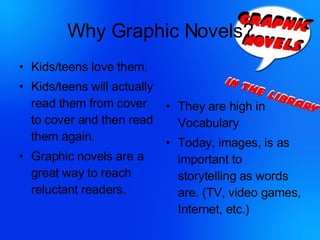
Why Graphic Novels? Kids/teens love them. Kids/teens will actually read them from cover to cover and then read them again. Graphic novels are a great way to reach reluctant readers. They are high in Vocabulary Today, images, is as important to storytelling as words are. (TV, video games, Internet, etc.)
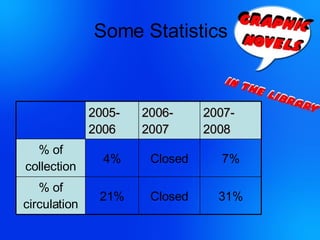
Some Statistics 31% Closed 21% % of circulation 7% Closed 4% % of collection 2007-2008 2006-2007 2005-2006
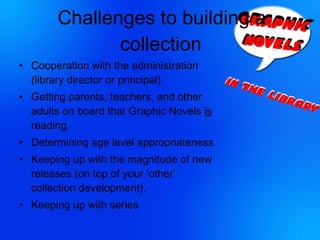
Challenges to building a collection Cooperation with the administration (library director or principal) Getting parents, teachers, and other adults on board that Graphic Novels  is  reading. Determining age level appropriateness Keeping up with the magnitude of new releases (on top of your ‘other’ collection development). Keeping up with series
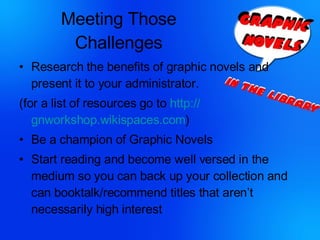
Meeting Those Challenges Research the benefits of graphic novels and present it to your administrator. (for a list of resources go to  http:// gnworkshop.wikispaces.com )  Be a champion of Graphic Novels Start reading and become well versed in the medium so you can back up your collection and can booktalk/recommend titles that aren’t necessarily high interest
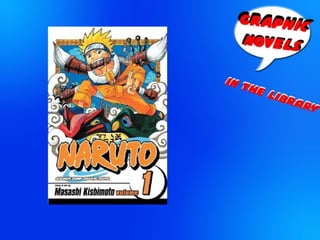
Manga vs. Graphic Novels Graphic Novel – A longer version of the comic book.  Western Style GNs are typically superhero stories, but the format is expanding rapidly Manga – The Japanese word for comic book.  In the U.S. we use it for Japanese style graphic novels or comics. Manga is often based on anime. (There’s also Manwha which are korean graphic novels.)
Building Your Collection Use review journals such as  slj, library journal, booklist, voya, etc. Some great professional reading: Professional  Resources.doc Read! Read! Read! Read! Ask your teens/kids/patrons GNLIB - http://groups.yahoo.com/group/GNLIB-L/
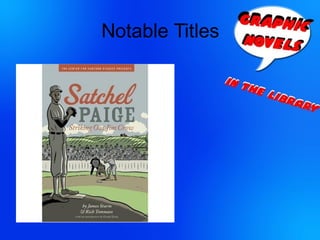
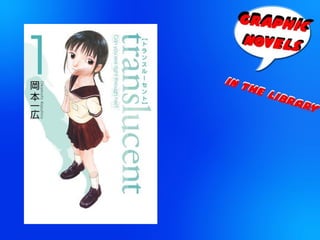
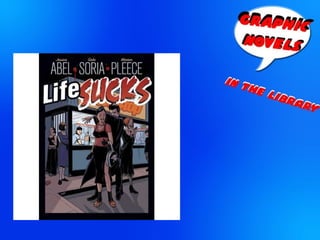
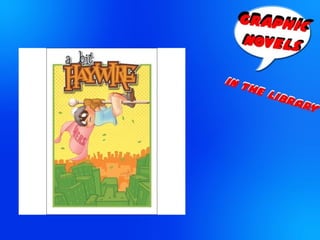
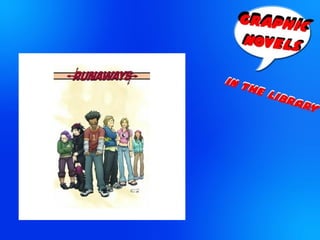
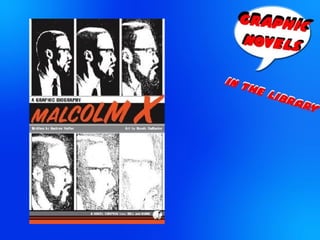
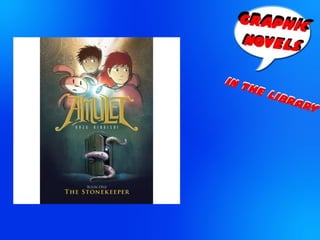
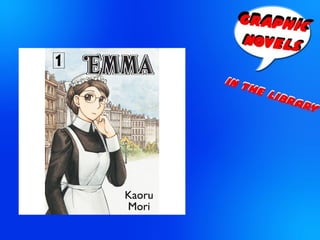
Notable Titles


Graphic Novels In The Library

  • 1.
    Esther Keller SchoolMedia Specialist I.S. 278 Marine Park [email_address]
  • 2.
    Why Graphic Novels?Kids/teens love them. Kids/teens will actually read them from cover to cover and then read them again. Graphic novels are a great way to reach reluctant readers. They are high in Vocabulary Today, images, is as important to storytelling as words are. (TV, video games, Internet, etc.)
  • 3.
    Some Statistics 31%Closed 21% % of circulation 7% Closed 4% % of collection 2007-2008 2006-2007 2005-2006
  • 4.
    Challenges to buildinga collection Cooperation with the administration (library director or principal) Getting parents, teachers, and other adults on board that Graphic Novels is reading. Determining age level appropriateness Keeping up with the magnitude of new releases (on top of your ‘other’ collection development). Keeping up with series
  • 5.
    Meeting Those ChallengesResearch the benefits of graphic novels and present it to your administrator. (for a list of resources go to http:// gnworkshop.wikispaces.com ) Be a champion of Graphic Novels Start reading and become well versed in the medium so you can back up your collection and can booktalk/recommend titles that aren’t necessarily high interest
  • 6.
    Manga vs. GraphicNovels Graphic Novel – A longer version of the comic book. Western Style GNs are typically superhero stories, but the format is expanding rapidly Manga – The Japanese word for comic book. In the U.S. we use it for Japanese style graphic novels or comics. Manga is often based on anime. (There’s also Manwha which are korean graphic novels.)
  • 7.
    Building Your CollectionUse review journals such as slj, library journal, booklist, voya, etc. Some great professional reading: Professional Resources.doc Read! Read! Read! Read! Ask your teens/kids/patrons GNLIB - http://groups.yahoo.com/group/GNLIB-L/
  • 8.
  • 9.
  • 10.
  • 11.
  • 12.
  • 13.
  • 14.
  • 15.
  • 16.