Budget transparency
and measuring budget transparency in parliaments
Ronnie Downes and Scherie Nicol
Budgeting and Public Expenditures, OECD
Meeting of the OECD Global Parliamentary Network – Paris, 12 Oct 2017
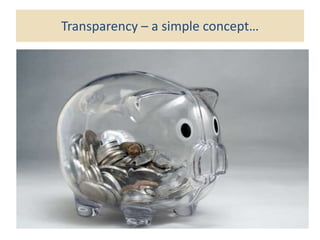
Transparency – a simple concept…
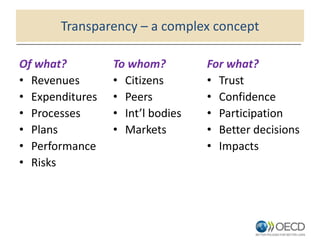
Transparency – a complex concept
Of what?
• Revenues
• Expenditures
• Processes
• Plans
• Performance
• Risks
To whom?
• Citizens
• Peers
• Int’l bodies
• Markets
For what?
• Trust
• Confidence
• Participation
• Better decisions
• Impacts
A wealth of official standards and guidance…
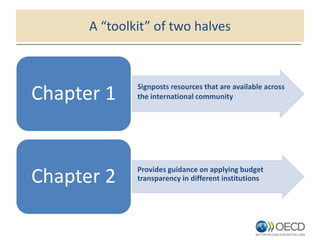
A “toolkit” of two halves
• Signposts resources that are available across
the international communityChapter 1
• Provides guidance on applying budget
transparency in different institutionsChapter 2
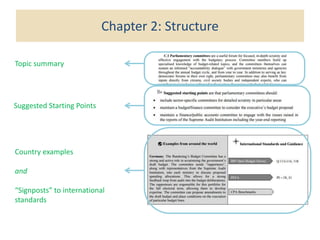
Chapter 2: Structure
Topic summary
Suggested Starting Points
Country examples
and
“Signposts” to international
standards
Some benefits of this approach?
• simple and user-friendly
• comprehensive coverage
• practical guidance to put transparency into practice
• Informal and easy-to-update
• Supports our collective efforts to promote the
benefits of BUDGET TRANSPARENCY
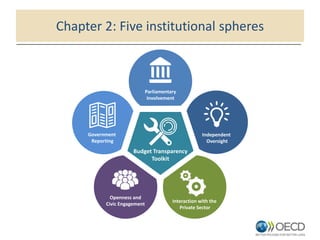
Chapter 2: Five institutional spheres
Budget Transparency
Toolkit
Government
Reporting
Parliamentary
Involvement
Independent
Oversight
Openness and
Civic Engagement
Interaction with the
Private Sector
A closer look at the parliamentary sphere
What is relevant to parliamentary budget transparency?
1. The budget process and
parliamentary capacity for
oversight
2. Information available to
parliament
3. What the parliament does to make the budget more
transparent for citizens
Parliamentary budget transparency and the focus of the Toolkit
Two key aspects:
1. Ensuring parliament has a
range of opportunities for
input and scrutiny
2. Supporting parliamentary
capacity
1. Ensuring parliament has a range of opportunities
for input and scrutiny
Toolkit guidance:
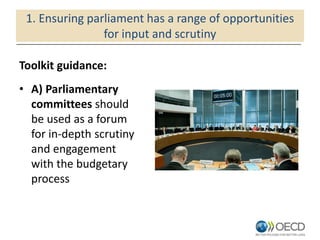
• A) Parliamentary
committees should
be used as a forum
for in-depth scrutiny
and engagement
with the budgetary
process
1. Ensuring parliament has a range of opportunities
for input and scrutiny
Toolkit guidance:
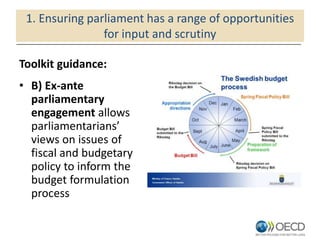
• B) Ex-ante
parliamentary
engagement allows
parliamentarians’
views on issues of
fiscal and budgetary
policy to inform the
budget formulation
process
1. Ensuring parliament has a range of opportunities
for input and scrutiny
Toolkit guidance:
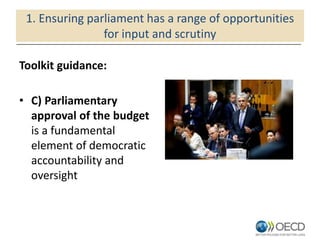
• C) Parliamentary
approval of the budget
is a fundamental
element of democratic
accountability and
oversight
1. Ensuring parliament has a range of opportunities
for input and scrutiny
Toolkit guidance:
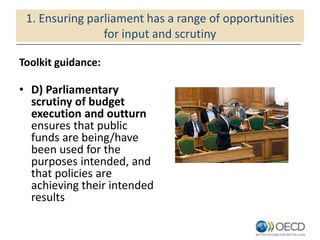
• D) Parliamentary
scrutiny of budget
execution and outturn
ensures that public
funds are being/have
been used for the
purposes intended, and
that policies are
achieving their intended
results
2. Supporting parliamentary capacity
Toolkit guidance:
• A) Specialist analytical
and research resources,
such as in-house
research services and
independent budget
offices, promote more
informed engagement
between the legislature
and the executive
2. Supporting parliamentary capacity
Toolkit guidance:
• B) Continuing Professional
Development (CPD) of
parliamentarians on
budgetary matters
recognises that scrutiny of
overall public spending,
taxation and asset and
liability management is a
complex, demanding task of
professional public
representatives
Building on the Toolkit and the OECD’s wider
parliamentary budgeting work stream…
• Heightened parliamentary engagement and activity can be
found across OECD
• Legislatures are also taking on new roles which promote
increased fiscal responsibility
• However, a number of factors impact on legislative influence
in the budget process
• These Best Practices seek to:
– Provide more specific guidance on how legislatures can most
effectively engage across the budget cycle
– Promote legislatures that are both empowered and fiscally
responsible
OECD Best Practices for Parliamentary Budgeting
Draft OECD Best Practices for Parliamentary Budgeting
• The legislature should have right of access to information
needed to undertake its role at all key stages of the budget
cycle
• Committees should have the power to conduct hearings
and call witnesses for in-depth budget scrutiny
• The budget documentation the legislature receives should
be comprehensive, to facilitate realistic debate.
• It should have specialist analytical support to provide
technical, expert and non-partisan analysis of the
proposed budget.
– This requires full access to all relevant information in a timely
manner, including methodology and assumptions underlying
the budget.
• Any significant in-year changes to approved expenditure
should be put before the legislature for review and prior
approval.
Some of the key messages in relation to budget transparency:
Questions for discussion
• Is “budget transparency” moving in the right
direction?
• What developments have been particularly
welcome?
• What remain the weak links?
• Should we develop standards to measure budget
transparency across parliaments?

GPNOct2017-Budget-Transparency

  • 1.
    Budget transparency and measuringbudget transparency in parliaments Ronnie Downes and Scherie Nicol Budgeting and Public Expenditures, OECD Meeting of the OECD Global Parliamentary Network – Paris, 12 Oct 2017
  • 2.
    Transparency – asimple concept…
  • 3.
    Transparency – acomplex concept Of what? • Revenues • Expenditures • Processes • Plans • Performance • Risks To whom? • Citizens • Peers • Int’l bodies • Markets For what? • Trust • Confidence • Participation • Better decisions • Impacts
  • 4.
    A wealth ofofficial standards and guidance…
  • 6.
    A “toolkit” oftwo halves • Signposts resources that are available across the international communityChapter 1 • Provides guidance on applying budget transparency in different institutionsChapter 2
  • 7.
    Chapter 2: Structure Topicsummary Suggested Starting Points Country examples and “Signposts” to international standards
  • 8.
    Some benefits ofthis approach? • simple and user-friendly • comprehensive coverage • practical guidance to put transparency into practice • Informal and easy-to-update • Supports our collective efforts to promote the benefits of BUDGET TRANSPARENCY
  • 9.
    Chapter 2: Fiveinstitutional spheres Budget Transparency Toolkit Government Reporting Parliamentary Involvement Independent Oversight Openness and Civic Engagement Interaction with the Private Sector
  • 10.
    A closer lookat the parliamentary sphere What is relevant to parliamentary budget transparency? 1. The budget process and parliamentary capacity for oversight 2. Information available to parliament 3. What the parliament does to make the budget more transparent for citizens
  • 11.
    Parliamentary budget transparencyand the focus of the Toolkit Two key aspects: 1. Ensuring parliament has a range of opportunities for input and scrutiny 2. Supporting parliamentary capacity
  • 12.
    1. Ensuring parliamenthas a range of opportunities for input and scrutiny Toolkit guidance: • A) Parliamentary committees should be used as a forum for in-depth scrutiny and engagement with the budgetary process
  • 13.
    1. Ensuring parliamenthas a range of opportunities for input and scrutiny Toolkit guidance: • B) Ex-ante parliamentary engagement allows parliamentarians’ views on issues of fiscal and budgetary policy to inform the budget formulation process
  • 14.
    1. Ensuring parliamenthas a range of opportunities for input and scrutiny Toolkit guidance: • C) Parliamentary approval of the budget is a fundamental element of democratic accountability and oversight
  • 15.
    1. Ensuring parliamenthas a range of opportunities for input and scrutiny Toolkit guidance: • D) Parliamentary scrutiny of budget execution and outturn ensures that public funds are being/have been used for the purposes intended, and that policies are achieving their intended results
  • 16.
    2. Supporting parliamentarycapacity Toolkit guidance: • A) Specialist analytical and research resources, such as in-house research services and independent budget offices, promote more informed engagement between the legislature and the executive
  • 17.
    2. Supporting parliamentarycapacity Toolkit guidance: • B) Continuing Professional Development (CPD) of parliamentarians on budgetary matters recognises that scrutiny of overall public spending, taxation and asset and liability management is a complex, demanding task of professional public representatives
  • 18.
    Building on theToolkit and the OECD’s wider parliamentary budgeting work stream… • Heightened parliamentary engagement and activity can be found across OECD • Legislatures are also taking on new roles which promote increased fiscal responsibility • However, a number of factors impact on legislative influence in the budget process • These Best Practices seek to: – Provide more specific guidance on how legislatures can most effectively engage across the budget cycle – Promote legislatures that are both empowered and fiscally responsible OECD Best Practices for Parliamentary Budgeting
  • 19.
    Draft OECD BestPractices for Parliamentary Budgeting • The legislature should have right of access to information needed to undertake its role at all key stages of the budget cycle • Committees should have the power to conduct hearings and call witnesses for in-depth budget scrutiny • The budget documentation the legislature receives should be comprehensive, to facilitate realistic debate. • It should have specialist analytical support to provide technical, expert and non-partisan analysis of the proposed budget. – This requires full access to all relevant information in a timely manner, including methodology and assumptions underlying the budget. • Any significant in-year changes to approved expenditure should be put before the legislature for review and prior approval. Some of the key messages in relation to budget transparency:
  • 20.
    Questions for discussion •Is “budget transparency” moving in the right direction? • What developments have been particularly welcome? • What remain the weak links? • Should we develop standards to measure budget transparency across parliaments?

Editor's Notes

  • #4 [translation notes: “of what” means “what are we being transaprenct about? What is the subject matter” “to whom” i.e. to whom are we being transparent” “for what” i.e. “for what purpose, why?” “int’l bodies” means international bodies]
  • #5 [no need for translation except for Slide Title]
  • #7 Allows self-assessment in relation to budget transparency, and to help plan and implement transparency-focused reforms
  • #8 [only the green text needs to be translated]
  • #19 with legislatures among other things setting up new oversight committees and committee procedures, enlarging budget staff, and demanding improved and more complete budgetary information from government. The proposed Best Practices draw on and further existing OECD principles, standards and analytical work, as well as supporting standards from a range of international partner organisations, and major parliamentary organisations such as the Inter-Parliamentary Union (IPU), the Commonwealth Parliamentary Association (CPA) and the Assemblée Parlementaire de la Francophonie (APF). They are further informed by a study of the common and more advanced practices reported by OECD member countries in OECD budget reviews and parliamentary budget reviews, as well as the OECD Budget Practices and Procedures Database.3 As such, while they are at times ambitious in nature, they are grounded in the experiences of OECD member legislatures. They have also benefited immensely from the discussions held over the past decade in the OECD Network of Parliamentary Budget Officials and Independent Fiscal Institutions (PBO), as well as discussions in the Working Party of Senior Budget Officials (SBO) and its other associated thematic networks.
  • #20 Budgetary data provided to the legislature should be open and accessible, including through the use of digital technologies.