Transport
mechanism
By Gowshika
Transport mechanism across the cell
membrane
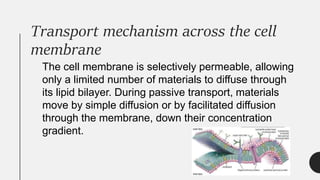
The cell membrane is selectively permeable, allowing
only a limited number of materials to diffuse through
its lipid bilayer. During passive transport, materials
move by simple diffusion or by facilitated diffusion
through the membrane, down their concentration
gradient.
Passive
transport
Is a movement of molecules across the cell
membrane without consuming energy
Substance move from higher concentration to lower
concentration without consumption of energy
Mechanism of passive transport
Diffusion
Facilitated diffusion
Osmosis
Diffusion
Substance tends to move from an area of
higher concentration to area of lower
concentration without consumption of
energy it continues until the concentration
is equal across the space ( dynamic
equilibrium is reached)
Some factors that affect diffusion
Temperature
Solvent density
Solubility
Facilitated
diffusion
Material diffuse across the plasma
membrane with the help of
membrane proteins
Transport proteins – integral proteins
involve in the facilitated diffusion and
functions as either channels or
carries
Channel proteins – specific for a
substance that is being transported
Carrier Proteins – binds a substance
and triggers a change in its own
shape , moving the Bound molecule
from the outside of the cell to its
interior
Osmosis Is a process by which molecules of a
solvent pass through a
semipermeable membrane from a
less concentrated solution into a more
concentrated one, thus equalizing the
concentrations on each side of the
membrane.
Without consumption of energy
Active
transport
mechanism
Requires energy to accomplish the
movement (in the form of ATP)
Substances move into the cell against
its concentration gradient.
Requires carrier proteins
Primary active transport
Secondary active transport
Primary and
secondary active
transport
• Primary active transport, also called direct active transport,
directly uses chemical energy (such as from adenosine
triphosphate or ATP in case of cell membrane) to transport all
species of solutes across a membrane against their
concentration gradient.
• SECONDARY ACTIVE TRANSPORT
Secondary active transport is a form of active transport across a
biological membrane in which a transporter protein couples the
movement of an ion (typically Na+ or H+) down its
electrochemical gradient to the uphill movement of another
molecule or ion against a concentration/ electrochemical gradient
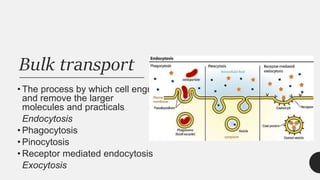
Bulk transport
• The process by which cell engulf
and remove the larger
molecules and practicals
Endocytosis
• Phagocytosis
• Pinocytosis
• Receptor mediated endocytosis
Exocytosis
Endocytosis
The process by which cells take in substances from
outside of the cell by engulfing them in a vesicle
Phagocytosis ( cell eater)
Pinocytosis (cell drinker)
Receptor mediated endocytosis
Process by which cells absorb metabolites, hormones,
proteins – and in some cases viruses – by the inward
budding of the plasma membrane (invagination)
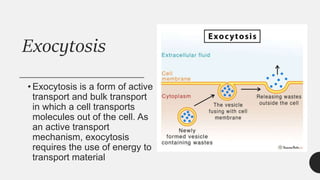
Exocytosis
• Exocytosis is a form of active
transport and bulk transport
in which a cell transports
molecules out of the cell. As
an active transport
mechanism, exocytosis
requires the use of energy to
transport material.
Thank you 💗
gowshika 's presentation.pptx

gowshika 's presentation.pptx

  • 1.
  • 2.
    Transport mechanism acrossthe cell membrane The cell membrane is selectively permeable, allowing only a limited number of materials to diffuse through its lipid bilayer. During passive transport, materials move by simple diffusion or by facilitated diffusion through the membrane, down their concentration gradient.
  • 3.
    Passive transport Is a movementof molecules across the cell membrane without consuming energy Substance move from higher concentration to lower concentration without consumption of energy Mechanism of passive transport Diffusion Facilitated diffusion Osmosis
  • 4.
    Diffusion Substance tends tomove from an area of higher concentration to area of lower concentration without consumption of energy it continues until the concentration is equal across the space ( dynamic equilibrium is reached) Some factors that affect diffusion Temperature Solvent density Solubility
  • 5.
    Facilitated diffusion Material diffuse acrossthe plasma membrane with the help of membrane proteins Transport proteins – integral proteins involve in the facilitated diffusion and functions as either channels or carries Channel proteins – specific for a substance that is being transported Carrier Proteins – binds a substance and triggers a change in its own shape , moving the Bound molecule from the outside of the cell to its interior
  • 6.
    Osmosis Is aprocess by which molecules of a solvent pass through a semipermeable membrane from a less concentrated solution into a more concentrated one, thus equalizing the concentrations on each side of the membrane. Without consumption of energy
  • 7.
    Active transport mechanism Requires energy toaccomplish the movement (in the form of ATP) Substances move into the cell against its concentration gradient. Requires carrier proteins Primary active transport Secondary active transport
  • 8.
    Primary and secondary active transport •Primary active transport, also called direct active transport, directly uses chemical energy (such as from adenosine triphosphate or ATP in case of cell membrane) to transport all species of solutes across a membrane against their concentration gradient. • SECONDARY ACTIVE TRANSPORT Secondary active transport is a form of active transport across a biological membrane in which a transporter protein couples the movement of an ion (typically Na+ or H+) down its electrochemical gradient to the uphill movement of another molecule or ion against a concentration/ electrochemical gradient
  • 9.
    Bulk transport • Theprocess by which cell engulf and remove the larger molecules and practicals Endocytosis • Phagocytosis • Pinocytosis • Receptor mediated endocytosis Exocytosis
  • 10.
    Endocytosis The process bywhich cells take in substances from outside of the cell by engulfing them in a vesicle Phagocytosis ( cell eater) Pinocytosis (cell drinker) Receptor mediated endocytosis Process by which cells absorb metabolites, hormones, proteins – and in some cases viruses – by the inward budding of the plasma membrane (invagination)
  • 11.
    Exocytosis • Exocytosis isa form of active transport and bulk transport in which a cell transports molecules out of the cell. As an active transport mechanism, exocytosis requires the use of energy to transport material.
  • 12.