Gillespie’s Hypothesis of
   Business Leadership
•There is a difference between management
and leadership
•Your business is NOT an exception.
•80% of all businesses lack true leadership.
•Gillespie’s Corollary: The 80% figure is
probably low but it fits into the Pareto
Principle.
Leadership is…
• Perceived that everyone knows it when they
  see it.
• Few have experienced it.
• Fewer understand it.
• Even less understand the economics.
• Blah, blah, blah
Moving ON

• What do others say
  about Leadership?
Dilbert Principle
• Coined by Scott Adams as a variation of the
  Peter Principle.
• The most ineffective workers are
  systematically moved to the place where
  they can do the least damage: management.
Clarke’s 3 Laws
         Formulated by Arthur C. Clarke

• First Law:
• When a distinguished but elderly scientist
  states that something is possible, he is
  almost certainly right.
• When he states that something is
  impossible, he is very probably wrong.
Clarke’s 3 Laws
• Second Law:
• The only way of discovering the limits of
  the possible is to venture a little way past
  them into the impossible.
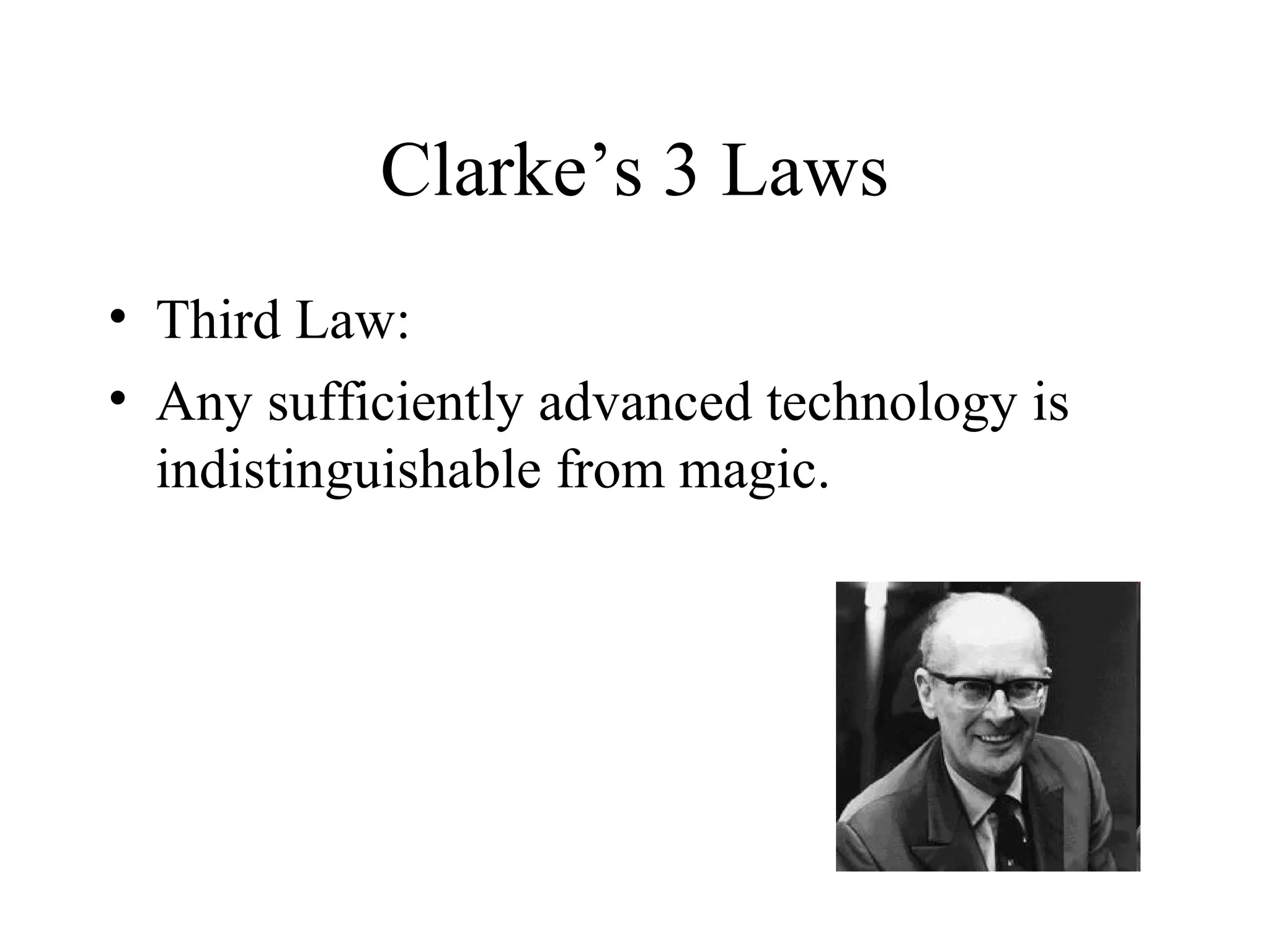
Clarke’s 3 Laws
• Third Law:
• Any sufficiently advanced technology is
  indistinguishable from magic.
Brooks’ Law
• Named after Fred Brooks author of “The
  Mythical Man-Month [Project Management
  publication]
• Adding manpower to a late software project
  makes it later.
Amara’s Law
• Proposed by Roy Amara
• We tend to overestimate the effect of
  technology in the short run and
  underestimate the effect in the long run.
Edward’s Law
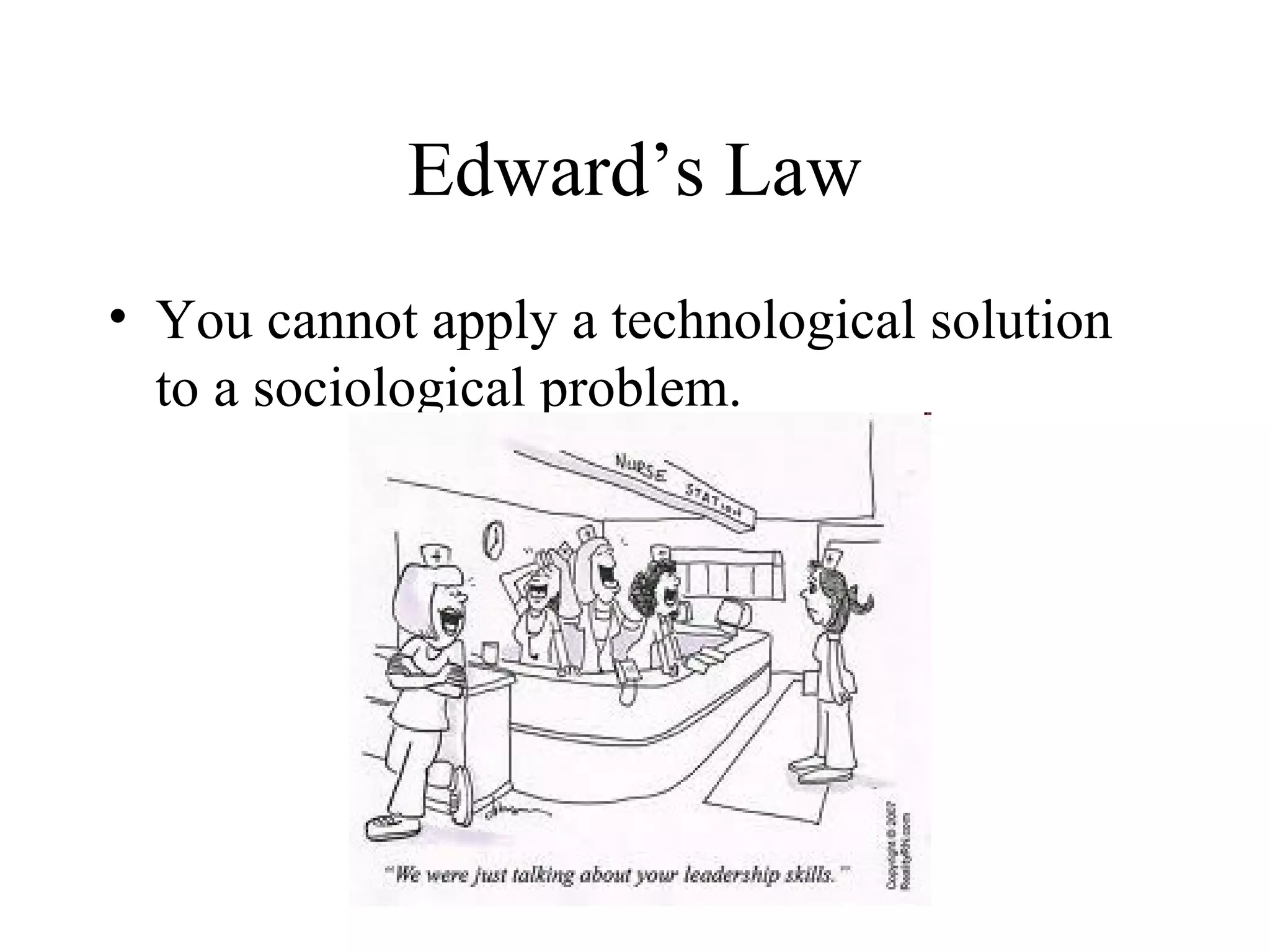
• You cannot apply a technological solution
  to a sociological problem.
Finagle’s Law
• Generalized version of Murphy’s law
• Fully named “Finagle’s Law of Dynamic
  Negatives”
• “anything that can go wrong, will”
• There is no Finagle!
Hanlon’s Razor
• Corollary of Finagle’s Law
• “Never attribute to malice that which can be
  adequately explained by stupidity.”
Duffy’s Law

• “Most people are wrong about
  most things most of the time.
Hlade’s Law
• If you have a difficult task, give it
  to a lazy person; they will find an
  easier way to do it.
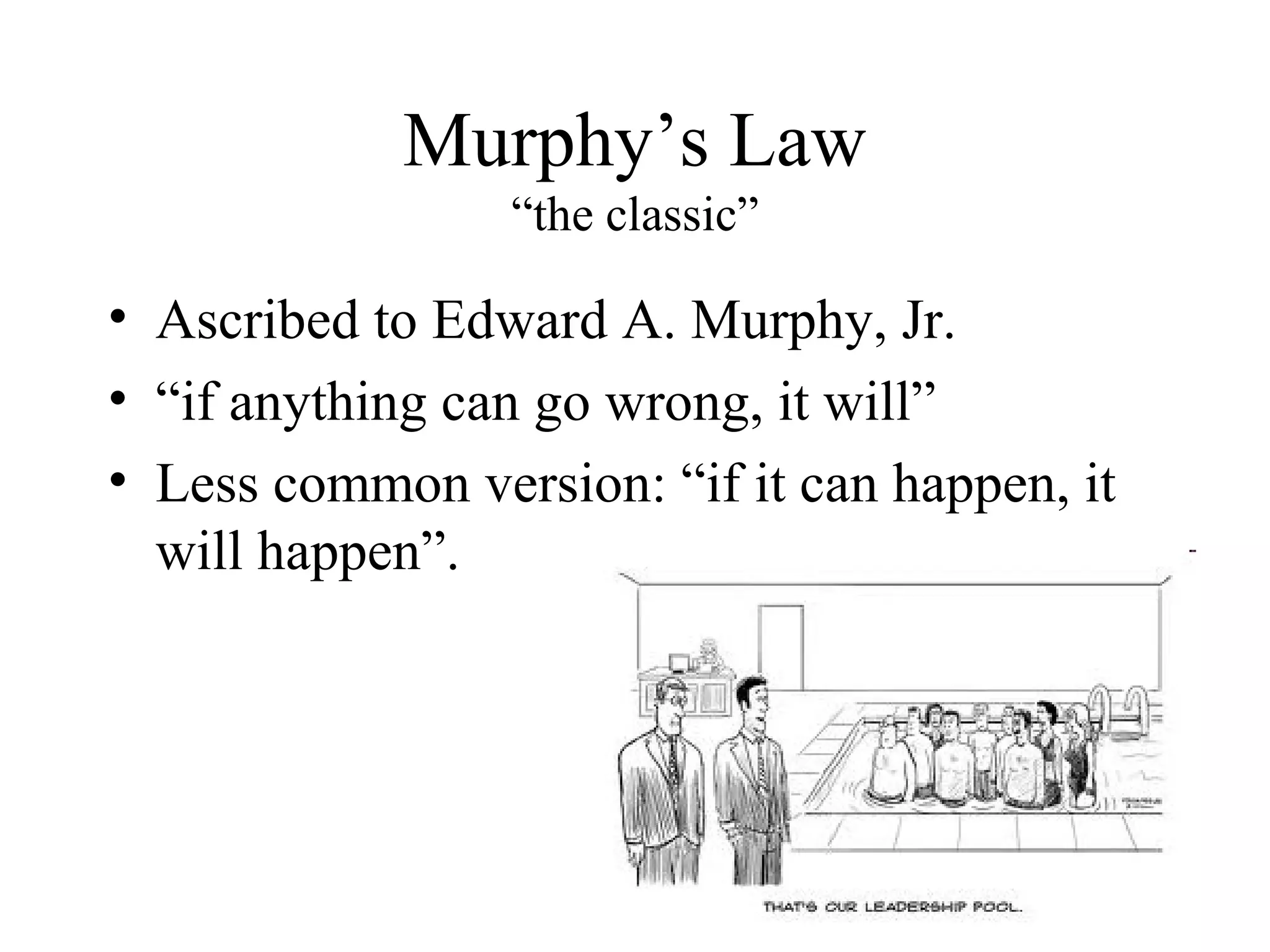
Murphy’s Law
                 “the classic”

• Ascribed to Edward A. Murphy, Jr.
• “if anything can go wrong, it will”
• Less common version: “if it can happen, it
  will happen”.
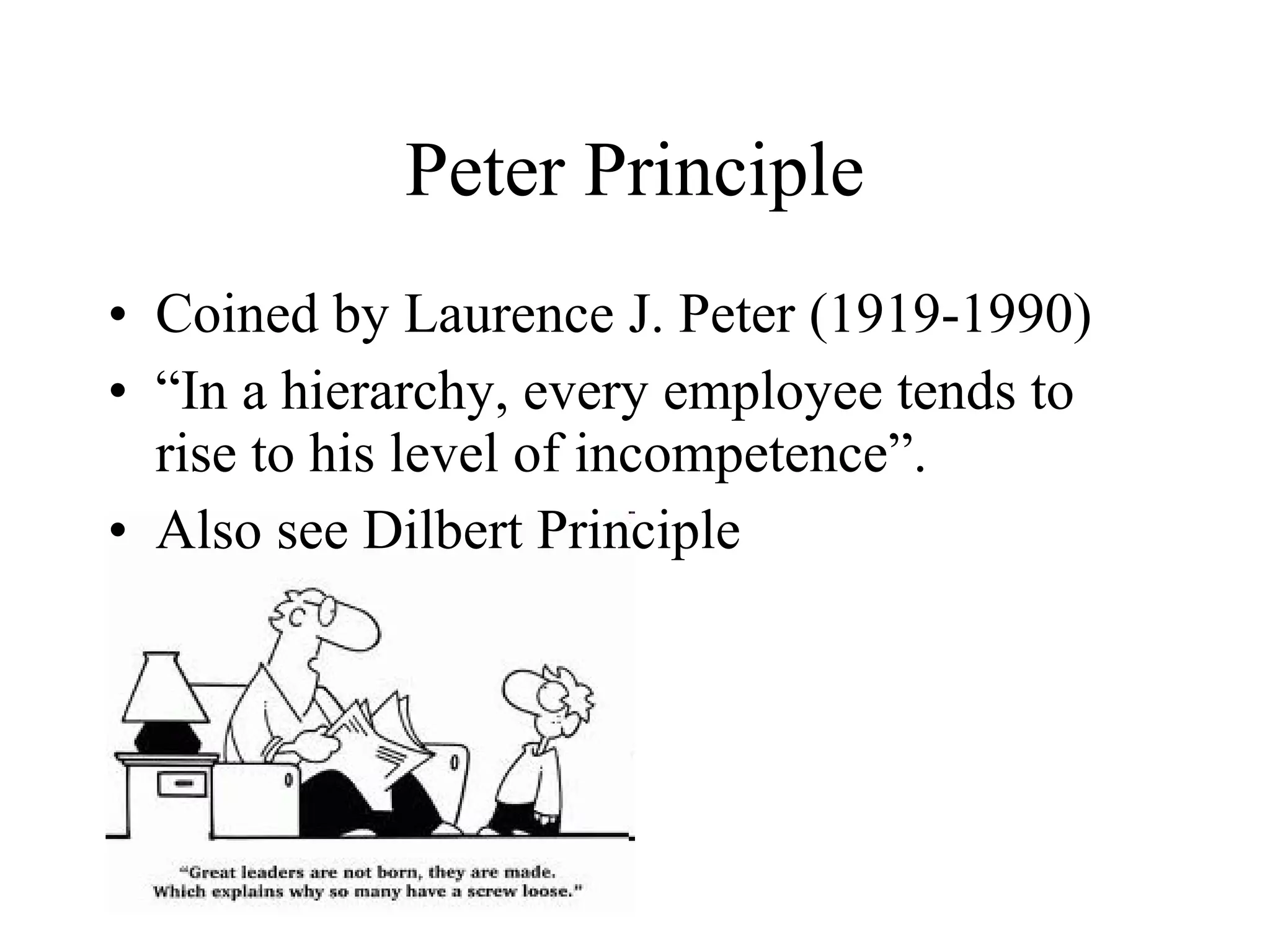
Peter Principle
• Coined by Laurence J. Peter (1919-1990)
• “In a hierarchy, every employee tends to
  rise to his level of incompetence”.
• Also see Dilbert Principle
Pareto Principle
• Named after Vilfredo Pareto
• Framed by Joseph M. Juran
• States that for many phenomena 80% of
  consequences stem from 20% of the causes.
Rothbard’s Law

• “Everyone specializes in his
  own area of weakness”.
Reilly’s Law
• Law of Retail Gravitation:
• “People generally patronize the largest mall
  in the area”.
• Location-Location-Location
Sturgeon’s Law
• Derived from science fiction author
  Theodore Sturgeon (1918-1985)
• “Ninety percent of everything is crud”.
Sutton’s Law
• Named after Willie Sutton – bank robber.
• Often cited in medical school to new
  doctors.
• “Go where the money is”.
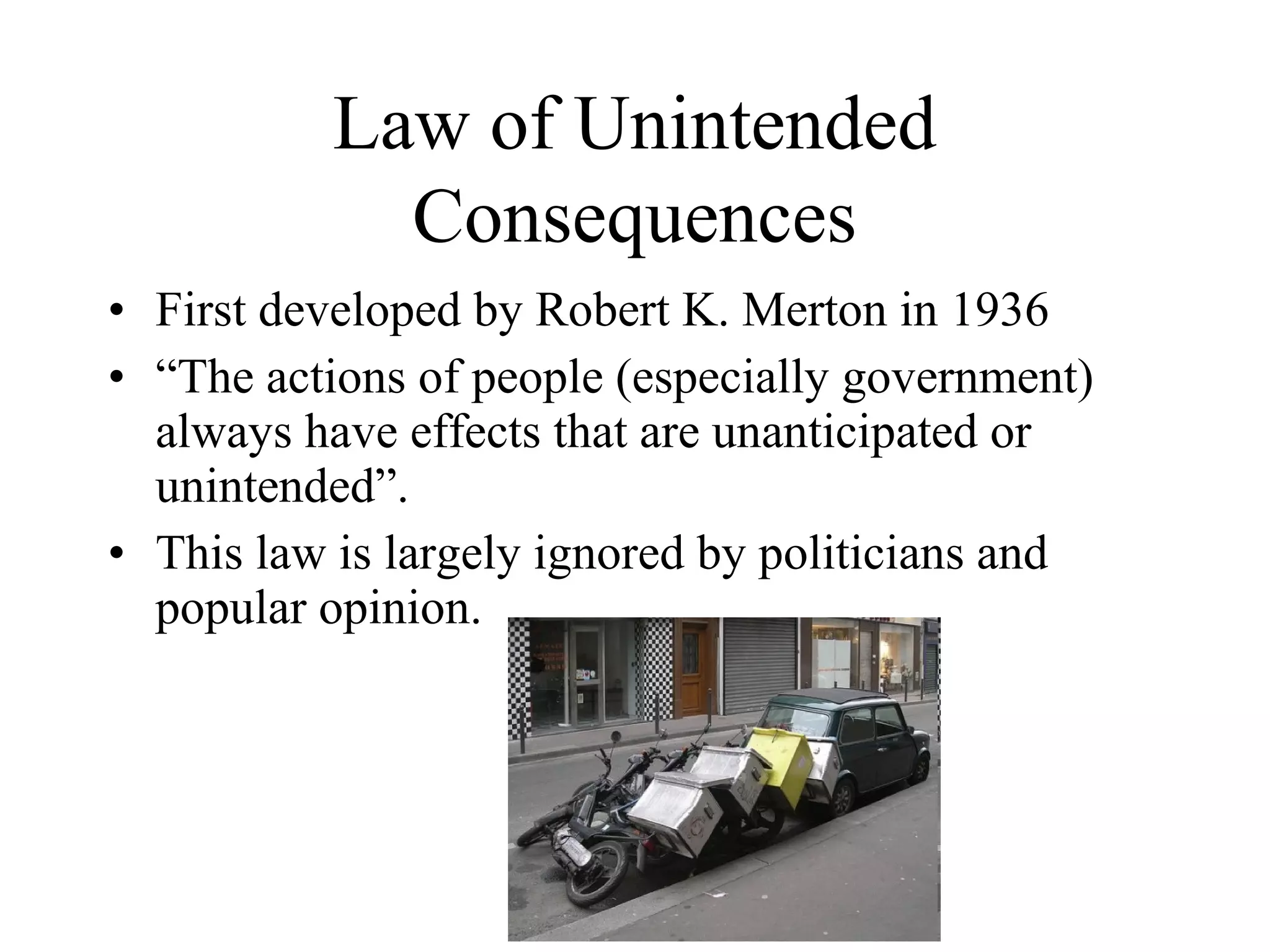
Law of Unintended
            Consequences
• First developed by Robert K. Merton in 1936
• “The actions of people (especially government)
  always have effects that are unanticipated or
  unintended”.
• This law is largely ignored by politicians and
  popular opinion.
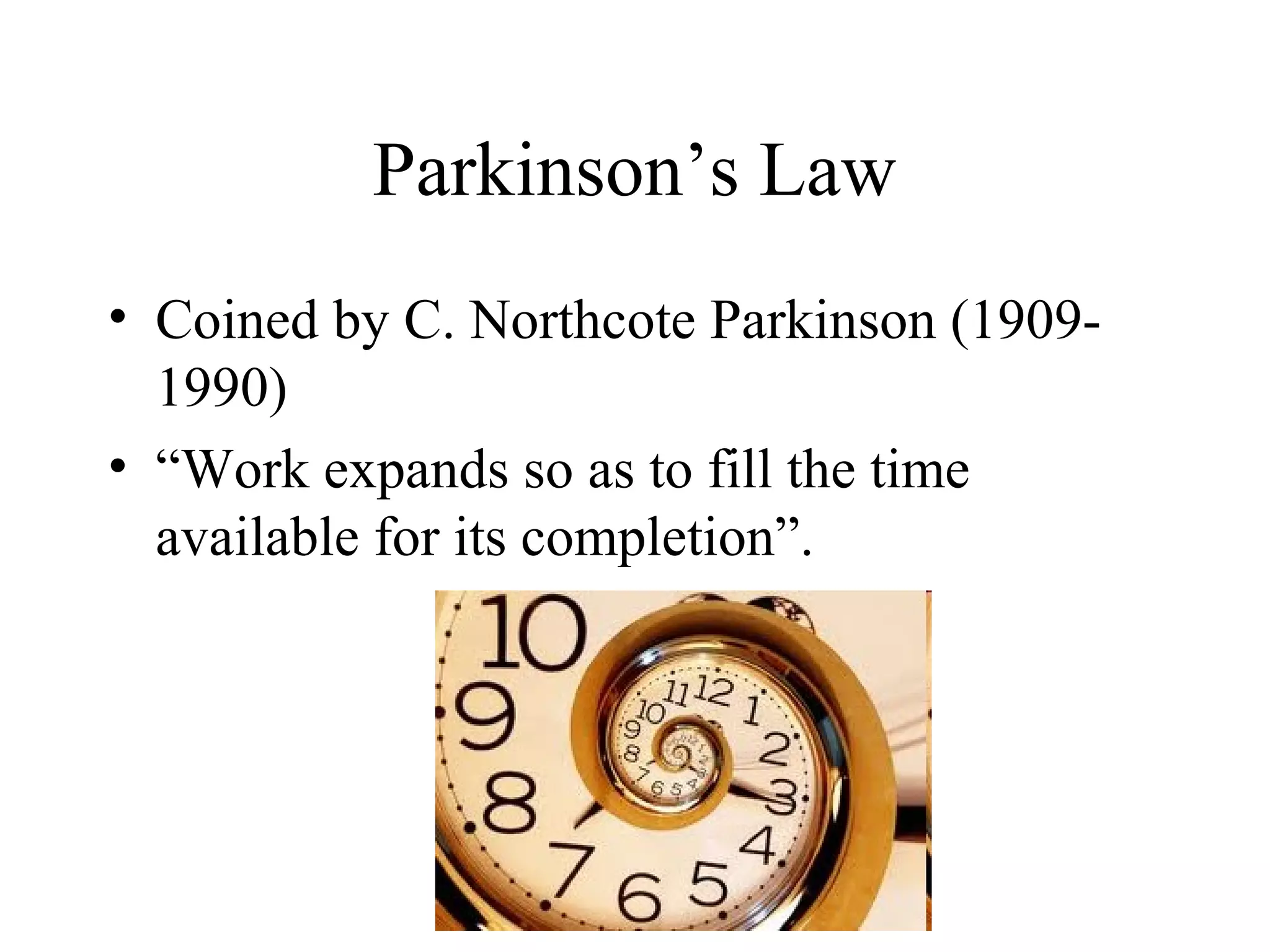
Parkinson’s Law
• Coined by C. Northcote Parkinson (1909-
  1990)
• “Work expands so as to fill the time
  available for its completion”.
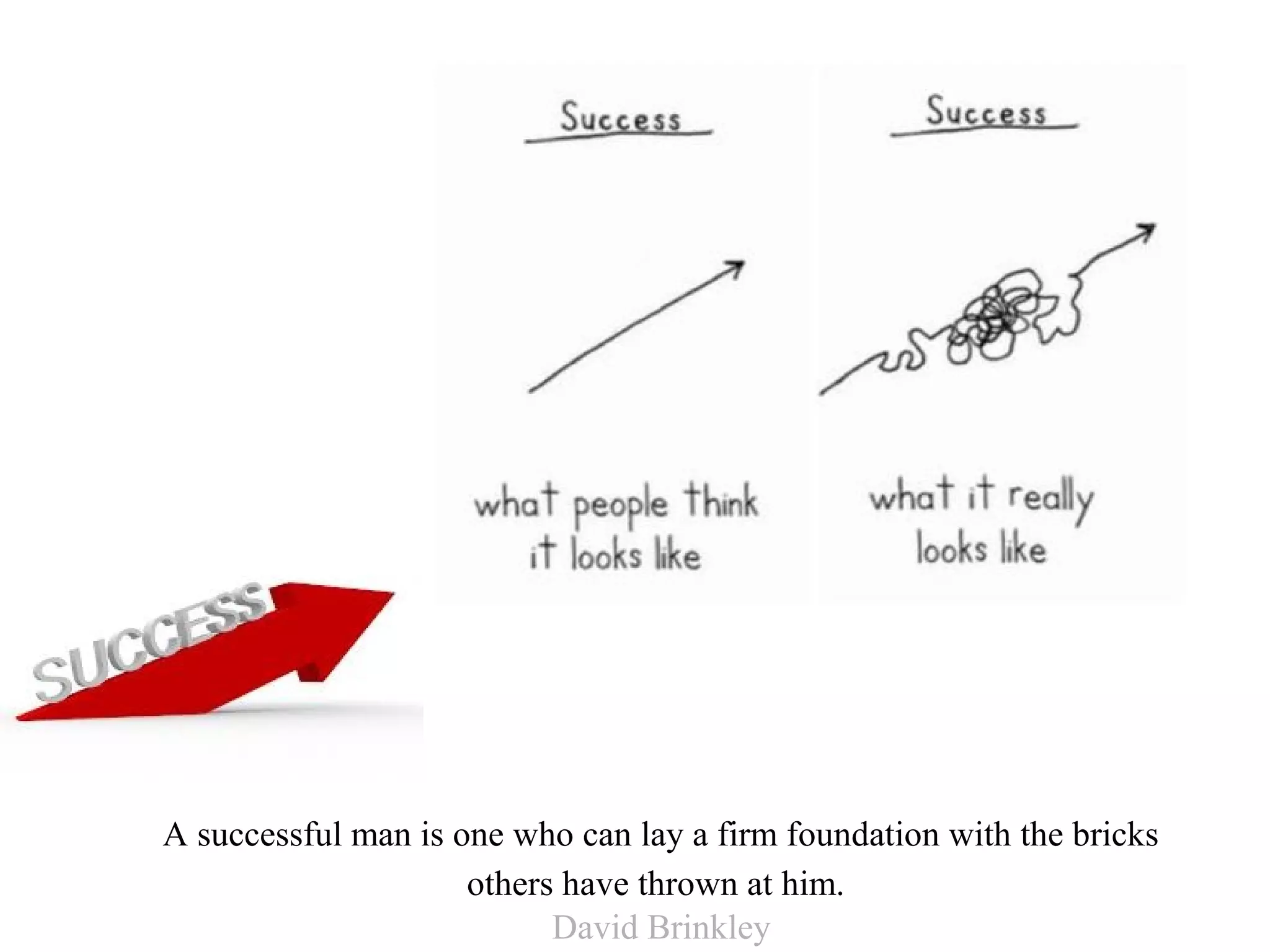
A successful man is one who can lay a firm foundation with the bricks
                     others have thrown at him.
                           David Brinkley
Notice of Disclaimer:
  Any resemblance to real persons, living or dead is purely
     coincidental. Void where prohibited. Some assembly
required. Contents may settle during shipment. Use only as
  directed. No other warranty expressed or implied. Do not
  use while operating a motor vehicle or heavy equipment.
  Subject to approval. This is not an offer to sell securities.
  Apply only to affected area. May be too intense for some
viewers. Do not stamp. Use other side for additional listings.
For recreational use only. Do not disturb. All models over 18
  years of age. If condition persists, consult your physician.
 No user-serviceable parts inside. Freshest if eaten before
      date on carton. Subject to change without notice.
             This supersedes all previous notices.
About -

Gillespie’s Hypothesis of Business

  • 2.
    Gillespie’s Hypothesis of Business Leadership •There is a difference between management and leadership •Your business is NOT an exception. •80% of all businesses lack true leadership. •Gillespie’s Corollary: The 80% figure is probably low but it fits into the Pareto Principle.
  • 3.
    Leadership is… • Perceivedthat everyone knows it when they see it. • Few have experienced it. • Fewer understand it. • Even less understand the economics. • Blah, blah, blah
  • 4.
    Moving ON • Whatdo others say about Leadership?
  • 5.
    Dilbert Principle • Coinedby Scott Adams as a variation of the Peter Principle. • The most ineffective workers are systematically moved to the place where they can do the least damage: management.
  • 6.
    Clarke’s 3 Laws Formulated by Arthur C. Clarke • First Law: • When a distinguished but elderly scientist states that something is possible, he is almost certainly right. • When he states that something is impossible, he is very probably wrong.
  • 7.
    Clarke’s 3 Laws •Second Law: • The only way of discovering the limits of the possible is to venture a little way past them into the impossible.
  • 8.
    Clarke’s 3 Laws •Third Law: • Any sufficiently advanced technology is indistinguishable from magic.
  • 9.
    Brooks’ Law • Namedafter Fred Brooks author of “The Mythical Man-Month [Project Management publication] • Adding manpower to a late software project makes it later.
  • 10.
    Amara’s Law • Proposedby Roy Amara • We tend to overestimate the effect of technology in the short run and underestimate the effect in the long run.
  • 11.
    Edward’s Law • Youcannot apply a technological solution to a sociological problem.
  • 12.
    Finagle’s Law • Generalizedversion of Murphy’s law • Fully named “Finagle’s Law of Dynamic Negatives” • “anything that can go wrong, will” • There is no Finagle!
  • 13.
    Hanlon’s Razor • Corollaryof Finagle’s Law • “Never attribute to malice that which can be adequately explained by stupidity.”
  • 14.
    Duffy’s Law • “Mostpeople are wrong about most things most of the time.
  • 15.
    Hlade’s Law • Ifyou have a difficult task, give it to a lazy person; they will find an easier way to do it.
  • 16.
    Murphy’s Law “the classic” • Ascribed to Edward A. Murphy, Jr. • “if anything can go wrong, it will” • Less common version: “if it can happen, it will happen”.
  • 17.
    Peter Principle • Coinedby Laurence J. Peter (1919-1990) • “In a hierarchy, every employee tends to rise to his level of incompetence”. • Also see Dilbert Principle
  • 18.
    Pareto Principle • Namedafter Vilfredo Pareto • Framed by Joseph M. Juran • States that for many phenomena 80% of consequences stem from 20% of the causes.
  • 19.
    Rothbard’s Law • “Everyonespecializes in his own area of weakness”.
  • 20.
    Reilly’s Law • Lawof Retail Gravitation: • “People generally patronize the largest mall in the area”. • Location-Location-Location
  • 21.
    Sturgeon’s Law • Derivedfrom science fiction author Theodore Sturgeon (1918-1985) • “Ninety percent of everything is crud”.
  • 22.
    Sutton’s Law • Namedafter Willie Sutton – bank robber. • Often cited in medical school to new doctors. • “Go where the money is”.
  • 23.
    Law of Unintended Consequences • First developed by Robert K. Merton in 1936 • “The actions of people (especially government) always have effects that are unanticipated or unintended”. • This law is largely ignored by politicians and popular opinion.
  • 24.
    Parkinson’s Law • Coinedby C. Northcote Parkinson (1909- 1990) • “Work expands so as to fill the time available for its completion”.
  • 25.
    A successful manis one who can lay a firm foundation with the bricks others have thrown at him. David Brinkley
  • 26.
    Notice of Disclaimer: Any resemblance to real persons, living or dead is purely coincidental. Void where prohibited. Some assembly required. Contents may settle during shipment. Use only as directed. No other warranty expressed or implied. Do not use while operating a motor vehicle or heavy equipment. Subject to approval. This is not an offer to sell securities. Apply only to affected area. May be too intense for some viewers. Do not stamp. Use other side for additional listings. For recreational use only. Do not disturb. All models over 18 years of age. If condition persists, consult your physician. No user-serviceable parts inside. Freshest if eaten before date on carton. Subject to change without notice. This supersedes all previous notices.
  • 27.