Generation Z goes to
College
A New Generation’s Expectations for Higher Education
Who is Generation Z?
• Born between 1995-2014
• Known as the Shaping Generation or Silent Generation
• 9/11 not remembered as an event, but as part of history
• Instead of 9/11, Generation Z has been shaped by school shootings and the war on terrorism
• Grew up in ultra connected, fast-moving technological age
• More dependent on technology than any other generation
• Comfortable with and enjoy operating multiple electronic devices at the same time
• Less likely to travel; choose to spend greater amount of time in “virtual” world
Who is Generation Z?
• Generation Z sees genders as equals
• Believe in tolerance and diversity in the classroom and at work
• In the workplace and classroom, Generation Z lacks in personal expression and interpersonal skills
• Prefer communication via internet to any verbal communication
• Passionate about education
• More than 80% of Generation Z plans on attending college immediately after high school
• Vo-Tech is an option for Generation Z more than any other generation
• Cost of college matters to Generation Z
Who is Generation Z?
• Ultimate do-it-yourselfers; they will look for their own answers
• Self Reliant
• Do not take suggestions from others well
More than any other generation, Generation Z most closely resembles Baby Boomers.
They least resemble Echo Boomers/Millennials (born 1973-2000).
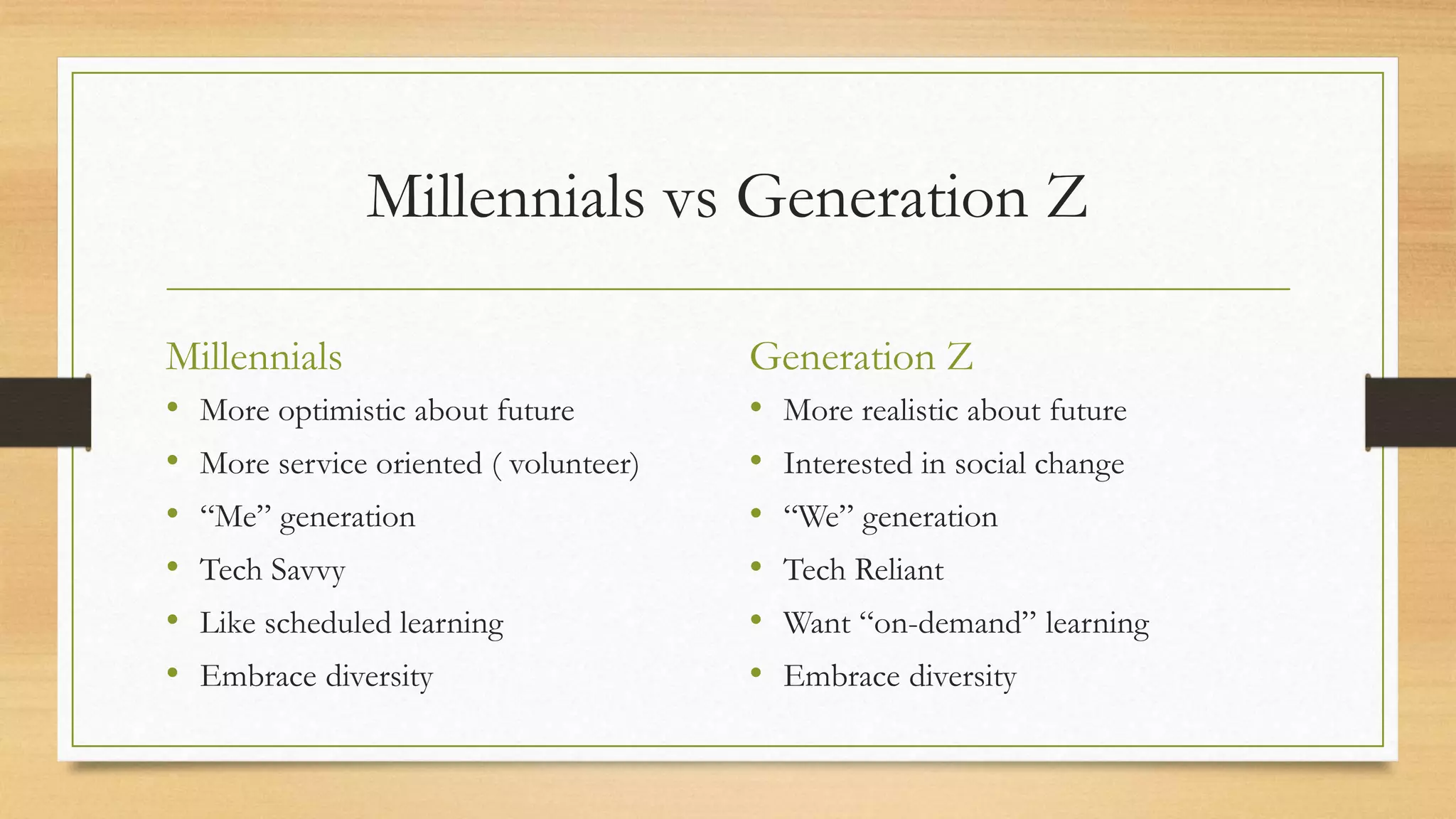
Millennials vs Generation Z
Millennials
• More optimistic about future
• More service oriented ( volunteer)
• “Me” generation
• Tech Savvy
• Like scheduled learning
• Embrace diversity
Generation Z
• More realistic about future
• Interested in social change
• “We” generation
• Tech Reliant
• Want “on-demand” learning
• Embrace diversity
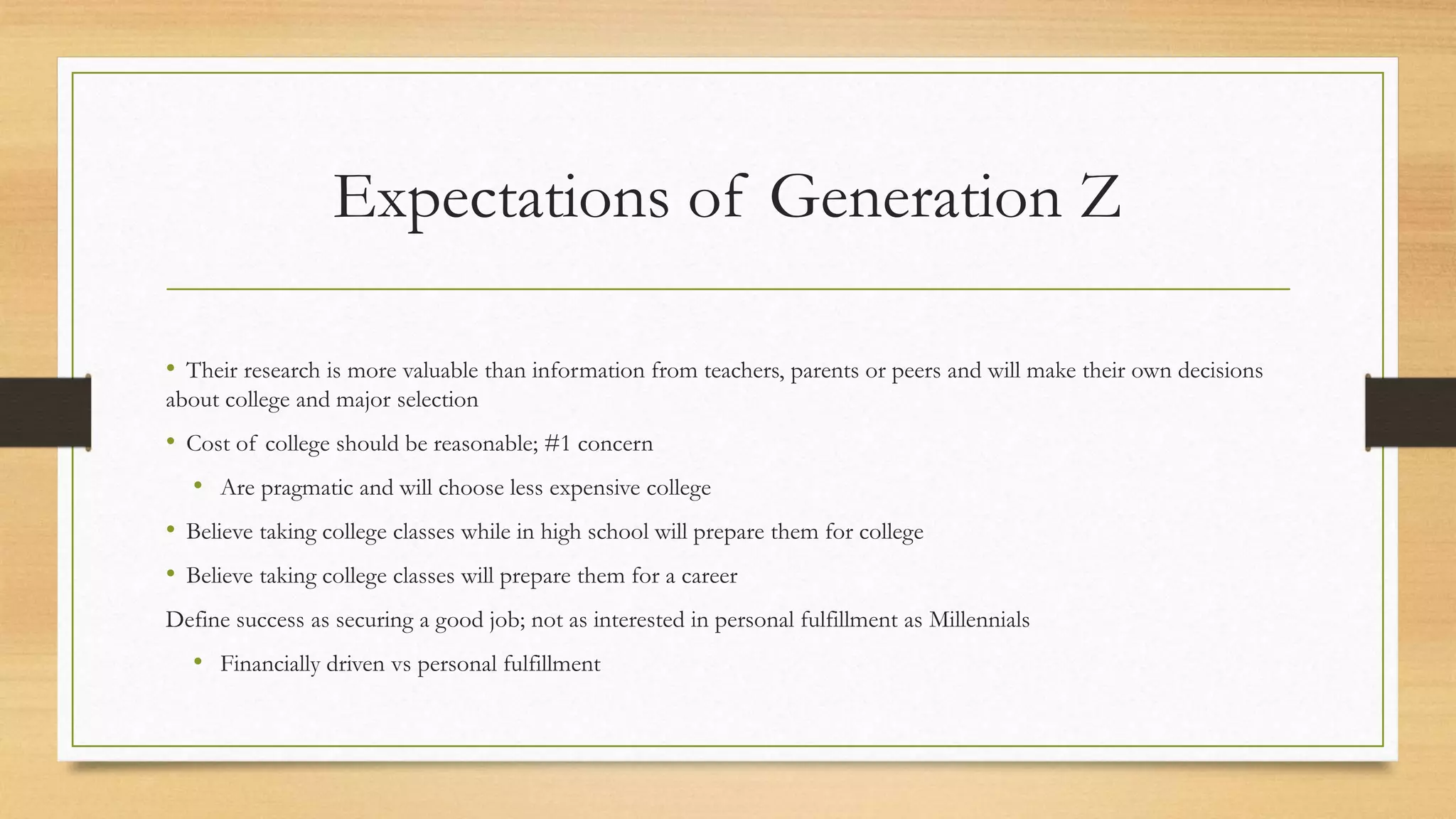
Expectations of Generation Z
• Their research is more valuable than information from teachers, parents or peers and will make their own decisions
about college and major selection
• Cost of college should be reasonable; #1 concern
• Are pragmatic and will choose less expensive college
• Believe taking college classes while in high school will prepare them for college
• Believe taking college classes will prepare them for a career
Define success as securing a good job; not as interested in personal fulfillment as Millennials
• Financially driven vs personal fulfillment
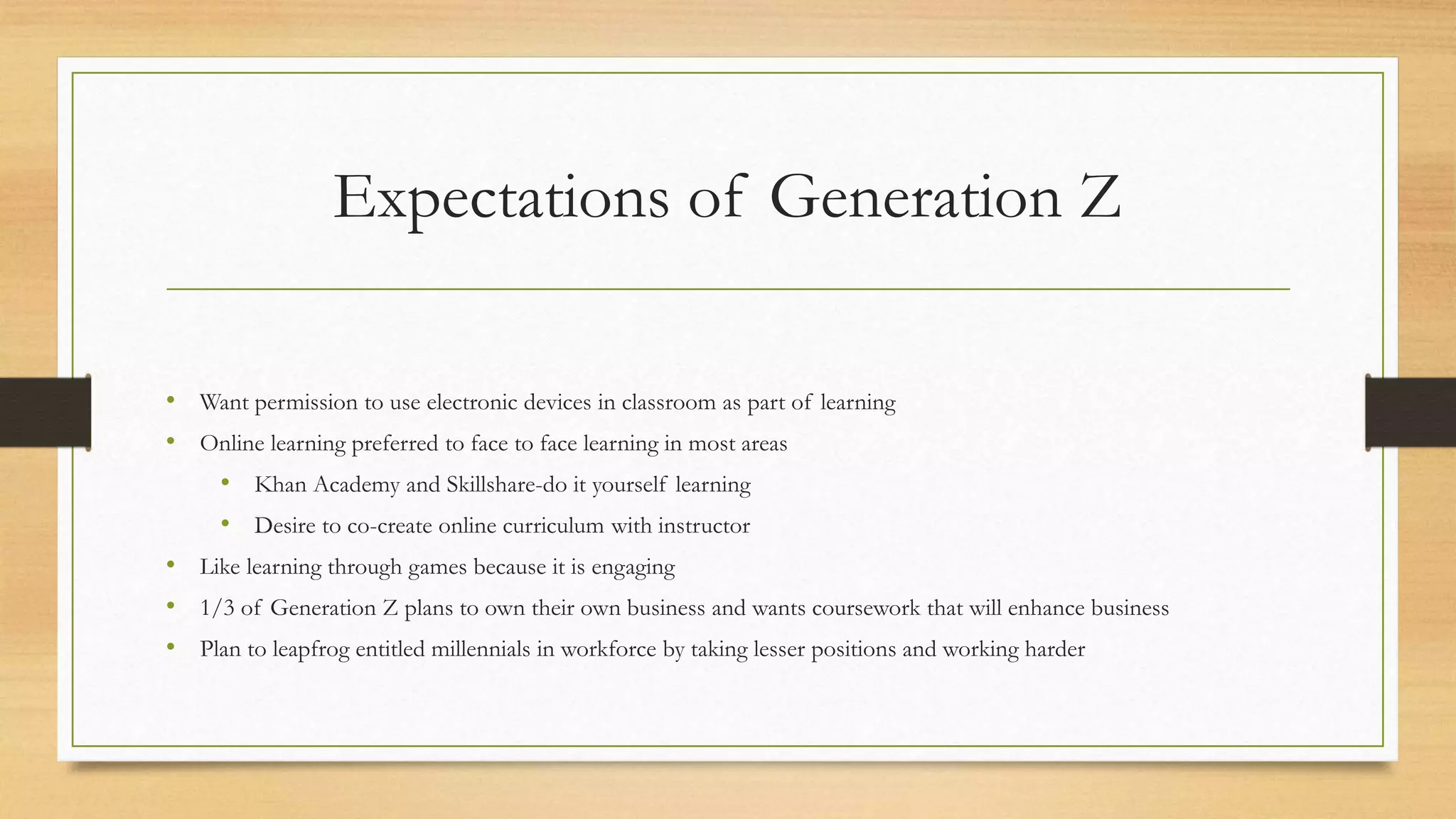
Expectations of Generation Z
• Want permission to use electronic devices in classroom as part of learning
• Online learning preferred to face to face learning in most areas
• Khan Academy and Skillshare-do it yourself learning
• Desire to co-create online curriculum with instructor
• Like learning through games because it is engaging
• 1/3 of Generation Z plans to own their own business and wants coursework that will enhance business
• Plan to leapfrog entitled millennials in workforce by taking lesser positions and working harder
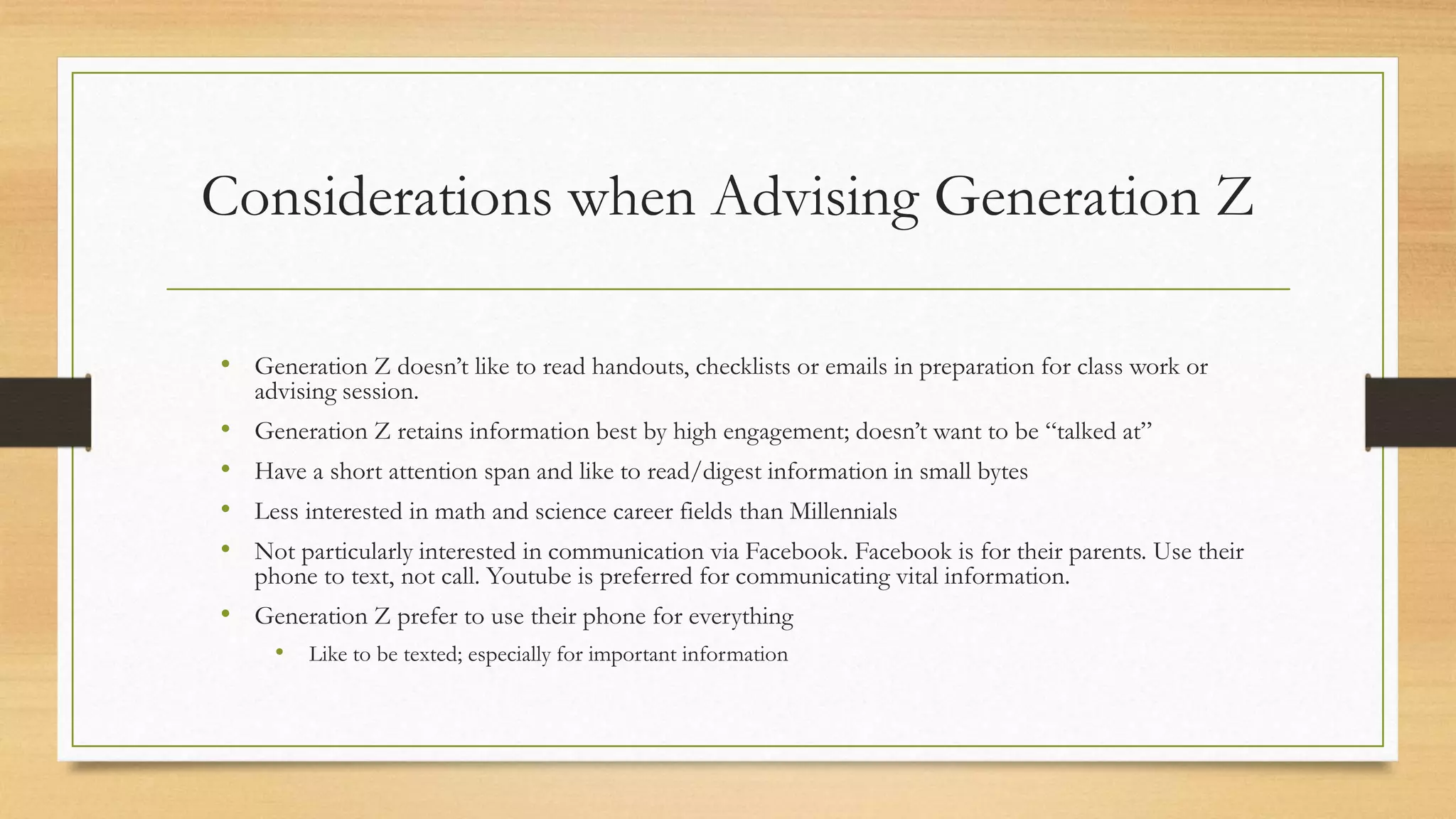
Considerations when Advising Generation Z
• Generation Z doesn’t like to read handouts, checklists or emails in preparation for class work or
advising session.
• Generation Z retains information best by high engagement; doesn’t want to be “talked at”
• Have a short attention span and like to read/digest information in small bytes
• Less interested in math and science career fields than Millennials
• Not particularly interested in communication via Facebook. Facebook is for their parents. Use their
phone to text, not call. Youtube is preferred for communicating vital information.
• Generation Z prefer to use their phone for everything
• Like to be texted; especially for important information
Academic Advising of Generation Z
• Generation Z expects to make good academic progress in college; will be
held accountable by “parents”, but parents not part of college processes
• Want instant answers and expect advisors to use technology to get them
• Generation Z struggles with critically evaluating information
• Being redundant with critical information is important
• Word of mouth is important. May take opinion of peers over facts given by adviser
Academic Advising of Generation Z
• What processes or approaches will academic advisers need to consider
modifying to better serve and engage Generation Z?

Getting to know generation z2

  • 1.
    Generation Z goesto College A New Generation’s Expectations for Higher Education
  • 2.
    Who is GenerationZ? • Born between 1995-2014 • Known as the Shaping Generation or Silent Generation • 9/11 not remembered as an event, but as part of history • Instead of 9/11, Generation Z has been shaped by school shootings and the war on terrorism • Grew up in ultra connected, fast-moving technological age • More dependent on technology than any other generation • Comfortable with and enjoy operating multiple electronic devices at the same time • Less likely to travel; choose to spend greater amount of time in “virtual” world
  • 3.
    Who is GenerationZ? • Generation Z sees genders as equals • Believe in tolerance and diversity in the classroom and at work • In the workplace and classroom, Generation Z lacks in personal expression and interpersonal skills • Prefer communication via internet to any verbal communication • Passionate about education • More than 80% of Generation Z plans on attending college immediately after high school • Vo-Tech is an option for Generation Z more than any other generation • Cost of college matters to Generation Z
  • 4.
    Who is GenerationZ? • Ultimate do-it-yourselfers; they will look for their own answers • Self Reliant • Do not take suggestions from others well More than any other generation, Generation Z most closely resembles Baby Boomers. They least resemble Echo Boomers/Millennials (born 1973-2000).
  • 5.
    Millennials vs GenerationZ Millennials • More optimistic about future • More service oriented ( volunteer) • “Me” generation • Tech Savvy • Like scheduled learning • Embrace diversity Generation Z • More realistic about future • Interested in social change • “We” generation • Tech Reliant • Want “on-demand” learning • Embrace diversity
  • 6.
    Expectations of GenerationZ • Their research is more valuable than information from teachers, parents or peers and will make their own decisions about college and major selection • Cost of college should be reasonable; #1 concern • Are pragmatic and will choose less expensive college • Believe taking college classes while in high school will prepare them for college • Believe taking college classes will prepare them for a career Define success as securing a good job; not as interested in personal fulfillment as Millennials • Financially driven vs personal fulfillment
  • 7.
    Expectations of GenerationZ • Want permission to use electronic devices in classroom as part of learning • Online learning preferred to face to face learning in most areas • Khan Academy and Skillshare-do it yourself learning • Desire to co-create online curriculum with instructor • Like learning through games because it is engaging • 1/3 of Generation Z plans to own their own business and wants coursework that will enhance business • Plan to leapfrog entitled millennials in workforce by taking lesser positions and working harder
  • 8.
    Considerations when AdvisingGeneration Z • Generation Z doesn’t like to read handouts, checklists or emails in preparation for class work or advising session. • Generation Z retains information best by high engagement; doesn’t want to be “talked at” • Have a short attention span and like to read/digest information in small bytes • Less interested in math and science career fields than Millennials • Not particularly interested in communication via Facebook. Facebook is for their parents. Use their phone to text, not call. Youtube is preferred for communicating vital information. • Generation Z prefer to use their phone for everything • Like to be texted; especially for important information
  • 9.
    Academic Advising ofGeneration Z • Generation Z expects to make good academic progress in college; will be held accountable by “parents”, but parents not part of college processes • Want instant answers and expect advisors to use technology to get them • Generation Z struggles with critically evaluating information • Being redundant with critical information is important • Word of mouth is important. May take opinion of peers over facts given by adviser
  • 10.
    Academic Advising ofGeneration Z • What processes or approaches will academic advisers need to consider modifying to better serve and engage Generation Z?