Understanding the 1099-MISC Form: Miscellaneous Income
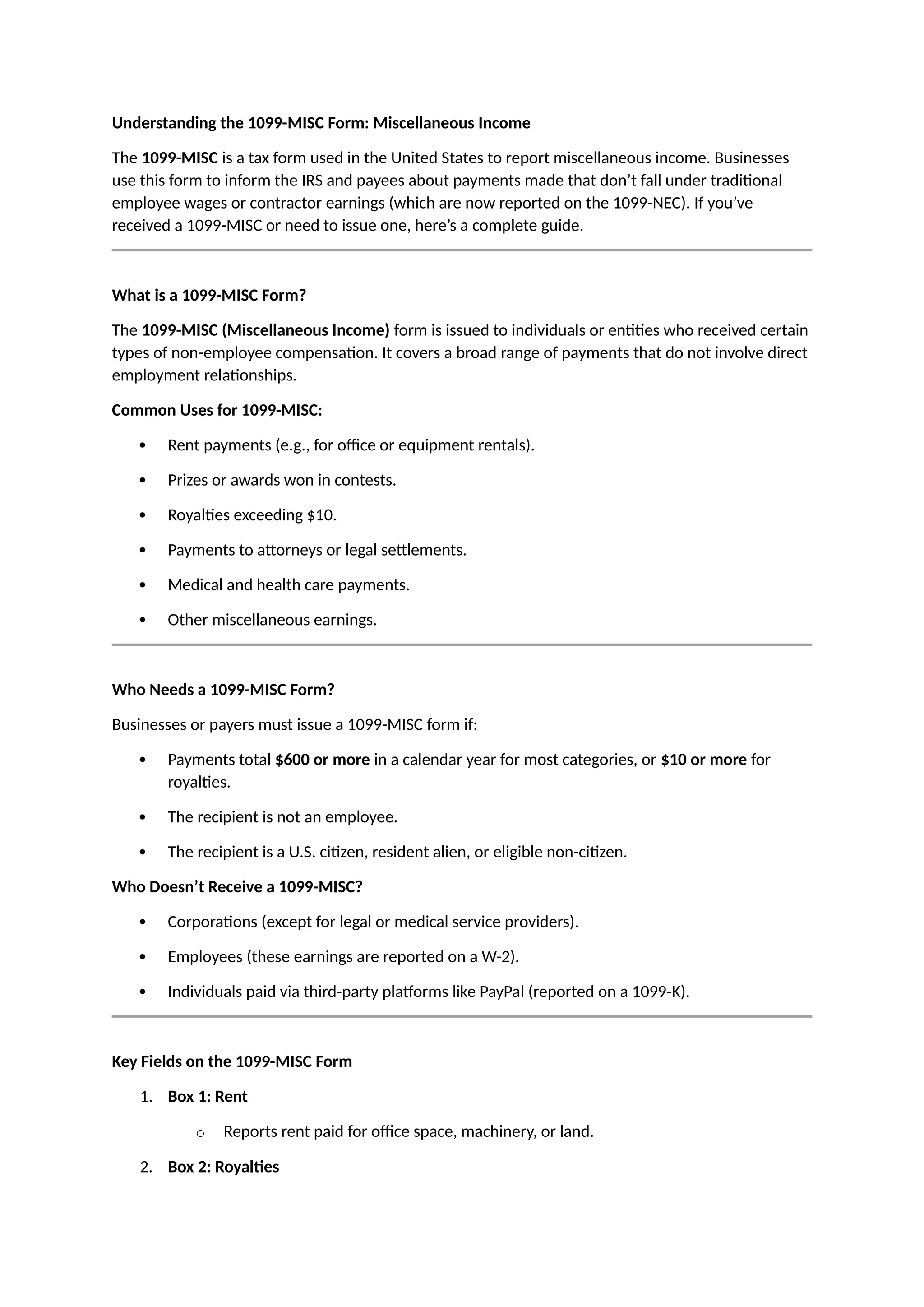
The 1099-MISC is a tax form used in the United States to report miscellaneous income. Businesses
use this form to inform the IRS and payees about payments made that don’t fall under traditional
employee wages or contractor earnings (which are now reported on the 1099-NEC). If you’ve
received a 1099-MISC or need to issue one, here’s a complete guide.
What is a 1099-MISC Form?
The 1099-MISC (Miscellaneous Income) form is issued to individuals or entities who received certain
types of non-employee compensation. It covers a broad range of payments that do not involve direct
employment relationships.
Common Uses for 1099-MISC:
 Rent payments (e.g., for office or equipment rentals).
 Prizes or awards won in contests.
 Royalties exceeding $10.
 Payments to attorneys or legal settlements.
 Medical and health care payments.
 Other miscellaneous earnings.
Who Needs a 1099-MISC Form?
Businesses or payers must issue a 1099-MISC form if:
 Payments total $600 or more in a calendar year for most categories, or $10 or more for
royalties.
 The recipient is not an employee.
 The recipient is a U.S. citizen, resident alien, or eligible non-citizen.
Who Doesn’t Receive a 1099-MISC?
 Corporations (except for legal or medical service providers).
 Employees (these earnings are reported on a W-2).
 Individuals paid via third-party platforms like PayPal (reported on a 1099-K).
Key Fields on the 1099-MISC Form
1. Box 1: Rent
o Reports rent paid for office space, machinery, or land.
2. Box 2: Royalties
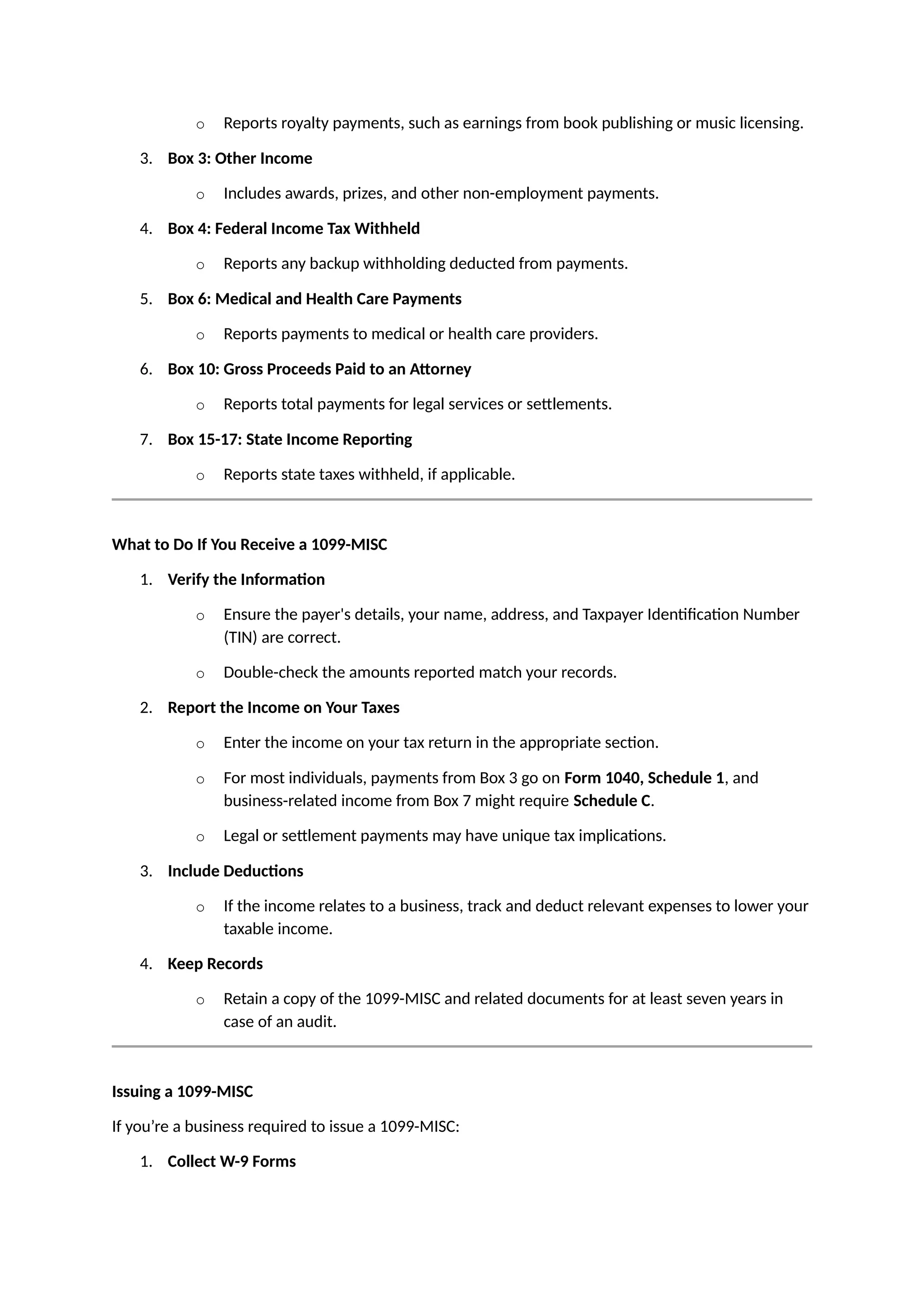
o Reports royalty payments, such as earnings from book publishing or music licensing.
3. Box 3: Other Income
o Includes awards, prizes, and other non-employment payments.
4. Box 4: Federal Income Tax Withheld
o Reports any backup withholding deducted from payments.
5. Box 6: Medical and Health Care Payments
o Reports payments to medical or health care providers.
6. Box 10: Gross Proceeds Paid to an Attorney
o Reports total payments for legal services or settlements.
7. Box 15-17: State Income Reporting
o Reports state taxes withheld, if applicable.
What to Do If You Receive a 1099-MISC
1. Verify the Information
o Ensure the payer's details, your name, address, and Taxpayer Identification Number
(TIN) are correct.
o Double-check the amounts reported match your records.
2. Report the Income on Your Taxes
o Enter the income on your tax return in the appropriate section.
o For most individuals, payments from Box 3 go on Form 1040, Schedule 1, and
business-related income from Box 7 might require Schedule C.
o Legal or settlement payments may have unique tax implications.
3. Include Deductions
o If the income relates to a business, track and deduct relevant expenses to lower your
taxable income.
4. Keep Records
o Retain a copy of the 1099-MISC and related documents for at least seven years in
case of an audit.
Issuing a 1099-MISC
If you’re a business required to issue a 1099-MISC:
1. Collect W-9 Forms
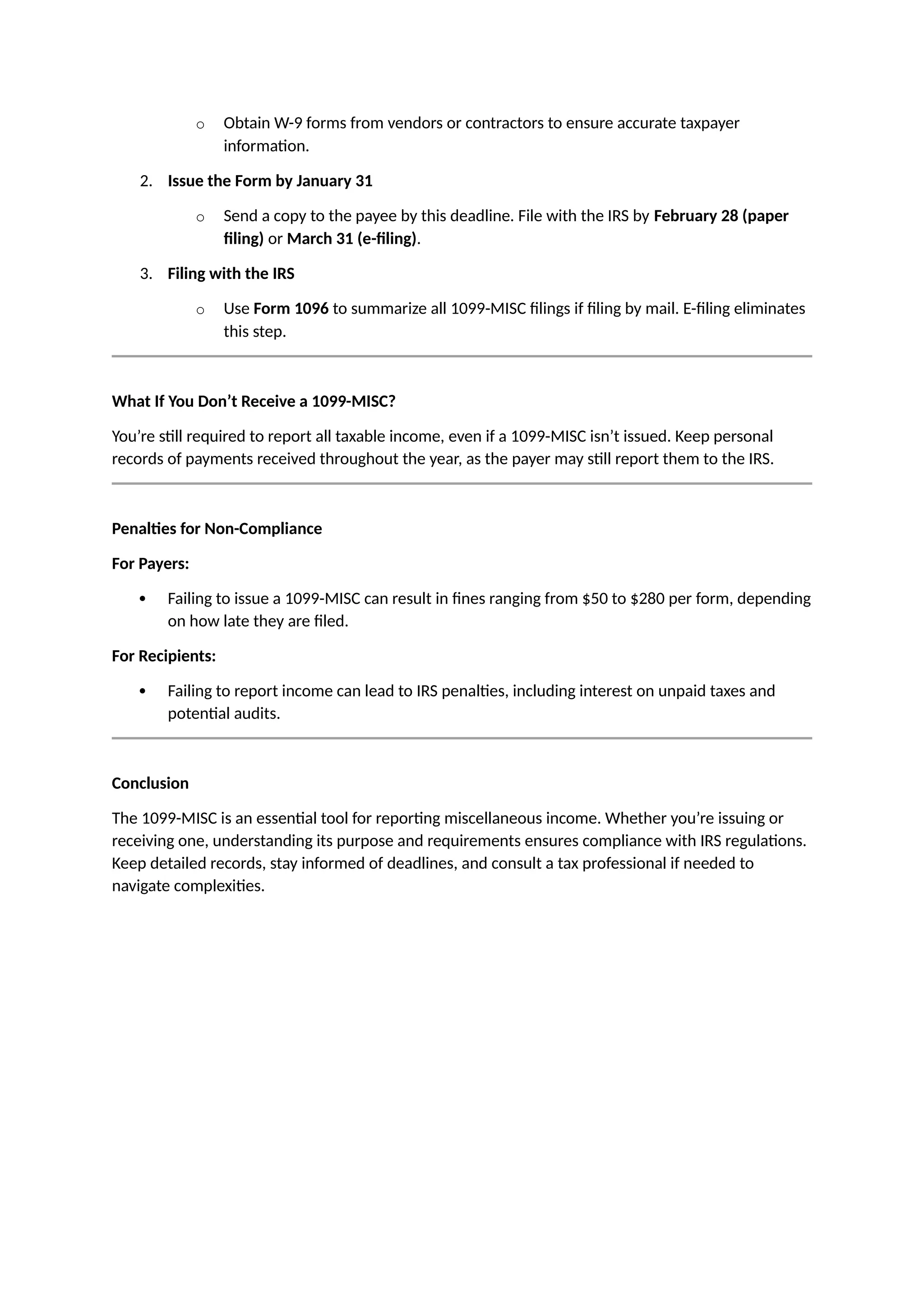
o Obtain W-9 forms from vendors or contractors to ensure accurate taxpayer
information.
2. Issue the Form by January 31
o Send a copy to the payee by this deadline. File with the IRS by February 28 (paper
filing) or March 31 (e-filing).
3. Filing with the IRS
o Use Form 1096 to summarize all 1099-MISC filings if filing by mail. E-filing eliminates
this step.
What If You Don’t Receive a 1099-MISC?
You’re still required to report all taxable income, even if a 1099-MISC isn’t issued. Keep personal
records of payments received throughout the year, as the payer may still report them to the IRS.
Penalties for Non-Compliance
For Payers:
 Failing to issue a 1099-MISC can result in fines ranging from $50 to $280 per form, depending
on how late they are filed.
For Recipients:
 Failing to report income can lead to IRS penalties, including interest on unpaid taxes and
potential audits.
Conclusion
The 1099-MISC is an essential tool for reporting miscellaneous income. Whether you’re issuing or
receiving one, understanding its purpose and requirements ensures compliance with IRS regulations.
Keep detailed records, stay informed of deadlines, and consult a tax professional if needed to
navigate complexities.

Generate your 1099 forms at stubscreator.com

  • 1.
    Understanding the 1099-MISCForm: Miscellaneous Income The 1099-MISC is a tax form used in the United States to report miscellaneous income. Businesses use this form to inform the IRS and payees about payments made that don’t fall under traditional employee wages or contractor earnings (which are now reported on the 1099-NEC). If you’ve received a 1099-MISC or need to issue one, here’s a complete guide. What is a 1099-MISC Form? The 1099-MISC (Miscellaneous Income) form is issued to individuals or entities who received certain types of non-employee compensation. It covers a broad range of payments that do not involve direct employment relationships. Common Uses for 1099-MISC:  Rent payments (e.g., for office or equipment rentals).  Prizes or awards won in contests.  Royalties exceeding $10.  Payments to attorneys or legal settlements.  Medical and health care payments.  Other miscellaneous earnings. Who Needs a 1099-MISC Form? Businesses or payers must issue a 1099-MISC form if:  Payments total $600 or more in a calendar year for most categories, or $10 or more for royalties.  The recipient is not an employee.  The recipient is a U.S. citizen, resident alien, or eligible non-citizen. Who Doesn’t Receive a 1099-MISC?  Corporations (except for legal or medical service providers).  Employees (these earnings are reported on a W-2).  Individuals paid via third-party platforms like PayPal (reported on a 1099-K). Key Fields on the 1099-MISC Form 1. Box 1: Rent o Reports rent paid for office space, machinery, or land. 2. Box 2: Royalties
  • 2.
    o Reports royaltypayments, such as earnings from book publishing or music licensing. 3. Box 3: Other Income o Includes awards, prizes, and other non-employment payments. 4. Box 4: Federal Income Tax Withheld o Reports any backup withholding deducted from payments. 5. Box 6: Medical and Health Care Payments o Reports payments to medical or health care providers. 6. Box 10: Gross Proceeds Paid to an Attorney o Reports total payments for legal services or settlements. 7. Box 15-17: State Income Reporting o Reports state taxes withheld, if applicable. What to Do If You Receive a 1099-MISC 1. Verify the Information o Ensure the payer's details, your name, address, and Taxpayer Identification Number (TIN) are correct. o Double-check the amounts reported match your records. 2. Report the Income on Your Taxes o Enter the income on your tax return in the appropriate section. o For most individuals, payments from Box 3 go on Form 1040, Schedule 1, and business-related income from Box 7 might require Schedule C. o Legal or settlement payments may have unique tax implications. 3. Include Deductions o If the income relates to a business, track and deduct relevant expenses to lower your taxable income. 4. Keep Records o Retain a copy of the 1099-MISC and related documents for at least seven years in case of an audit. Issuing a 1099-MISC If you’re a business required to issue a 1099-MISC: 1. Collect W-9 Forms
  • 3.
    o Obtain W-9forms from vendors or contractors to ensure accurate taxpayer information. 2. Issue the Form by January 31 o Send a copy to the payee by this deadline. File with the IRS by February 28 (paper filing) or March 31 (e-filing). 3. Filing with the IRS o Use Form 1096 to summarize all 1099-MISC filings if filing by mail. E-filing eliminates this step. What If You Don’t Receive a 1099-MISC? You’re still required to report all taxable income, even if a 1099-MISC isn’t issued. Keep personal records of payments received throughout the year, as the payer may still report them to the IRS. Penalties for Non-Compliance For Payers:  Failing to issue a 1099-MISC can result in fines ranging from $50 to $280 per form, depending on how late they are filed. For Recipients:  Failing to report income can lead to IRS penalties, including interest on unpaid taxes and potential audits. Conclusion The 1099-MISC is an essential tool for reporting miscellaneous income. Whether you’re issuing or receiving one, understanding its purpose and requirements ensures compliance with IRS regulations. Keep detailed records, stay informed of deadlines, and consult a tax professional if needed to navigate complexities.