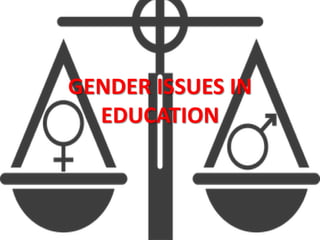
GENDER ISSUES IN
EDUCATION
GENDER
• Gender is a social construct that impacts
attitudes, roles and responsibilities and
behavior patterns of boys and girls, men and
women.
• Increasing attention has been given to the
importance of achieving gender equality in
education.
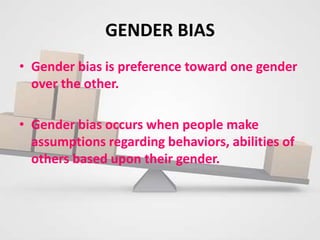
GENDER BIAS
• Gender bias is preference toward one gender
over the other.
• Gender bias occurs when people make
assumptions regarding behaviors, abilities of
others based upon their gender.
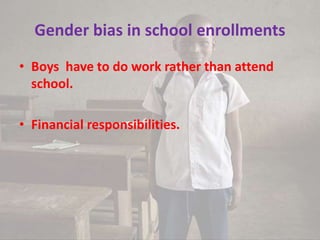
Gender bias in school enrollments
• Boys have to do work rather than attend
school.
• Financial responsibilities.
Gender bias in dropouts
• The social barriers standing in the way of girls
attending schools.
1) Poverty
2) Misconceptions
3) limited benefits in educating girls.
4) lack of women teachers.
5) Supportive facilities.
Social attitudes towards girls
education
• After marriage girls are part of another family.
so educating girls are not necessary.
• Two types of parental and social attitude.
1) Perfect altruistic
2) perfect capitalistic
Unequal access to education
• Literacy
• Schooling
• Violence against women
• Disabled girls
• school availability
LITERACY
• Female literacy rate is lower than male
literacy rate.
• compared to boys far fewer girls are enrolled
in the school and many of them are drop out.
• low level of education significantly affect the
health and nutritional status of women.
SCHOOLING
• In rural regions girls continue to be less
educated than boys.
• chief barriers to female education are
inadequate school facilities.
• Shortage of female teachers.
• gender bias in curriculum.
VIOLENCE AGAINST WOMEN
• sexual harassment and violence also
continue to be major factors preventing girls
education.
• sexual abuse
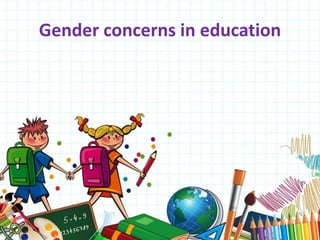
Gender concerns in education
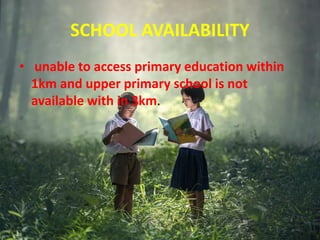
SCHOOL AVAILABILITY
• unable to access primary education within
1km and upper primary school is not
available with in 3km.
Text book and gender
• books attempt to mirror social realities.
• addresses contributions of men and women
in adequate manner.
• it reflect heterogeneous identities of gaps in
an inclusive manner.
Teaching and learning
• The methodology followed in delivering
content related to various domains of
knowledge not only promotes learning and
understanding of but also overall personality
of children.
HIDDEN CURRICULUM
• related to transmission of norms, values beliefs
existing social and cultural ethos of society.
• Activities
1) Use of language
2) body language
3) touch
4) eye contact
5) gestures
6) addressing physical and emotional conflicts
CLASSROOM ORGANIZATION AND
MANAGEMENT
• promote healthy relationship between boys
and girls.
• equal participation
• the classroom culture should built in a
manner that interactions between boys and
girls reflect mutual respect.
• use visual aids like women working in fields
along with men.
CULTURAL ISSUES IN EDUCATION
• Issues refers to the conflicts,
misinterpretations that take place in the
classroom.
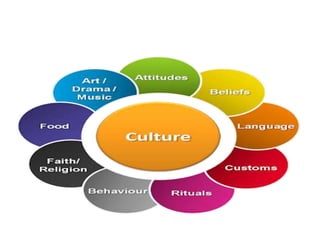
• Culture is a broad comprehensive concept
that includes all the way of being.
• several components - values , behavior
styles, language and dialects, non verbal
communications etc..
Individuals, groups, and the surrounding
environment are always changing.
• in every culture sub groups may form.
Subgroups can differ by any of the
components of culture ,including ethnicity,
language, class, religion and geography.
• All students are culturally diverse regardless of
their ethnicity, race or socio economic status.
• multicultural and multilingual classrooms have
become the norm in many educational settings
due to changing immigration patterns caused by
globalization.
• analyzing cultural issues can shed light on some
of the unconscious process that shape
individuals perception of reality as well as
patterns of interaction.
• The analysis of cultural issues may benefit
teachers as well as learners by raising awareness
of the hidden cultural assumptions and biases
that they bring to the class room.
• In order to educate the future generations of our
society effectively ,the education system must
be successful teaching all children to
communicate and interact with people from
different backgrounds and different abilities.
• Educators must find ways to offer an
excellent education to all students regardless
of their backgrounds.
• for culturally and linguistically diverse
students, issues of diversity, difference and
disability can be quite complex and
challenging for classroom teachers.
• Understanding the role that culture plays in the
classroom is essential to effective teaching,
learning and communicative interaction in
general.
• designing programs for diverse audience is not
an easy process. It involves linguistic translation
although language is important.
• more over programs must be designed to be
sustainable within the communities they seek to
involve.
Gender issues in education

Gender issues in education

  • 1.
  • 2.
    GENDER • Gender isa social construct that impacts attitudes, roles and responsibilities and behavior patterns of boys and girls, men and women.
  • 3.
    • Increasing attentionhas been given to the importance of achieving gender equality in education.
  • 4.
    GENDER BIAS • Genderbias is preference toward one gender over the other. • Gender bias occurs when people make assumptions regarding behaviors, abilities of others based upon their gender.
  • 5.
    Gender bias inschool enrollments • Boys have to do work rather than attend school. • Financial responsibilities.
  • 6.
    Gender bias indropouts • The social barriers standing in the way of girls attending schools. 1) Poverty 2) Misconceptions 3) limited benefits in educating girls. 4) lack of women teachers. 5) Supportive facilities.
  • 7.
    Social attitudes towardsgirls education • After marriage girls are part of another family. so educating girls are not necessary. • Two types of parental and social attitude. 1) Perfect altruistic 2) perfect capitalistic
  • 8.
    Unequal access toeducation • Literacy • Schooling • Violence against women • Disabled girls • school availability
  • 9.
    LITERACY • Female literacyrate is lower than male literacy rate. • compared to boys far fewer girls are enrolled in the school and many of them are drop out. • low level of education significantly affect the health and nutritional status of women.
  • 10.
    SCHOOLING • In ruralregions girls continue to be less educated than boys. • chief barriers to female education are inadequate school facilities. • Shortage of female teachers. • gender bias in curriculum.
  • 11.
    VIOLENCE AGAINST WOMEN •sexual harassment and violence also continue to be major factors preventing girls education. • sexual abuse
  • 12.
  • 13.
    SCHOOL AVAILABILITY • unableto access primary education within 1km and upper primary school is not available with in 3km.
  • 14.
    Text book andgender • books attempt to mirror social realities. • addresses contributions of men and women in adequate manner. • it reflect heterogeneous identities of gaps in an inclusive manner.
  • 15.
    Teaching and learning •The methodology followed in delivering content related to various domains of knowledge not only promotes learning and understanding of but also overall personality of children.
  • 16.
    HIDDEN CURRICULUM • relatedto transmission of norms, values beliefs existing social and cultural ethos of society. • Activities 1) Use of language 2) body language 3) touch 4) eye contact 5) gestures 6) addressing physical and emotional conflicts
  • 17.
    CLASSROOM ORGANIZATION AND MANAGEMENT •promote healthy relationship between boys and girls. • equal participation • the classroom culture should built in a manner that interactions between boys and girls reflect mutual respect. • use visual aids like women working in fields along with men.
  • 19.
    CULTURAL ISSUES INEDUCATION • Issues refers to the conflicts, misinterpretations that take place in the classroom. • Culture is a broad comprehensive concept that includes all the way of being. • several components - values , behavior styles, language and dialects, non verbal communications etc..
  • 20.
    Individuals, groups, andthe surrounding environment are always changing. • in every culture sub groups may form. Subgroups can differ by any of the components of culture ,including ethnicity, language, class, religion and geography.
  • 21.
    • All studentsare culturally diverse regardless of their ethnicity, race or socio economic status. • multicultural and multilingual classrooms have become the norm in many educational settings due to changing immigration patterns caused by globalization. • analyzing cultural issues can shed light on some of the unconscious process that shape individuals perception of reality as well as patterns of interaction.
  • 22.
    • The analysisof cultural issues may benefit teachers as well as learners by raising awareness of the hidden cultural assumptions and biases that they bring to the class room. • In order to educate the future generations of our society effectively ,the education system must be successful teaching all children to communicate and interact with people from different backgrounds and different abilities.
  • 23.
    • Educators mustfind ways to offer an excellent education to all students regardless of their backgrounds. • for culturally and linguistically diverse students, issues of diversity, difference and disability can be quite complex and challenging for classroom teachers.
  • 24.
    • Understanding therole that culture plays in the classroom is essential to effective teaching, learning and communicative interaction in general. • designing programs for diverse audience is not an easy process. It involves linguistic translation although language is important. • more over programs must be designed to be sustainable within the communities they seek to involve.