Gender Inputs in School
Curricula: Shaping Future
Generations
Defining "Gender Inputs":
Beyond Biology
Societal Expectations
Learned roles, behaviors, and
attributes.
Identity & Expression
How individuals perceive and present
themselves.
Cultural Norms
Influences on interactions and opportunities.
Gender inputs encompass far more than just biological sex. They involve the subtle and
overt ways societal expectations, cultural norms, and individual identities shape the
educational experience, influencing everything from teaching materials to classroom
dynamics.
The Subtlety of Bias: Hidden Messages in Textbooks &
Materials
Stereotypical
Representation
Traditional gender roles often prevail,
limiting children's perceptions of
possibilities.
Language & Imagery
Unconscious biases can be embedded
in wording, pronouns, and visual cues,
reinforcing outdated notions.
Historical Narratives
Contributions of diverse genders may be overlooked or marginalized, presenting an
incomplete view of history.
Textbooks and educational materials are powerful tools, but they can inadvertently perpetuate gender biases. Recognizing these hidden messages is the first step
towards creating truly inclusive content.
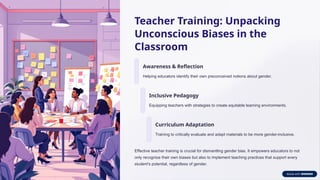
Teacher Training: Unpacking
Unconscious Biases in the
Classroom
Awareness & Reflection
Helping educators identify their own preconceived notions about gender.
Inclusive Pedagogy
Equipping teachers with strategies to create equitable learning environments.
Curriculum Adaptation
Training to critically evaluate and adapt materials to be more gender-inclusive.
Effective teacher training is crucial for dismantling gender bias. It empowers educators to not
only recognize their own biases but also to implement teaching practices that support every
student's potential, regardless of gender.
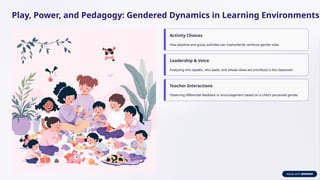
Play, Power, and Pedagogy: Gendered Dynamics in Learning Environments
Activity Choices
How playtime and group activities can inadvertently reinforce gender roles.
Leadership & Voice
Analyzing who speaks, who leads, and whose ideas are prioritized in the classroom.
Teacher Interactions
Observing differential feedback or encouragement based on a child's perceived gender.
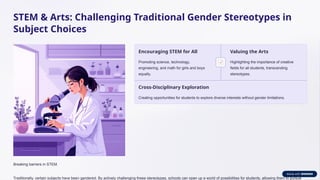
STEM & Arts: Challenging Traditional Gender Stereotypes in
Subject Choices
Breaking barriers in STEM.
Encouraging STEM for All
Promoting science, technology,
engineering, and math for girls and boys
equally.
Valuing the Arts
Highlighting the importance of creative
fields for all students, transcending
stereotypes.
Cross-Disciplinary Exploration
Creating opportunities for students to explore diverse interests without gender limitations.
Traditionally, certain subjects have been gendered. By actively challenging these stereotypes, schools can open up a world of possibilities for students, allowing them to pursue
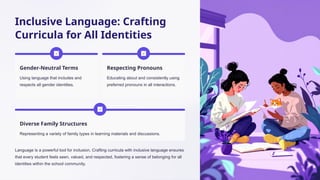
Inclusive Language: Crafting
Curricula for All Identities
Gender-Neutral Terms
Using language that includes and
respects all gender identities.
Respecting Pronouns
Educating about and consistently using
preferred pronouns in all interactions.
Diverse Family Structures
Representing a variety of family types in learning materials and discussions.
Language is a powerful tool for inclusion. Crafting curricula with inclusive language ensures
that every student feels seen, valued, and respected, fostering a sense of belonging for all
identities within the school community.
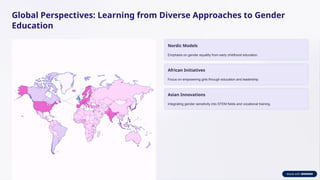
Global Perspectives: Learning from Diverse Approaches to Gender
Education
Nordic Models
Emphasis on gender equality from early childhood education.
African Initiatives
Focus on empowering girls through education and leadership.
Asian Innovations
Integrating gender sensitivity into STEM fields and vocational training.
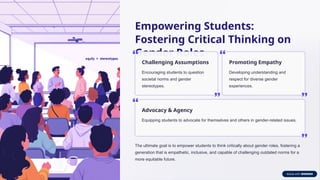
Empowering Students:
Fostering Critical Thinking on
Gender Roles
Challenging Assumptions
Encouraging students to question
societal norms and gender
stereotypes.
Promoting Empathy
Developing understanding and
respect for diverse gender
experiences.
Advocacy & Agency
Equipping students to advocate for themselves and others in gender-related issues.
The ultimate goal is to empower students to think critically about gender roles, fostering a
generation that is empathetic, inclusive, and capable of challenging outdated norms for a
more equitable future.
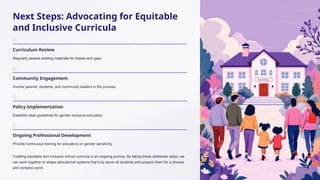
Next Steps: Advocating for Equitable
and Inclusive Curricula
Curriculum Review
Regularly assess existing materials for biases and gaps.
Community Engagement
Involve parents, students, and community leaders in the process.
Policy Implementation
Establish clear guidelines for gender-inclusive education.
Ongoing Professional Development
Provide continuous training for educators on gender sensitivity.
Creating equitable and inclusive school curricula is an ongoing journey. By taking these deliberate steps, we
can work together to shape educational systems that truly serve all students and prepare them for a diverse
and complex world.

Gender-Inputs-in-School-Curricula-Shaping-Future-Generations.pptx

  • 1.
    Gender Inputs inSchool Curricula: Shaping Future Generations
  • 2.
    Defining "Gender Inputs": BeyondBiology Societal Expectations Learned roles, behaviors, and attributes. Identity & Expression How individuals perceive and present themselves. Cultural Norms Influences on interactions and opportunities. Gender inputs encompass far more than just biological sex. They involve the subtle and overt ways societal expectations, cultural norms, and individual identities shape the educational experience, influencing everything from teaching materials to classroom dynamics.
  • 3.
    The Subtlety ofBias: Hidden Messages in Textbooks & Materials Stereotypical Representation Traditional gender roles often prevail, limiting children's perceptions of possibilities. Language & Imagery Unconscious biases can be embedded in wording, pronouns, and visual cues, reinforcing outdated notions. Historical Narratives Contributions of diverse genders may be overlooked or marginalized, presenting an incomplete view of history. Textbooks and educational materials are powerful tools, but they can inadvertently perpetuate gender biases. Recognizing these hidden messages is the first step towards creating truly inclusive content.
  • 4.
    Teacher Training: Unpacking UnconsciousBiases in the Classroom Awareness & Reflection Helping educators identify their own preconceived notions about gender. Inclusive Pedagogy Equipping teachers with strategies to create equitable learning environments. Curriculum Adaptation Training to critically evaluate and adapt materials to be more gender-inclusive. Effective teacher training is crucial for dismantling gender bias. It empowers educators to not only recognize their own biases but also to implement teaching practices that support every student's potential, regardless of gender.
  • 5.
    Play, Power, andPedagogy: Gendered Dynamics in Learning Environments Activity Choices How playtime and group activities can inadvertently reinforce gender roles. Leadership & Voice Analyzing who speaks, who leads, and whose ideas are prioritized in the classroom. Teacher Interactions Observing differential feedback or encouragement based on a child's perceived gender.
  • 6.
    STEM & Arts:Challenging Traditional Gender Stereotypes in Subject Choices Breaking barriers in STEM. Encouraging STEM for All Promoting science, technology, engineering, and math for girls and boys equally. Valuing the Arts Highlighting the importance of creative fields for all students, transcending stereotypes. Cross-Disciplinary Exploration Creating opportunities for students to explore diverse interests without gender limitations. Traditionally, certain subjects have been gendered. By actively challenging these stereotypes, schools can open up a world of possibilities for students, allowing them to pursue
  • 7.
    Inclusive Language: Crafting Curriculafor All Identities Gender-Neutral Terms Using language that includes and respects all gender identities. Respecting Pronouns Educating about and consistently using preferred pronouns in all interactions. Diverse Family Structures Representing a variety of family types in learning materials and discussions. Language is a powerful tool for inclusion. Crafting curricula with inclusive language ensures that every student feels seen, valued, and respected, fostering a sense of belonging for all identities within the school community.
  • 8.
    Global Perspectives: Learningfrom Diverse Approaches to Gender Education Nordic Models Emphasis on gender equality from early childhood education. African Initiatives Focus on empowering girls through education and leadership. Asian Innovations Integrating gender sensitivity into STEM fields and vocational training.
  • 9.
    Empowering Students: Fostering CriticalThinking on Gender Roles Challenging Assumptions Encouraging students to question societal norms and gender stereotypes. Promoting Empathy Developing understanding and respect for diverse gender experiences. Advocacy & Agency Equipping students to advocate for themselves and others in gender-related issues. The ultimate goal is to empower students to think critically about gender roles, fostering a generation that is empathetic, inclusive, and capable of challenging outdated norms for a more equitable future.
  • 10.
    Next Steps: Advocatingfor Equitable and Inclusive Curricula Curriculum Review Regularly assess existing materials for biases and gaps. Community Engagement Involve parents, students, and community leaders in the process. Policy Implementation Establish clear guidelines for gender-inclusive education. Ongoing Professional Development Provide continuous training for educators on gender sensitivity. Creating equitable and inclusive school curricula is an ongoing journey. By taking these deliberate steps, we can work together to shape educational systems that truly serve all students and prepare them for a diverse and complex world.