HARANAHALLI RAMASWAMY INSTITUTE OF HIGHER EDUCATION, HASSAN
PRESENTATION ON – ‘ BRICS and BRICS Bank ’
PRESENTED BY,
S U Aditya Gowda
1st
year MBA
HRIHE, Hassan
PRESENTED TO,
Mrs. Sanhitha S N
Assistant Professor
Department of MBA
HRIHE, Hassan
INTRODUCTION TO BRICS
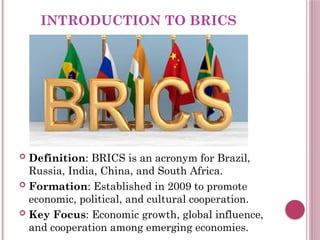
 Definition: BRICS is an acronym for Brazil,
Russia, India, China, and South Africa.
 Formation: Established in 2009 to promote
economic, political, and cultural cooperation.
 Key Focus: Economic growth, global influence,
and cooperation among emerging economies.
BRICS COUNTRIES OVERVIEW
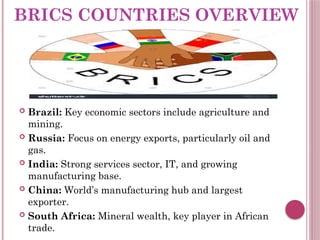
 Brazil: Key economic sectors include agriculture and
mining.
 Russia: Focus on energy exports, particularly oil and
gas.
 India: Strong services sector, IT, and growing
manufacturing base.
 China: World’s manufacturing hub and largest
exporter.
 South Africa: Mineral wealth, key player in African
trade.
BRICS’ GLOBAL ECONOMIC
ROLE
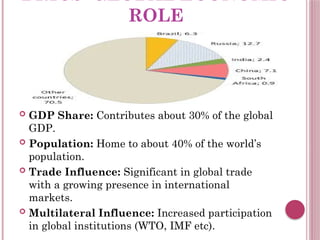
 GDP Share: Contributes about 30% of the global
GDP.
 Population: Home to about 40% of the world’s
population.
 Trade Influence: Significant in global trade
with a growing presence in international
markets.
 Multilateral Influence: Increased participation
in global institutions (WTO, IMF etc).
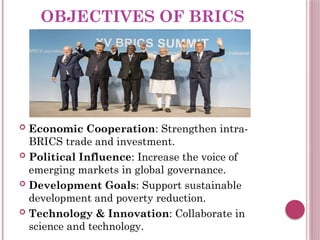
OBJECTIVES OF BRICS
 Economic Cooperation: Strengthen intra-
BRICS trade and investment.
 Political Influence: Increase the voice of
emerging markets in global governance.
 Development Goals: Support sustainable
development and poverty reduction.
 Technology & Innovation: Collaborate in
science and technology.
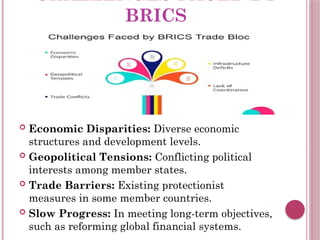
CHALLENGES FACED BY
BRICS
 Economic Disparities: Diverse economic
structures and development levels.
 Geopolitical Tensions: Conflicting political
interests among member states.
 Trade Barriers: Existing protectionist
measures in some member countries.
 Slow Progress: In meeting long-term objectives,
such as reforming global financial systems.
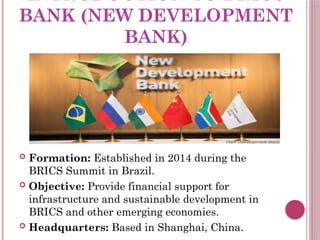
INTRODUCTION TO BRICS
BANK (NEW DEVELOPMENT
BANK)
 Formation: Established in 2014 during the
BRICS Summit in Brazil.
 Objective: Provide financial support for
infrastructure and sustainable development in
BRICS and other emerging economies.
 Headquarters: Based in Shanghai, China.
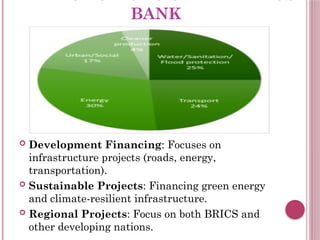
KEY FUNCTIONS OF THE BRICS
BANK
 Development Financing: Focuses on
infrastructure projects (roads, energy,
transportation).
 Sustainable Projects: Financing green energy
and climate-resilient infrastructure.
 Regional Projects: Focus on both BRICS and
other developing nations.
BRICS BANK AND GLOBAL FINANCIAL
SYSTEM
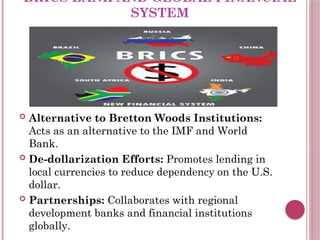
 Alternative to Bretton Woods Institutions:
Acts as an alternative to the IMF and World
Bank.
 De-dollarization Efforts: Promotes lending in
local currencies to reduce dependency on the U.S.
dollar.
 Partnerships: Collaborates with regional
development banks and financial institutions
globally.
IMPACT OF BRICS BANK ON GLOBAL
BUSINESS ENVIRONMENT
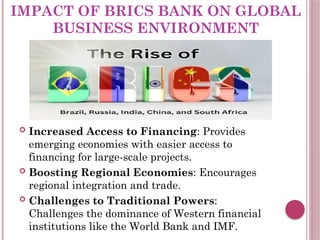
 Increased Access to Financing: Provides
emerging economies with easier access to
financing for large-scale projects.
 Boosting Regional Economies: Encourages
regional integration and trade.
 Challenges to Traditional Powers:
Challenges the dominance of Western financial
institutions like the World Bank and IMF.
BRICS IN THE FUTURE OF GLOBAL
BUSINESS
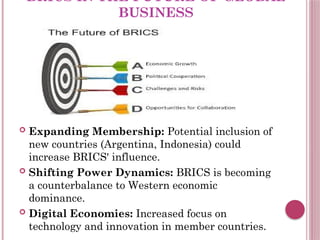
 Expanding Membership: Potential inclusion of
new countries (Argentina, Indonesia) could
increase BRICS' influence.
 Shifting Power Dynamics: BRICS is becoming
a counterbalance to Western economic
dominance.
 Digital Economies: Increased focus on
technology and innovation in member countries.
CONCLUSION
 BRICS Significance: A major force in the global
economy, challenging traditional power
structures.
 BRICS Bank Role: Facilitating infrastructure
development and promoting sustainable growth.
 Future Prospects: BRICS is likely to continue
expanding its influence in the global business
environment.
THANK YOU

GBE BRICS Aditya.pptx GBE BRICS Aditya.pptx

  • 1.
    HARANAHALLI RAMASWAMY INSTITUTEOF HIGHER EDUCATION, HASSAN PRESENTATION ON – ‘ BRICS and BRICS Bank ’ PRESENTED BY, S U Aditya Gowda 1st year MBA HRIHE, Hassan PRESENTED TO, Mrs. Sanhitha S N Assistant Professor Department of MBA HRIHE, Hassan
  • 2.
    INTRODUCTION TO BRICS Definition: BRICS is an acronym for Brazil, Russia, India, China, and South Africa.  Formation: Established in 2009 to promote economic, political, and cultural cooperation.  Key Focus: Economic growth, global influence, and cooperation among emerging economies.
  • 3.
    BRICS COUNTRIES OVERVIEW Brazil: Key economic sectors include agriculture and mining.  Russia: Focus on energy exports, particularly oil and gas.  India: Strong services sector, IT, and growing manufacturing base.  China: World’s manufacturing hub and largest exporter.  South Africa: Mineral wealth, key player in African trade.
  • 4.
    BRICS’ GLOBAL ECONOMIC ROLE GDP Share: Contributes about 30% of the global GDP.  Population: Home to about 40% of the world’s population.  Trade Influence: Significant in global trade with a growing presence in international markets.  Multilateral Influence: Increased participation in global institutions (WTO, IMF etc).
  • 5.
    OBJECTIVES OF BRICS Economic Cooperation: Strengthen intra- BRICS trade and investment.  Political Influence: Increase the voice of emerging markets in global governance.  Development Goals: Support sustainable development and poverty reduction.  Technology & Innovation: Collaborate in science and technology.
  • 6.
    CHALLENGES FACED BY BRICS Economic Disparities: Diverse economic structures and development levels.  Geopolitical Tensions: Conflicting political interests among member states.  Trade Barriers: Existing protectionist measures in some member countries.  Slow Progress: In meeting long-term objectives, such as reforming global financial systems.
  • 7.
    INTRODUCTION TO BRICS BANK(NEW DEVELOPMENT BANK)  Formation: Established in 2014 during the BRICS Summit in Brazil.  Objective: Provide financial support for infrastructure and sustainable development in BRICS and other emerging economies.  Headquarters: Based in Shanghai, China.
  • 8.
    KEY FUNCTIONS OFTHE BRICS BANK  Development Financing: Focuses on infrastructure projects (roads, energy, transportation).  Sustainable Projects: Financing green energy and climate-resilient infrastructure.  Regional Projects: Focus on both BRICS and other developing nations.
  • 9.
    BRICS BANK ANDGLOBAL FINANCIAL SYSTEM  Alternative to Bretton Woods Institutions: Acts as an alternative to the IMF and World Bank.  De-dollarization Efforts: Promotes lending in local currencies to reduce dependency on the U.S. dollar.  Partnerships: Collaborates with regional development banks and financial institutions globally.
  • 10.
    IMPACT OF BRICSBANK ON GLOBAL BUSINESS ENVIRONMENT  Increased Access to Financing: Provides emerging economies with easier access to financing for large-scale projects.  Boosting Regional Economies: Encourages regional integration and trade.  Challenges to Traditional Powers: Challenges the dominance of Western financial institutions like the World Bank and IMF.
  • 11.
    BRICS IN THEFUTURE OF GLOBAL BUSINESS  Expanding Membership: Potential inclusion of new countries (Argentina, Indonesia) could increase BRICS' influence.  Shifting Power Dynamics: BRICS is becoming a counterbalance to Western economic dominance.  Digital Economies: Increased focus on technology and innovation in member countries.
  • 12.
    CONCLUSION  BRICS Significance:A major force in the global economy, challenging traditional power structures.  BRICS Bank Role: Facilitating infrastructure development and promoting sustainable growth.  Future Prospects: BRICS is likely to continue expanding its influence in the global business environment.
  • 13.