



Future Role of the Architect
Reports of our extinction have been greatly exaggerated
© The App Business
Riccardo M Bennett-Lovsey
ITARC London, November 2016
A little about me
Senior Architect at “The App Business”
Began my career as a doctor of bioinformatics
Enterprise Fellow with the RSE
Student of the IDesign school of architecture
Co-organiser of the “Software Architect & Mentorship” Meetup
Contact via www.theappbusiness.com
© The App Business
Overview
The Role of the Architect
The Past
The Present
The Future
© The App Business
But first…
Warning:
Completely subjective
© The App Business
The Role of the Architect
5© The App Business
© The App Business
The Role of the Architect
6
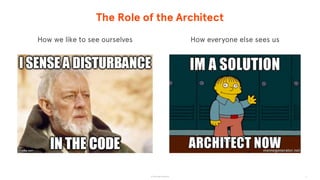
How we like to see ourselves How everyone else sees us
The Role of the Architect
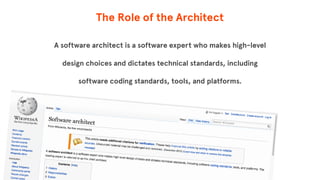
A software architect is a software expert who makes high-level
design choices and dictates technical standards, including
software coding standards, tools, and platforms.
© The App Business
© The App Business
The Role of the Architect
8
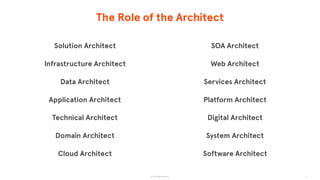
Solution Architect
Infrastructure Architect
Data Architect
Application Architect
Technical Architect
Domain Architect
Cloud Architect
SOA Architect
Web Architect
Services Architect
Platform Architect
Digital Architect
System Architect
Software Architect
The Role of the Architect
“… can be summarised by any one of a collection of
aphorisms, which (while equally nebulous) are still long
enough to use in a job specification”
© The App Business
- Human Resources
The problem is…
We love to ruminate over what we are
Rarely think about what it is we actually do?
© The App Business
© The App Business
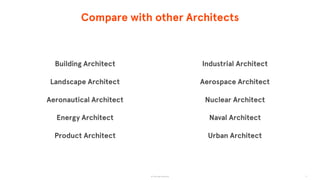
Compare with other Architects
11
Building Architect
Landscape Architect
Aeronautical Architect
Energy Architect
Product Architect
Industrial Architect
Aerospace Architect
Nuclear Architect
Naval Architect
Urban Architect
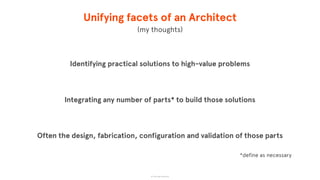
Unifying facets of an Architect
Identifying practical solutions to high-value problems
Integrating any number of parts* to build those solutions
Often the design, fabrication, configuration and validation of those parts
© The App Business
*define as necessary
(my thoughts)
© The App Business
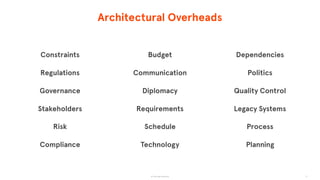
Architectural Overheads
13
Constraints
Regulations
Governance
Stakeholders
Risk
Compliance
Dependencies
Politics
Quality Control
Legacy Systems
Process
Planning
Budget
Communication
Diplomacy
Requirements
Schedule
Technology
The Past
14© The App Business
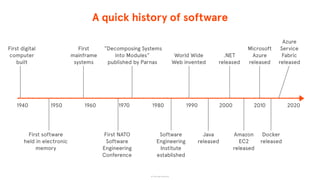
A quick history of software
© The App Business
First digital
computer
built
First software
held in electronic
memory
“Decomposing Systems
into Modules”
published by Parnas
Software
Engineering
Institute
established
First
mainframe
systems
First NATO
Software
Engineering
Conference
World Wide
Web invented
1940 1950 20201960 1970 1980 1990 2000 2010
Amazon
EC2
released
Java
released
.NET
released
Microsoft
Azure
released
Docker
released
Azure
Service
Fabric
released
Where were the Architects?
For as long people have built software
there have been Architects
© The App Business
(whether they were called that or not)
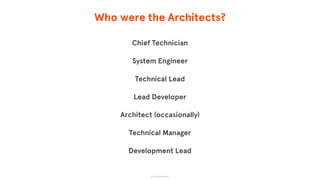
Who were the Architects?
Chief Technician
System Engineer
Technical Lead
Lead Developer
Architect (occasionally)
Technical Manager
Development Lead
© The App Business
© The App Business
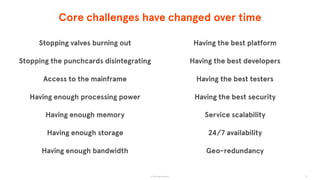
Core challenges have changed over time
18
Stopping valves burning out
Stopping the punchcards disintegrating
Access to the mainframe
Having enough processing power
Having enough memory
Having enough storage
Having enough bandwidth
Having the best platform
Having the best developers
Having the best testers
Having the best security
Service scalability
24/7 availability
Geo-redundancy
Software Crisis
19© The App Business
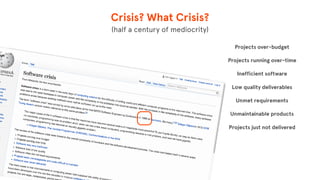
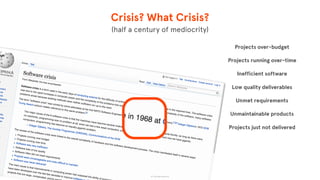
Crisis? What Crisis?
Projects over-budget
Projects running over-time
Inefficient software
Low quality deliverables
Unmet requirements
Unmaintainable products
Projects just not delivered
© The App Business
(half a century of mediocrity)
Crisis? What Crisis?
Projects over-budget
Projects running over-time
Inefficient software
Low quality deliverables
Unmet requirements
Unmaintainable products
Projects just not delivered
© The App Business
(half a century of mediocrity)
Crisis? What Crisis?
Why is there no “Electronics Crisis”?
… “Aeronautical Crisis”?
… “Construction Crisis”?
… “Manufacturing Crisis”?
… “Mining Crisis”?
… “Transport Crisis”?
… “Agricultural Crisis”?
© The App Business
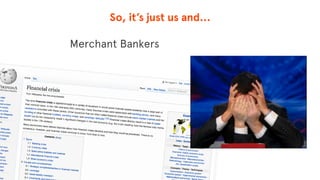
So, it’s just us and…
© The App Business
Merchant Bankers
What went wrong?
24© The App Business
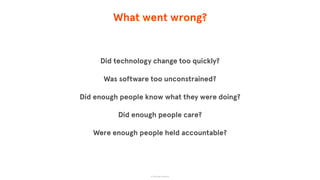
What went wrong?
Did technology change too quickly?
Was software too unconstrained?
Did enough people know what they were doing?
Did enough people care?
Were enough people held accountable?
© The App Business
What went wrong?
Disciplines that do not hold their practitioners
to account are destined to stagnate or worse
© The App Business
The Present
27© The App Business
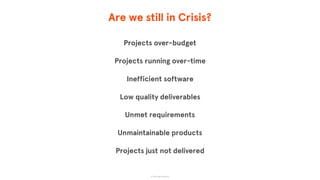
Are we still in Crisis?
Projects over-budget
Projects running over-time
Inefficient software
Low quality deliverables
Unmet requirements
Unmaintainable products
Projects just not delivered
© The App Business
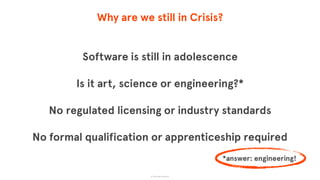
Why are we still in Crisis?
Software is still in adolescence
Is it art, science or engineering?*
No regulated licensing or industry standards
No formal qualification or apprenticeship required
© The App Business
*answer: engineering!
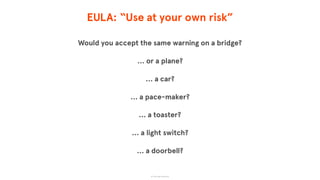
EULA: “Use at your own risk”
Would you accept the same warning on a bridge?
… or a plane?
… a car?
… a pace-maker?
… a toaster?
… a light switch?
… a doorbell?
© The App Business
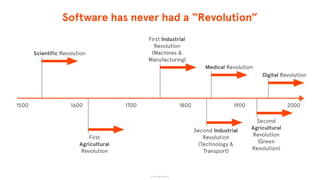
Software has never had a “Revolution”
© The App Business
1500 1600 20001700 1800 1900
Scientific Revolution
First
Agricultural
Revolution
First Industrial
Revolution
(Machines &
Manufacturing)
Second Industrial
Revolution
(Technology &
Transport)
Medical Revolution
Second
Agricultural
Revolution
(Green
Revolution)
Digital Revolution
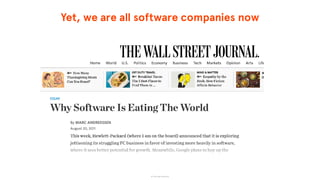
Yet, we are all software companies now
© The App Business
Who should hold themselves accountable?
Answer: we should
© The App Business
(because no one else will)
We must drive the change
34© The App Business
We must drive the change
Set an example to the newbies
Become the standard-bearers
Take responsibility for our industry
© The App Business
We must drive the change
… otherwise, why else are we here?
© The App Business
The Future
37© The App Business
Remaining relevant
“Revolution” begets industrialisation
Industrialisation begets automation
Automation begets redundancy
© The App Business
What else must we do?
What we always do:
Adapt or perish
© The App Business
© The App Business
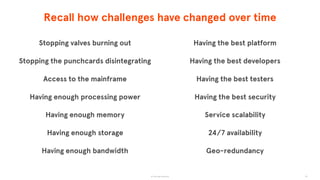
Recall how challenges have changed over time
40
Stopping valves burning out
Stopping the punchcards disintegrating
Access to the mainframe
Having enough processing power
Having enough memory
Having enough storage
Having enough bandwidth
Having the best platform
Having the best developers
Having the best testers
Having the best security
Service scalability
24/7 availability
Geo-redundancy
Recall how challenges have changed over time
Eventually technology ceases to be the limitation
© The App Business
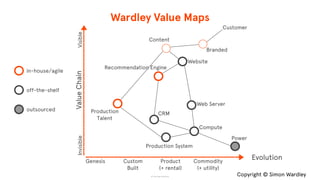
Wardley Value Maps
© The App Business
Genesis
ValueChainInvisibleVisible
Product
(+ rental)
Custom
Built
Commodity
(+ utility)
Evolution
Power
Compute
Production System
CRMProduction
Talent
Web Server
Website
Branded
Content
Customer
Copyright © Simon Wardley
1
Recommendation Engine
in-house/agile
off-the-shelf
outsourced
1
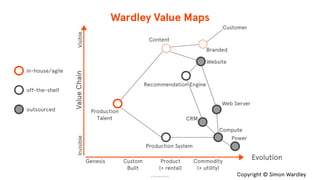
Wardley Value Maps
© The App Business
Genesis
ValueChainInvisibleVisible
Product
(+ rental)
Custom
Built
Commodity
(+ utility)
Power
Compute
Production System
CRM
Production
Talent
Web Server
Website
Branded
Content
Customer
Copyright © Simon Wardley
Evolution
Recommendation Engine
in-house/agile
off-the-shelf
outsourced
© The App Business
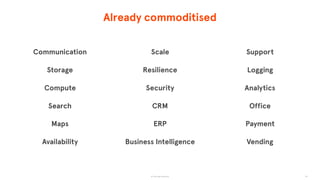
Already commoditised
44
Communication
Storage
Compute
Search
Maps
Availability
Support
Logging
Analytics
Office
Payment
Vending
Scale
Resilience
Security
CRM
ERP
Business Intelligence
Already commoditised
© The App Business
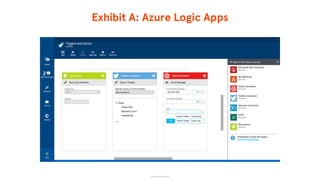
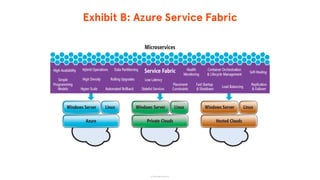
Even coding is becoming commoditised
Exhibit A: Azure Logic Apps
© The App Business
Exhibit B: Azure Service Fabric
© The App Business
What does all this mean for us?
48© The App Business
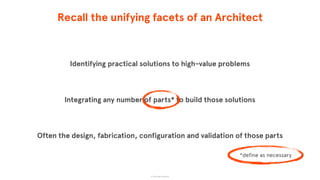
Recall the unifying facets of an Architect
Identifying practical solutions to high-value problems
Integrating any number of parts* to build those solutions
Often the design, fabrication, configuration and validation of those parts
© The App Business
*define as necessary
© The App Business
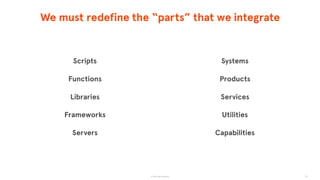
We must redefine the “parts” that we integrate
50
Scripts
Functions
Libraries
Frameworks
Servers
Systems
Products
Services
Utilities
Capabilities
We must redefine the “parts” that we integrate
Things will always need integrating
© The App Business
Look ahead and drive innovation
Move beyond just technology
To realms of business and enterprise
Thinking in terms of “capabilities”
© The App Business
Opportunities are coming faster than ever
© The App Business
Never been a better time
The world needs Architects more than ever
© The App Business
© The App Business
Thank You
© The App Business

Future Role of the Architect

  • 1.
    Future Role ofthe Architect Reports of our extinction have been greatly exaggerated © The App Business Riccardo M Bennett-Lovsey ITARC London, November 2016
  • 2.
    A little aboutme Senior Architect at “The App Business” Began my career as a doctor of bioinformatics Enterprise Fellow with the RSE Student of the IDesign school of architecture Co-organiser of the “Software Architect & Mentorship” Meetup Contact via www.theappbusiness.com © The App Business
  • 3.
    Overview The Role ofthe Architect The Past The Present The Future © The App Business
  • 4.
  • 5.
    The Role ofthe Architect 5© The App Business
  • 6.
    © The AppBusiness The Role of the Architect 6 How we like to see ourselves How everyone else sees us
  • 7.
    The Role ofthe Architect A software architect is a software expert who makes high-level design choices and dictates technical standards, including software coding standards, tools, and platforms. © The App Business
  • 8.
    © The AppBusiness The Role of the Architect 8 Solution Architect Infrastructure Architect Data Architect Application Architect Technical Architect Domain Architect Cloud Architect SOA Architect Web Architect Services Architect Platform Architect Digital Architect System Architect Software Architect
  • 9.
    The Role ofthe Architect “… can be summarised by any one of a collection of aphorisms, which (while equally nebulous) are still long enough to use in a job specification” © The App Business - Human Resources
  • 10.
    The problem is… Welove to ruminate over what we are Rarely think about what it is we actually do? © The App Business
  • 11.
    © The AppBusiness Compare with other Architects 11 Building Architect Landscape Architect Aeronautical Architect Energy Architect Product Architect Industrial Architect Aerospace Architect Nuclear Architect Naval Architect Urban Architect
  • 12.
    Unifying facets ofan Architect Identifying practical solutions to high-value problems Integrating any number of parts* to build those solutions Often the design, fabrication, configuration and validation of those parts © The App Business *define as necessary (my thoughts)
  • 13.
    © The AppBusiness Architectural Overheads 13 Constraints Regulations Governance Stakeholders Risk Compliance Dependencies Politics Quality Control Legacy Systems Process Planning Budget Communication Diplomacy Requirements Schedule Technology
  • 14.
    The Past 14© TheApp Business
  • 15.
    A quick historyof software © The App Business First digital computer built First software held in electronic memory “Decomposing Systems into Modules” published by Parnas Software Engineering Institute established First mainframe systems First NATO Software Engineering Conference World Wide Web invented 1940 1950 20201960 1970 1980 1990 2000 2010 Amazon EC2 released Java released .NET released Microsoft Azure released Docker released Azure Service Fabric released
  • 16.
    Where were theArchitects? For as long people have built software there have been Architects © The App Business (whether they were called that or not)
  • 17.
    Who were theArchitects? Chief Technician System Engineer Technical Lead Lead Developer Architect (occasionally) Technical Manager Development Lead © The App Business
  • 18.
    © The AppBusiness Core challenges have changed over time 18 Stopping valves burning out Stopping the punchcards disintegrating Access to the mainframe Having enough processing power Having enough memory Having enough storage Having enough bandwidth Having the best platform Having the best developers Having the best testers Having the best security Service scalability 24/7 availability Geo-redundancy
  • 19.
  • 20.
    Crisis? What Crisis? Projectsover-budget Projects running over-time Inefficient software Low quality deliverables Unmet requirements Unmaintainable products Projects just not delivered © The App Business (half a century of mediocrity)
  • 21.
    Crisis? What Crisis? Projectsover-budget Projects running over-time Inefficient software Low quality deliverables Unmet requirements Unmaintainable products Projects just not delivered © The App Business (half a century of mediocrity)
  • 22.
    Crisis? What Crisis? Whyis there no “Electronics Crisis”? … “Aeronautical Crisis”? … “Construction Crisis”? … “Manufacturing Crisis”? … “Mining Crisis”? … “Transport Crisis”? … “Agricultural Crisis”? © The App Business
  • 23.
    So, it’s justus and… © The App Business Merchant Bankers
  • 24.
    What went wrong? 24©The App Business
  • 25.
    What went wrong? Didtechnology change too quickly? Was software too unconstrained? Did enough people know what they were doing? Did enough people care? Were enough people held accountable? © The App Business
  • 26.
    What went wrong? Disciplinesthat do not hold their practitioners to account are destined to stagnate or worse © The App Business
  • 27.
  • 28.
    Are we stillin Crisis? Projects over-budget Projects running over-time Inefficient software Low quality deliverables Unmet requirements Unmaintainable products Projects just not delivered © The App Business
  • 29.
    Why are westill in Crisis? Software is still in adolescence Is it art, science or engineering?* No regulated licensing or industry standards No formal qualification or apprenticeship required © The App Business *answer: engineering!
  • 30.
    EULA: “Use atyour own risk” Would you accept the same warning on a bridge? … or a plane? … a car? … a pace-maker? … a toaster? … a light switch? … a doorbell? © The App Business
  • 31.
    Software has neverhad a “Revolution” © The App Business 1500 1600 20001700 1800 1900 Scientific Revolution First Agricultural Revolution First Industrial Revolution (Machines & Manufacturing) Second Industrial Revolution (Technology & Transport) Medical Revolution Second Agricultural Revolution (Green Revolution) Digital Revolution
  • 32.
    Yet, we areall software companies now © The App Business
  • 33.
    Who should holdthemselves accountable? Answer: we should © The App Business (because no one else will)
  • 34.
    We must drivethe change 34© The App Business
  • 35.
    We must drivethe change Set an example to the newbies Become the standard-bearers Take responsibility for our industry © The App Business
  • 36.
    We must drivethe change … otherwise, why else are we here? © The App Business
  • 37.
    The Future 37© TheApp Business
  • 38.
    Remaining relevant “Revolution” begetsindustrialisation Industrialisation begets automation Automation begets redundancy © The App Business
  • 39.
    What else mustwe do? What we always do: Adapt or perish © The App Business
  • 40.
    © The AppBusiness Recall how challenges have changed over time 40 Stopping valves burning out Stopping the punchcards disintegrating Access to the mainframe Having enough processing power Having enough memory Having enough storage Having enough bandwidth Having the best platform Having the best developers Having the best testers Having the best security Service scalability 24/7 availability Geo-redundancy
  • 41.
    Recall how challengeshave changed over time Eventually technology ceases to be the limitation © The App Business
  • 42.
    Wardley Value Maps ©The App Business Genesis ValueChainInvisibleVisible Product (+ rental) Custom Built Commodity (+ utility) Evolution Power Compute Production System CRMProduction Talent Web Server Website Branded Content Customer Copyright © Simon Wardley 1 Recommendation Engine in-house/agile off-the-shelf outsourced
  • 43.
    1 Wardley Value Maps ©The App Business Genesis ValueChainInvisibleVisible Product (+ rental) Custom Built Commodity (+ utility) Power Compute Production System CRM Production Talent Web Server Website Branded Content Customer Copyright © Simon Wardley Evolution Recommendation Engine in-house/agile off-the-shelf outsourced
  • 44.
    © The AppBusiness Already commoditised 44 Communication Storage Compute Search Maps Availability Support Logging Analytics Office Payment Vending Scale Resilience Security CRM ERP Business Intelligence
  • 45.
    Already commoditised © TheApp Business Even coding is becoming commoditised
  • 46.
    Exhibit A: AzureLogic Apps © The App Business
  • 47.
    Exhibit B: AzureService Fabric © The App Business
  • 48.
    What does allthis mean for us? 48© The App Business
  • 49.
    Recall the unifyingfacets of an Architect Identifying practical solutions to high-value problems Integrating any number of parts* to build those solutions Often the design, fabrication, configuration and validation of those parts © The App Business *define as necessary
  • 50.
    © The AppBusiness We must redefine the “parts” that we integrate 50 Scripts Functions Libraries Frameworks Servers Systems Products Services Utilities Capabilities
  • 51.
    We must redefinethe “parts” that we integrate Things will always need integrating © The App Business
  • 52.
    Look ahead anddrive innovation Move beyond just technology To realms of business and enterprise Thinking in terms of “capabilities” © The App Business
  • 53.
    Opportunities are comingfaster than ever © The App Business
  • 54.
    Never been abetter time The world needs Architects more than ever © The App Business
  • 55.
    © The AppBusiness
  • 56.
    Thank You © TheApp Business