Department of Mechanical Engineering
And
Department Robotics and Artificial Intelligence
Sub: ELEMENTS OF MECHANICAL ENGINEERING [BEMEM203]
Seminar Presentation
Topic: Future of Automotive Engineering
Present By:
Name: PARTHA BHAT
USN: 1MV24ME017
Semester & Branch: II SEM –
Reviewer:
Name: Prof. Chandrasekhar B
Assistant Professor
Content or Index:
1. Introduction
2. Literature Review
3. Methodology
4. Results and discussion
5. Conclusions
6. References
1
Future of
Automotive
Engineerin
g
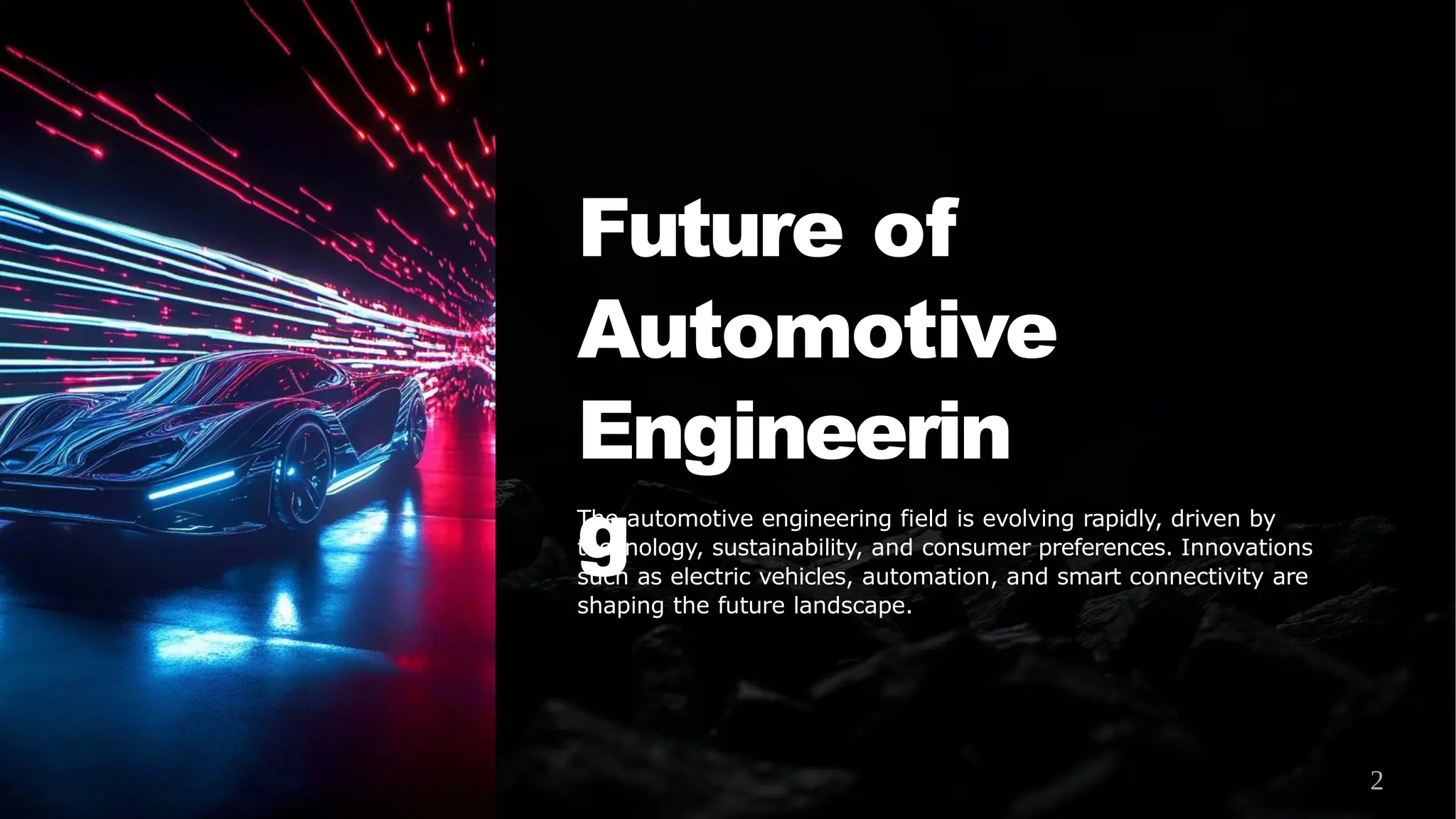
The automotive engineering field is evolving rapidly, driven by
technology, sustainability, and consumer preferences. Innovations
such as electric vehicles, automation, and smart connectivity are
shaping the future landscape.
2
Electric Vehicles
Revolution
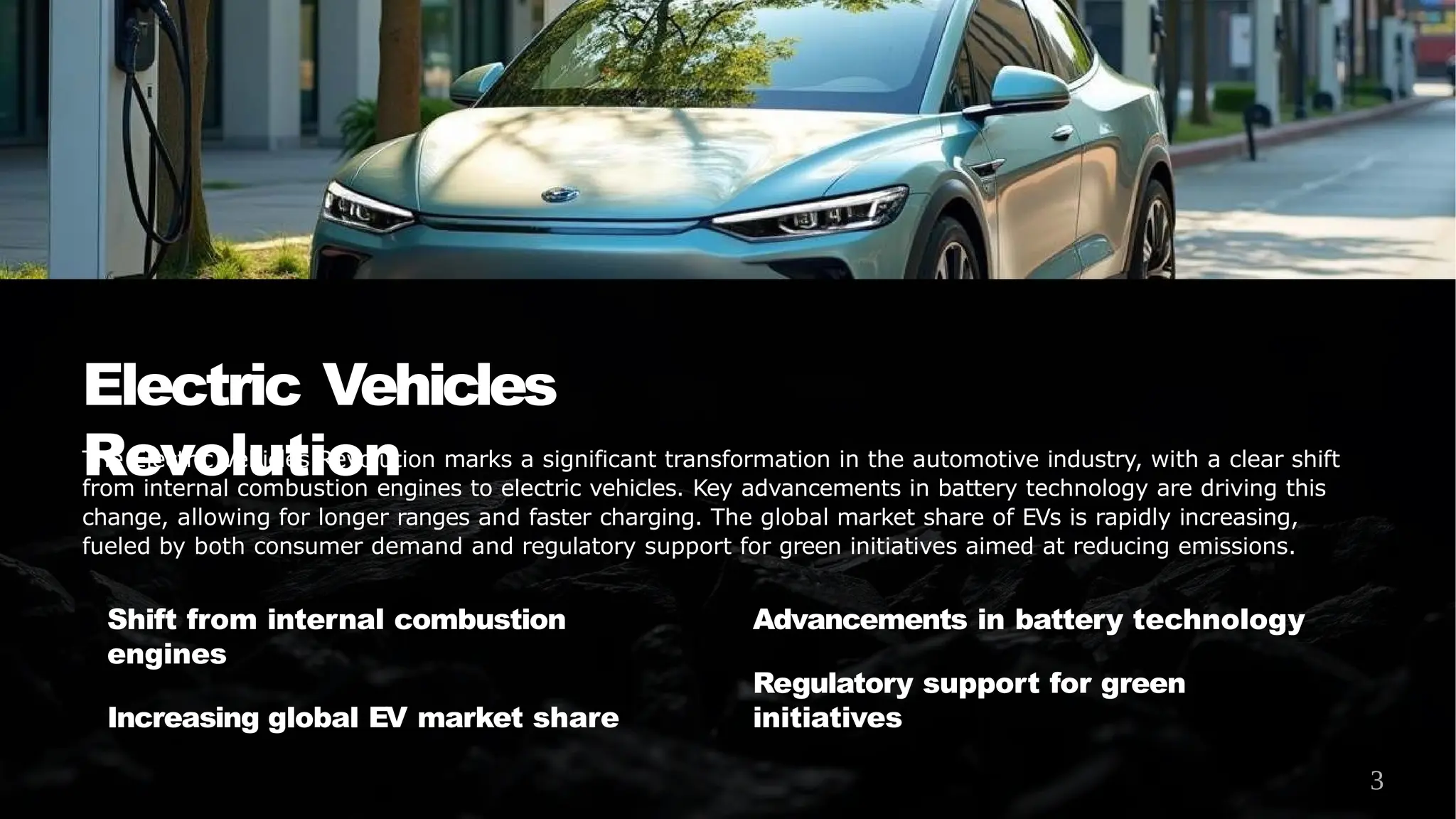
The Electric Vehicles Revolution marks a significant transformation in the automotive industry, with a clear shift
from internal combustion engines to electric vehicles. Key advancements in battery technology are driving this
change, allowing for longer ranges and faster charging. The global market share of EVs is rapidly increasing,
fueled by both consumer demand and regulatory support for green initiatives aimed at reducing emissions.
Shift from internal combustion
engines
Increasing global EV market share
Advancements in battery technology
Regulatory support for green
initiatives
3
Autonomous
Driving
Development of AI
Advancements in artificial
intelligence and machine
learning enhance vehicle
autonomy.
Enhanced Safety
Automation aims to
reduce accidents and
improve road safety.
Legal Challenges
Navigating legal
frameworks and
regulations is critical
for adoption.
Consumer Trust
Building consumer
acceptance and trust is
essential for widespread
adoption.
4
Connectivity and Smart
Features
Rise of IoT in
Automotive
The increasing integration
of Internet of Things in
vehicles.
Vehicle-to-Everything
(V2X) Communication
Enables vehicles to communicate
with other vehicles and
infrastructure.
Enhanced User
Experience via Apps
Mobile applications improving
interaction and services for
drivers.
Data Privacy and
Security
Concerns
Challenges in protecting user
data
in connected vehicles.
5
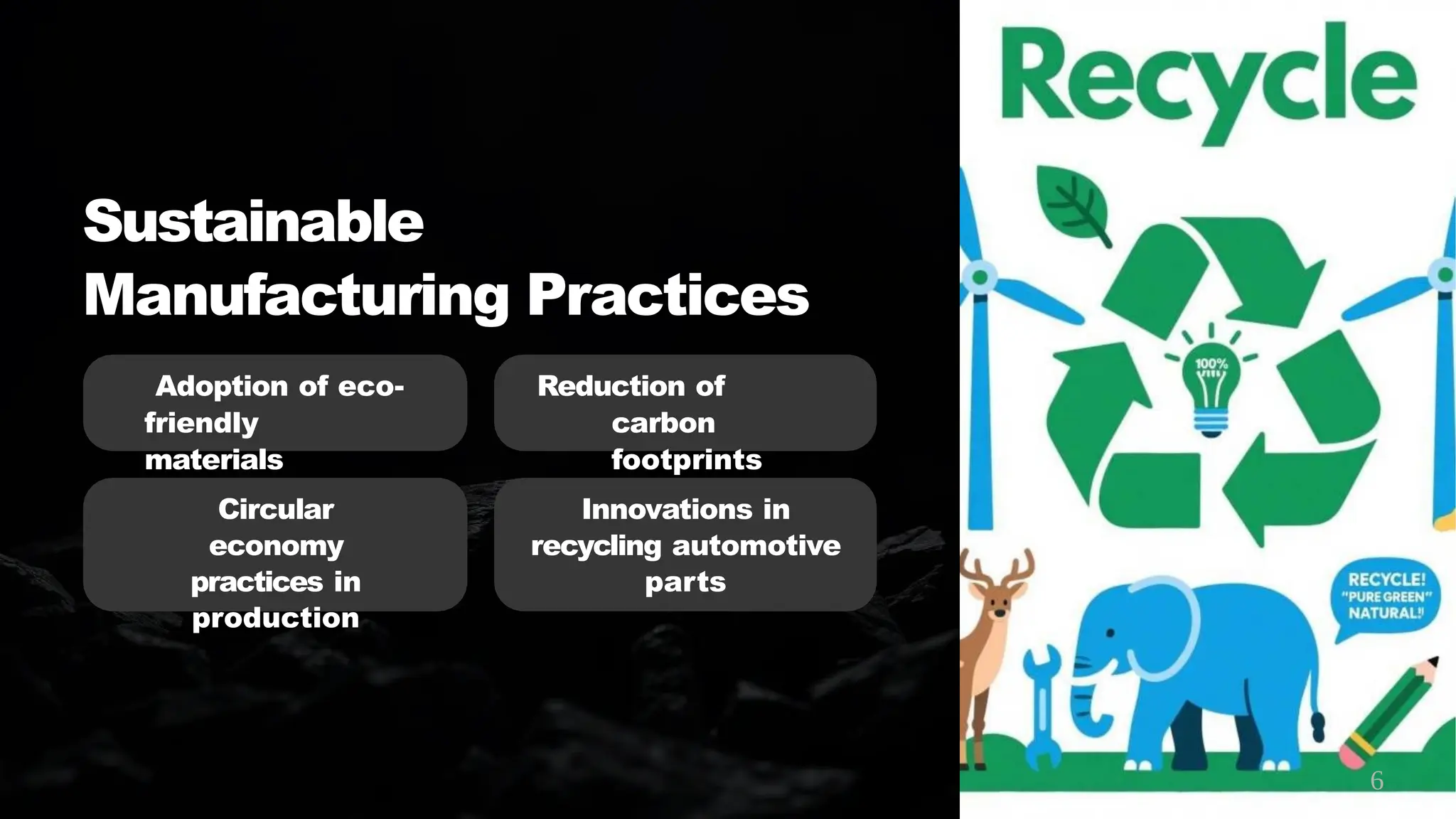
Sustainable
Manufacturing Practices
Adoption of eco-
friendly
materials
Reduction of
carbon
footprints
Circular
economy
practices in
production
Innovations in
recycling automotive
parts
6
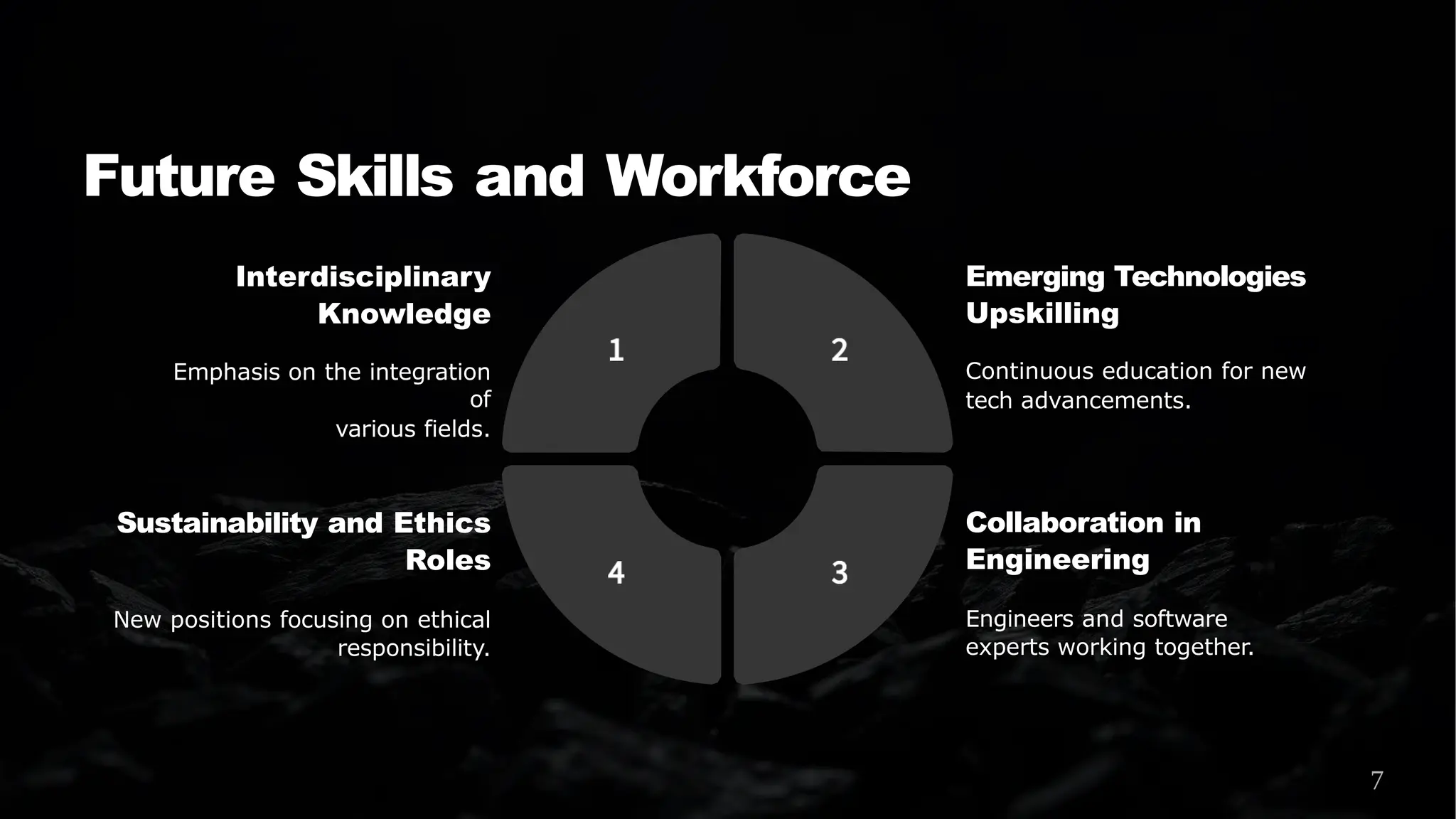
Future Skills and Workforce
Interdisciplinary
Knowledge
Emphasis on the integration
of
various fields.
Emerging Technologies
Upskilling
Continuous education for new
tech advancements.
Collaboration in
Engineering
Engineers and software
experts working together.
Sustainability and Ethics
Roles
New positions focusing on ethical
responsibility.
7
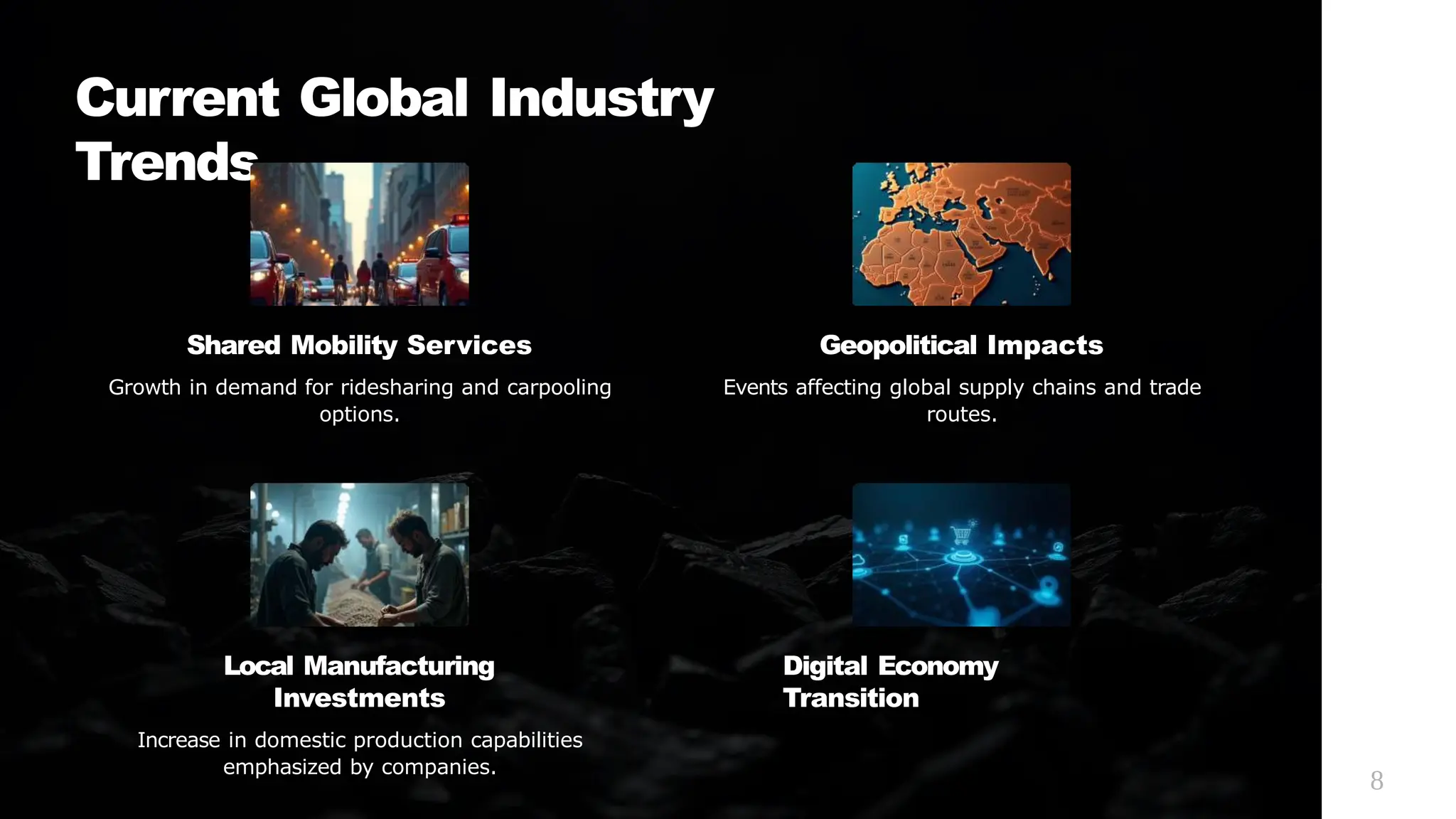
Current Global Industry
Trends
Shared Mobility Services
Growth in demand for ridesharing and carpooling
options.
Geopolitical Impacts
Events affecting global supply chains and trade
routes.
Local Manufacturing
Investments
Increase in domestic production capabilities
emphasized by companies.
Digital Economy
Transition
8
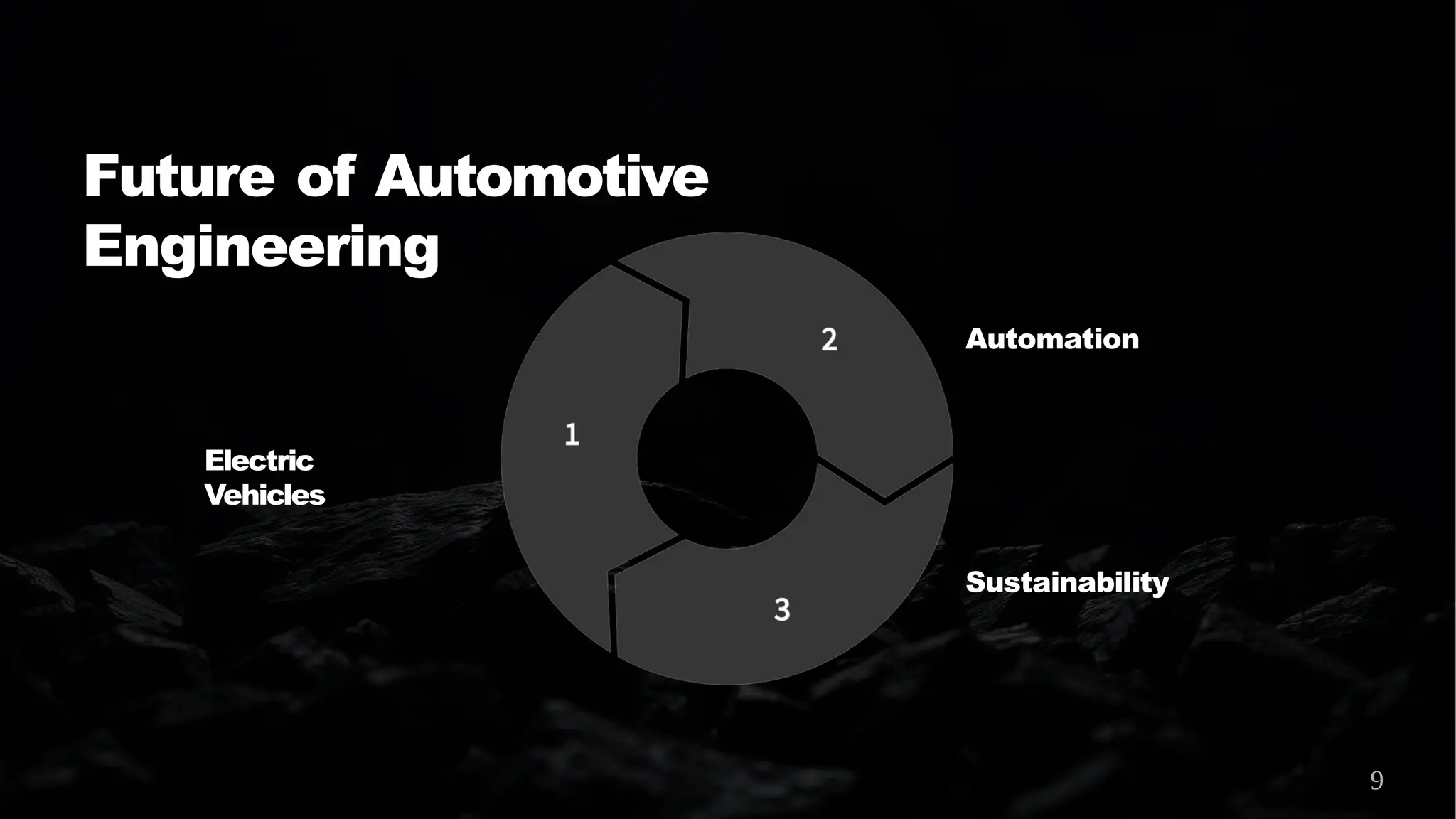
Future of Automotive
Engineering
Electric
Vehicles
Automation
Sustainability
9

Future of Automotive Engineering mECHANICAL

  • 1.
    Department of MechanicalEngineering And Department Robotics and Artificial Intelligence Sub: ELEMENTS OF MECHANICAL ENGINEERING [BEMEM203] Seminar Presentation Topic: Future of Automotive Engineering Present By: Name: PARTHA BHAT USN: 1MV24ME017 Semester & Branch: II SEM – Reviewer: Name: Prof. Chandrasekhar B Assistant Professor
  • 2.
    Content or Index: 1.Introduction 2. Literature Review 3. Methodology 4. Results and discussion 5. Conclusions 6. References 1
  • 3.
    Future of Automotive Engineerin g The automotiveengineering field is evolving rapidly, driven by technology, sustainability, and consumer preferences. Innovations such as electric vehicles, automation, and smart connectivity are shaping the future landscape. 2
  • 4.
    Electric Vehicles Revolution The ElectricVehicles Revolution marks a significant transformation in the automotive industry, with a clear shift from internal combustion engines to electric vehicles. Key advancements in battery technology are driving this change, allowing for longer ranges and faster charging. The global market share of EVs is rapidly increasing, fueled by both consumer demand and regulatory support for green initiatives aimed at reducing emissions. Shift from internal combustion engines Increasing global EV market share Advancements in battery technology Regulatory support for green initiatives 3
  • 5.
    Autonomous Driving Development of AI Advancementsin artificial intelligence and machine learning enhance vehicle autonomy. Enhanced Safety Automation aims to reduce accidents and improve road safety. Legal Challenges Navigating legal frameworks and regulations is critical for adoption. Consumer Trust Building consumer acceptance and trust is essential for widespread adoption. 4
  • 6.
    Connectivity and Smart Features Riseof IoT in Automotive The increasing integration of Internet of Things in vehicles. Vehicle-to-Everything (V2X) Communication Enables vehicles to communicate with other vehicles and infrastructure. Enhanced User Experience via Apps Mobile applications improving interaction and services for drivers. Data Privacy and Security Concerns Challenges in protecting user data in connected vehicles. 5
  • 7.
    Sustainable Manufacturing Practices Adoption ofeco- friendly materials Reduction of carbon footprints Circular economy practices in production Innovations in recycling automotive parts 6
  • 8.
    Future Skills andWorkforce Interdisciplinary Knowledge Emphasis on the integration of various fields. Emerging Technologies Upskilling Continuous education for new tech advancements. Collaboration in Engineering Engineers and software experts working together. Sustainability and Ethics Roles New positions focusing on ethical responsibility. 7
  • 9.
    Current Global Industry Trends SharedMobility Services Growth in demand for ridesharing and carpooling options. Geopolitical Impacts Events affecting global supply chains and trade routes. Local Manufacturing Investments Increase in domestic production capabilities emphasized by companies. Digital Economy Transition 8
  • 10.