Explore the future of Real-World Asset Tokenization, highlighting trends, market growth, benefits, challenges, and real-world applications in blockchain-driven asset ownership.
Introduction
Asset tokenization isthe process of converting real-world assets
into digital tokens on a blockchain.
It enhances liquidity, transparency, and accessibility in asset
markets.
Why is it important?
Enables fractional ownership, reducing barriers to investment.
Facilitates global transactions without intermediaries.
Improves security and efficiency using blockchain technology.
3.
Traditional asset ownershipinvolves complex paperwork, intermediaries,
and limited access.
Blockchain technology introduced smart contracts, decentralization, and
borderless transactions.
Major developments:
2017-2018: Initial experiments in tokenized real estate and gold.
2019-2021: Rise of security tokens & institutional interest.
2022-Present: Regulatory discussions, DeFi integration, and mainstream
adoption.
Evolution of Asset Tokenization
4.
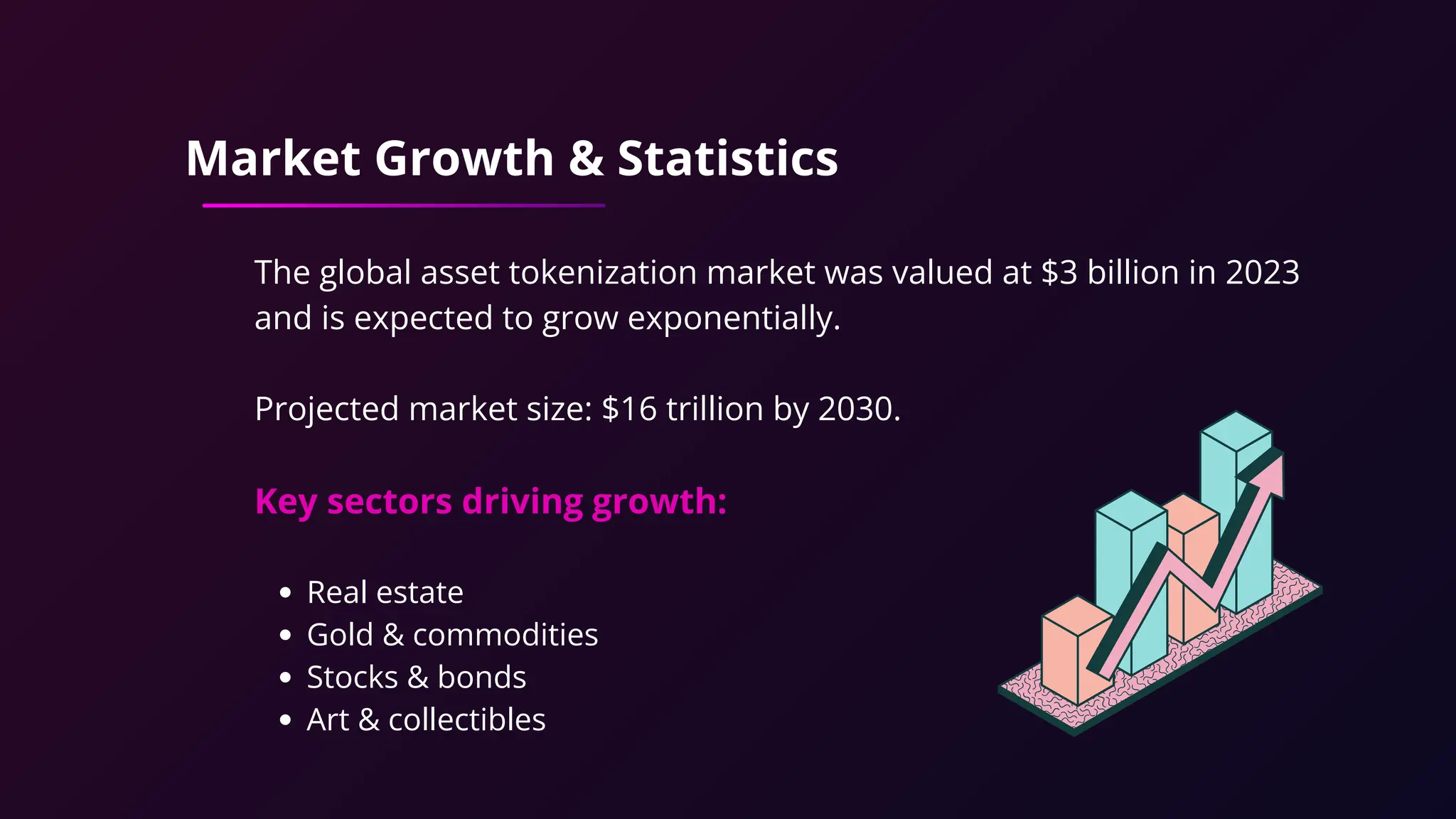
The global assettokenization market was valued at $3 billion in 2023
and is expected to grow exponentially.
Projected market size: $16 trillion by 2030.
Key sectors driving growth:
Real estate
Gold & commodities
Stocks & bonds
Art & collectibles
Market Growth & Statistics
5.
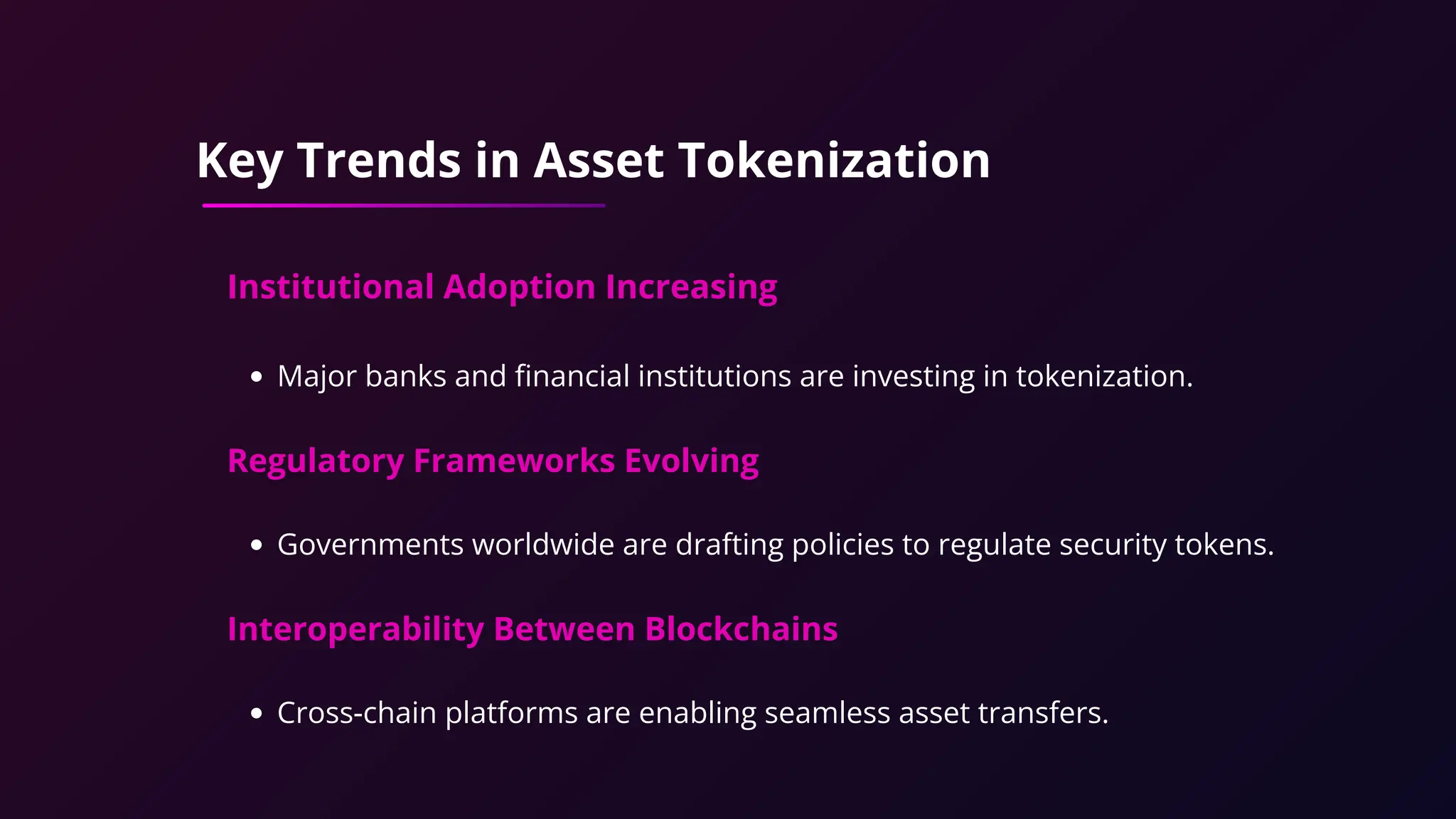
Key Trends inAsset Tokenization
Institutional Adoption Increasing
Major banks and financial institutions are investing in tokenization.
Regulatory Frameworks Evolving
Governments worldwide are drafting policies to regulate security tokens.
Interoperability Between Blockchains
Cross-chain platforms are enabling seamless asset transfers.
6.
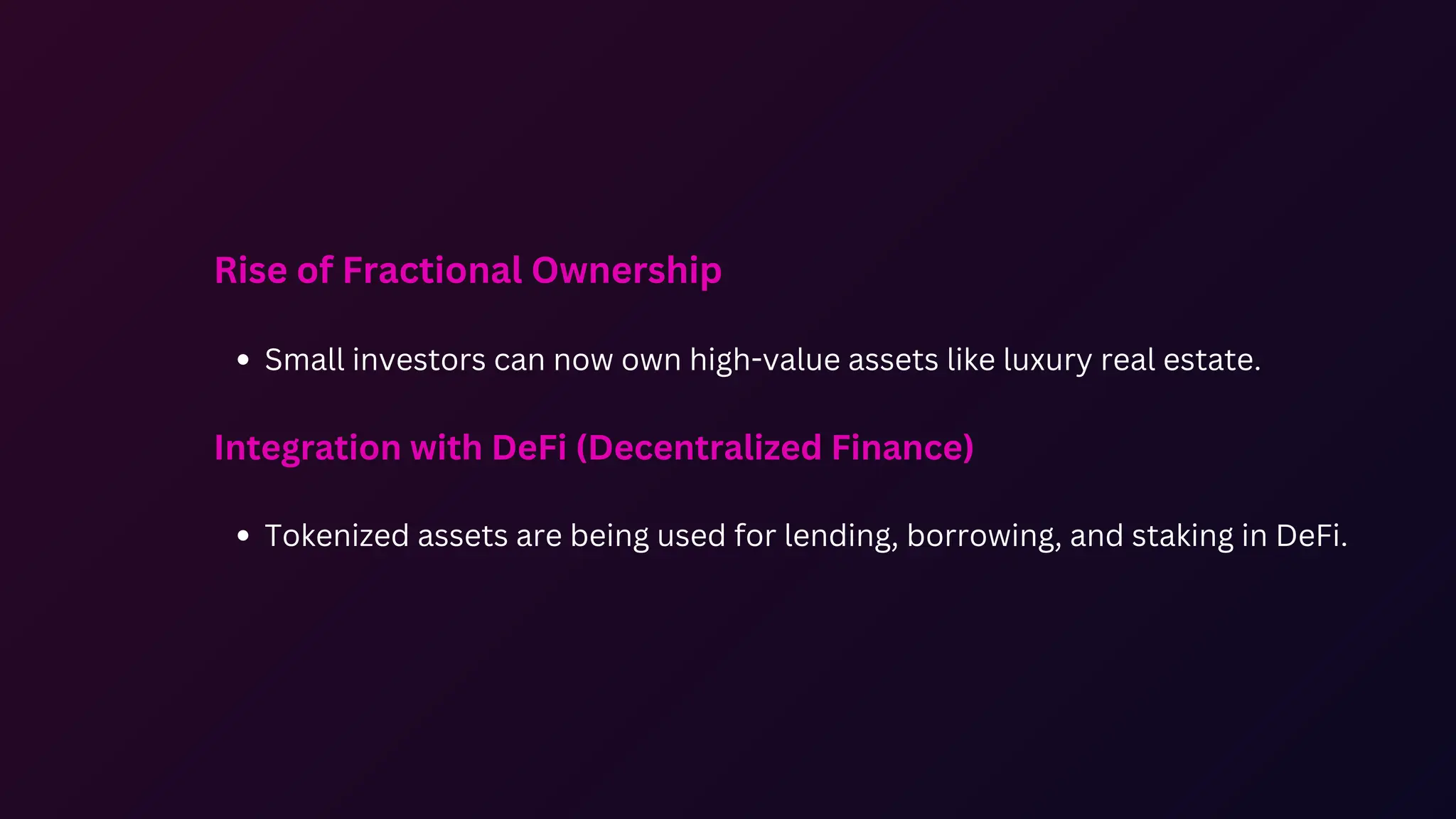
Rise of FractionalOwnership
Small investors can now own high-value assets like luxury real estate.
Integration with DeFi (Decentralized Finance)
Tokenized assets are being used for lending, borrowing, and staking in DeFi.
7.
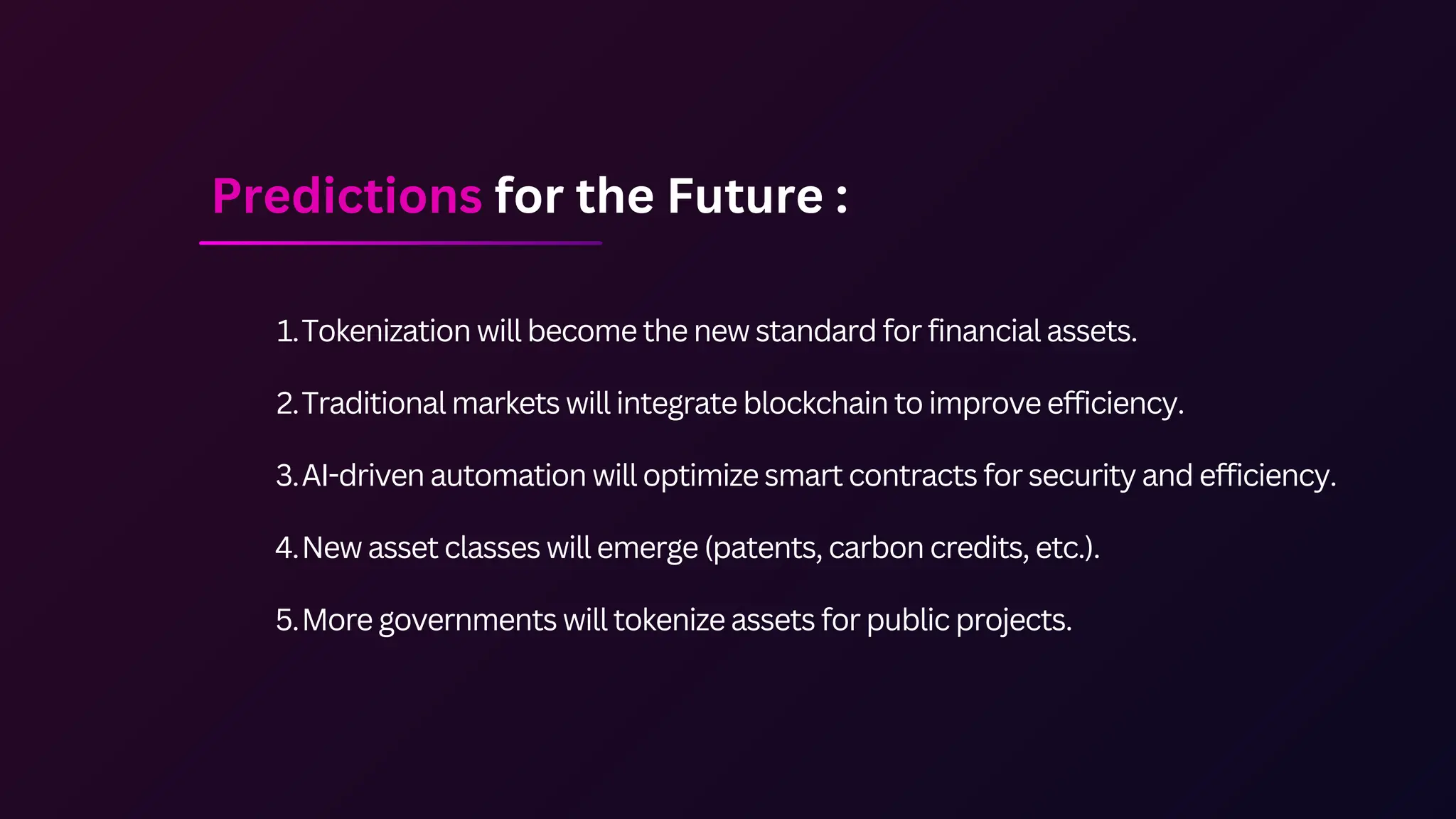
Tokenization will becomethe new standard for financial assets.
1.
Traditional markets will integrate blockchain to improve efficiency.
2.
AI-driven automation will optimize smart contracts for security and efficiency.
3.
New asset classes will emerge (patents, carbon credits, etc.).
4.
More governments will tokenize assets for public projects.
5.
Predictions for the Future :
8.
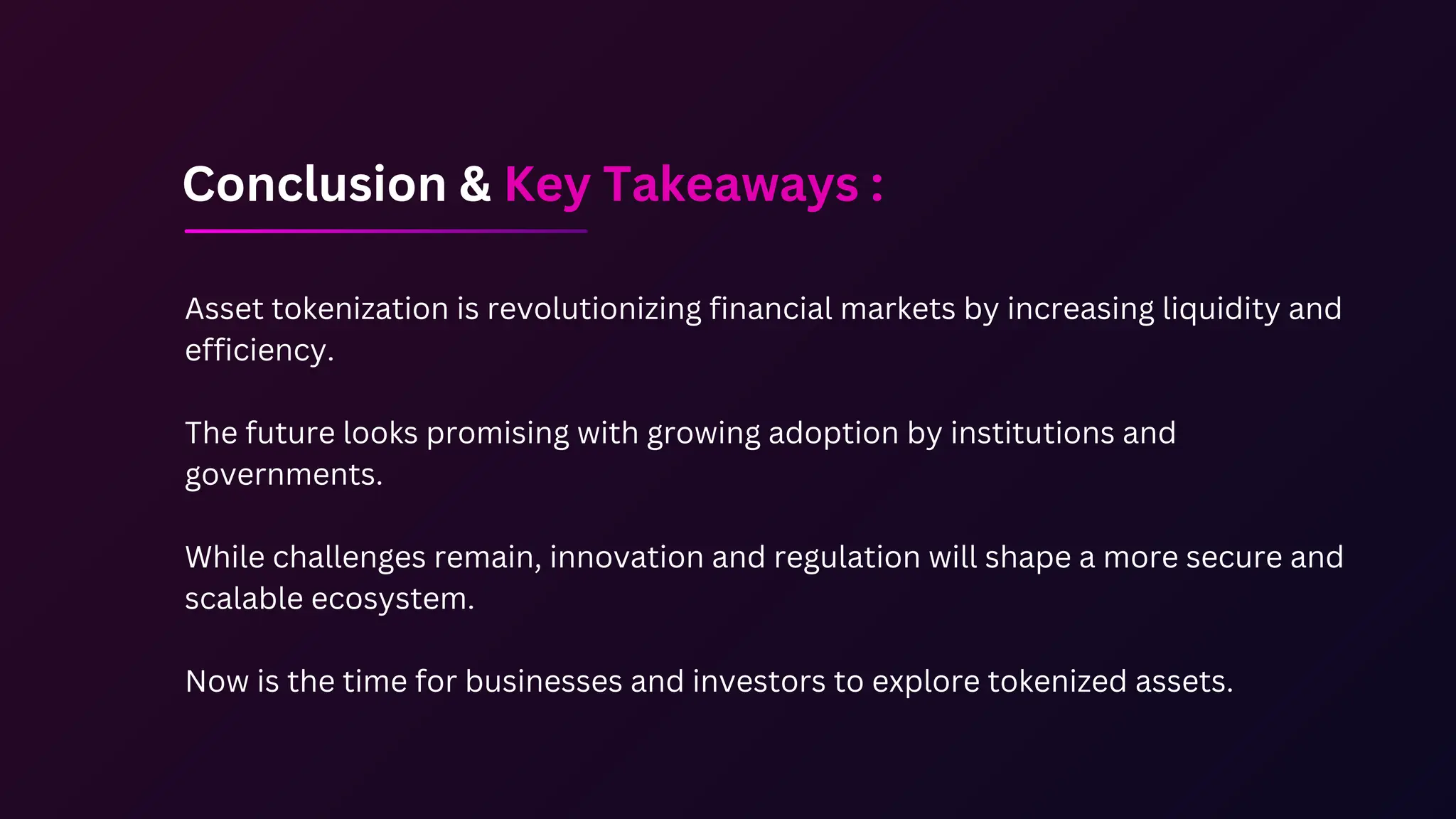
Asset tokenization isrevolutionizing financial markets by increasing liquidity and
efficiency.
The future looks promising with growing adoption by institutions and
governments.
While challenges remain, innovation and regulation will shape a more secure and
scalable ecosystem.
Now is the time for businesses and investors to explore tokenized assets.
Conclusion & Key Takeaways :
9.
Real-World Asset (RWA)Tokenization :
Tokenize real-world assets securely and compliantly. Unlock liquidity,
enhance accessibility, and trade seamlessly on blockchain.
Check out more : Asset Tokenization Servcies