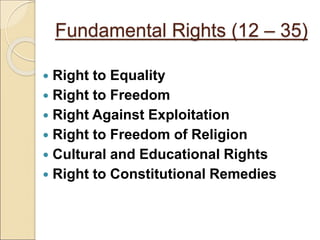
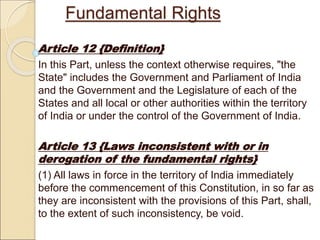
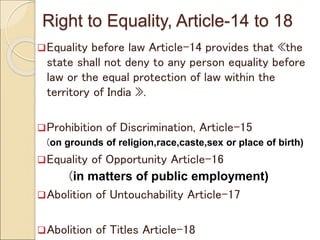
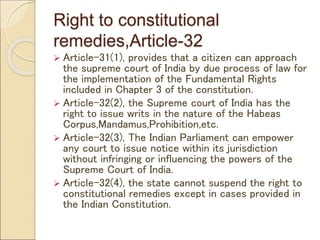
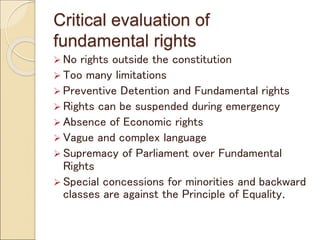
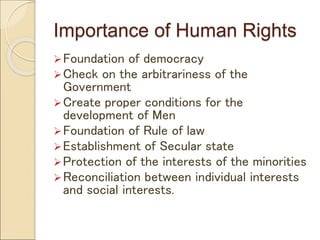
Fundamental rights in India are incorporated in Articles 12-35 of the constitution. They include the right to equality, freedom of speech and expression, freedom of religion, and cultural and educational rights. Fundamental rights are justiciable and protect individuals from the state, but are not absolute and can be suspended during emergencies. They distinguish between citizens and foreigners and limit government authority while also being subject to amendment. The existence of democracy in India relies upon these fundamental rights that serve as the basis for individual development and are enjoyed by all people and officials in the country.