Functions
of HRD
Presented By-
Yash Dwivedi
M.Sc. Agricultural Extension
CAU/CPGS-AS/AG-EXT/M23/06
CAU, IMPHAL
● HRD is the framework for helping employees develop their personal and
organizational skills, knowledge, and abilities.
● A set of systematic and planned activities designed by an organization or HR
department to provide its members with the necessary skills to meet current and
future job demands.
● The concept of Development should cover not only the individual but other units in
the organization, too.
● The entire department and the entire organization also should be covered by
development.
● Their development would involve developing a climate conducive to their
effectiveness, developing a self-renewing mechanism in the organizations so that
they are able to adjust and develop relevant processes which contribute to their
effectiveness.
Introduction
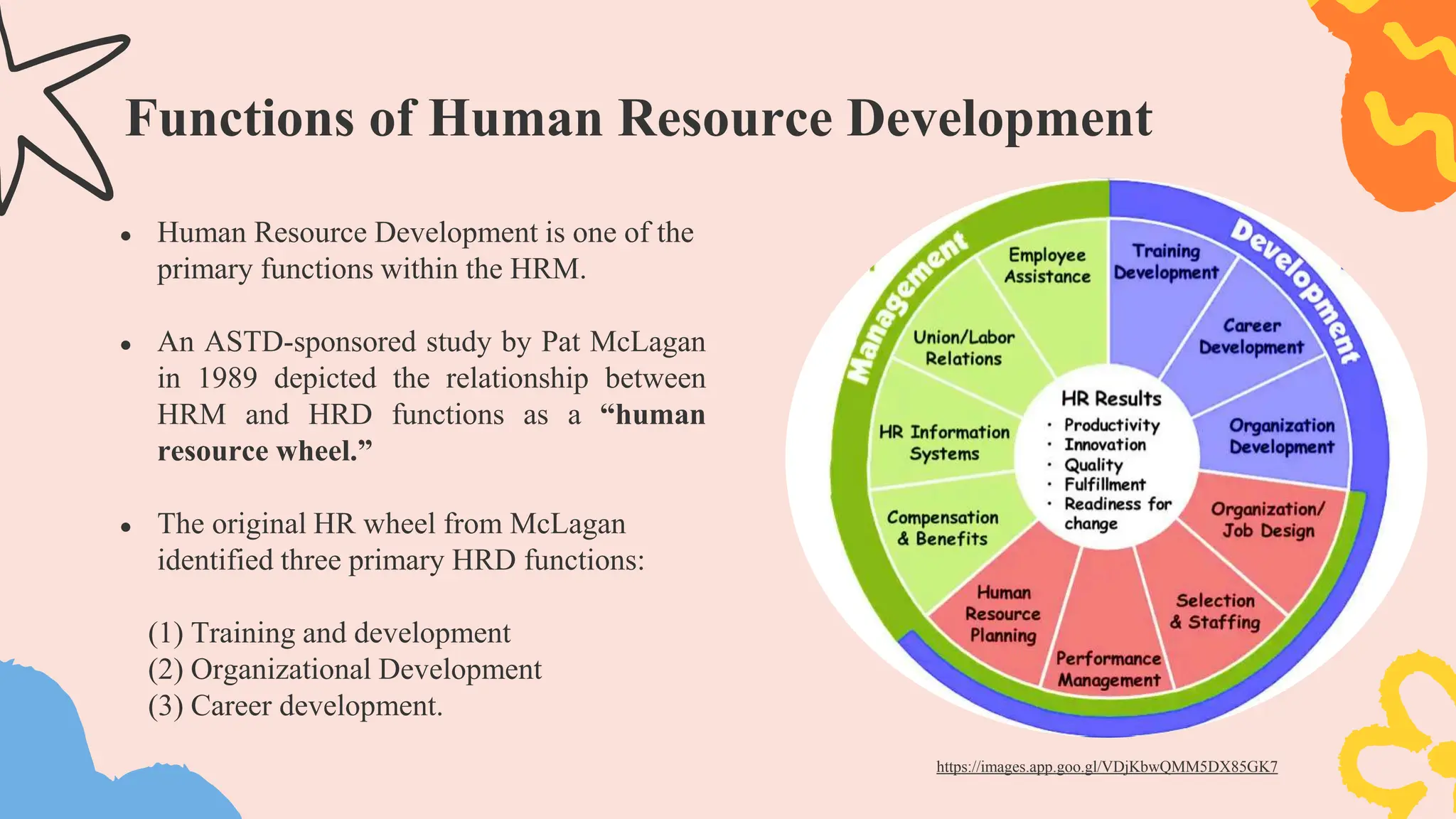
● Human Resource Development is one of the
primary functions within the HRM.
● An ASTD-sponsored study by Pat McLagan
in 1989 depicted the relationship between
HRM and HRD functions as a “human
resource wheel.”
● The original HR wheel from McLagan
identified three primary HRD functions:
(1) Training and development
(2) Organizational Development
(3) Career development.
Functions of Human Resource Development
https://images.app.goo.gl/VDjKbwQMM5DX85GK7
Training and Development
● Training is the most important activity which plays an important role in the development of
human resources.
Systematic
Process of
acquisition
Attitude
Knowledge
Skills
• To put the right man at the right
place with training has now become
essential in today’s globalized
market.
• The traditional approach of training
and development believed that
managers are born and not made.
• They were also of the opinion that the
training is a very costly affair and not
worth.
Developmental Activities Have a Longer-term focus on preparing for Future Work Responsibilities
Also Increasing the capacities of employees to perform their current jobs
● When an employee enters the organization these programs are carried out-:
● Objectives of Training and Development-:
Counselling
Coaching
Skills and
technical
training
Employee
orientation
Societal
Objectives
Functional
Objectives
Organizational
Objectives
Individual
Objectives
Increase in Efficiency
Reduced supervision
Increased organisational
Viability & flexibility
Increase in employee
morale
Better human relations
Outcomes of Training in an Organisation
Organizational Development
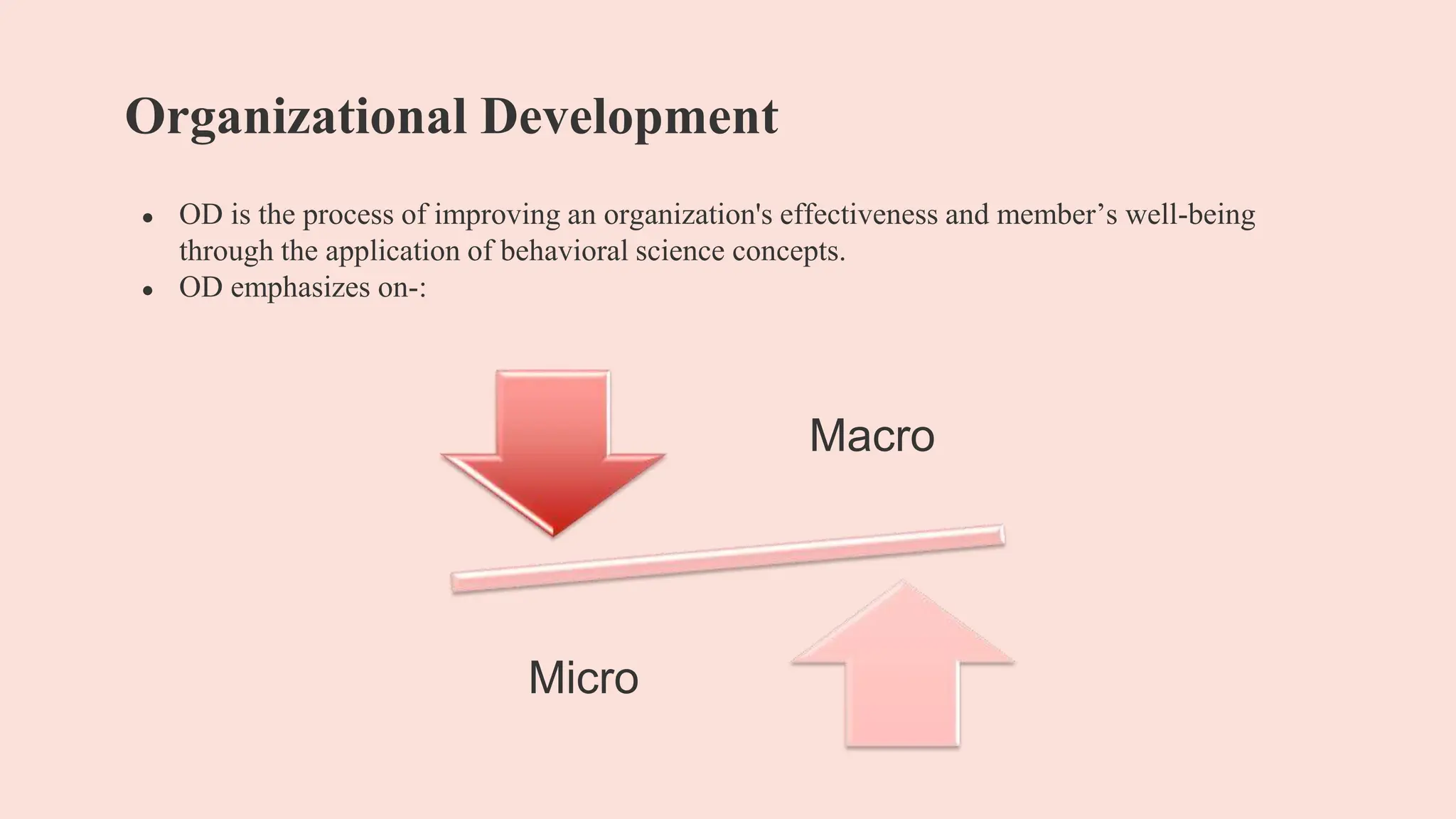
● OD is the process of improving an organization's effectiveness and member’s well-being
through the application of behavioral science concepts.
● OD emphasizes on-:
Macro
Micro
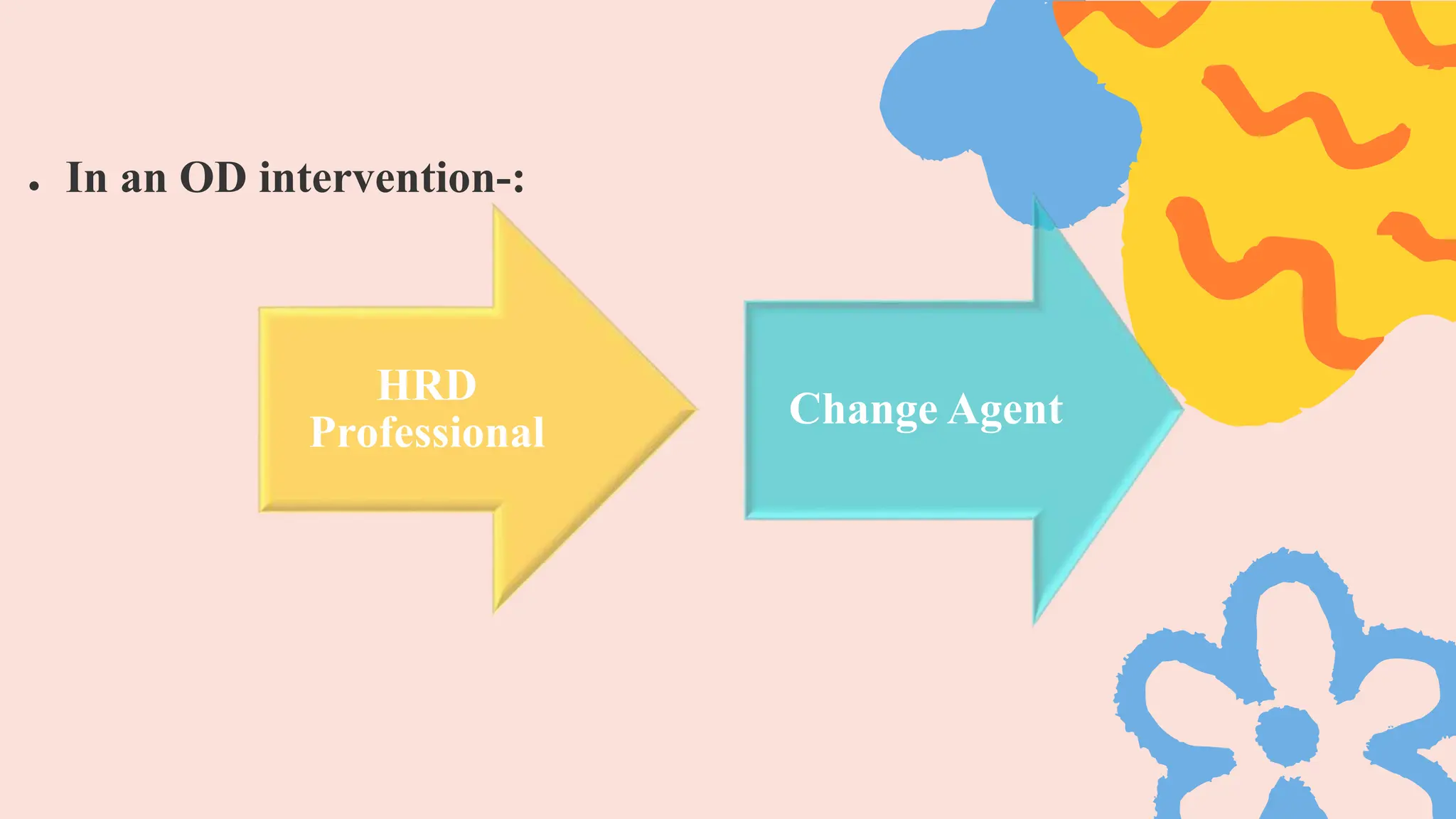
● In an OD intervention-:
HRD
Professional
Change Agent
● An organisation should be concerned not only with its growth, but with its health, too.
● It needs to diagnose its problems from time-to-time and take steps to develop new competencies
to cope with the various problems and challenges it would be facing.
● Aims of OD-:
Maintaining Profiles
of organizational
health
Monitoring
Organizational
Health
Conflict
Management
Assisting Sick
Departments
Helping Interested
Units & Department
in Self-renewal
Creation of strong
teams
Build a climate that
promotes enabling
capacities in the org.
Career Development
● Career development is “An ongoing process by which individuals progress through a series of
stages, each of which is characterized by a relatively unique set of issues, themes, and tasks.
● Human resource development becomes effective when it is linked to the career planning of all
individuals in an organization.
● Career development involves two distinct processes:-
Career
Planning
Career
Management
● Career planning is the systematic process by which an individual selects his career goals and the
path to achieve these goals.
● Career development represents the entire sequence of activities and events related to an
individual’s career.
● Career development encompasses the period of acquiring educational qualifications and
certifications, career path, self-actualization as an individual, shifting of careers, and career
growth.
● There is a strong relationship between career development and T&D activities- An
organization’s training and development plans can help individual employees in career planning
and development
● Human Resource Development (HRD) isn't just about training employees.
● It's a strategic investment in a company's most valuable asset: its people.
● By focusing on skill development, performance improvement, and employee well-being,
HRD creates a win-win situation.
● Employees grow in their careers, and organizations gain a competitive edge through a
more effective and engaged workforce.
Conclusion
● Human Resource Development 6e by Jon M. Werner & Randy L. DeSimone, 6th edition.
● Ignou Notes. Training and Human Resource Development.
References

Functions of Human Resource Development.pptx

  • 1.
    Functions of HRD Presented By- YashDwivedi M.Sc. Agricultural Extension CAU/CPGS-AS/AG-EXT/M23/06 CAU, IMPHAL
  • 2.
    ● HRD isthe framework for helping employees develop their personal and organizational skills, knowledge, and abilities. ● A set of systematic and planned activities designed by an organization or HR department to provide its members with the necessary skills to meet current and future job demands. ● The concept of Development should cover not only the individual but other units in the organization, too. ● The entire department and the entire organization also should be covered by development. ● Their development would involve developing a climate conducive to their effectiveness, developing a self-renewing mechanism in the organizations so that they are able to adjust and develop relevant processes which contribute to their effectiveness. Introduction
  • 3.
    ● Human ResourceDevelopment is one of the primary functions within the HRM. ● An ASTD-sponsored study by Pat McLagan in 1989 depicted the relationship between HRM and HRD functions as a “human resource wheel.” ● The original HR wheel from McLagan identified three primary HRD functions: (1) Training and development (2) Organizational Development (3) Career development. Functions of Human Resource Development https://images.app.goo.gl/VDjKbwQMM5DX85GK7
  • 4.
    Training and Development ●Training is the most important activity which plays an important role in the development of human resources. Systematic Process of acquisition Attitude Knowledge Skills • To put the right man at the right place with training has now become essential in today’s globalized market. • The traditional approach of training and development believed that managers are born and not made. • They were also of the opinion that the training is a very costly affair and not worth.
  • 5.
    Developmental Activities Havea Longer-term focus on preparing for Future Work Responsibilities Also Increasing the capacities of employees to perform their current jobs
  • 6.
    ● When anemployee enters the organization these programs are carried out-: ● Objectives of Training and Development-: Counselling Coaching Skills and technical training Employee orientation Societal Objectives Functional Objectives Organizational Objectives Individual Objectives
  • 7.
    Increase in Efficiency Reducedsupervision Increased organisational Viability & flexibility Increase in employee morale Better human relations Outcomes of Training in an Organisation
  • 8.
    Organizational Development ● ODis the process of improving an organization's effectiveness and member’s well-being through the application of behavioral science concepts. ● OD emphasizes on-: Macro Micro
  • 9.
    ● In anOD intervention-: HRD Professional Change Agent
  • 10.
    ● An organisationshould be concerned not only with its growth, but with its health, too. ● It needs to diagnose its problems from time-to-time and take steps to develop new competencies to cope with the various problems and challenges it would be facing. ● Aims of OD-: Maintaining Profiles of organizational health Monitoring Organizational Health Conflict Management Assisting Sick Departments Helping Interested Units & Department in Self-renewal Creation of strong teams Build a climate that promotes enabling capacities in the org.
  • 11.
    Career Development ● Careerdevelopment is “An ongoing process by which individuals progress through a series of stages, each of which is characterized by a relatively unique set of issues, themes, and tasks. ● Human resource development becomes effective when it is linked to the career planning of all individuals in an organization. ● Career development involves two distinct processes:- Career Planning Career Management
  • 12.
    ● Career planningis the systematic process by which an individual selects his career goals and the path to achieve these goals. ● Career development represents the entire sequence of activities and events related to an individual’s career. ● Career development encompasses the period of acquiring educational qualifications and certifications, career path, self-actualization as an individual, shifting of careers, and career growth. ● There is a strong relationship between career development and T&D activities- An organization’s training and development plans can help individual employees in career planning and development
  • 13.
    ● Human ResourceDevelopment (HRD) isn't just about training employees. ● It's a strategic investment in a company's most valuable asset: its people. ● By focusing on skill development, performance improvement, and employee well-being, HRD creates a win-win situation. ● Employees grow in their careers, and organizations gain a competitive edge through a more effective and engaged workforce. Conclusion
  • 14.
    ● Human ResourceDevelopment 6e by Jon M. Werner & Randy L. DeSimone, 6th edition. ● Ignou Notes. Training and Human Resource Development. References

Editor's Notes

  • #9 Macro Changes-Intended to ultimately improve the effectiveness of the organization as a whole Micro Changes-Intended at individuals, small groups, and terms.
  • #10 Facilitating change often requires consulting with and advising line managers on strategies that can be used to effect the desired change.