Faculty of S.Sc.
Faculty of S.Sc.
POINTS
POINTS
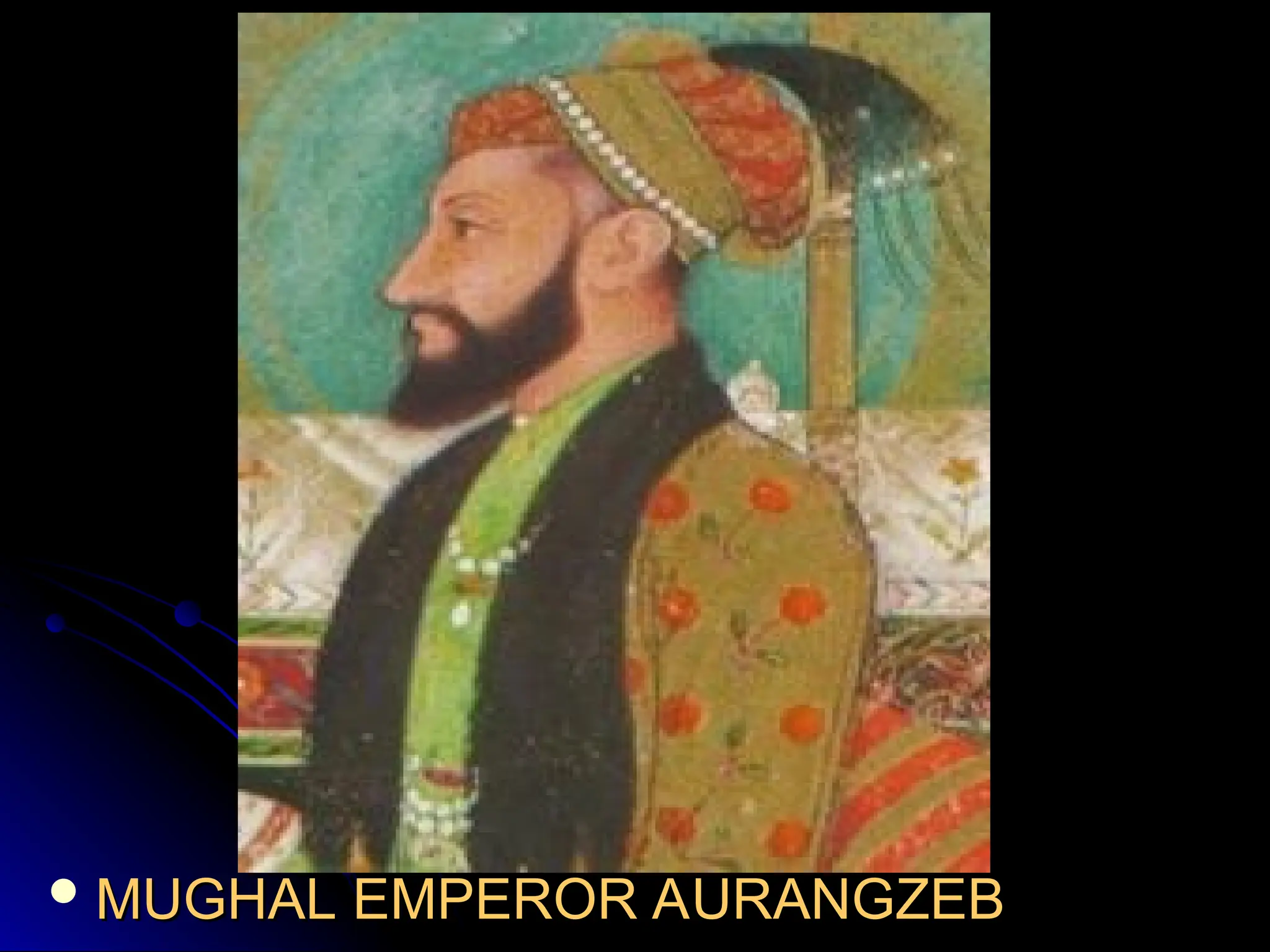
 Aurangzeb was the last powerful Mughal
Aurangzeb was the last powerful Mughal
ruler. ( died in 1707 )
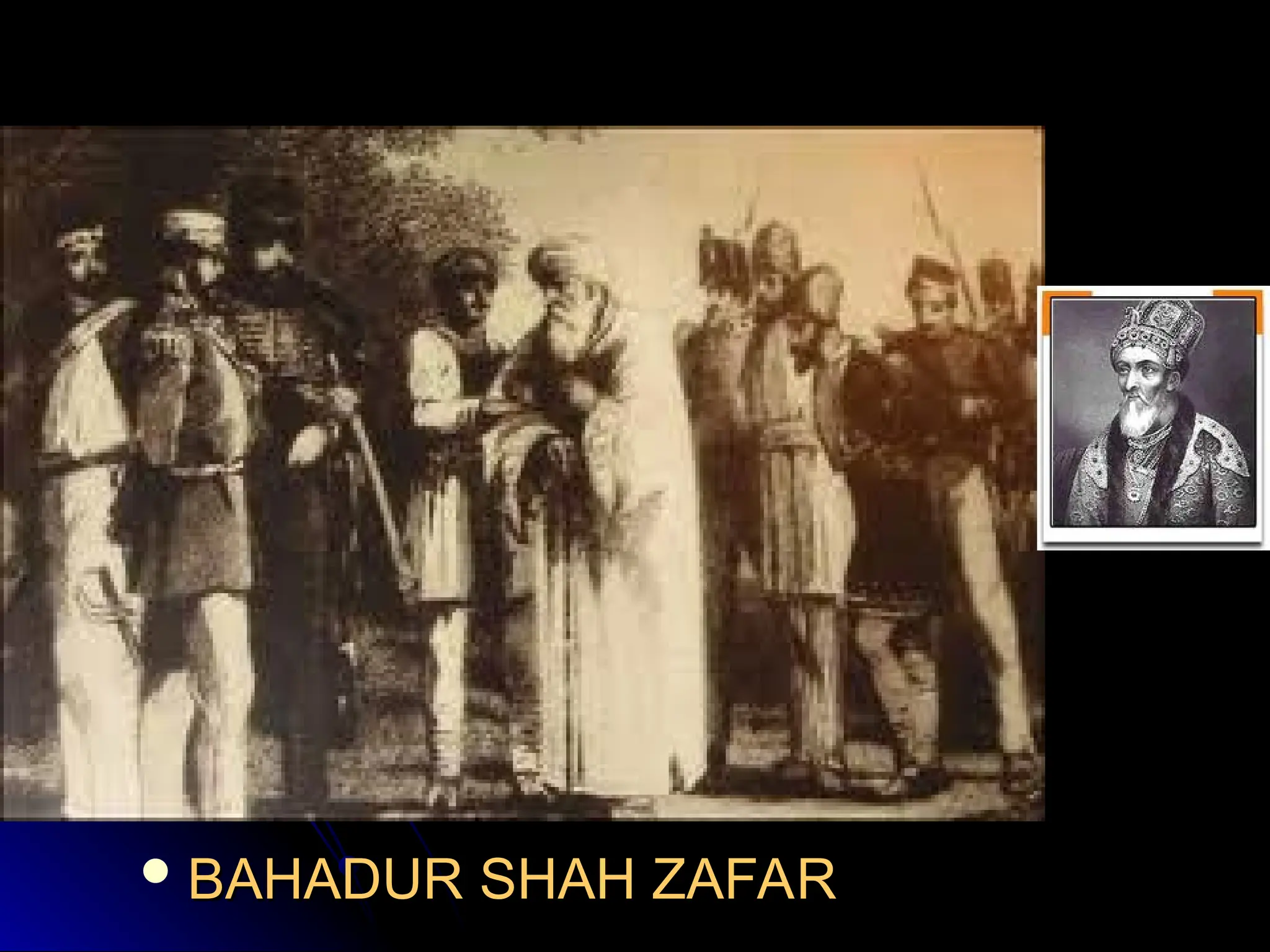
 Bahadur Shah Zafar was forced to leave
Bahadur Shah Zafar was forced to leave
the kingdom in 1857.
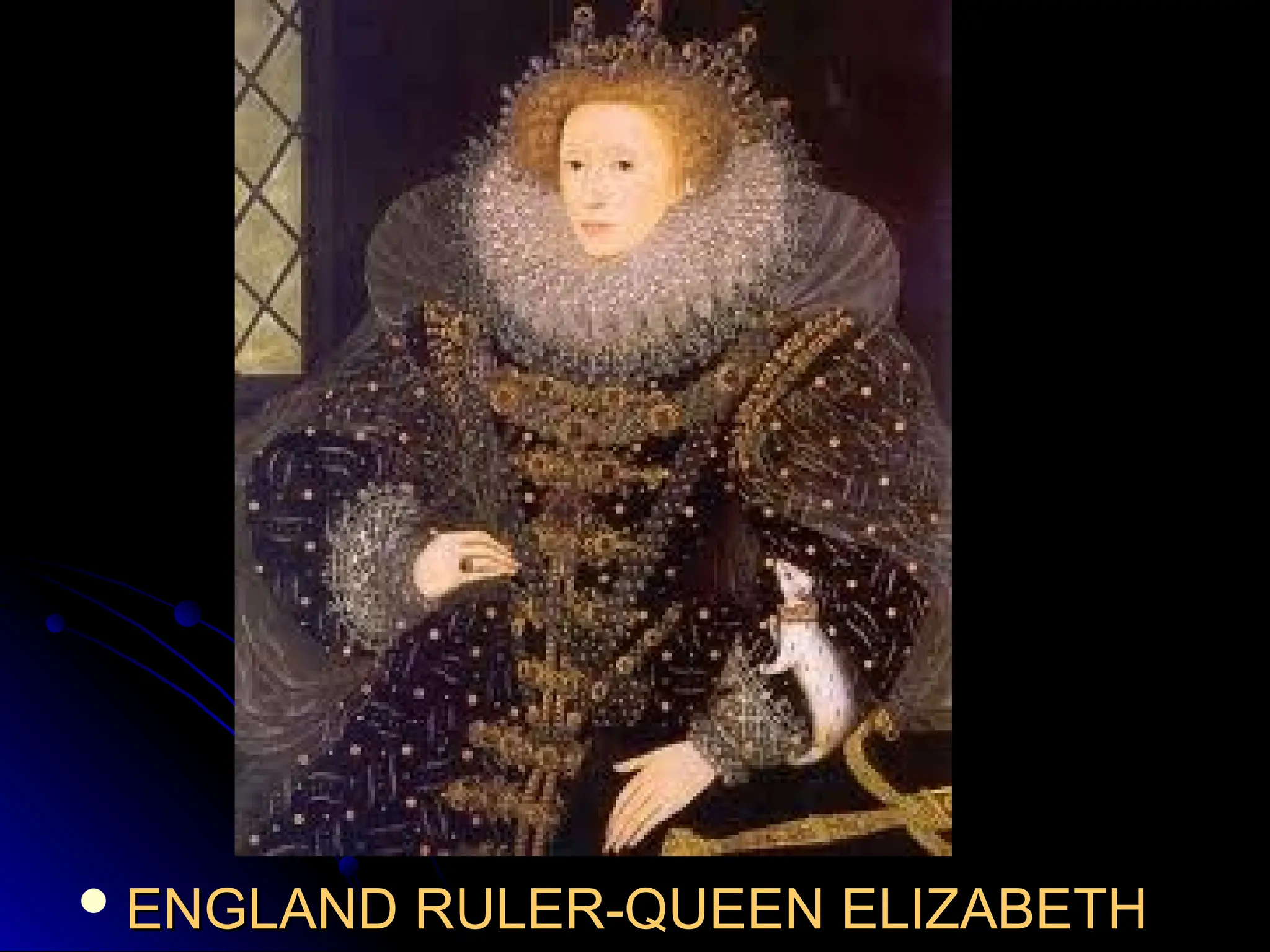
 In 1600 East India Company acquired a
In 1600 East India Company acquired a
charter from the ruler of England.
 Mercantile companies in those days
Mercantile companies in those days
primarily to make more profit.
 MUGHAL EMPEROR AURANGZEB
MUGHAL EMPEROR AURANGZEB
 BAHADUR SHAH ZAFAR
BAHADUR SHAH ZAFAR
 ENGLAND RULER-QUEEN ELIZABETH
ENGLAND RULER-QUEEN ELIZABETH
POINTS
POINTS
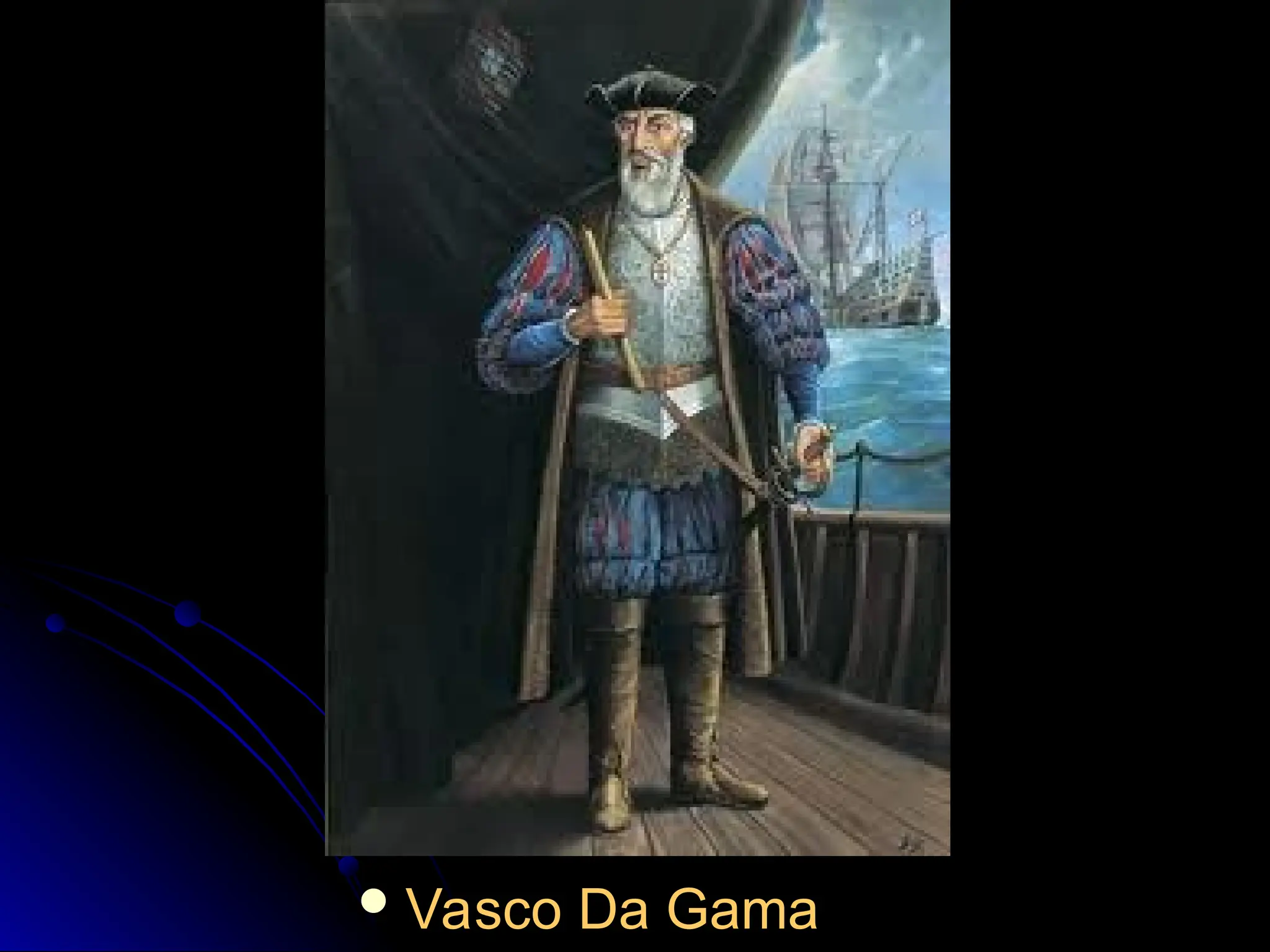
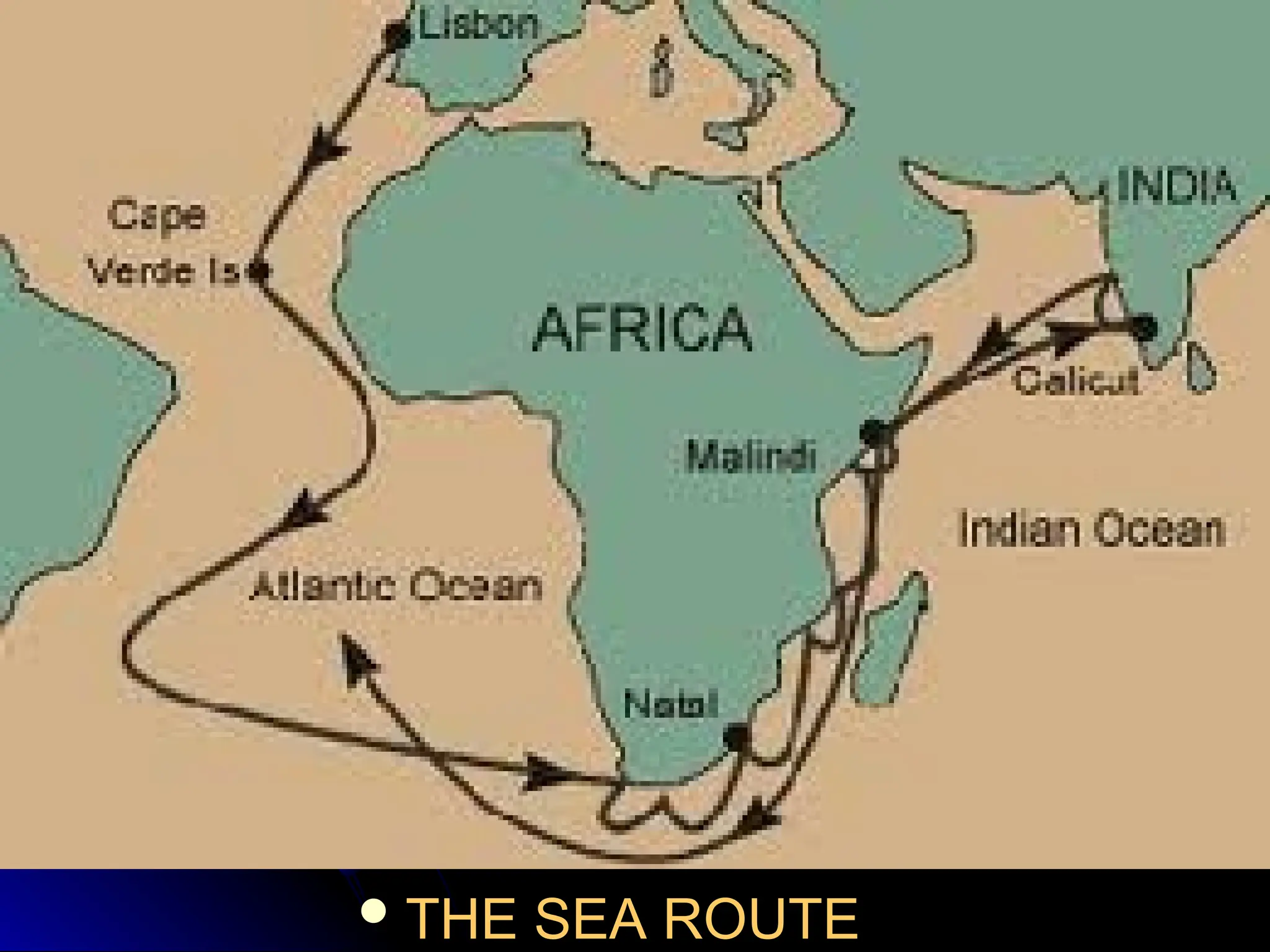
 The sea route to India was discovered by
The sea route to India was discovered by
Vasco Da Gama in 1498.
 Afterwards French came to trade in India.
Afterwards French came to trade in India.
 Fine quality silk and cotton was produced in
Fine quality silk and cotton was produced in
India.
India.
 In 17th to 18th century the traders sank each
In 17th to 18th century the traders sank each
other's ship.
other's ship.
 Effort to fortify settlements and carry profitable
Effort to fortify settlements and carry profitable
trade led to conflict amongst local rulers
 Vasco Da Gama
Vasco Da Gama
 THE SEA ROUTE
THE SEA ROUTE
POINTS
POINTS
 The 1st factory of East India Company was set
The 1st factory of East India Company was set
up on the banks of river Hughli in 1651.
 By 1696 it began building forts around the
By 1696 it began building forts around the
settlements.
settlements.
 Kolkata was first Kalikata ,then Calcutta and
Kolkata was first Kalikata ,then Calcutta and
afterwards became Kolkata.
 Farman is a royal edict, royal order.
Farman is a royal edict, royal order.
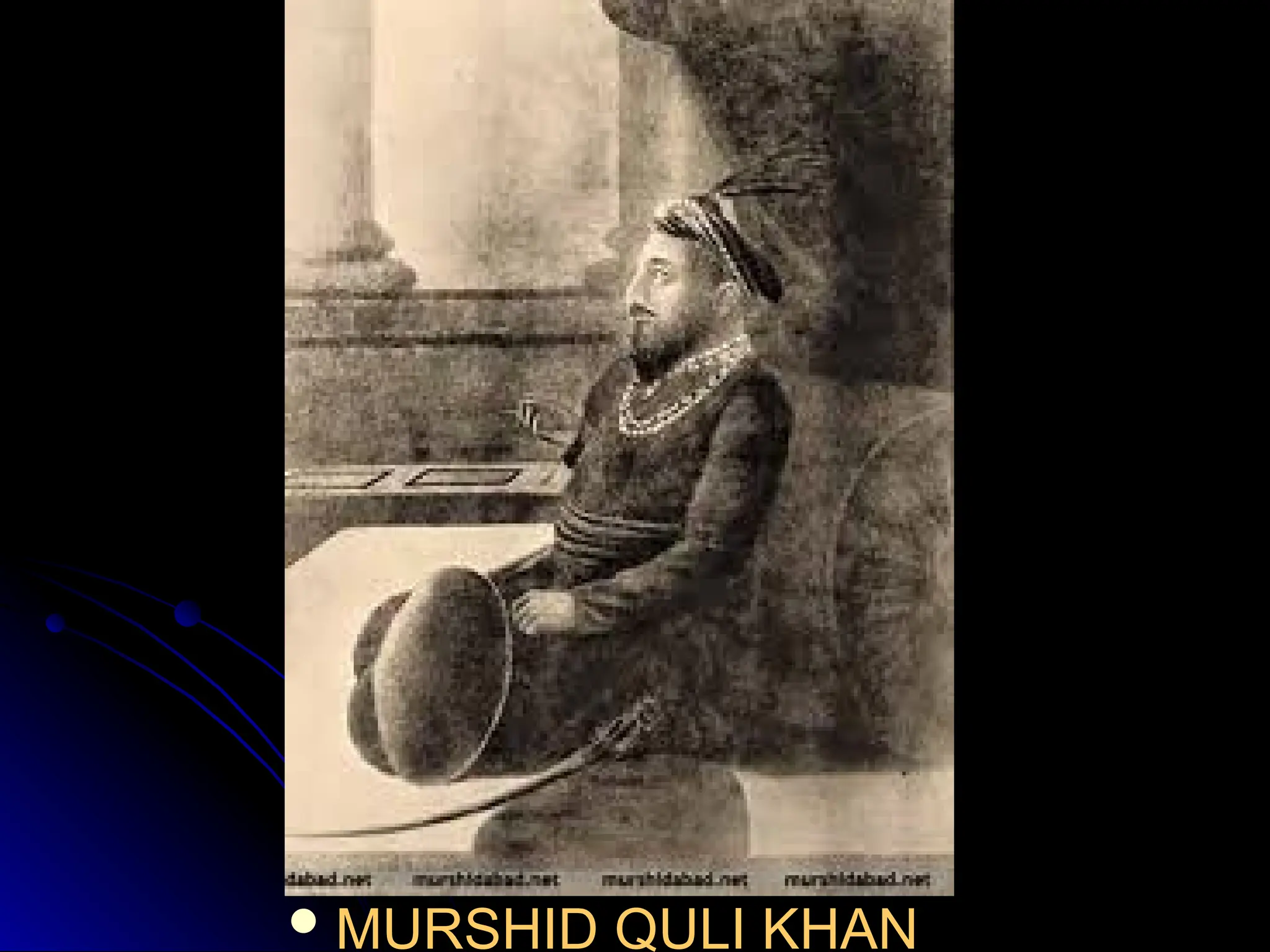
 At that time Murshid Quli Khan was the
At that time Murshid Quli Khan was the
Nawab of Bengal
Nawab of Bengal
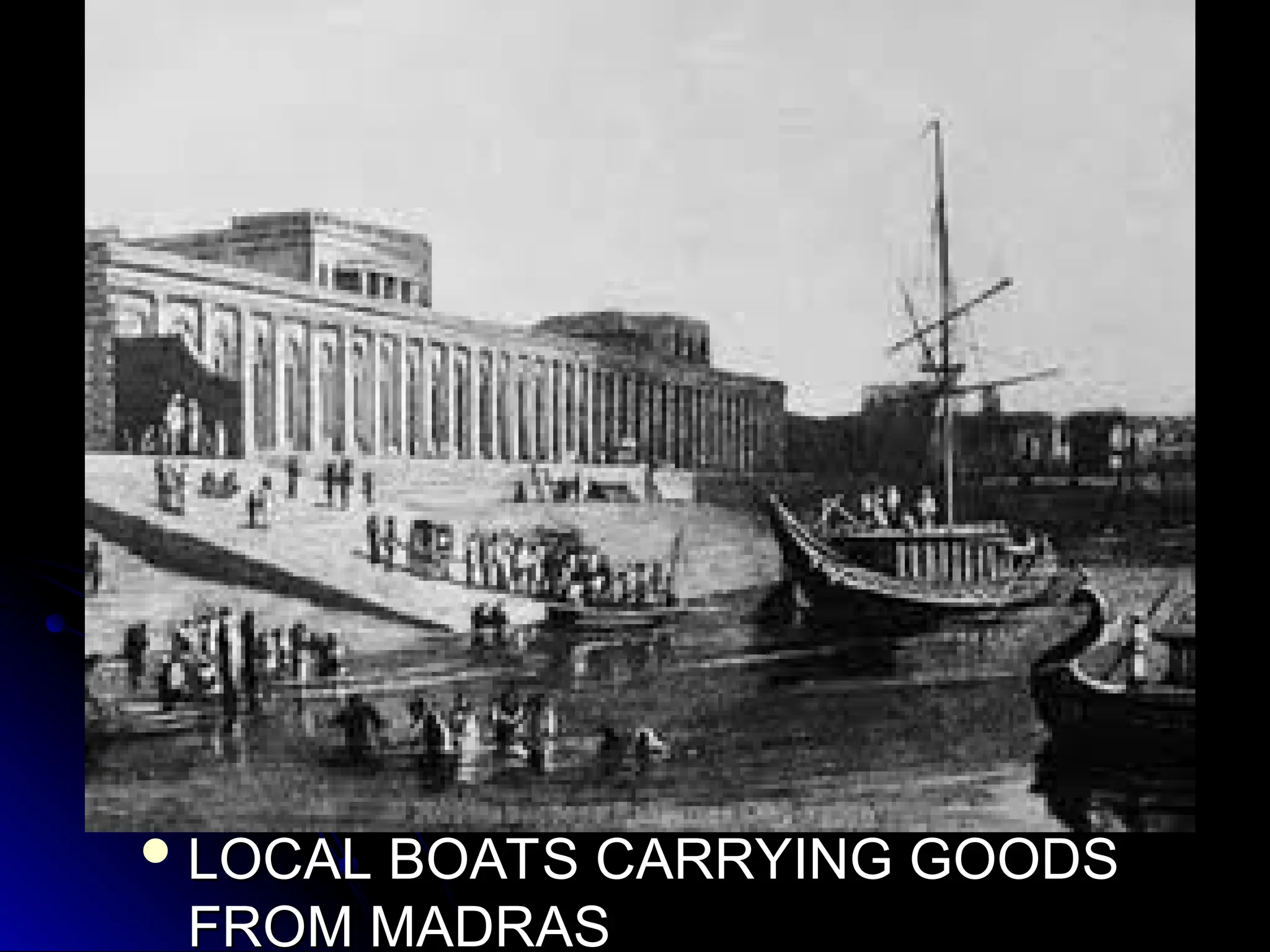
 LOCAL BOATS CARRYING GOODS
LOCAL BOATS CARRYING GOODS
FROM MADRAS
FROM MADRAS
 MURSHID QULI KHAN
MURSHID QULI KHAN
POINTS
POINTS
 After Aurangzeb's death the Bengal Nawabs
After Aurangzeb's death the Bengal Nawabs
asserted their power and autonomy
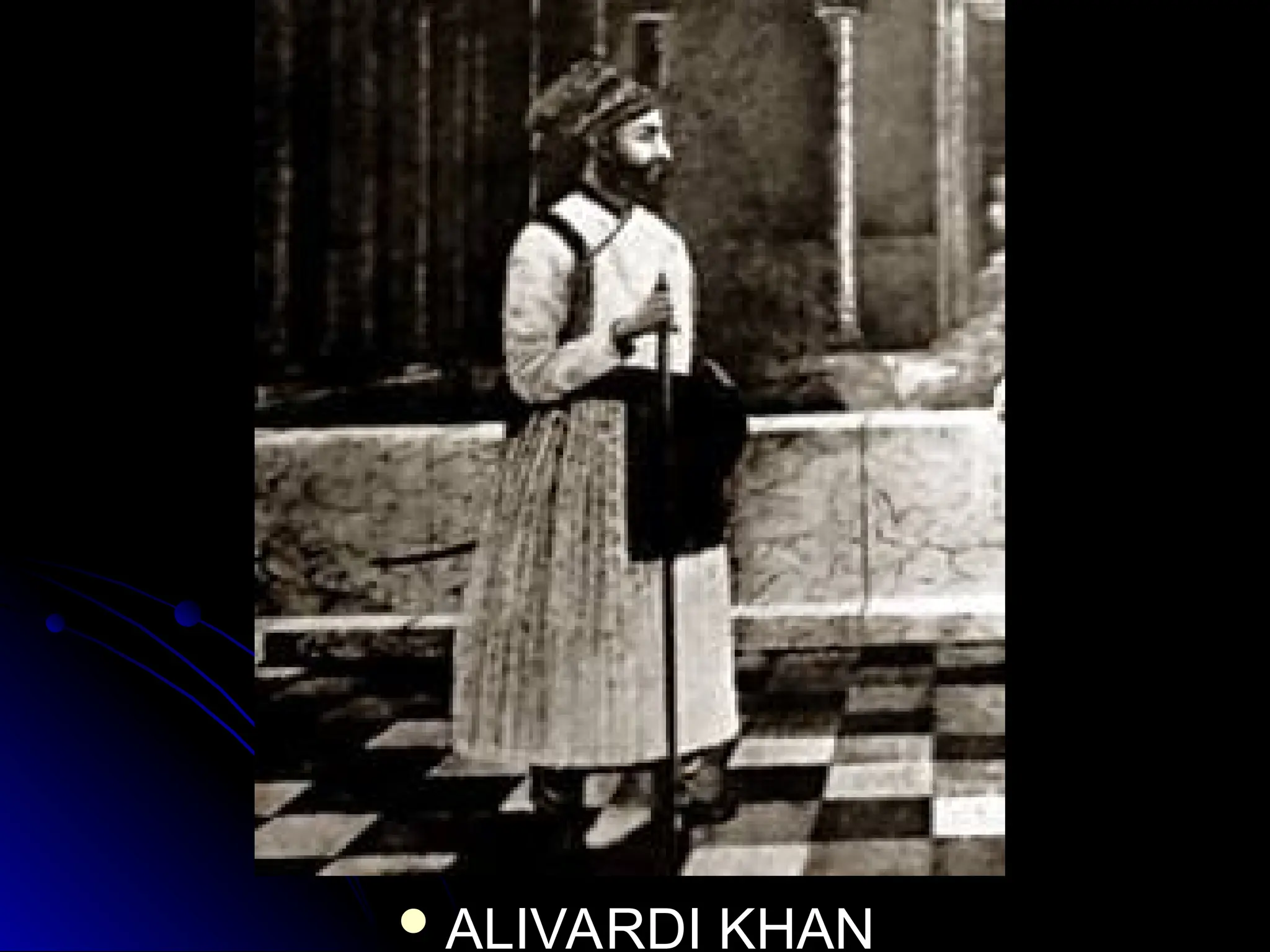
 Murshid Quli Khan was followed by Alivardi
Murshid Quli Khan was followed by Alivardi
Khan and then by Sirajuddaulah as the
Nawab of Bengal.
Nawab of Bengal.
 The conflicts led to confrontations and finally
The conflicts led to confrontations and finally
culminated in the famous battle of Plassey.
 ALIVARDI KHAN
ALIVARDI KHAN
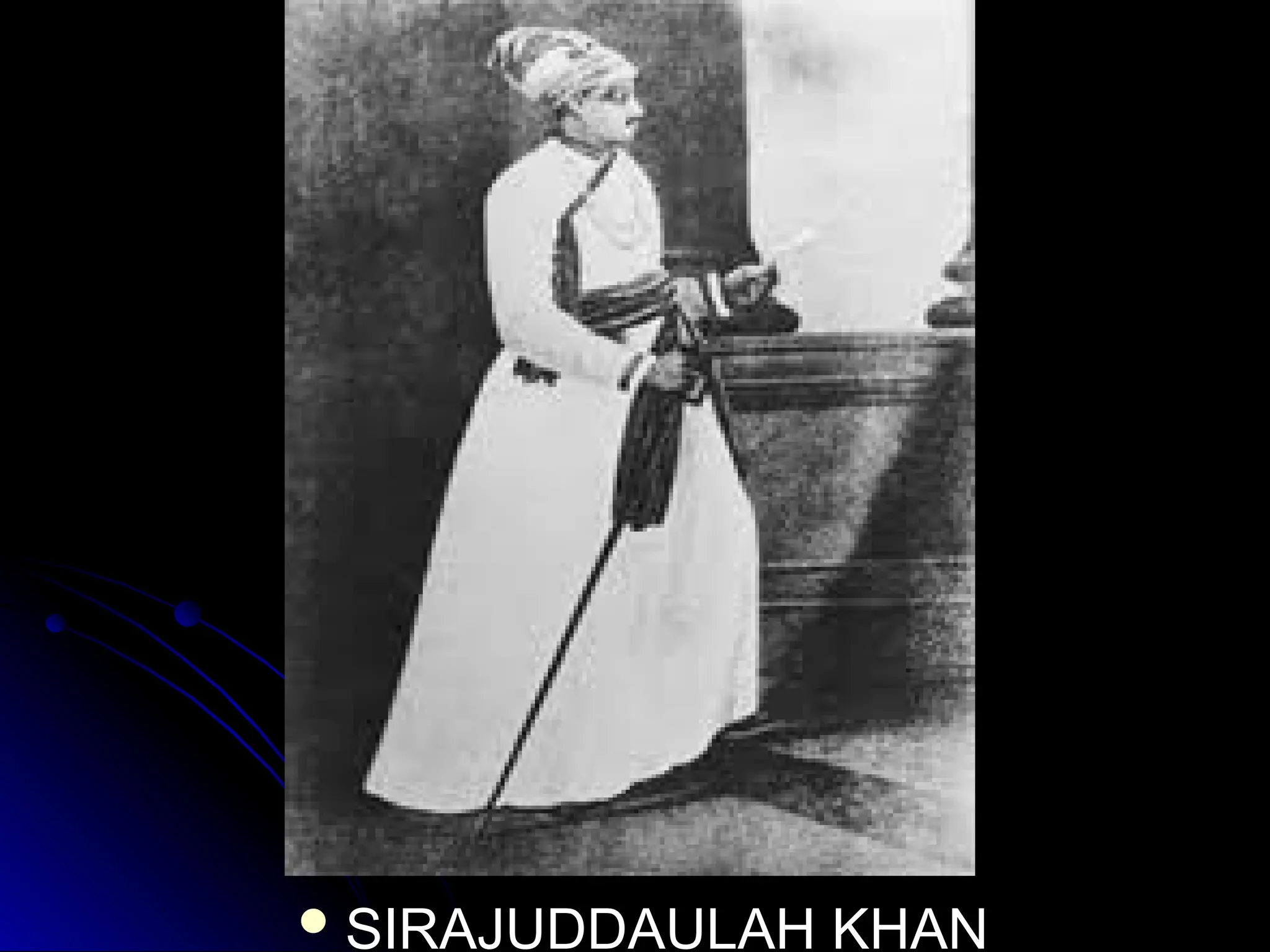
 SIRAJUDDAULAH KHAN
SIRAJUDDAULAH KHAN
POINTS
POINTS
 Alivardi khan died in 1756 , Sirajddaulah
Alivardi khan died in 1756 , Sirajddaulah
became the Nawab of Bengal.
 Sirajddaulah marched 30,000 soldiers to the
Sirajddaulah marched 30,000 soldiers to the
English factory at Kassimbazar ,captured the
company officials, locked the warehouse,
disarmed all Englishmen and blockaded
English ships.
English ships.
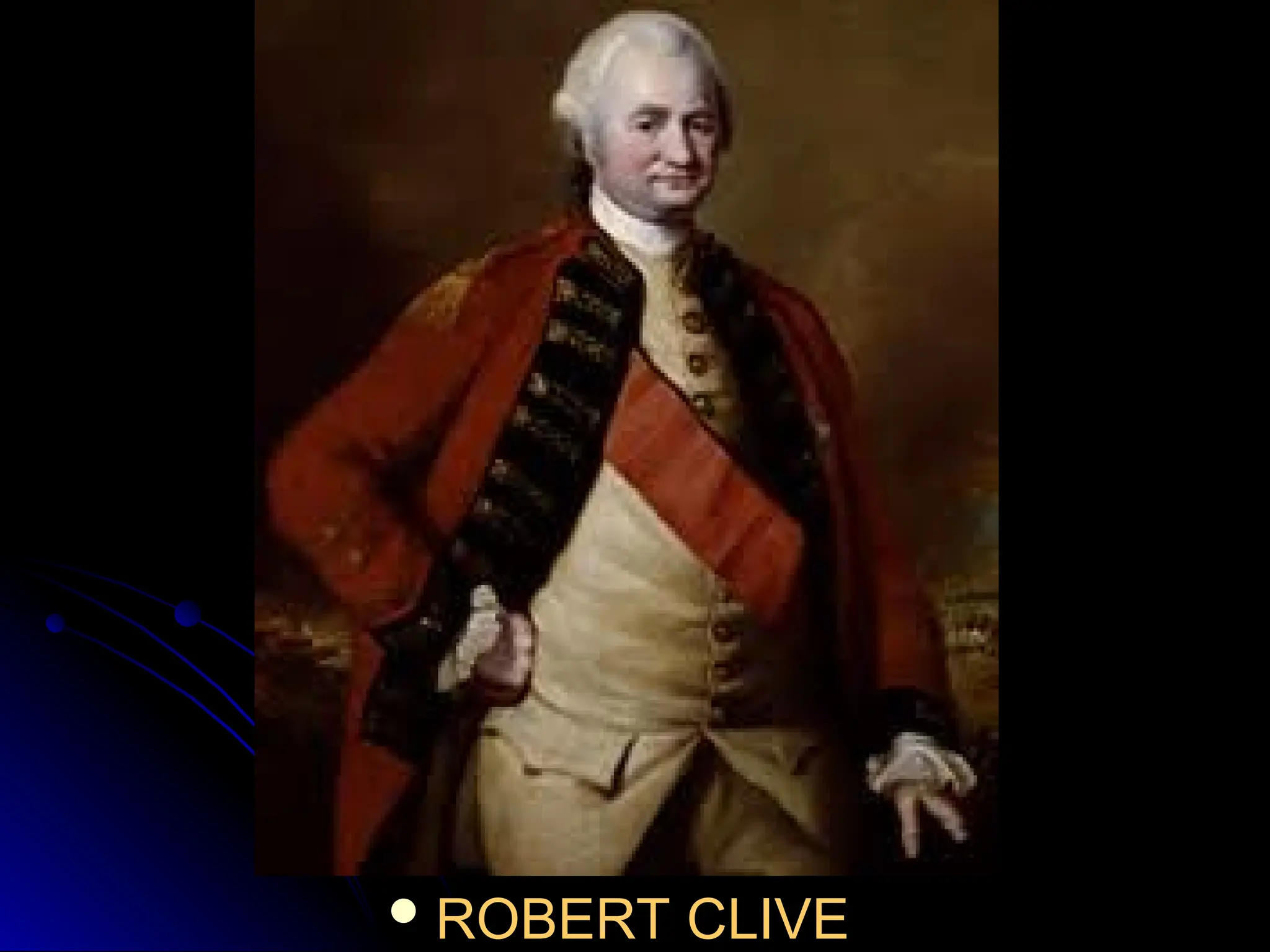
 Finally in 1757 Robert Clive led the company's
Finally in 1757 Robert Clive led the company's
army against Sirajddaulah at Plassey.
 ROBERT CLIVE
ROBERT CLIVE
POINTS
POINTS
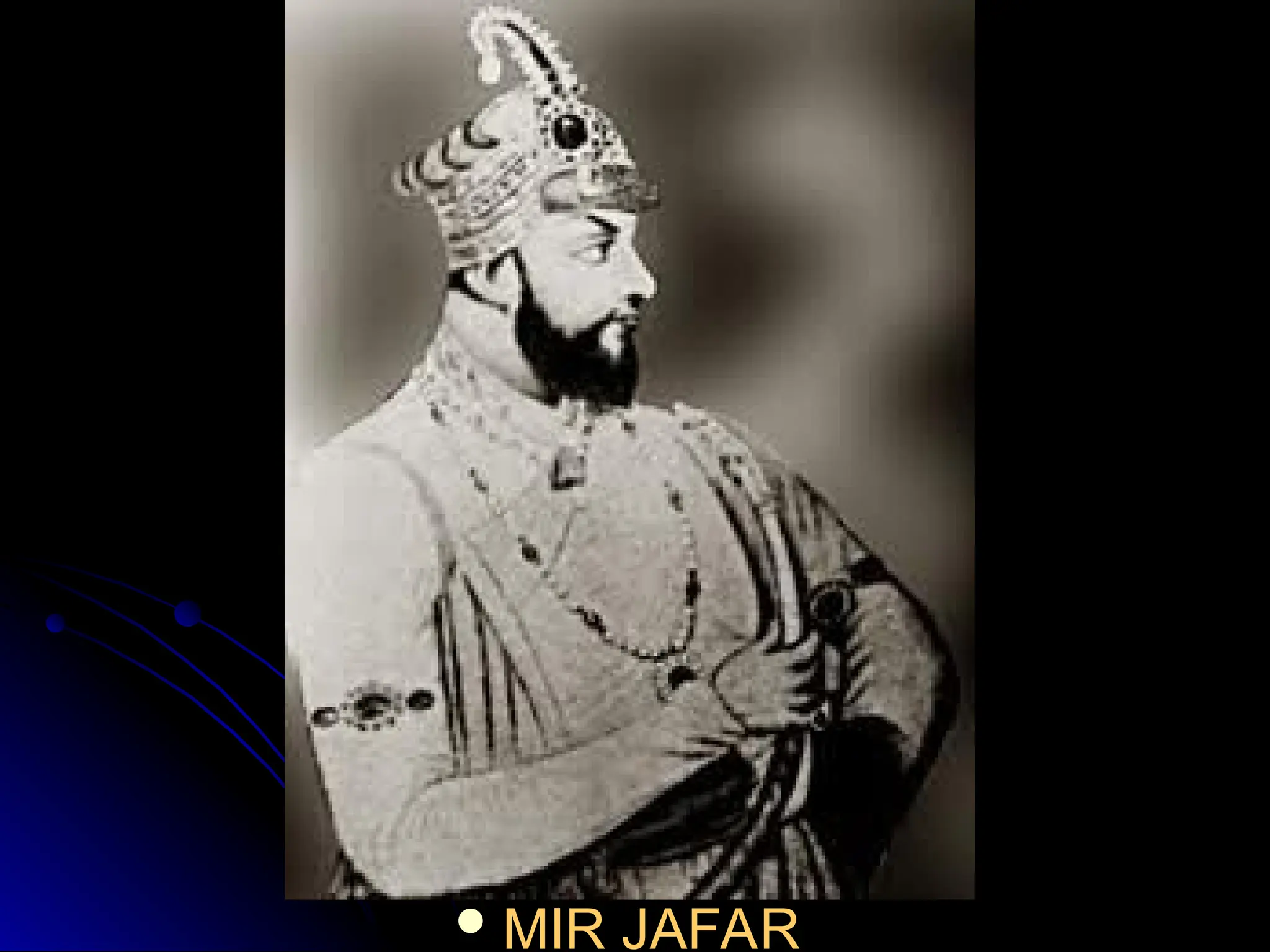
 Robert Clive promised Mir Jafar that if he wins the
Robert Clive promised Mir Jafar that if he wins the
battle against Sirajddaulah he will make him the
Nawab of Bengal.
Nawab of Bengal.
 Sirajddaulah was assassinated and Mir Jafar was
Sirajddaulah was assassinated and Mir Jafar was
made the Nawab.
made the Nawab.
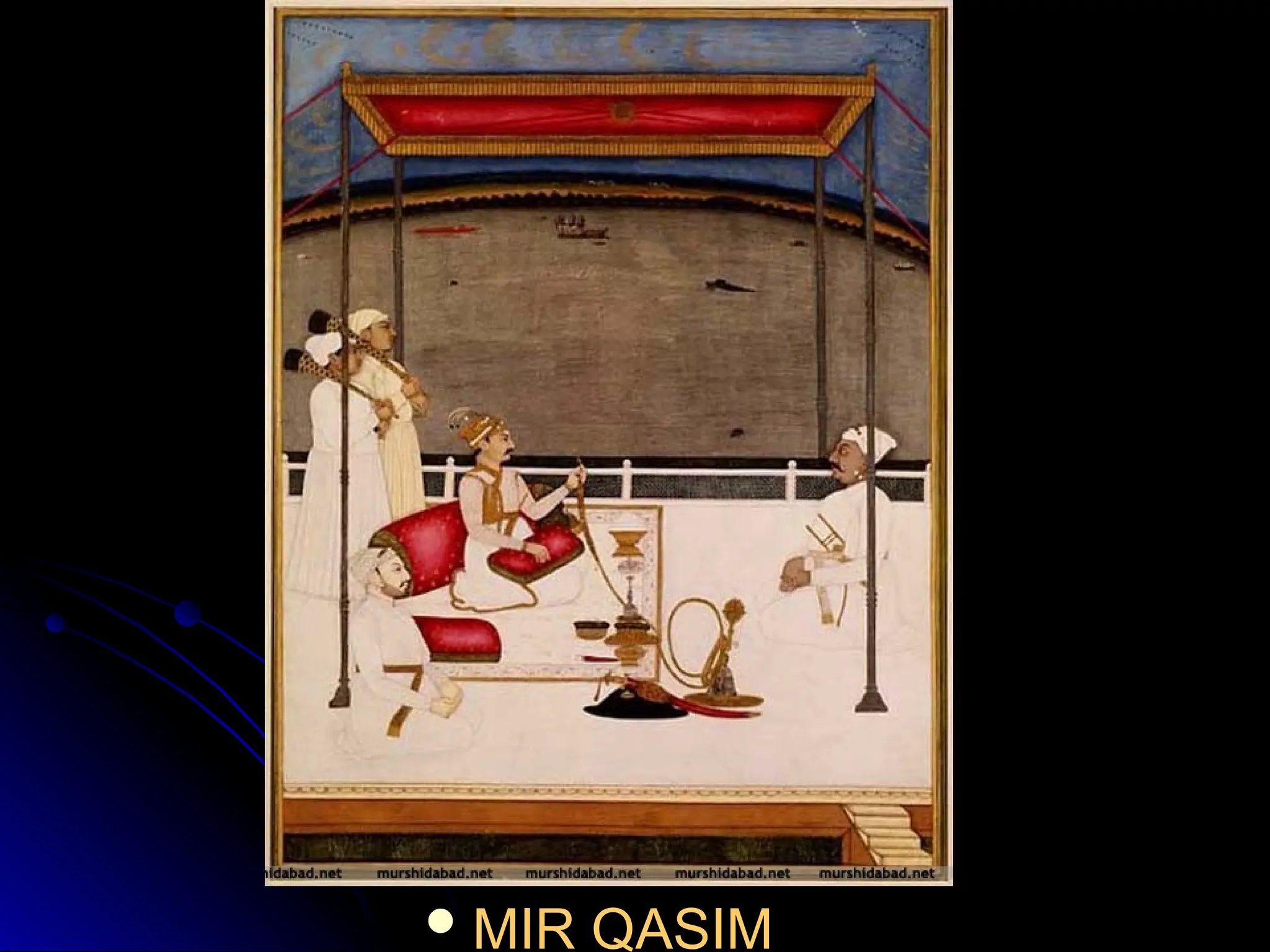
 Mir Jafar was deposed because he was protesting
Mir Jafar was deposed because he was protesting
for dignity and sovereignty and hence was
replaced by Mir Qasim.
 Mir Qasim lost the war at Buxar in 1764 and Mir
Mir Qasim lost the war at Buxar in 1764 and Mir
Jafar was reinstalled.
 MIR JAFAR
MIR JAFAR
 MIR QASIM
MIR QASIM
POINTS
POINTS
 In 17th-18th century Nawabs had to pay
In 17th-18th century Nawabs had to pay
5,00,000 rupees.
5,00,000 rupees.
 Mir Jafar died in 1765. And Clive declared
Mir Jafar died in 1765. And Clive declared
-"We must indeed become Nawabs ourselves"
 Clive collected 401,102 pounds of Indian
Clive collected 401,102 pounds of Indian
fortune.
fortune.
 Robert Clive committed suicide in 1774.
Robert Clive committed suicide in 1774.
 "Nabobs is an English word for Nawab.
"Nabobs is an English word for Nawab.
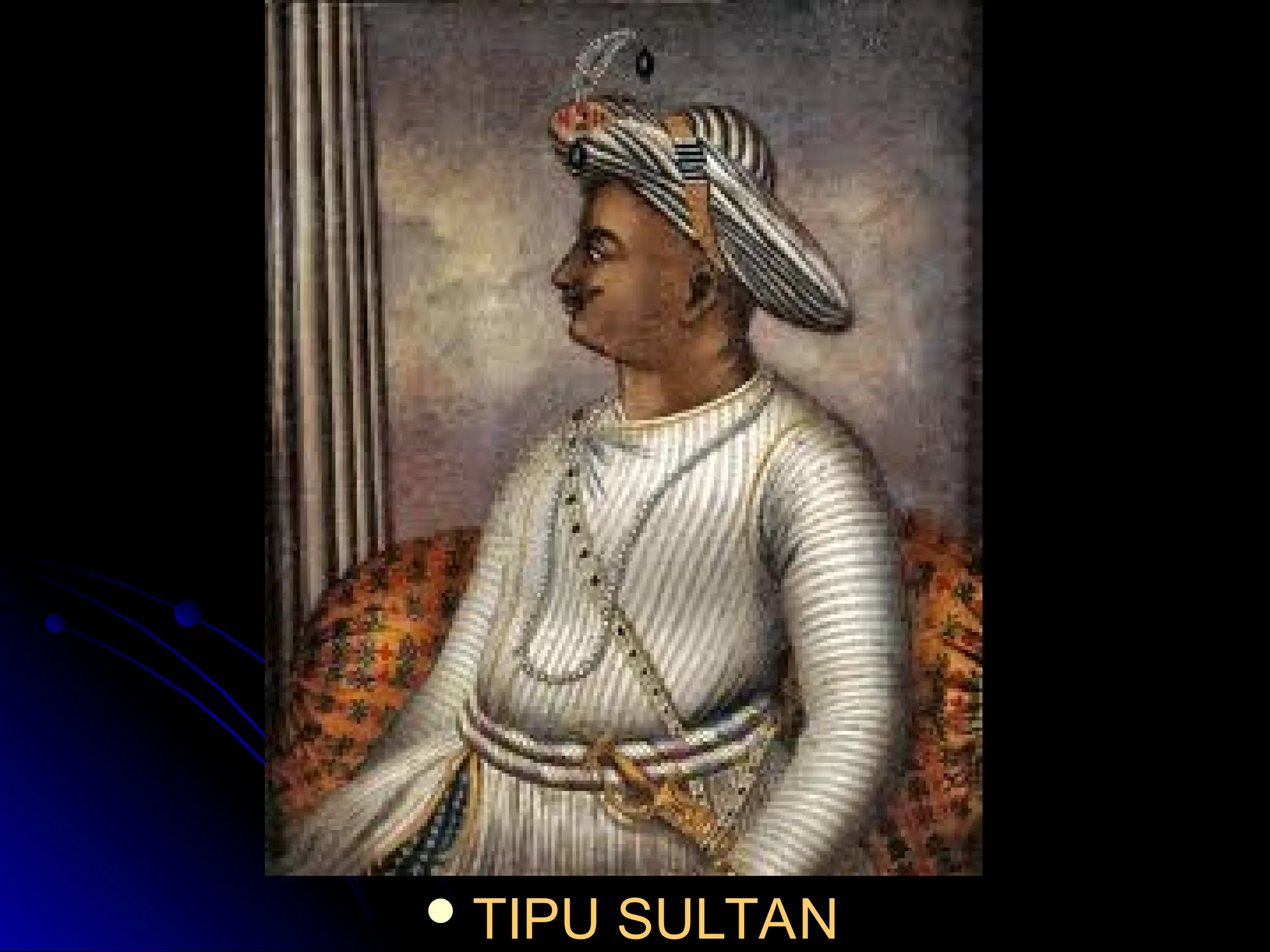
 TIPU SULTAN
TIPU SULTAN
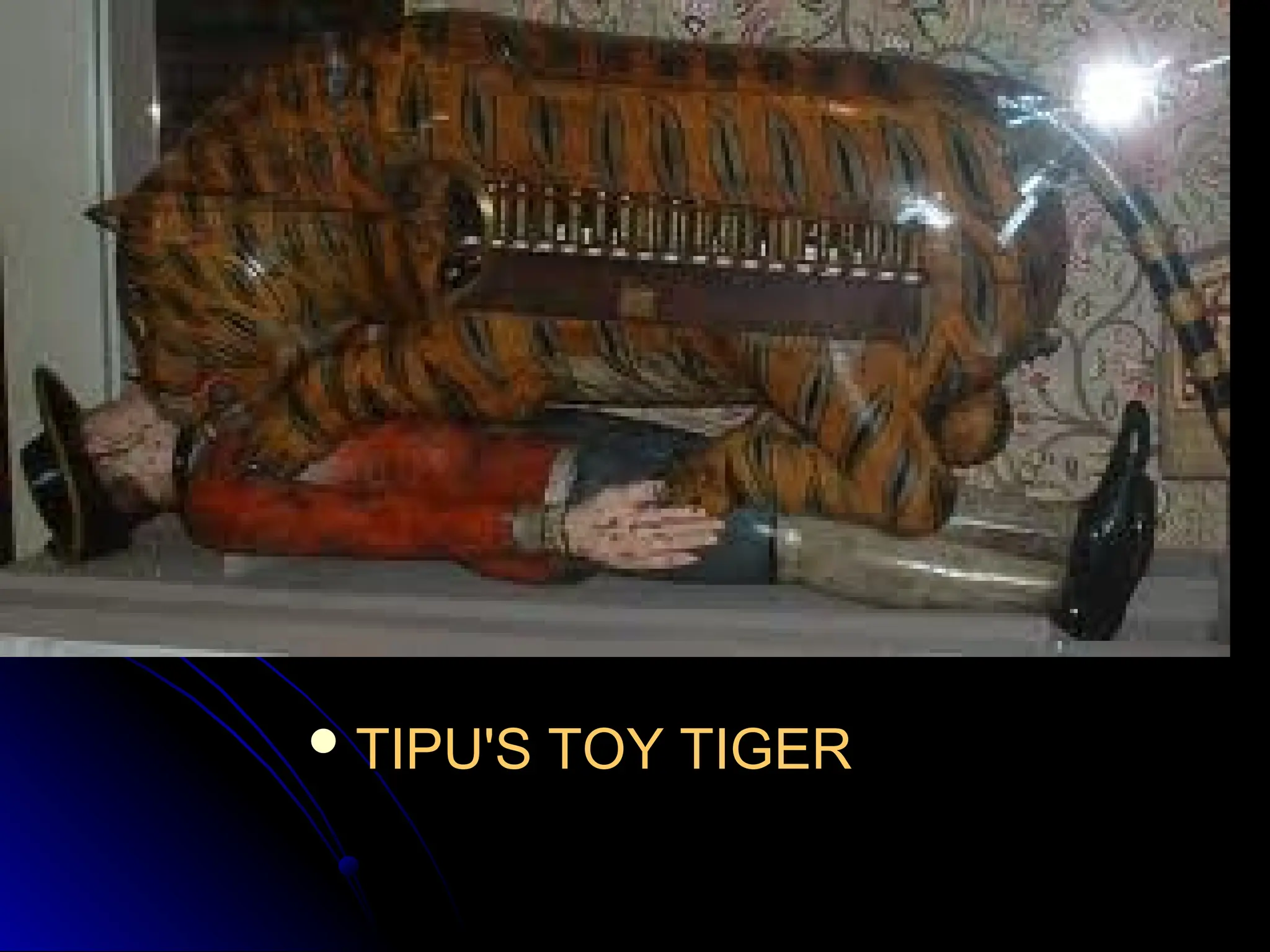
 TIPU'S TOY TIGER
TIPU'S TOY TIGER
POINTS
POINTS
 Regional ruler had to pay a little part of his
Regional ruler had to pay a little part of his
territory as a penalty to the company on his
failure to pay in cash.
 Haider Ali was the ruler of Mysore from 1761
Haider Ali was the ruler of Mysore from 1761
to 1782.
to 1782.
 Tipu Sultan stopped the export of
Tipu Sultan stopped the export of
sandalwood, pepper and cardamom.
 Haider and Tipu together were ambitious ,
Haider and Tipu together were ambitious ,
arrogant and dangerous.
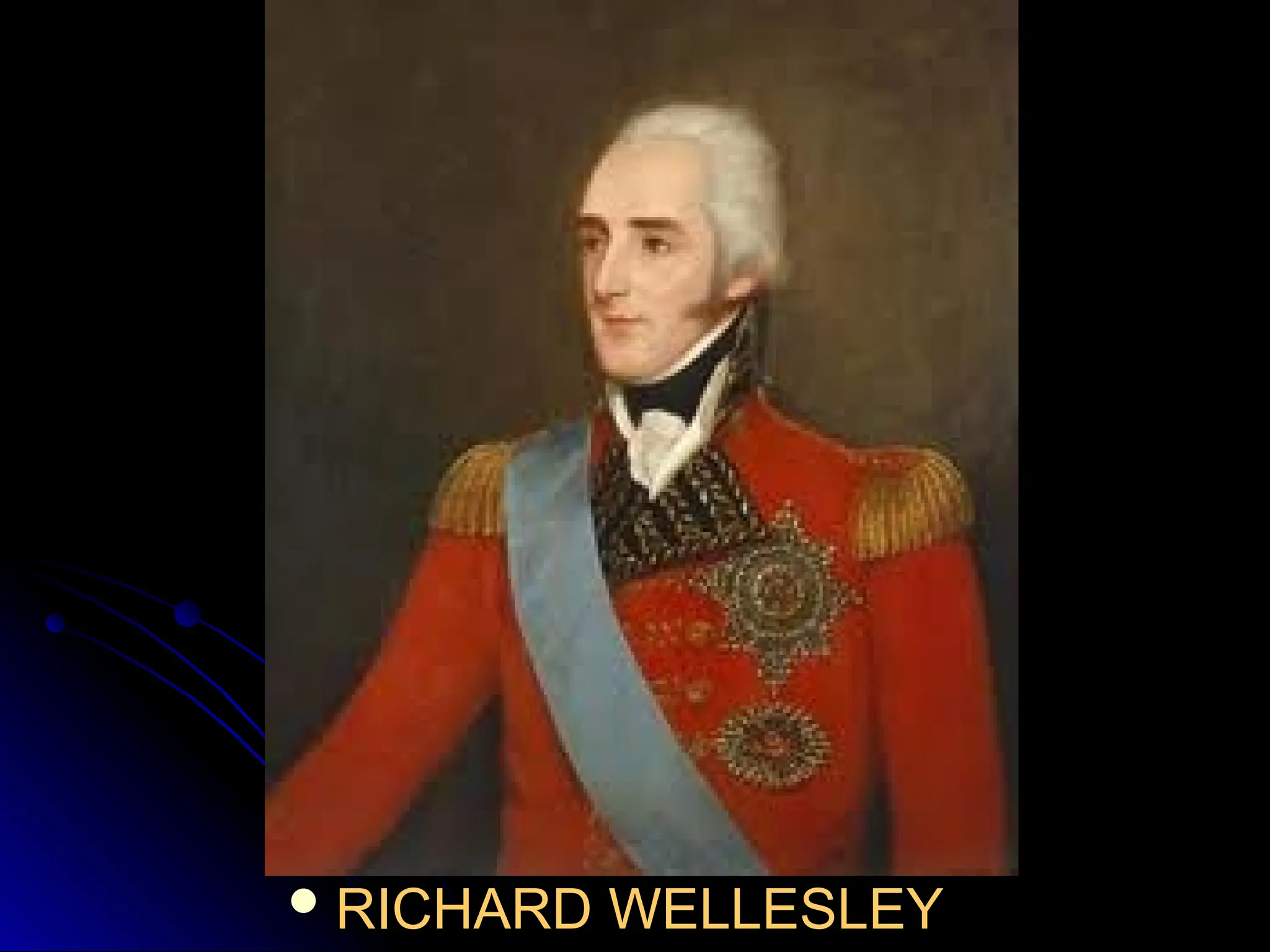
 RICHARD WELLESLEY
RICHARD WELLESLEY
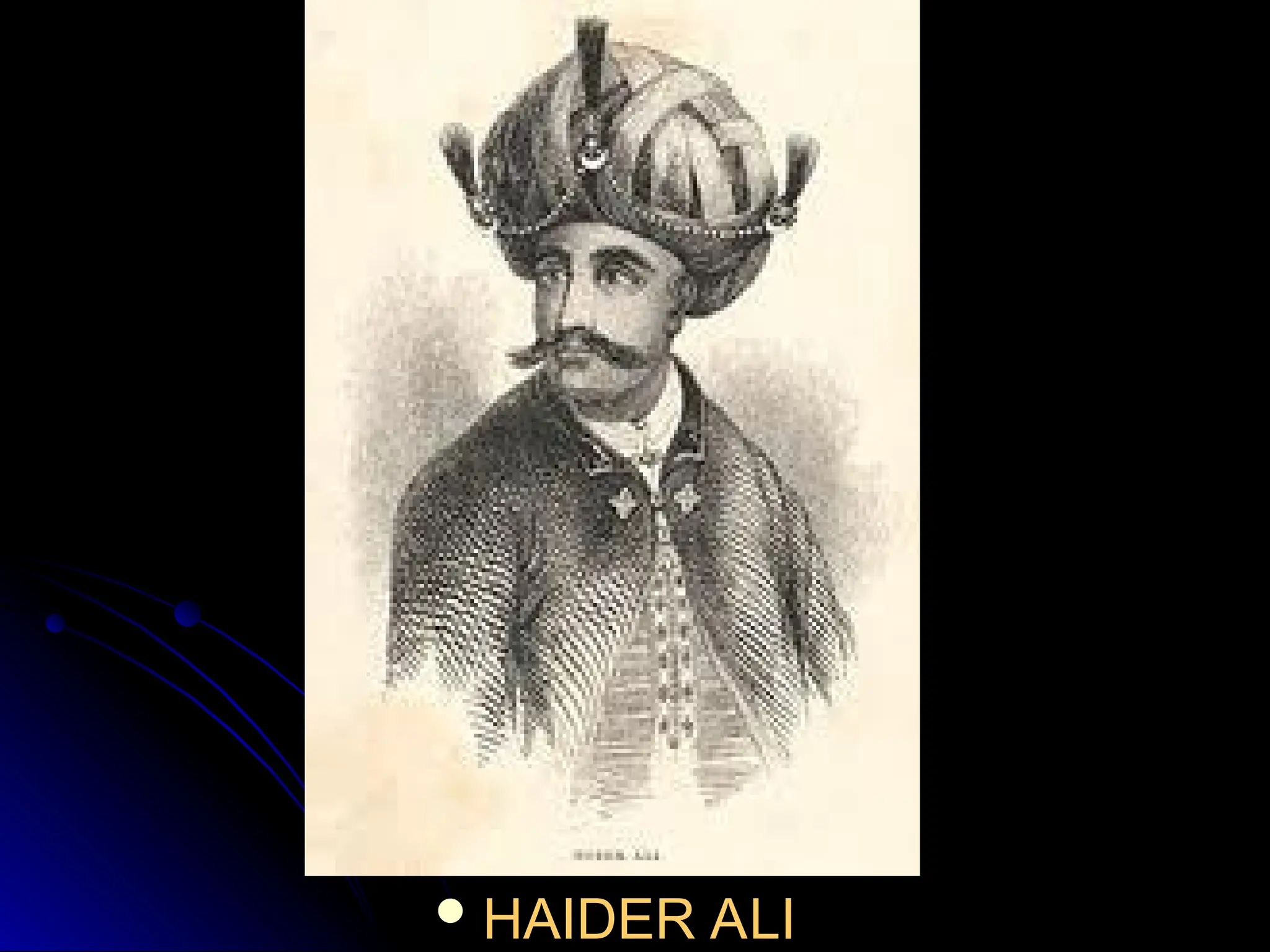
 HAIDER ALI
HAIDER ALI
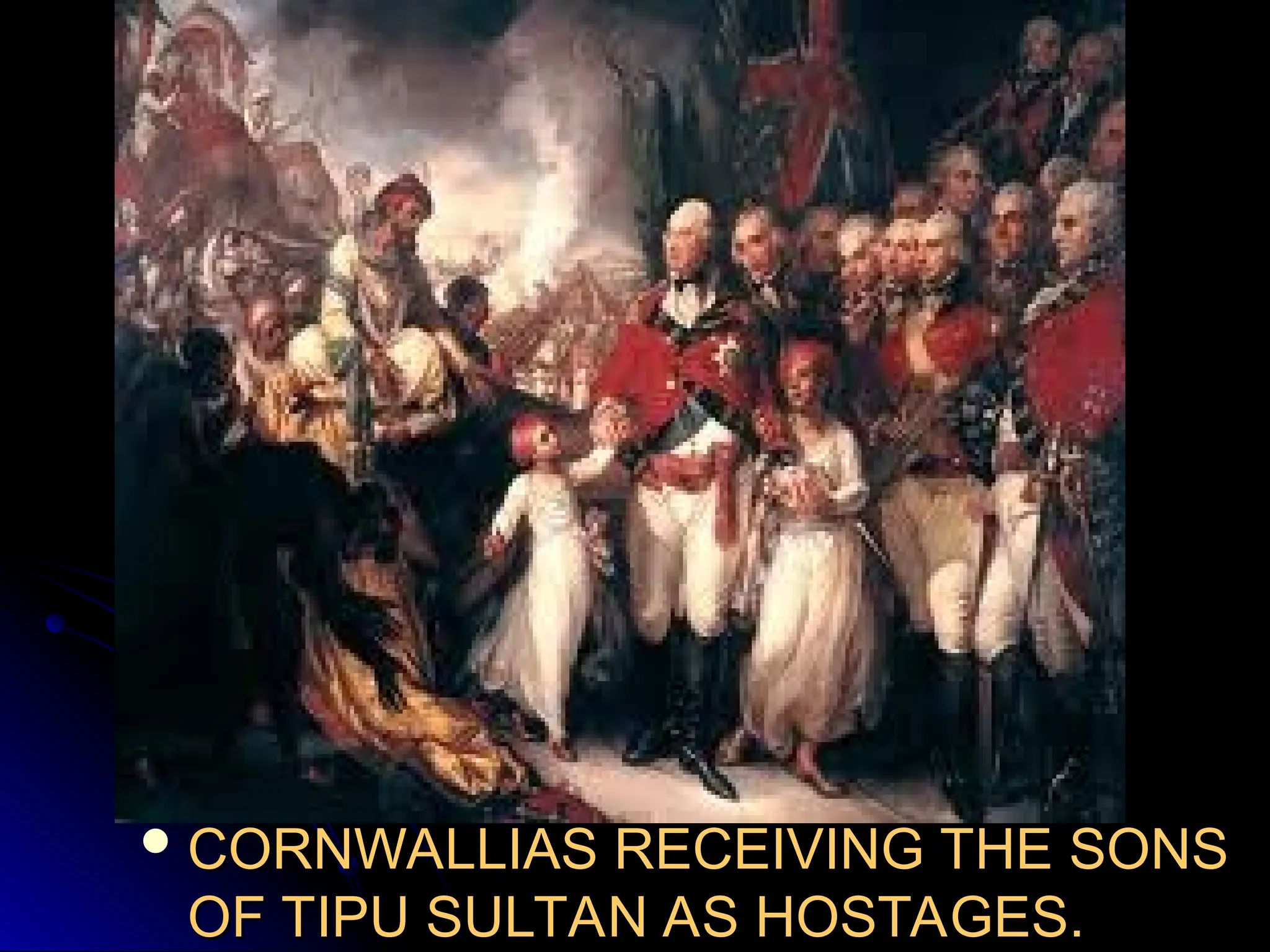
 CORNWALLIAS RECEIVING THE SONS
CORNWALLIAS RECEIVING THE SONS
OF TIPU SULTAN AS HOSTAGES.
 CORNWALLIS
CORNWALLIS
POINTS
POINTS
 From the late 18th century British also
From the late 18th century British also
wanted to destroy Maratha power.
 Mahadji Sindhia and Nana Phandis were two
Mahadji Sindhia and Nana Phandis were two
famous Maratha soldiers who fought the
battle in Panipat.
battle in Panipat.
 Finally in 1817-19 Britishers crushed the
Finally in 1817-19 Britishers crushed the
Marathas.
Marathas.
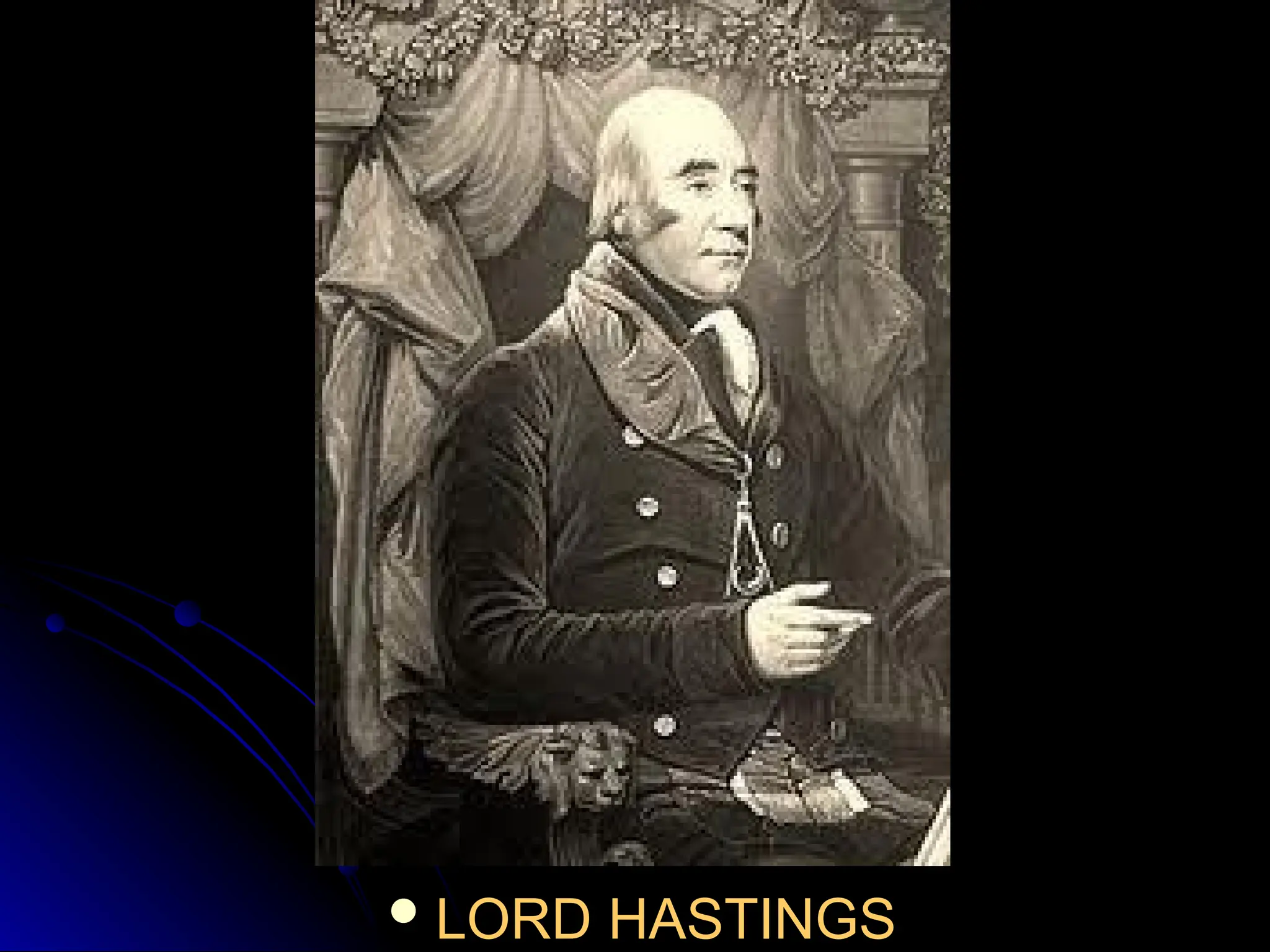
 A new policy "Paramountcy" was initiated by
A new policy "Paramountcy" was initiated by
Lord Hastings.
Lord Hastings.
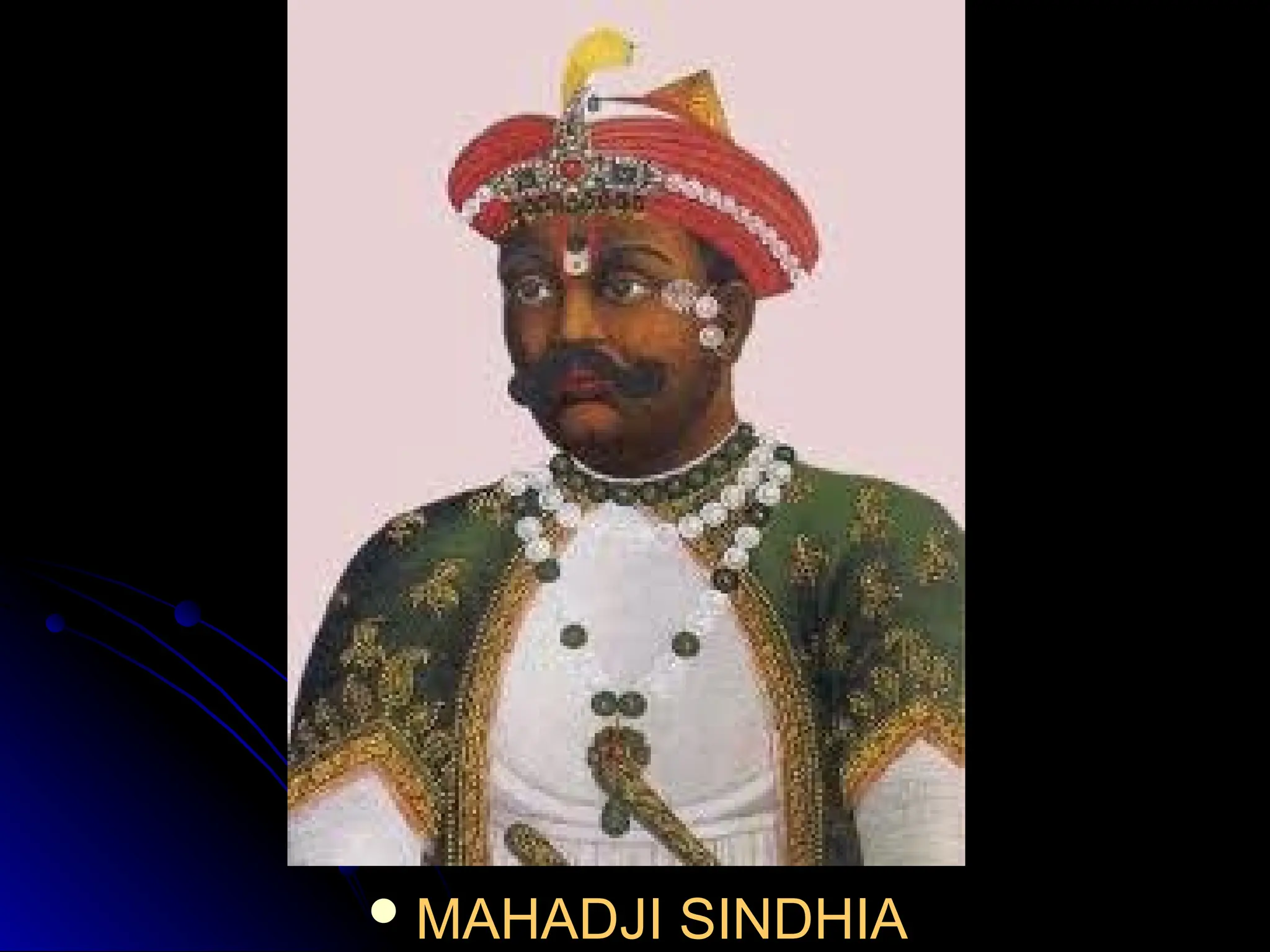
 MAHADJI SINDHIA
MAHADJI SINDHIA
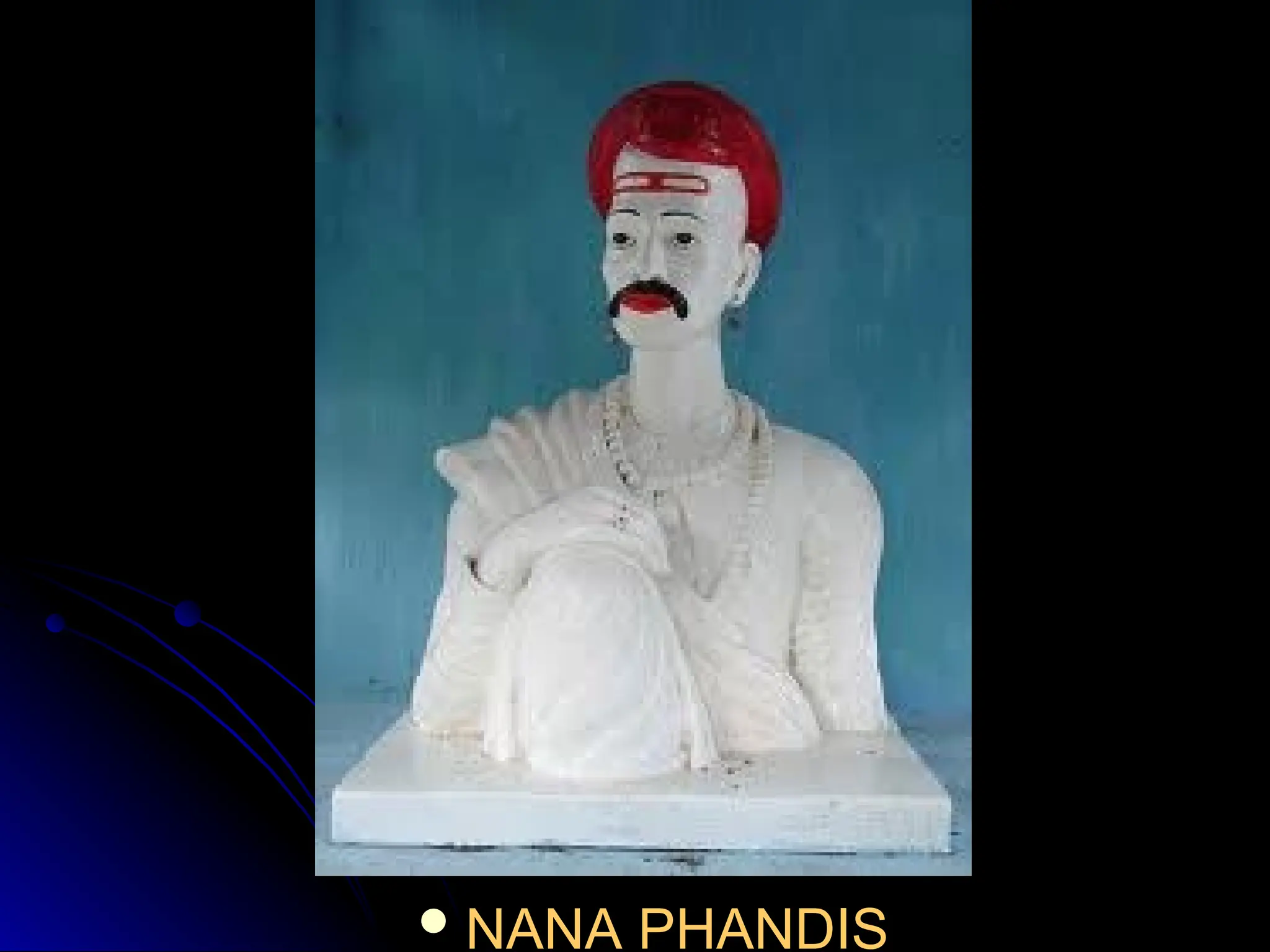
 NANA PHANDIS
NANA PHANDIS
 LORD HASTINGS
LORD HASTINGS
POINTS
POINTS
 In late 18th century East India Company
In late 18th century East India Company
began worrying about Russia.
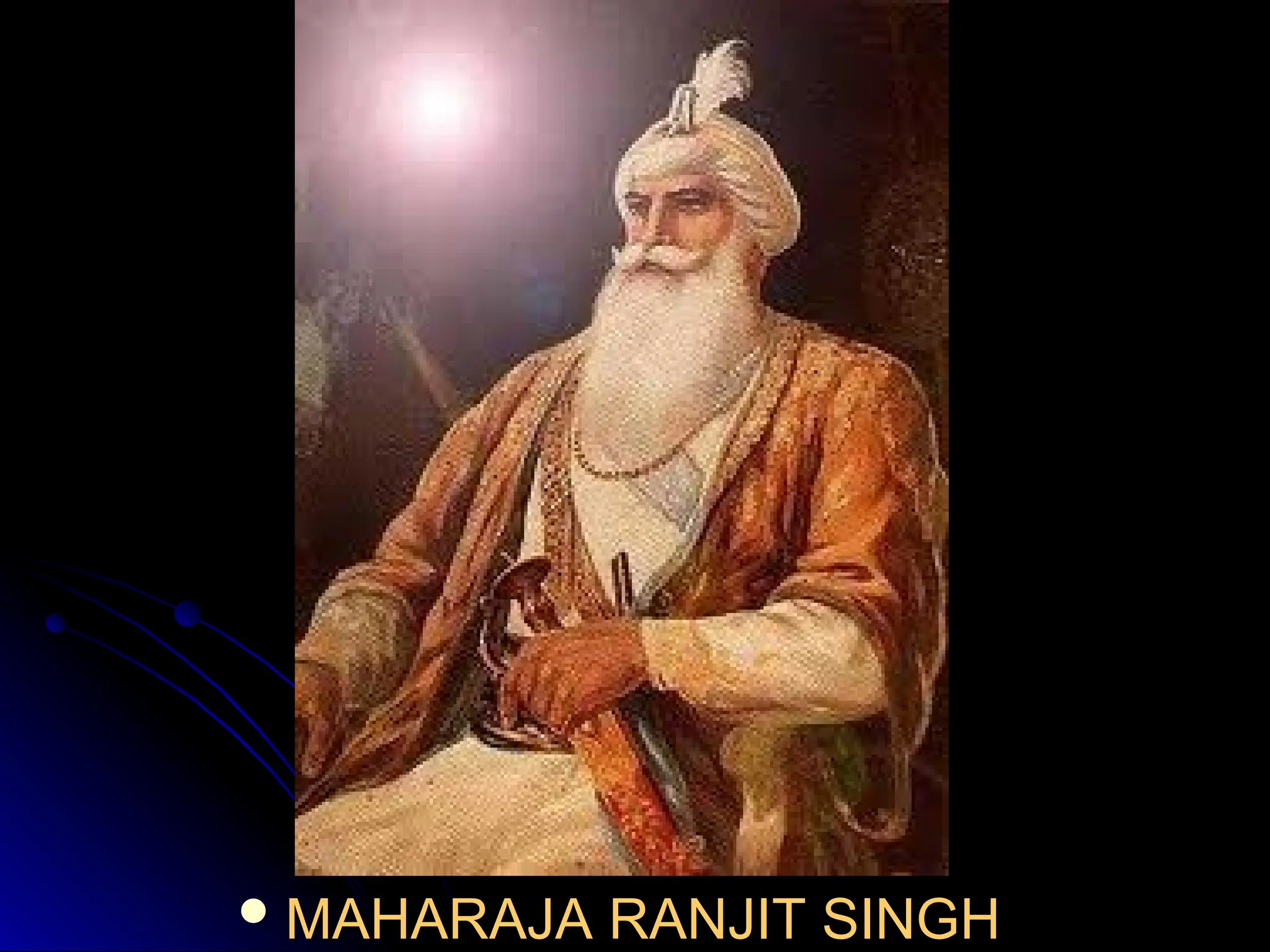
 Maharaja Ranjit Singh died in 1839.
Maharaja Ranjit Singh died in 1839.
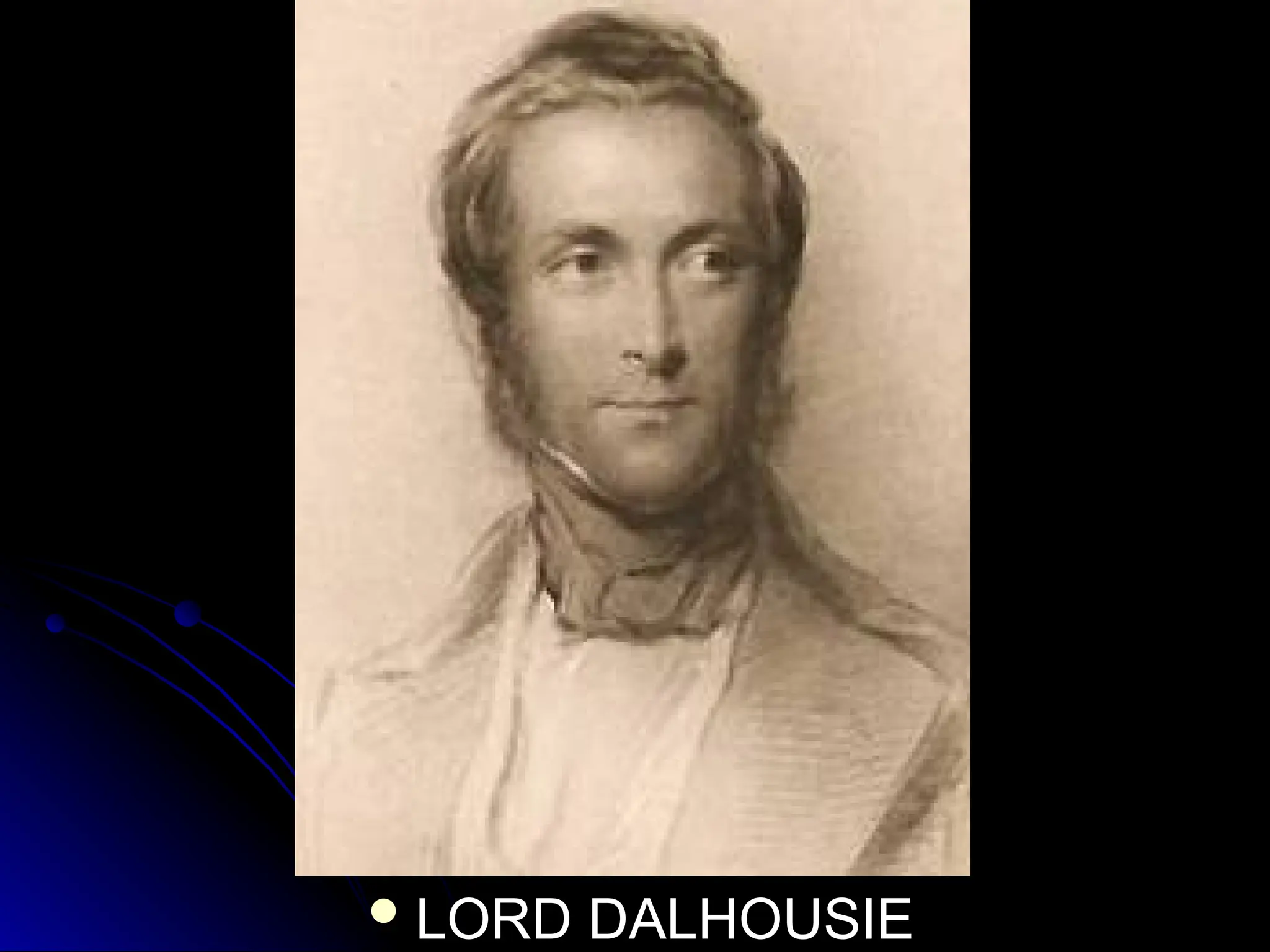
 Lord Dalhousie was the Governor-General
Lord Dalhousie was the Governor-General
from 1848 to 1856.
from 1848 to 1856.
 In 1856 the company took over Awadh.
In 1856 the company took over Awadh.
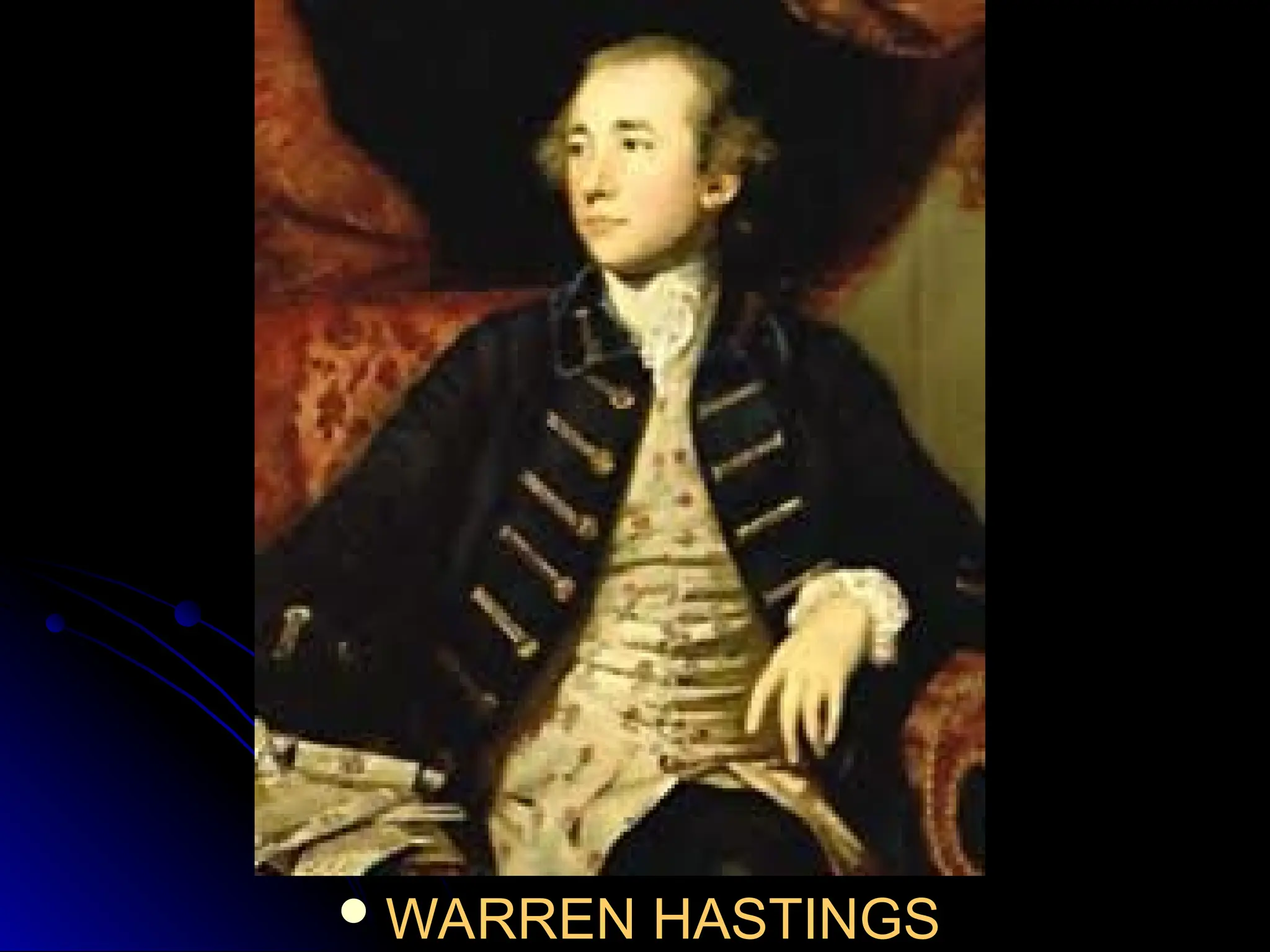
 Warren Hastings was one of the many
Warren Hastings was one of the many
Important figures who played a significant role
in company power expansion.
 MAHARAJA RANJIT SINGH
MAHARAJA RANJIT SINGH
 LORD DALHOUSIE
LORD DALHOUSIE
 WARREN HASTINGS
WARREN HASTINGS
POINTS
POINTS
 From 1772 a new system of justice was
From 1772 a new system of justice was
established.
established.
 Qazi is a word for court judge.
Qazi is a word for court judge.
 In 1775 eleven pandits were asked to
In 1775 eleven pandits were asked to
compile a digest of Hindu laws.
 Sawars are trained soldiers on horseback.
Sawars are trained soldiers on horseback.
 The cavalry requirements of the
The cavalry requirements of the
company's army declined.
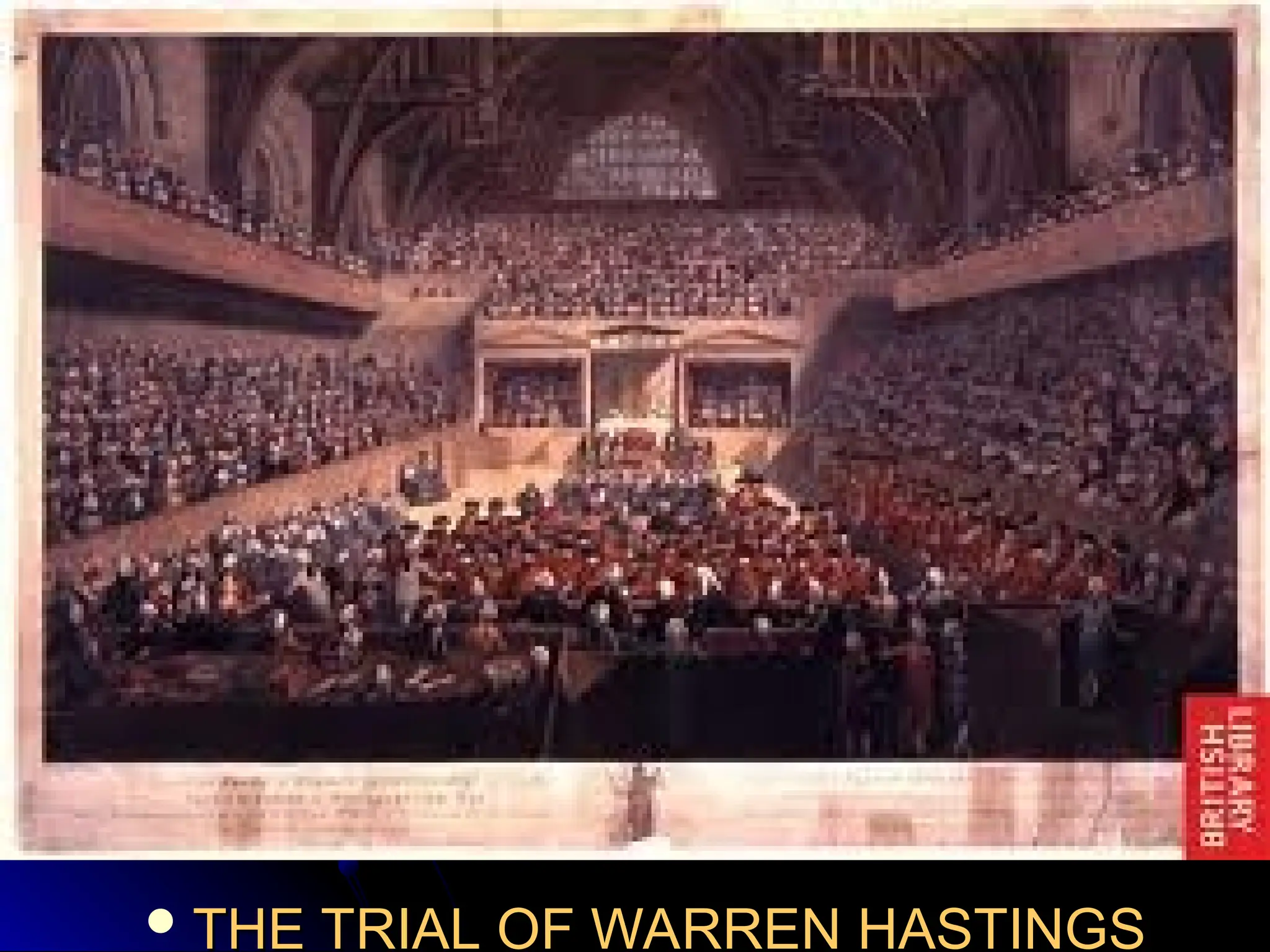
 THE TRIAL OF WARREN HASTINGS
THE TRIAL OF WARREN HASTINGS
POINTS
POINTS
 In the early 19th century the British began
In the early 19th century the British began
to develop a uniform military culture.
 British empire was fighting in Burma,
British empire was fighting in Burma,
Afghanistan and Egypt where soldiers
were armed with muskets and matchlocks.
 The Revolt of 1857 gives us a glimpse in
The Revolt of 1857 gives us a glimpse in
to the world of sepoys.

From Trade to Territory,PPT.ppt of class 8

  • 1.
  • 2.
    POINTS POINTS  Aurangzeb wasthe last powerful Mughal Aurangzeb was the last powerful Mughal ruler. ( died in 1707 ) ruler. ( died in 1707 )  Bahadur Shah Zafar was forced to leave Bahadur Shah Zafar was forced to leave the kingdom in 1857. the kingdom in 1857.  In 1600 East India Company acquired a In 1600 East India Company acquired a charter from the ruler of England. charter from the ruler of England.  Mercantile companies in those days Mercantile companies in those days primarily to make more profit. primarily to make more profit.
  • 3.
     MUGHAL EMPERORAURANGZEB MUGHAL EMPEROR AURANGZEB
  • 4.
     BAHADUR SHAHZAFAR BAHADUR SHAH ZAFAR
  • 5.
     ENGLAND RULER-QUEENELIZABETH ENGLAND RULER-QUEEN ELIZABETH
  • 6.
    POINTS POINTS  The searoute to India was discovered by The sea route to India was discovered by Vasco Da Gama in 1498. Vasco Da Gama in 1498.  Afterwards French came to trade in India. Afterwards French came to trade in India.  Fine quality silk and cotton was produced in Fine quality silk and cotton was produced in India. India.  In 17th to 18th century the traders sank each In 17th to 18th century the traders sank each other's ship. other's ship.  Effort to fortify settlements and carry profitable Effort to fortify settlements and carry profitable trade led to conflict amongst local rulers trade led to conflict amongst local rulers
  • 7.
     Vasco DaGama Vasco Da Gama
  • 8.
     THE SEAROUTE THE SEA ROUTE
  • 9.
    POINTS POINTS  The 1stfactory of East India Company was set The 1st factory of East India Company was set up on the banks of river Hughli in 1651. up on the banks of river Hughli in 1651.  By 1696 it began building forts around the By 1696 it began building forts around the settlements. settlements.  Kolkata was first Kalikata ,then Calcutta and Kolkata was first Kalikata ,then Calcutta and afterwards became Kolkata. afterwards became Kolkata.  Farman is a royal edict, royal order. Farman is a royal edict, royal order.  At that time Murshid Quli Khan was the At that time Murshid Quli Khan was the Nawab of Bengal Nawab of Bengal
  • 10.
     LOCAL BOATSCARRYING GOODS LOCAL BOATS CARRYING GOODS FROM MADRAS FROM MADRAS
  • 11.
     MURSHID QULIKHAN MURSHID QULI KHAN
  • 12.
    POINTS POINTS  After Aurangzeb'sdeath the Bengal Nawabs After Aurangzeb's death the Bengal Nawabs asserted their power and autonomy asserted their power and autonomy  Murshid Quli Khan was followed by Alivardi Murshid Quli Khan was followed by Alivardi Khan and then by Sirajuddaulah as the Khan and then by Sirajuddaulah as the Nawab of Bengal. Nawab of Bengal.  The conflicts led to confrontations and finally The conflicts led to confrontations and finally culminated in the famous battle of Plassey. culminated in the famous battle of Plassey.
  • 13.
  • 14.
  • 15.
    POINTS POINTS  Alivardi khandied in 1756 , Sirajddaulah Alivardi khan died in 1756 , Sirajddaulah became the Nawab of Bengal. became the Nawab of Bengal.  Sirajddaulah marched 30,000 soldiers to the Sirajddaulah marched 30,000 soldiers to the English factory at Kassimbazar ,captured the English factory at Kassimbazar ,captured the company officials, locked the warehouse, company officials, locked the warehouse, disarmed all Englishmen and blockaded disarmed all Englishmen and blockaded English ships. English ships.  Finally in 1757 Robert Clive led the company's Finally in 1757 Robert Clive led the company's army against Sirajddaulah at Plassey. army against Sirajddaulah at Plassey.
  • 16.
  • 17.
    POINTS POINTS  Robert Clivepromised Mir Jafar that if he wins the Robert Clive promised Mir Jafar that if he wins the battle against Sirajddaulah he will make him the battle against Sirajddaulah he will make him the Nawab of Bengal. Nawab of Bengal.  Sirajddaulah was assassinated and Mir Jafar was Sirajddaulah was assassinated and Mir Jafar was made the Nawab. made the Nawab.  Mir Jafar was deposed because he was protesting Mir Jafar was deposed because he was protesting for dignity and sovereignty and hence was for dignity and sovereignty and hence was replaced by Mir Qasim. replaced by Mir Qasim.  Mir Qasim lost the war at Buxar in 1764 and Mir Mir Qasim lost the war at Buxar in 1764 and Mir Jafar was reinstalled. Jafar was reinstalled.
  • 18.
  • 19.
  • 20.
    POINTS POINTS  In 17th-18thcentury Nawabs had to pay In 17th-18th century Nawabs had to pay 5,00,000 rupees. 5,00,000 rupees.  Mir Jafar died in 1765. And Clive declared Mir Jafar died in 1765. And Clive declared -"We must indeed become Nawabs ourselves" -"We must indeed become Nawabs ourselves"  Clive collected 401,102 pounds of Indian Clive collected 401,102 pounds of Indian fortune. fortune.  Robert Clive committed suicide in 1774. Robert Clive committed suicide in 1774.  "Nabobs is an English word for Nawab. "Nabobs is an English word for Nawab.
  • 21.
  • 22.
     TIPU'S TOYTIGER TIPU'S TOY TIGER
  • 23.
    POINTS POINTS  Regional rulerhad to pay a little part of his Regional ruler had to pay a little part of his territory as a penalty to the company on his territory as a penalty to the company on his failure to pay in cash. failure to pay in cash.  Haider Ali was the ruler of Mysore from 1761 Haider Ali was the ruler of Mysore from 1761 to 1782. to 1782.  Tipu Sultan stopped the export of Tipu Sultan stopped the export of sandalwood, pepper and cardamom. sandalwood, pepper and cardamom.  Haider and Tipu together were ambitious , Haider and Tipu together were ambitious , arrogant and dangerous. arrogant and dangerous.
  • 24.
  • 25.
  • 26.
     CORNWALLIAS RECEIVINGTHE SONS CORNWALLIAS RECEIVING THE SONS OF TIPU SULTAN AS HOSTAGES. OF TIPU SULTAN AS HOSTAGES.
  • 27.
  • 28.
    POINTS POINTS  From thelate 18th century British also From the late 18th century British also wanted to destroy Maratha power. wanted to destroy Maratha power.  Mahadji Sindhia and Nana Phandis were two Mahadji Sindhia and Nana Phandis were two famous Maratha soldiers who fought the famous Maratha soldiers who fought the battle in Panipat. battle in Panipat.  Finally in 1817-19 Britishers crushed the Finally in 1817-19 Britishers crushed the Marathas. Marathas.  A new policy "Paramountcy" was initiated by A new policy "Paramountcy" was initiated by Lord Hastings. Lord Hastings.
  • 29.
  • 30.
  • 31.
  • 32.
    POINTS POINTS  In late18th century East India Company In late 18th century East India Company began worrying about Russia. began worrying about Russia.  Maharaja Ranjit Singh died in 1839. Maharaja Ranjit Singh died in 1839.  Lord Dalhousie was the Governor-General Lord Dalhousie was the Governor-General from 1848 to 1856. from 1848 to 1856.  In 1856 the company took over Awadh. In 1856 the company took over Awadh.  Warren Hastings was one of the many Warren Hastings was one of the many Important figures who played a significant role Important figures who played a significant role in company power expansion. in company power expansion.
  • 33.
     MAHARAJA RANJITSINGH MAHARAJA RANJIT SINGH
  • 34.
  • 35.
  • 36.
    POINTS POINTS  From 1772a new system of justice was From 1772 a new system of justice was established. established.  Qazi is a word for court judge. Qazi is a word for court judge.  In 1775 eleven pandits were asked to In 1775 eleven pandits were asked to compile a digest of Hindu laws. compile a digest of Hindu laws.  Sawars are trained soldiers on horseback. Sawars are trained soldiers on horseback.  The cavalry requirements of the The cavalry requirements of the company's army declined. company's army declined.
  • 37.
     THE TRIALOF WARREN HASTINGS THE TRIAL OF WARREN HASTINGS
  • 38.
    POINTS POINTS  In theearly 19th century the British began In the early 19th century the British began to develop a uniform military culture. to develop a uniform military culture.  British empire was fighting in Burma, British empire was fighting in Burma, Afghanistan and Egypt where soldiers Afghanistan and Egypt where soldiers were armed with muskets and matchlocks. were armed with muskets and matchlocks.  The Revolt of 1857 gives us a glimpse in The Revolt of 1857 gives us a glimpse in to the world of sepoys. to the world of sepoys.