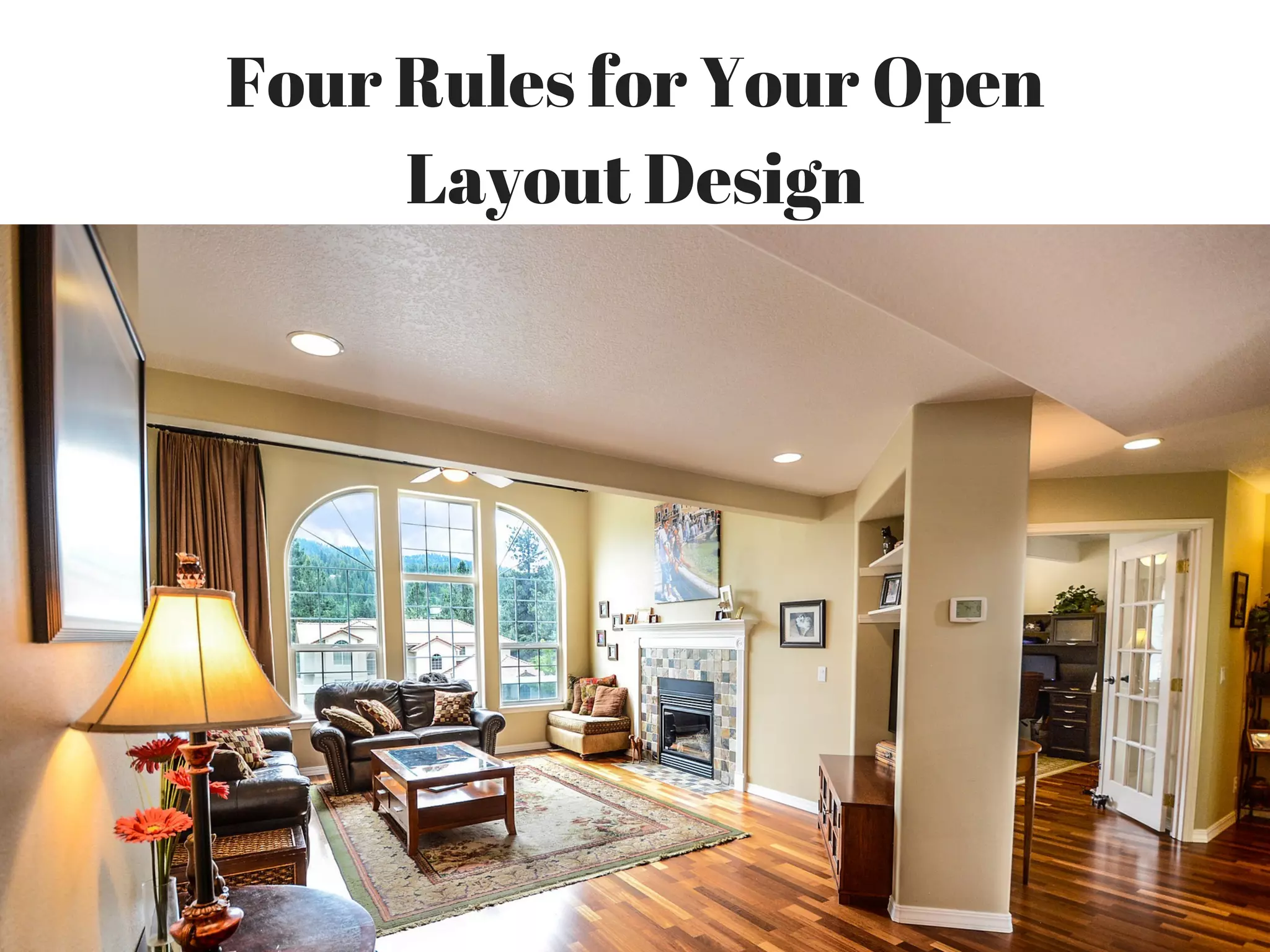
Four Rules for Your Open
Layout Design
Homes used to value private nooks
and crannies. Cozy was the goal of
the American home, accentuated
by whimsical wallpaper and tacky
knick-knack pieces.
Now, these old and neglected
homes that are separated by walls
into awkward areas that no longer
make sense to the modern family.
These types of projects are perfect
for executing the open layout
design. 
With kids running back and forth
from the kitchen, attention
diverted from the television or
stereo, and the desire to merge the
kitchen and lounge area into the
heart of the home, the open layout
has proved to be the most desired
solution to converting older
homes.
What are some things to keep in
mind when planning an open
layout conversion?
Does your family spend more time in the
kitchen or on the couch? 
Are you messy and require a lot of space or
do you prefer less table surface overall? 
What kind of light will you require? 
Do you have an active family or is it just
you and your spouse? 
Ask yourself how you use this space:
Spend some time in your current
kitchen and take note of the ways
the space limits you and how you
would prefer it.
 In your rehab project, be considerate of
the preexisting features in the space. 
You may not be able to add your sink under
a window because the plumbing simply
may not allow for that flexibility.
What kind of work does the space require?
Think about paths of movement.
You don’t want to get off your
couch and bump into the kitchen
island.
This may be obvious, but it can be
exhilarating to buy furniture based on
taste without planning how everything
will coalesce. 
Consider public versus private spaces,
think about whether you want some of the
spaces enclosed, or partially walled off.
Kitchens are open and public. 
Plus, how do you like your dining room? In
open communication with the kitchen, or
more formal and shut off?
Sketch your ideas first. 

Four Rules for Your Open Layout Design

  • 1.
    Four Rules forYour Open Layout Design
  • 2.
    Homes used tovalue private nooks and crannies. Cozy was the goal of the American home, accentuated by whimsical wallpaper and tacky knick-knack pieces.
  • 3.
    Now, these oldand neglected homes that are separated by walls into awkward areas that no longer make sense to the modern family. These types of projects are perfect for executing the open layout design. 
  • 4.
    With kids runningback and forth from the kitchen, attention diverted from the television or stereo, and the desire to merge the kitchen and lounge area into the heart of the home, the open layout has proved to be the most desired solution to converting older homes.
  • 5.
    What are somethings to keep in mind when planning an open layout conversion?
  • 6.
    Does your familyspend more time in the kitchen or on the couch?  Are you messy and require a lot of space or do you prefer less table surface overall?  What kind of light will you require?  Do you have an active family or is it just you and your spouse?  Ask yourself how you use this space:
  • 7.
    Spend some timein your current kitchen and take note of the ways the space limits you and how you would prefer it.
  • 8.
     In your rehabproject, be considerate of the preexisting features in the space.  You may not be able to add your sink under a window because the plumbing simply may not allow for that flexibility. What kind of work does the space require?
  • 9.
    Think about pathsof movement. You don’t want to get off your couch and bump into the kitchen island.
  • 10.
    This may beobvious, but it can be exhilarating to buy furniture based on taste without planning how everything will coalesce.  Consider public versus private spaces, think about whether you want some of the spaces enclosed, or partially walled off. Kitchens are open and public.  Plus, how do you like your dining room? In open communication with the kitchen, or more formal and shut off? Sketch your ideas first.