Foundation
Functions
 Transfers building loads to ground
 Anchors the building against wind and
seismic loads
 Isolates building from expansive soils
 Holds building above or from ground
moisture
 Retards heat flow to or from conditioned
space
 Provides storage, living, mechanical space
(basements)
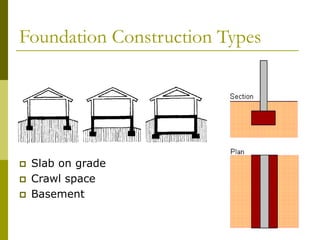
Foundation Construction Types
 Slab on grade
 Crawl space
 Basement
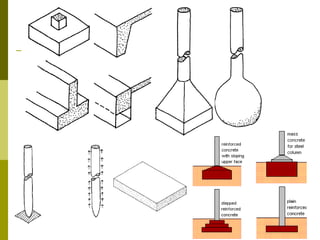
Types of Foundations
 Shallow/spread
foundation
1. Pads/isolated
footings
2. Strip footings
3. rafts
 Deep foundation
1. Piles
2. Pile walls
3. Diaphragm walls
4. Caissons
Foundation Construction Materials
 Masonry block
 Poured concrete
 Brick
 Stone
 Wood
 Pre-cast Concrete
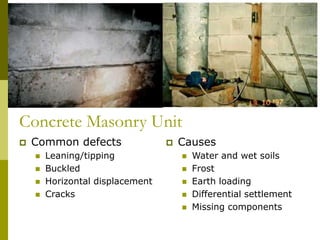
Concrete Masonry Unit
 Causes
 Water and wet soils
 Frost
 Earth loading
 Differential settlement
 Missing components
 Common defects
 Leaning/tipping
 Buckled
 Horizontal displacement
 Cracks
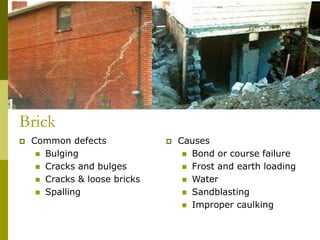
Brick
 Causes
 Bond or course failure
 Frost and earth loading
 Water
 Sandblasting
 Improper caulking
 Common defects
 Bulging
 Cracks and bulges
 Cracks & loose bricks
 Spalling
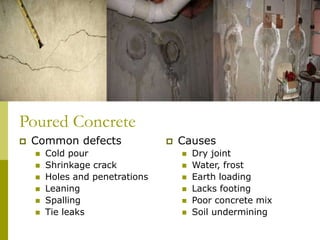
Poured Concrete
 Causes
 Dry joint
 Water, frost
 Earth loading
 Lacks footing
 Poor concrete mix
 Soil undermining
 Common defects
 Cold pour
 Shrinkage crack
 Holes and penetrations
 Leaning
 Spalling
 Tie leaks
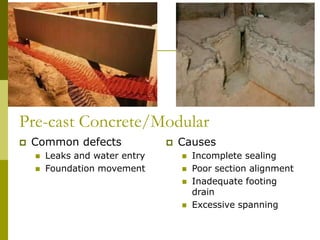
Pre-cast Concrete/Modular
 Causes
 Incomplete sealing
 Poor section alignment
 Inadequate footing
drain
 Excessive spanning
 Common defects
 Leaks and water entry
 Foundation movement
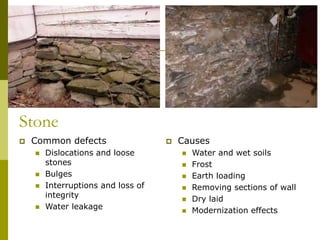
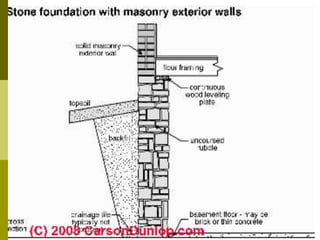
Stone
 Causes
 Water and wet soils
 Frost
 Earth loading
 Removing sections of wall
 Dry laid
 Modernization effects
 Common defects
 Dislocations and loose
stones
 Bulges
 Interruptions and loss of
integrity
 Water leakage
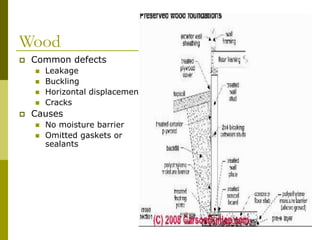
Wood
 Common defects
 Leakage
 Buckling
 Horizontal displacement
 Cracks
 Causes
 No moisture barrier
 Omitted gaskets or
sealants
Types of Piles
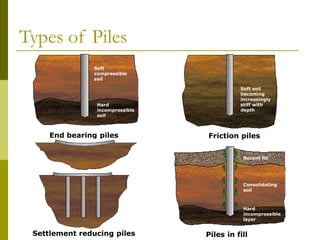
1. End bearing piles – carrying capacity is in the hard stratum
2. Friction piles – carrying capacity is from skin friction or adhesion
3. Tension piles –used for structures which are subject to large overturning,
e.g. transmission towers, tall chimneys and jetties
4. Laterally load bearing piles – used for wharves and jetties carrying the
impact forces of berthing ships, piled foundations to bridge piers, trestles
to overhead cranes, tall chimneys and retaining walls, where the
horizontal component is relatively large
5. Settlement reducing piles - incorporated beneath the central part of a raft
foundation in order to reduce differential settlement
6. Piles in fill - pass through layers of moderately- to poorly-compacted fill
will be affected by negative skin friction, which produces a downward drag
along the pile shaft and therefore an additional load on the pile
Types of Piles
End bearing piles
Soft
compressible
soil
Hard
incompressible
soil
Friction piles
Soft soil
becoming
increasingly
stiff with
depth
Settlement reducing piles Piles in fill
Recent fill
Consolidating
soil
Hard
incompressible
layer
Types of Pile Construction
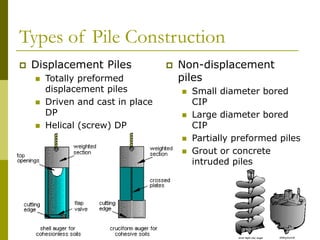
 Displacement Piles
 Totally preformed
displacement piles
 Driven and cast in place
DP
 Helical (screw) DP
 Non-displacement
piles
 Small diameter bored
CIP
 Large diameter bored
CIP
 Partially preformed piles
 Grout or concrete
intruded piles
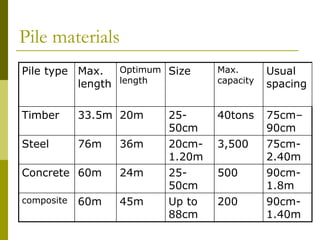
Pile materials
Pile type Max.
length
Optimum
length
Size Max.
capacity
Usual
spacing
Timber 33.5m 20m 25-
50cm
40tons 75cm–
90cm
Steel 76m 36m 20cm-
1.20m
3,500 75cm-
2.40m
Concrete 60m 24m 25-
50cm
500 90cm-
1.8m
composite 60m 45m Up to
88cm
200 90cm-
1.40m
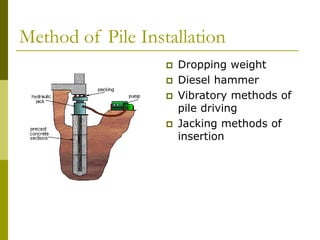
Method of Pile Installation
 Dropping weight
 Diesel hammer
 Vibratory methods of
pile driving
 Jacking methods of
insertion

Foundation Transfers building loads to ground

  • 1.
  • 2.
    Functions  Transfers buildingloads to ground  Anchors the building against wind and seismic loads  Isolates building from expansive soils  Holds building above or from ground moisture  Retards heat flow to or from conditioned space  Provides storage, living, mechanical space (basements)
  • 3.
    Foundation Construction Types Slab on grade  Crawl space  Basement
  • 4.
    Types of Foundations Shallow/spread foundation 1. Pads/isolated footings 2. Strip footings 3. rafts  Deep foundation 1. Piles 2. Pile walls 3. Diaphragm walls 4. Caissons
  • 6.
    Foundation Construction Materials Masonry block  Poured concrete  Brick  Stone  Wood  Pre-cast Concrete
  • 7.
    Concrete Masonry Unit Causes  Water and wet soils  Frost  Earth loading  Differential settlement  Missing components  Common defects  Leaning/tipping  Buckled  Horizontal displacement  Cracks
  • 8.
    Brick  Causes  Bondor course failure  Frost and earth loading  Water  Sandblasting  Improper caulking  Common defects  Bulging  Cracks and bulges  Cracks & loose bricks  Spalling
  • 9.
    Poured Concrete  Causes Dry joint  Water, frost  Earth loading  Lacks footing  Poor concrete mix  Soil undermining  Common defects  Cold pour  Shrinkage crack  Holes and penetrations  Leaning  Spalling  Tie leaks
  • 10.
    Pre-cast Concrete/Modular  Causes Incomplete sealing  Poor section alignment  Inadequate footing drain  Excessive spanning  Common defects  Leaks and water entry  Foundation movement
  • 11.
    Stone  Causes  Waterand wet soils  Frost  Earth loading  Removing sections of wall  Dry laid  Modernization effects  Common defects  Dislocations and loose stones  Bulges  Interruptions and loss of integrity  Water leakage
  • 13.
    Wood  Common defects Leakage  Buckling  Horizontal displacement  Cracks  Causes  No moisture barrier  Omitted gaskets or sealants
  • 14.
    Types of Piles 1.End bearing piles – carrying capacity is in the hard stratum 2. Friction piles – carrying capacity is from skin friction or adhesion 3. Tension piles –used for structures which are subject to large overturning, e.g. transmission towers, tall chimneys and jetties 4. Laterally load bearing piles – used for wharves and jetties carrying the impact forces of berthing ships, piled foundations to bridge piers, trestles to overhead cranes, tall chimneys and retaining walls, where the horizontal component is relatively large 5. Settlement reducing piles - incorporated beneath the central part of a raft foundation in order to reduce differential settlement 6. Piles in fill - pass through layers of moderately- to poorly-compacted fill will be affected by negative skin friction, which produces a downward drag along the pile shaft and therefore an additional load on the pile
  • 15.
    Types of Piles Endbearing piles Soft compressible soil Hard incompressible soil Friction piles Soft soil becoming increasingly stiff with depth Settlement reducing piles Piles in fill Recent fill Consolidating soil Hard incompressible layer
  • 16.
    Types of PileConstruction  Displacement Piles  Totally preformed displacement piles  Driven and cast in place DP  Helical (screw) DP  Non-displacement piles  Small diameter bored CIP  Large diameter bored CIP  Partially preformed piles  Grout or concrete intruded piles
  • 17.
    Pile materials Pile typeMax. length Optimum length Size Max. capacity Usual spacing Timber 33.5m 20m 25- 50cm 40tons 75cm– 90cm Steel 76m 36m 20cm- 1.20m 3,500 75cm- 2.40m Concrete 60m 24m 25- 50cm 500 90cm- 1.8m composite 60m 45m Up to 88cm 200 90cm- 1.40m
  • 18.
    Method of PileInstallation  Dropping weight  Diesel hammer  Vibratory methods of pile driving  Jacking methods of insertion