FOREST COMMUNICATIONS
By
Neha Srivastava
IFS
FAO Forestry Wing- Connecting People with forest.
• What they do?
• How they do?
• What have they done?
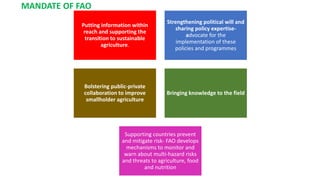
MANDATE OF FAO
Putting information within
reach and supporting the
transition to sustainable
agriculture.
Strengthening political will and
sharing policy expertise-
advocate for the
implementation of these
policies and programmes
Bolstering public-private
collaboration to improve
smallholder agriculture
Bringing knowledge to the field
Supporting countries prevent
and mitigate risk- FAO develops
mechanisms to monitor and
warn about multi-hazard risks
and threats to agriculture, food
and nutrition
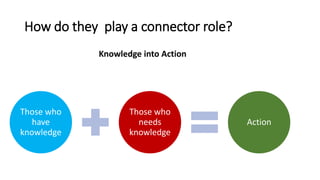
How do they play a connector role?
Knowledge into Action
Those who
have
knowledge
Those who
needs
knowledge
Action
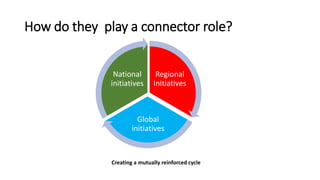
How do they play a connector role?
Regional
Initiatives
Global
initiatives
National
initiatives
Creating a mutually reinforced cycle
What they have done?
1. Creation of communication Toolkit-
The forestry communication toolkit provides a wealth of resources and
key messages on issues of central importance to the forest sector.
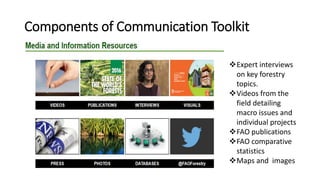
Components of Communication Toolkit
Expert interviews
on key forestry
topics.
Videos from the
field detailing
macro issues and
individual projects
FAO publications
FAO comparative
statistics
Maps and images
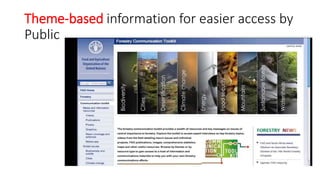
Theme-based information for easier access by
Public
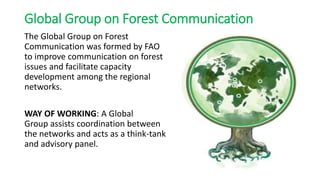
Global Group on Forest Communication
The Global Group on Forest
Communication was formed by FAO
to improve communication on forest
issues and facilitate capacity
development among the regional
networks.
WAY OF WORKING: A Global
Group assists coordination between
the networks and acts as a think-tank
and advisory panel.
3. Creating Regional Communication network
• There are now six
networks in five
regions:
1.Africa (2 networks)
2. Europe and Central
Asia
3. Asia-Pacific
4.Mediterranean and
the Near East
5. Latin America and
the Caribbean
Regional Communication network
The networks currently comprise nearly
500 enthusiastic professionals from both
government and private organizations within the
forestry sector who come together to:
share best practices and tools to implement
effective communication campaigns on a regional
level,
promote learning among their members, generate
new contacts and alliances, and
exchange up-to-date information on topical forest
issues.
Forest Communication Indian Experience by
FAO
• Challenges of Forestry Communication in India
-Complex biodiversity and cultural diversity and social and economic
diversity make the task of Identification of appropriate means and
media for consultative processes and communication for target groups
really challenging.
• Unique strategies:
Tying up communications with local customs, traditions and festivals.
Involvement of individuals of high social stature.
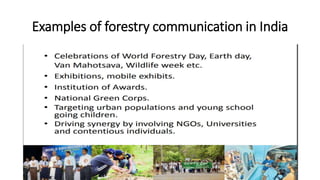
Examples of forestry communication in India
Forest communications

Forest communications

  • 1.
  • 2.
    FAO Forestry Wing-Connecting People with forest. • What they do? • How they do? • What have they done?
  • 3.
    MANDATE OF FAO Puttinginformation within reach and supporting the transition to sustainable agriculture. Strengthening political will and sharing policy expertise- advocate for the implementation of these policies and programmes Bolstering public-private collaboration to improve smallholder agriculture Bringing knowledge to the field Supporting countries prevent and mitigate risk- FAO develops mechanisms to monitor and warn about multi-hazard risks and threats to agriculture, food and nutrition
  • 4.
    How do theyplay a connector role? Knowledge into Action Those who have knowledge Those who needs knowledge Action
  • 5.
    How do theyplay a connector role? Regional Initiatives Global initiatives National initiatives Creating a mutually reinforced cycle
  • 6.
    What they havedone? 1. Creation of communication Toolkit- The forestry communication toolkit provides a wealth of resources and key messages on issues of central importance to the forest sector.
  • 7.
    Components of CommunicationToolkit Expert interviews on key forestry topics. Videos from the field detailing macro issues and individual projects FAO publications FAO comparative statistics Maps and images
  • 8.
    Theme-based information foreasier access by Public
  • 9.
    Global Group onForest Communication The Global Group on Forest Communication was formed by FAO to improve communication on forest issues and facilitate capacity development among the regional networks. WAY OF WORKING: A Global Group assists coordination between the networks and acts as a think-tank and advisory panel.
  • 10.
    3. Creating RegionalCommunication network • There are now six networks in five regions: 1.Africa (2 networks) 2. Europe and Central Asia 3. Asia-Pacific 4.Mediterranean and the Near East 5. Latin America and the Caribbean
  • 11.
    Regional Communication network Thenetworks currently comprise nearly 500 enthusiastic professionals from both government and private organizations within the forestry sector who come together to: share best practices and tools to implement effective communication campaigns on a regional level, promote learning among their members, generate new contacts and alliances, and exchange up-to-date information on topical forest issues.
  • 12.
    Forest Communication IndianExperience by FAO • Challenges of Forestry Communication in India -Complex biodiversity and cultural diversity and social and economic diversity make the task of Identification of appropriate means and media for consultative processes and communication for target groups really challenging. • Unique strategies: Tying up communications with local customs, traditions and festivals. Involvement of individuals of high social stature.
  • 13.
    Examples of forestrycommunication in India