TIME-LINE
Mid-2016 2017 2018>>
Community
Open Platform
Code on Github
Base platform
release
1st apps release
Service
organizations
LSP release
2015 development began
Marketplace
Open Library
Foundation
イマココ
現状のFOLIOのコード
• 現状(2016年9月初旬時点)GitHubで公開されているコード
• okapi
•Okapi API Gateway proxy/discovery/deployment service.
• raml-module-builder
• framework facilitating easy module creation based on RAML files.
• mod-*
• 各種サンプルモジュール
• mod-auth – Prototype of a JWT-based authentication/authorization module. Will be
superseded by a more capable set of modules handling authentication by various methods,
and generalized permissions-handling.
• mod-acquisitions – demo acquisitions module, based on the raml-module-builder
framework, exposing acquisition APIs and objects against MongoDB.
• mod-circulation – circulation demo based on the raml-module-builder and a set of
RAML and JSON Schemas. Represents some of the necessary circulation functionality
against MongoDB.
• mod-metadata – Initial work on a FOLIO metadata store and related knowledge
base/cataloging concepts.
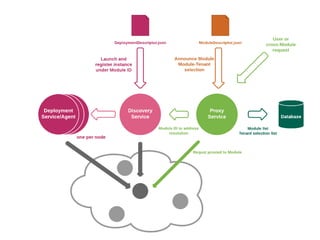
#12 Next I will share some high-level architecture diagrams to point out features of the platform design.
First is that its essentially "APIs all the way down" -- it is based upon layered APIs and every layer is available to the developer.
#14 OLF being spun up, board primarily academics (but no real power ie just id future projects). Under OLF is FOLIO and a few other projects (mention OLE, Gokb yet?)
Governance – Apache lazy consensus, move fwd fast
Board – evangelizing… hands dirty folk, practitioners (not deans)
Index Data has been working on this since 2015. We hope to have initial release of platform software in mid-2016, on Github, People will be able to look at it, see the documentation, provide feedback.
People will then be able to start developing against the APIs. Not only will we start developing apps, but other organizations will tune their apps to run against the platform.
When we met with other large companies, one of the companies said – can we host this platform? We said – that would be great. Then they said, we are developing all our new software in a modular framework so they are in fact apps. Can we, they asked, develop our apps to run against your platform – and maybe we can sell some of these to libraries? We said perfect. So this is an indication of how the platform can change and transform library services.
So by late 2017 early 2018 we will have a system that is up and running, to run your library.













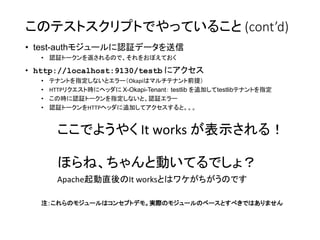
![このテストスクリプトでやっていること
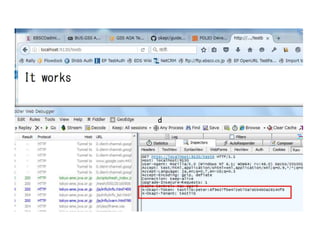
• test-basicモジュールをOkapiに登録
• こいつは It works と出力するだけ(本当はもうちょっと違うこともできるど)
id: test-basic
version: 2.2.3
path: /testb [GET/POST]
level: 30
実行コマンド:
java -Dport=%p -jar okapi-test-module/target/okapi-test-module-fat.jar
• test-authモジュールをOkapiに登録
• こいつは認証通ったら認証トークンを返す(イメージ)
id: test-auth
version: 3.4.5
requires: test-basicモジュールのバージョン2.2.1以上を要求
path: /login [POST]
level: 20
実行コマンド:
java -Dport=%p -jar okapi-test-auth-module/target/okapi-test-auth-module-fat.jar
• testlibというテナントをOkapiに登録
• testlibテナントにtest-basic/test-auth両モジュールをenable
* 各モジュールのlevelが実行時の優先度、値が低い方から呼び出される](https://image.slidesharecdn.com/folio-okapi-160913012546/85/FOLIO-26-320.jpg)