


1
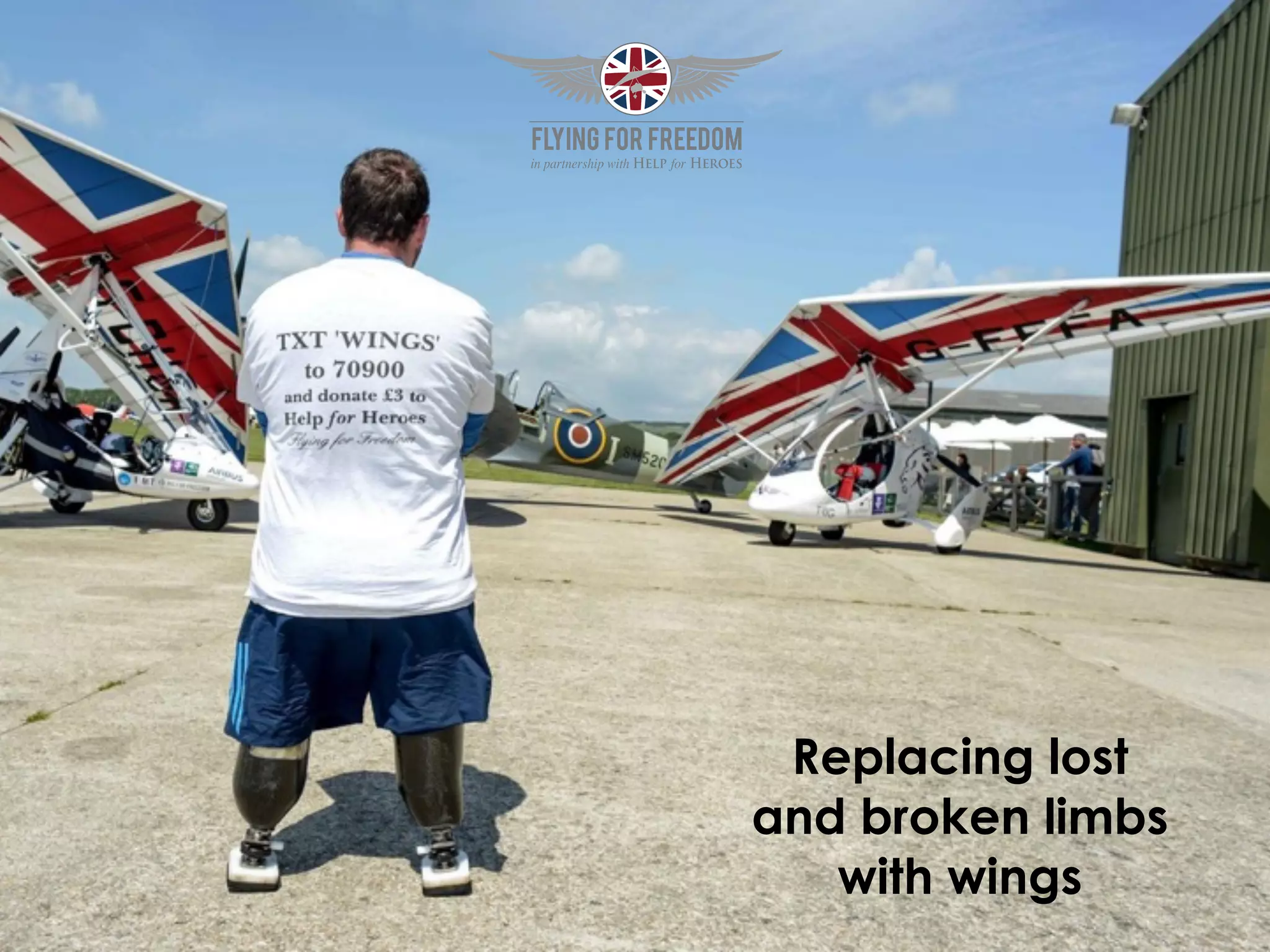
Replacing lost
and broken limbs
with wings
2
3
What
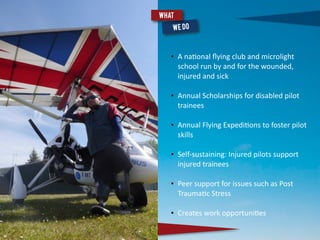
• A	
  na(onal	
  flying	
  club	
  and	
  microlight	
  
school	
  run	
  by	
  and	
  for	
  the	
  wounded,	
  
injured	
  and	
  sick	
  
• Annual	
  Scholarships	
  for	
  disabled	
  pilot	
  
trainees	
  
• Annual	
  Flying	
  Expedi(ons	
  to	
  foster	
  pilot	
  
skills	
  
• Self-­‐sustaining:	
  Injured	
  pilots	
  support	
  
injured	
  trainees	
  
• Peer	
  support	
  for	
  issues	
  such	
  as	
  Post	
  
Trauma(c	
  Stress	
  
• Creates	
  work	
  opportuni(es	
  
What
7
8
9
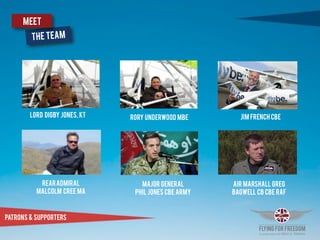
Lord Digby Jones, KT Rory Underwood MBE Jim French CBE
REARAdmiral 

MALCOLM CREE MA
Major General 

Phil Jones CBE Army
Air Marshall Greg
Bagwell CB CBE RAF
PAtRons & SUPPORTERS
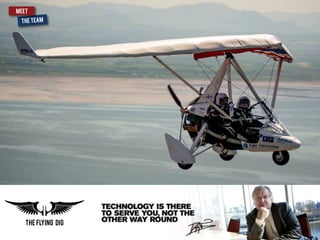
The FLYING DIG
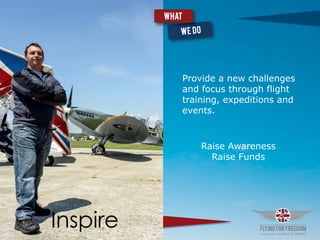
Inspire
Provide a new challenges
and focus through flight
training, expeditions and
events.
What
Raise Awareness
Raise Funds
14
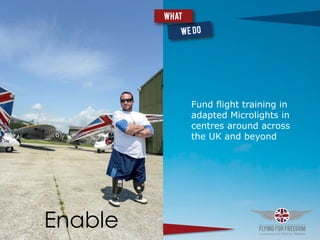
Enable
Fund flight training in
adapted Microlights in
centres around across
the UK and beyond
What
16
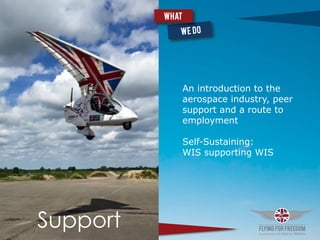
An introduction to the
aerospace industry, peer
support and a route to
employment
Self-Sustaining:
WIS supporting WIS
What
Support
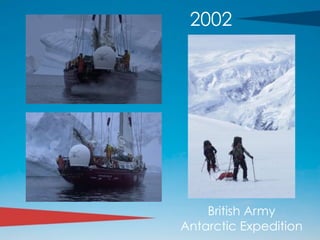
2002
British Army
Antarctic Expedition
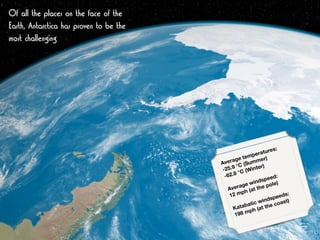
Of all the places on the face of the
Earth, Antarctica has proven to be the
most challenging
Average temperatures:

-25.9 °C (Summer)

-62.8 °C (Winter)


Average windspeed:

12 mph (at the pole)


Katabatic windspeeds:

198 mph (at the coast)

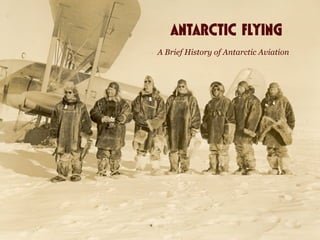
ANTARCTIC FLYING
A Brief History of Antarctic Aviation
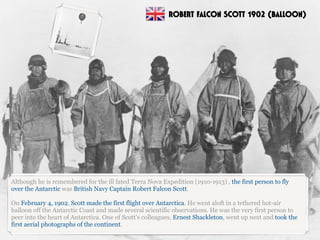
Although he is remembered for the ill fated Terra Nova Expedition (1910-1913) , the first person to fly
over the Antarctic was British Navy Captain Robert Falcon Scott.
On February 4, 1902, Scott made the first flight over Antarctica. He went aloft in a tethered hot-air
balloon off the Antarctic Coast and made several scientific observations. He was the very first person to
peer into the heart of Antarctica. One of Scott's colleagues, Ernest Shackleton, went up next and took the
first aerial photographs of the continent.
ROBERT FALCON SCOTT 1902 (BALLOON)
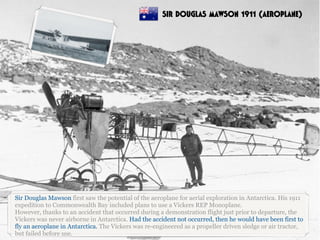
Sir Douglas Mawson first saw the potential of the aeroplane for aerial exploration in Antarctica. His 1911
expedition to Commonwealth Bay included plans to use a Vickers REP Monoplane.
However, thanks to an accident that occurred during a demonstration flight just prior to departure, the
Vickers was never airborne in Antarctica. Had the accident not occurred, then he would have been first to
fly an aeroplane in Antarctica. The Vickers was re-engineered as a propeller driven sledge or air tractor,
but failed before use.
SIR DOUGLAS MAWSON 1911 (AEROPLANE)
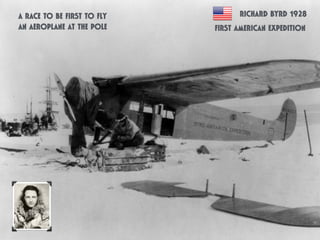
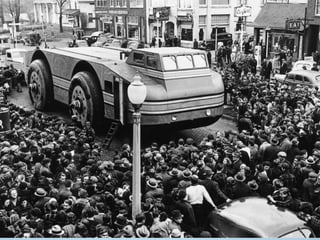
FIRST AMERICAN EXPEDITION
A RACE TO BE FIRST TO FLY
AN AEROPLANE AT THE POLE
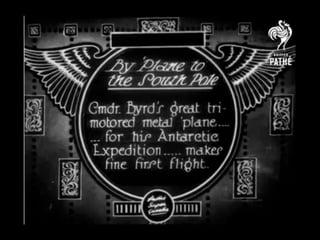
RICHARD BYRD 1928
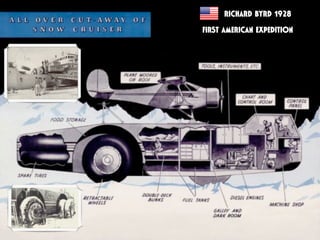
RICHARD BYRD 1928
FIRST AMERICAN EXPEDITION
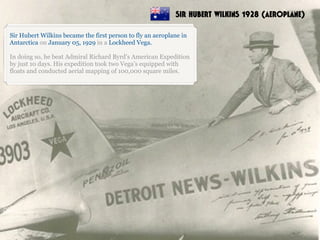
Sir Hubert Wilkins became the first person to fly an aeroplane in
Antarctica on January 05, 1929 in a Lockheed Vega.
In doing so, he beat Admiral Richard Byrd’s American Expedition
by just 10 days. His expedition took two Vega’s equipped with
floats and conducted aerial mapping of 100,000 square miles.
SIR HUBERT WILKINS 1928 (AEROPLANE)
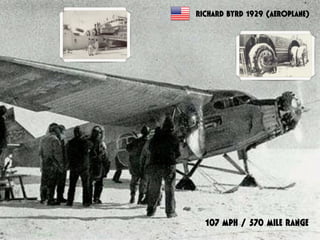
107 MPH / 570 MILE RANGE
RICHARD BYRD 1929 (AEROPLANE)
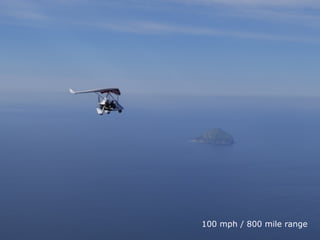
100 mph / 800 mile range
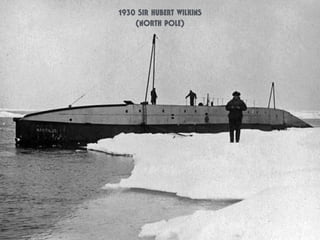
1930 SIR HUBERT WILKINS
(NORTH POLE)
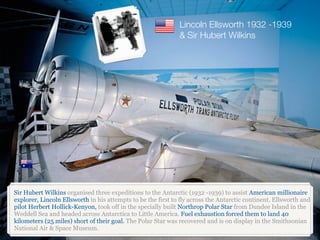
Sir Hubert Wilkins organised three expeditions to the Antarctic (1932 -1939) to assist American millionaire
explorer, Lincoln Ellsworth in his attempts to be the first to fly across the Antarctic continent. Ellsworth and
pilot Herbert Hollick-Kenyon, took off in the specially built Northrop Polar Star from Dundee Island in the
Weddell Sea and headed across Antarctica to Little America. Fuel exhaustion forced them to land 40
kilometers (25 miles) short of their goal. The Polar Star was recovered and is on display in the Smithsonian
National Air & Space Museum.
Lincoln Ellsworth 1932 -1939
& Sir Hubert Wilkins
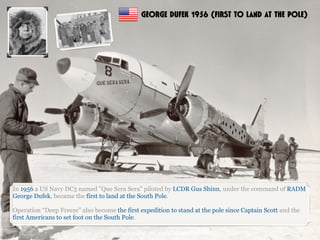
In 1956 a US Navy DC3 named "Que Sera Sera" piloted by LCDR Gus Shinn, under the command of RADM
George Dufek, became the first to land at the South Pole.
Operation “Deep Freeze” also become the first expedition to stand at the pole since Captain Scott and the
first Americans to set foot on the South Pole.
GEORGE DUFEK 1956 (FIRST TO LAND AT THE POLE)
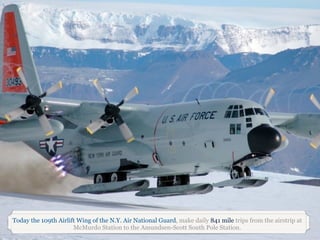
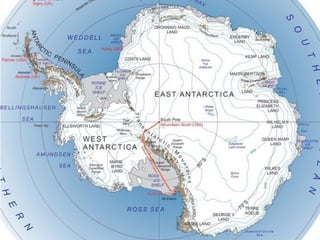
Today the 109th Airlift Wing of the N.Y. Air National Guard, make daily 841 mile trips from the airstrip at
McMurdo Station to the Amundsen-Scott South Pole Station.
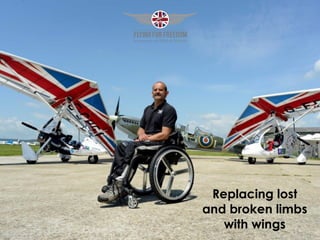
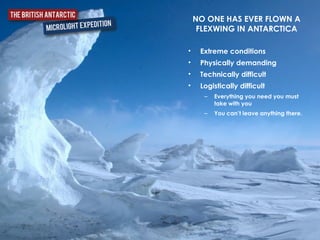
Replacing lost
and broken limbs
with wings
• Extreme conditions	
  
• Physically demanding	
  
• Technically difficult	
  
• Logistically difficult	
  
– Everything you need you must
take with you	
  
– You can’t leave anything there.
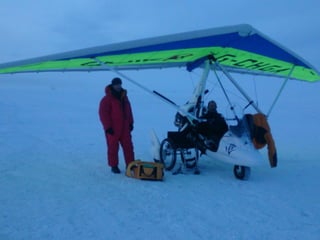
NO ONE HAS EVER FLOWN A
FLEXWING IN ANTARCTICA
42
43
44
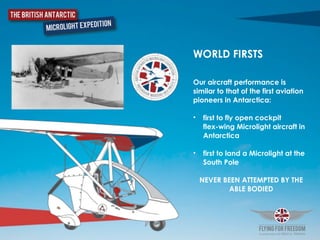
WORLD FIRSTS	
  
Our aircraft performance is
similar to that of the first aviation
pioneers in Antarctica:	
  
• first to fly open cockpit 

flex-wing Microlight aircraft in
Antarctica	
  
• first to land a Microlight at the
South Pole
NEVER BEEN ATTEMPTED BY THE
ABLE BODIED
47
48
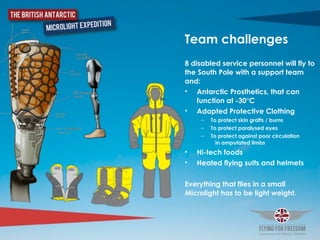
Team challenges
8 disabled service personnel will fly to
the South Pole with a support team
and:
• Antarctic Prosthetics, that can
function at -30°C
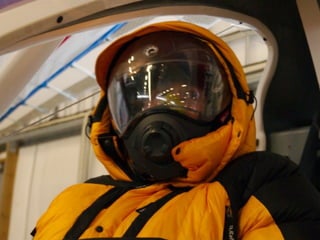
• Adapted Protective Clothing
– To protect skin grafts / burns
– To protect paralysed eyes
– To protect against poor circulation

in amputated limbs
• Hi-tech foods
• Heated flying suits and helmets
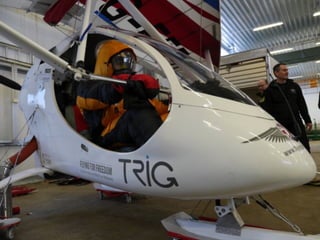
Everything that flies in a small
Microlight has to be light weight.
50
51
52
53
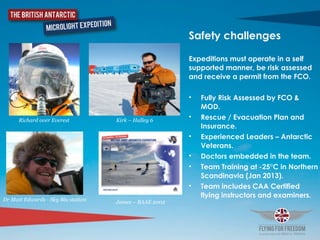
Safety challenges	
  
Expeditions must operate in a self
supported manner, be risk assessed
and receive a permit from the FCO. 	
  
• Fully Risk Assessed by FCO &
MOD.	
  
• Rescue / Evacuation Plan and
Insurance.	
  
• Experienced Leaders – Antarctic
Veterans.	
  
• Doctors embedded in the team.	
  
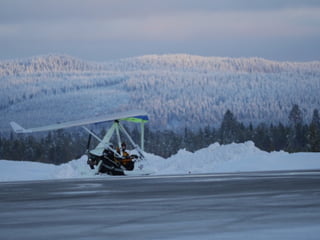
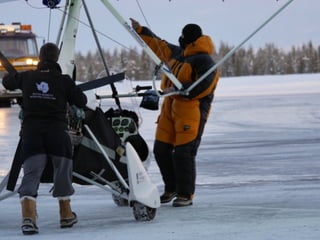
• Team Training at -25°C in Northern
Scandinavia (Jan 2013).	
  
• Team includes CAA Certified
flying instructors and examiners.
Richard over Everest Kirk – Halley 6
Dr Matt Edwards - Sky Blu station James – BAAE 2002
55
56
57
58
59
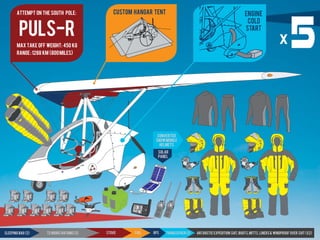
Puls-R
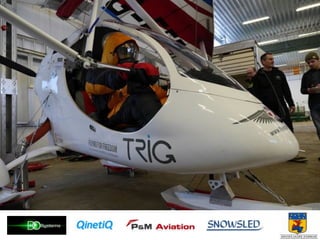
Max take ofF weight: 450 kg
Range:1288 km (800Miles)
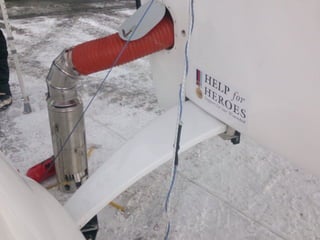
ATTEMPT ON THE SOUTH POLE: ENGINE
COLD
START
CUSTOM HANGAR TENT
SOLAR
PANEL
CONVERTED
SNOWMOBILE
HELMETS
72 HOURS RATIONS(2) STOVE fUEL GPS TRANSCEIVER(2) ANTARCTIC EXPEDITION SUIT,BOOTS,MITTS, LINERs& WINDPROOF OVER SUIT (x2)SLEEPING BAG (2)
x
64
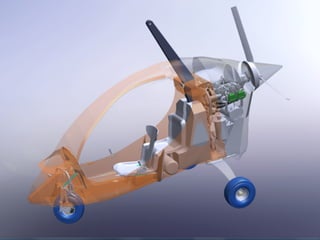
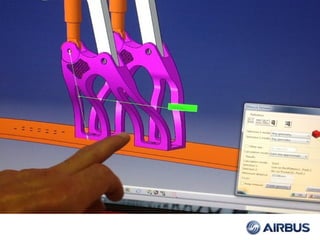
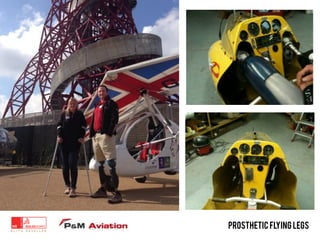
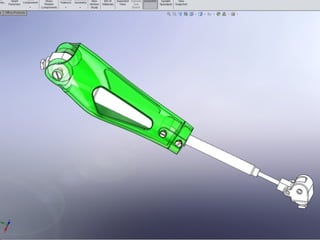
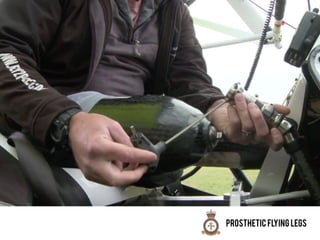
Prosthetic FLYING LEGS
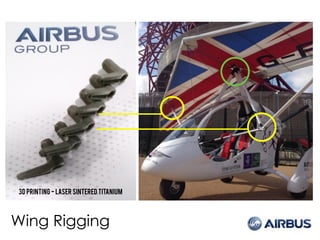
3D PRINTING - LASER SINTERED TITANIUM
Wing Rigging
69
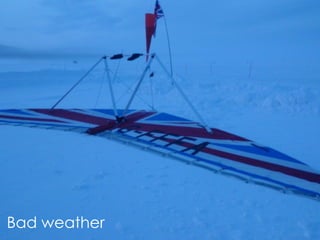
Bad weather
√
70
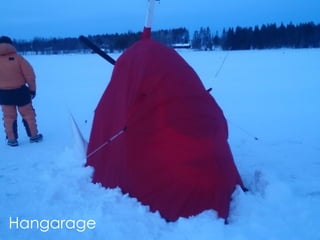
Hangarage
√
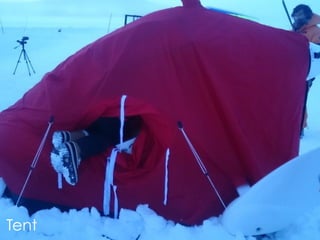
71Tent
72
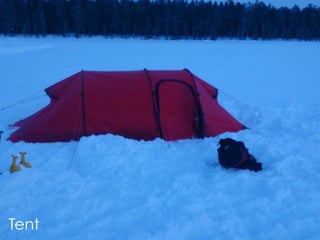
Tent
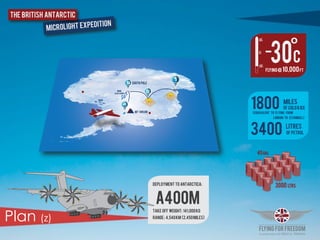
A400M
take ofF weight: 141,000kg
Range: 4,540km (2,450Miles)
DEPLOYMENT TO ANTARCTICA:
Flying@10,000ft
1800 miles
(Equivalent TO flying from
London to ISTANBULL)
OF COLD&ICE
3400 LITRES
OF PETROL
Mt vinson
SOUTH POLE
(AVE)12MPH
WIND
WIND
Plan (z)
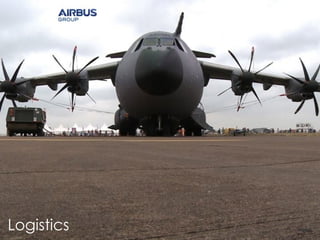
74Logistics
75
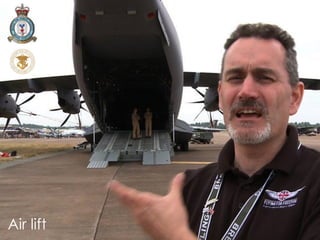
Air lift
76
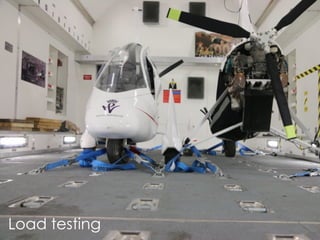
Load testing
77
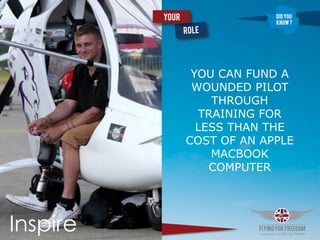
YOU CAN FUND A
WOUNDED PILOT
THROUGH
TRAINING FOR
LESS THAN THE
COST OF AN APPLE
MACBOOK
COMPUTER
Inspire
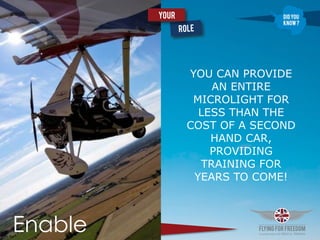
Enable
YOU CAN PROVIDE
AN ENTIRE
MICROLIGHT FOR
LESS THAN THE
COST OF A SECOND
HAND CAR,
PROVIDING
TRAINING FOR
YEARS TO COME!
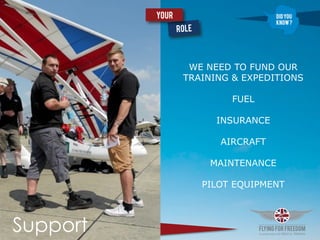
Support
WE NEED TO FUND OUR
TRAINING & EXPEDITIONS
FUEL
INSURANCE
AIRCRAFT
MAINTENANCE
PILOT EQUIPMENT
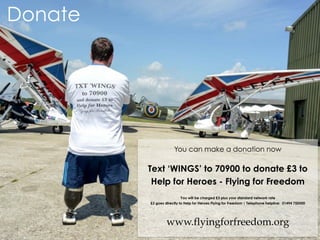
You can make a donation now
Text ‘WINGS’ to 70900 to donate £3 to
Help for Heroes - Flying for Freedom
You will be charged £3 plus your standard network rate
£3 goes directly to Help for Heroes Flying for Freedom | Telephone helpline: 01494 750500
www.flyingforfreedom.org
Donate

Flying for Freedom - Keynote

  • 1.
  • 2.
  • 3.
  • 4.
  • 5.
    • A  na(onal  flying  club  and  microlight   school  run  by  and  for  the  wounded,   injured  and  sick   • Annual  Scholarships  for  disabled  pilot   trainees   • Annual  Flying  Expedi(ons  to  foster  pilot   skills   • Self-­‐sustaining:  Injured  pilots  support   injured  trainees   • Peer  support  for  issues  such  as  Post   Trauma(c  Stress   • Creates  work  opportuni(es   What
  • 7.
  • 8.
  • 9.
  • 11.
    Lord Digby Jones,KT Rory Underwood MBE Jim French CBE REARAdmiral 
 MALCOLM CREE MA Major General 
 Phil Jones CBE Army Air Marshall Greg Bagwell CB CBE RAF PAtRons & SUPPORTERS
  • 12.
  • 13.
    Inspire Provide a newchallenges and focus through flight training, expeditions and events. What Raise Awareness Raise Funds
  • 14.
  • 15.
    Enable Fund flight trainingin adapted Microlights in centres around across the UK and beyond What
  • 16.
  • 17.
    An introduction tothe aerospace industry, peer support and a route to employment Self-Sustaining: WIS supporting WIS What Support
  • 20.
  • 21.
    Of all theplaces on the face of the Earth, Antarctica has proven to be the most challenging Average temperatures:
 -25.9 °C (Summer)
 -62.8 °C (Winter)
 
 Average windspeed:
 12 mph (at the pole)
 
 Katabatic windspeeds:
 198 mph (at the coast)

  • 23.
    ANTARCTIC FLYING A BriefHistory of Antarctic Aviation
  • 24.
    Although he isremembered for the ill fated Terra Nova Expedition (1910-1913) , the first person to fly over the Antarctic was British Navy Captain Robert Falcon Scott. On February 4, 1902, Scott made the first flight over Antarctica. He went aloft in a tethered hot-air balloon off the Antarctic Coast and made several scientific observations. He was the very first person to peer into the heart of Antarctica. One of Scott's colleagues, Ernest Shackleton, went up next and took the first aerial photographs of the continent. ROBERT FALCON SCOTT 1902 (BALLOON)
  • 25.
    Sir Douglas Mawsonfirst saw the potential of the aeroplane for aerial exploration in Antarctica. His 1911 expedition to Commonwealth Bay included plans to use a Vickers REP Monoplane. However, thanks to an accident that occurred during a demonstration flight just prior to departure, the Vickers was never airborne in Antarctica. Had the accident not occurred, then he would have been first to fly an aeroplane in Antarctica. The Vickers was re-engineered as a propeller driven sledge or air tractor, but failed before use. SIR DOUGLAS MAWSON 1911 (AEROPLANE)
  • 26.
    FIRST AMERICAN EXPEDITION ARACE TO BE FIRST TO FLY AN AEROPLANE AT THE POLE RICHARD BYRD 1928
  • 28.
    RICHARD BYRD 1928 FIRSTAMERICAN EXPEDITION
  • 29.
    Sir Hubert Wilkinsbecame the first person to fly an aeroplane in Antarctica on January 05, 1929 in a Lockheed Vega. In doing so, he beat Admiral Richard Byrd’s American Expedition by just 10 days. His expedition took two Vega’s equipped with floats and conducted aerial mapping of 100,000 square miles. SIR HUBERT WILKINS 1928 (AEROPLANE)
  • 31.
    107 MPH /570 MILE RANGE RICHARD BYRD 1929 (AEROPLANE)
  • 33.
    100 mph /800 mile range
  • 34.
    1930 SIR HUBERTWILKINS (NORTH POLE)
  • 35.
    Sir Hubert Wilkinsorganised three expeditions to the Antarctic (1932 -1939) to assist American millionaire explorer, Lincoln Ellsworth in his attempts to be the first to fly across the Antarctic continent. Ellsworth and pilot Herbert Hollick-Kenyon, took off in the specially built Northrop Polar Star from Dundee Island in the Weddell Sea and headed across Antarctica to Little America. Fuel exhaustion forced them to land 40 kilometers (25 miles) short of their goal. The Polar Star was recovered and is on display in the Smithsonian National Air & Space Museum. Lincoln Ellsworth 1932 -1939 & Sir Hubert Wilkins
  • 36.
    In 1956 aUS Navy DC3 named "Que Sera Sera" piloted by LCDR Gus Shinn, under the command of RADM George Dufek, became the first to land at the South Pole. Operation “Deep Freeze” also become the first expedition to stand at the pole since Captain Scott and the first Americans to set foot on the South Pole. GEORGE DUFEK 1956 (FIRST TO LAND AT THE POLE)
  • 37.
    Today the 109thAirlift Wing of the N.Y. Air National Guard, make daily 841 mile trips from the airstrip at McMurdo Station to the Amundsen-Scott South Pole Station.
  • 39.
    Replacing lost and brokenlimbs with wings
  • 40.
    • Extreme conditions   • Physically demanding   • Technically difficult   • Logistically difficult   – Everything you need you must take with you   – You can’t leave anything there. NO ONE HAS EVER FLOWN A FLEXWING IN ANTARCTICA
  • 42.
  • 43.
  • 44.
  • 46.
    WORLD FIRSTS   Ouraircraft performance is similar to that of the first aviation pioneers in Antarctica:   • first to fly open cockpit 
 flex-wing Microlight aircraft in Antarctica   • first to land a Microlight at the South Pole NEVER BEEN ATTEMPTED BY THE ABLE BODIED
  • 47.
  • 48.
  • 49.
    Team challenges 8 disabledservice personnel will fly to the South Pole with a support team and: • Antarctic Prosthetics, that can function at -30°C • Adapted Protective Clothing – To protect skin grafts / burns – To protect paralysed eyes – To protect against poor circulation
 in amputated limbs • Hi-tech foods • Heated flying suits and helmets Everything that flies in a small Microlight has to be light weight.
  • 50.
  • 51.
  • 52.
  • 53.
  • 54.
    Safety challenges   Expeditionsmust operate in a self supported manner, be risk assessed and receive a permit from the FCO.   • Fully Risk Assessed by FCO & MOD.   • Rescue / Evacuation Plan and Insurance.   • Experienced Leaders – Antarctic Veterans.   • Doctors embedded in the team.   • Team Training at -25°C in Northern Scandinavia (Jan 2013).   • Team includes CAA Certified flying instructors and examiners. Richard over Everest Kirk – Halley 6 Dr Matt Edwards - Sky Blu station James – BAAE 2002
  • 55.
  • 56.
  • 57.
  • 58.
  • 59.
  • 60.
    Puls-R Max take ofFweight: 450 kg Range:1288 km (800Miles) ATTEMPT ON THE SOUTH POLE: ENGINE COLD START CUSTOM HANGAR TENT SOLAR PANEL CONVERTED SNOWMOBILE HELMETS 72 HOURS RATIONS(2) STOVE fUEL GPS TRANSCEIVER(2) ANTARCTIC EXPEDITION SUIT,BOOTS,MITTS, LINERs& WINDPROOF OVER SUIT (x2)SLEEPING BAG (2) x
  • 64.
  • 65.
  • 67.
  • 68.
    3D PRINTING -LASER SINTERED TITANIUM Wing Rigging
  • 69.
  • 70.
  • 71.
  • 72.
  • 73.
    A400M take ofF weight:141,000kg Range: 4,540km (2,450Miles) DEPLOYMENT TO ANTARCTICA: Flying@10,000ft 1800 miles (Equivalent TO flying from London to ISTANBULL) OF COLD&ICE 3400 LITRES OF PETROL Mt vinson SOUTH POLE (AVE)12MPH WIND WIND Plan (z)
  • 74.
  • 75.
  • 76.
  • 77.
  • 78.
    YOU CAN FUNDA WOUNDED PILOT THROUGH TRAINING FOR LESS THAN THE COST OF AN APPLE MACBOOK COMPUTER Inspire
  • 79.
    Enable YOU CAN PROVIDE ANENTIRE MICROLIGHT FOR LESS THAN THE COST OF A SECOND HAND CAR, PROVIDING TRAINING FOR YEARS TO COME!
  • 80.
    Support WE NEED TOFUND OUR TRAINING & EXPEDITIONS FUEL INSURANCE AIRCRAFT MAINTENANCE PILOT EQUIPMENT
  • 81.
    You can makea donation now Text ‘WINGS’ to 70900 to donate £3 to Help for Heroes - Flying for Freedom You will be charged £3 plus your standard network rate £3 goes directly to Help for Heroes Flying for Freedom | Telephone helpline: 01494 750500 www.flyingforfreedom.org Donate