Fiscal Admin. - Budget Analyst's Role, Mikesell 181.pdfFiscal
Admin. - Budget Analyst's Role, Mikesell 182.pdfFiscal Admin.
- Budget Analyst's Role, Mikesell 183.pdfFiscal Admin. -
Budget Analyst's Role, Mikesell 184.pdfFiscal Admin. - Budget
Analyst's Role, Mikesell 185.pdfFiscal Admin. - Budget
Analyst's Role, Mikesell 186.pdfFiscal Admin. - Budget
Analyst's Role, Mikesell 187.pdfFiscal Admin. - Budget
Analyst's Role, Mikesell 188.pdfFiscal Admin. - Budget
Analyst's Role, Mikesell 189.pdfFiscal Admin. - Budget
Analyst's Role, Mikesell 190.pdfFiscal Admin. - Budget
Analyst's Role, Mikesell 191.pdf
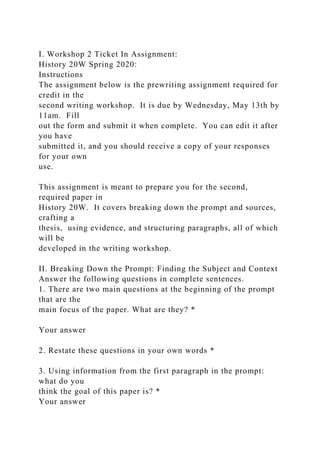
I. Workshop 2 Ticket In Assignment:
History 20W Spring 2020:
Instructions
The assignment below is the prewriting assignment required for
credit in the
second writing workshop. It is due by Wednesday, May 13th by
11am. Fill
out the form and submit it when complete. You can edit it after
you have
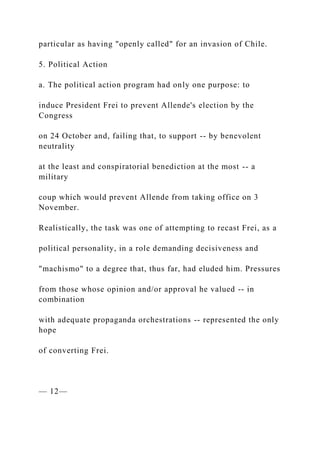
submitted it, and you should receive a copy of your responses
for your own
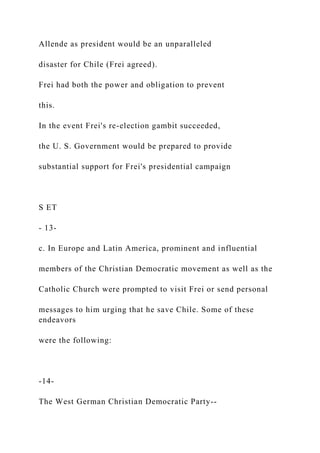
use.
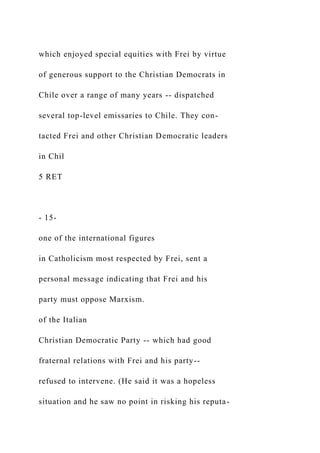
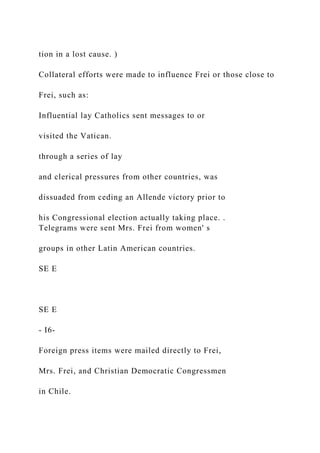
This assignment is meant to prepare you for the second,
required paper in
History 20W. It covers breaking down the prompt and sources,
crafting a
thesis, using evidence, and structuring paragraphs, all of which
will be
developed in the writing workshop.
II. Breaking Down the Prompt: Finding the Subject and Context
Answer the following questions in complete sentences.
1. There are two main questions at the beginning of the prompt
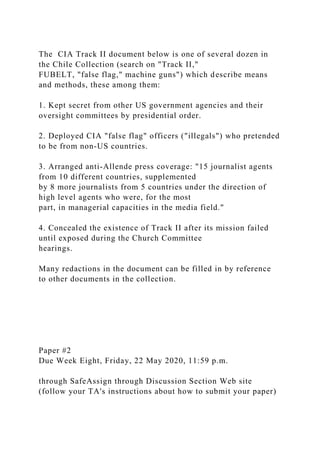
that are the
main focus of the paper. What are they? *
Your answer
2. Restate these questions in your own words *
3. Using information from the first paragraph in the prompt:
what do you
think the goal of this paper is? *
Your answer
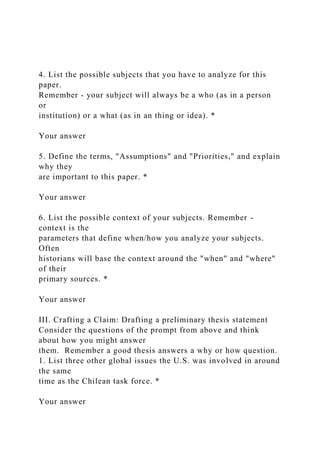
4. List the possible subjects that you have to analyze for this
paper.
Remember - your subject will always be a who (as in a person
or
institution) or a what (as in an thing or idea). *
Your answer
5. Define the terms, "Assumptions" and "Priorities," and explain
why they
are important to this paper. *
Your answer
6. List the possible context of your subjects. Remember -
context is the
parameters that define when/how you analyze your subjects.
Often
historians will base the context around the "when" and "where"
of their
primary sources. *
Your answer
III. Crafting a Claim: Drafting a preliminary thesis statement
Consider the questions of the prompt from above and think
about how you might answer
them. Remember a good thesis answers a why or how question.
1. List three other global issues the U.S. was involved in around
the same
time as the Chilean task force. *
Your answer
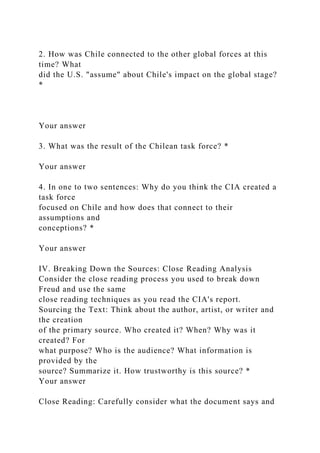
2. How was Chile connected to the other global forces at this
time? What
did the U.S. "assume" about Chile's impact on the global stage?
*
Your answer
3. What was the result of the Chilean task force? *
Your answer
4. In one to two sentences: Why do you think the CIA created a
task force
focused on Chile and how does that connect to their
assumptions and
conceptions? *
Your answer
IV. Breaking Down the Sources: Close Reading Analysis
Consider the close reading process you used to break down
Freud and use the same
close reading techniques as you read the CIA's report.
Sourcing the Text: Think about the author, artist, or writer and
the creation
of the primary source. Who created it? When? Why was it
created? For
what purpose? Who is the audience? What information is
provided by the
source? Summarize it. How trustworthy is this source? *
Your answer
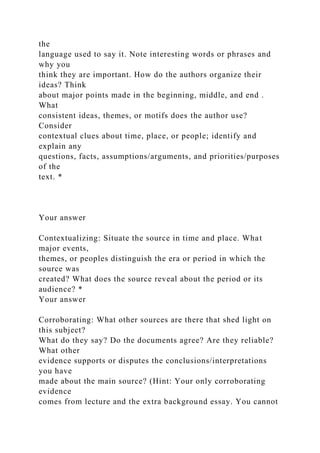
Close Reading: Carefully consider what the document says and
the
language used to say it. Note interesting words or phrases and
why you
think they are important. How do the authors organize their
ideas? Think
about major points made in the beginning, middle, and end .
What
consistent ideas, themes, or motifs does the author use?
Consider
contextual clues about time, place, or people; identify and
explain any
questions, facts, assumptions/arguments, and priorities/purposes
of the
text. *
Your answer
Contextualizing: Situate the source in time and place. What
major events,
themes, or peoples distinguish the era or period in which the
source was
created? What does the source reveal about the period or its
audience? *
Your answer
Corroborating: What other sources are there that shed light on
this subject?
What do they say? Do the documents agree? Are they reliable?
What other
evidence supports or disputes the conclusions/interpretations
you have
made about the main source? (Hint: Your only corroborating
evidence
comes from lecture and the extra background essay. You cannot
and should
not use other outside sources.) *
Your answer
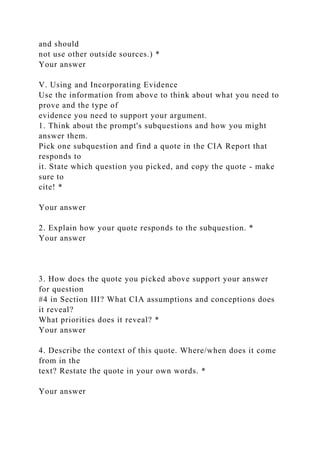
V. Using and Incorporating Evidence
Use the information from above to think about what you need to
prove and the type of
evidence you need to support your argument.
1. Think about the prompt's subquestions and how you might
answer them.
Pick one subquestion and find a quote in the CIA Report that
responds to
it. State which question you picked, and copy the quote - make
sure to
cite! *
Your answer
2. Explain how your quote responds to the subquestion. *
Your answer
3. How does the quote you picked above support your answer
for question
#4 in Section III? What CIA assumptions and conceptions does
it reveal?
What priorities does it reveal? *
Your answer
4. Describe the context of this quote. Where/when does it come
from in the
text? Restate the quote in your own words. *
Your answer
5. Describe the subject of the quote. What is the quote about?
What is the
main idea? What are some interesting words or phrases that you
note? *
Your answer
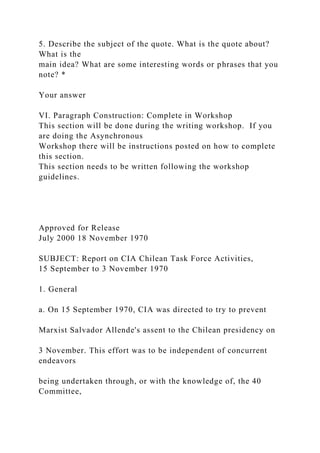
VI. Paragraph Construction: Complete in Workshop
This section will be done during the writing workshop. If you
are doing the Asynchronous
Workshop there will be instructions posted on how to complete
this section.
This section needs to be written following the workshop
guidelines.
Approved for Release
July 2000 18 November 1970
SUBJECT: Report on CIA Chilean Task Force Activities,
15 September to 3 November 1970
1. General
a. On 15 September 1970, CIA was directed to try to prevent
Marxist Salvador Allende's assent to the Chilean presidency on
3 November. This effort was to be independent of concurrent
endeavors
being undertaken through, or with the knowledge of, the 40
Committee,
Department of State, and Ambassador Korry.
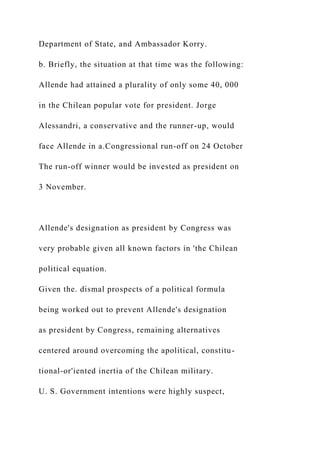
b. Briefly, the situation at that time was the following:
Allende had attained a plurality of only some 40, 000
in the Chilean popular vote for president. Jorge
Alessandri, a conservative and the runner-up, would
face Allende in a.Congressional run-off on 24 October
The run-off winner would be invested as president on
3 November.
Allende's designation as president by Congress was
very probable given all known factors in 'the Chilean
political equation.
Given the. dismal prospects of a political formula
being worked out to prevent Allende's designation
as president by Congress, remaining alternatives
centered around overcoming the apolitical, constitu-
tional-or'iented inertia of the Chilean military.
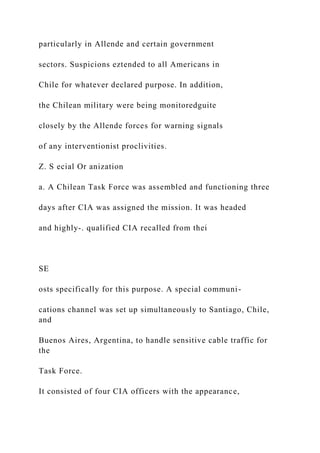
U. S. Government intentions were highly suspect,
particularly in Allende and certain government
sectors. Suspicions eztended to all Americans in
Chile for whatever declared purpose. In addition,
the Chilean military were being monitoredguite
closely by the Allende forces for warning signals
of any interventionist proclivities.
Z. S ecial Or anization
a. A Chilean Task Force was assembled and functioning three
days after CIA was assigned the mission. It was headed
and highly-. qualified CIA recalled from thei
SE
osts specifically for this purpose. A special communi-
cations channel was set up simultaneously to Santiago, Chile,
and
Buenos Aires, Argentina, to handle sensitive cable traffic for
the
Task Force.
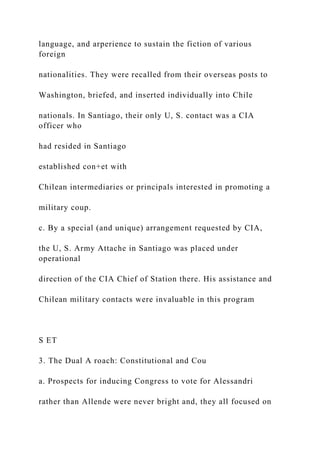
It consisted of four CIA officers with the appearance,
language, and arperience to sustain the fiction of various
foreign
nationalities. They were recalled from their overseas posts to
Washington, briefed, and inserted individually into Chile
nationals. In Santiago, their only U, S. contact was a CIA
officer who
had resided in Santiago
established con+et with
Chilean intermediaries or principals interested in promoting a
military coup.
c. By a special (and unique) arrangement requested by CIA,
the U, S. Army Attache in Santiago was placed under
operational
direction of the CIA Chief of Station there. His assistance and
Chilean military contacts were invaluable in this program
S ET
3. The Dual A roach: Constitutional and Cou
a. Prospects for inducing Congress to vote for Alessandri
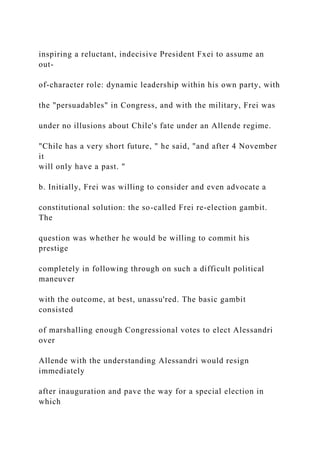
rather than Allende were never bright and, they all focused on
inspiring a reluctant, indecisive President Fxei to assume an
out-
of-character role: dynamic leadership within his own party, with
the "persuadables" in Congress, and with the military, Frei was
under no illusions about Chile's fate under an Allende regime.
"Chile has a very short future, " he said, "and after 4 November
it
will only have a past. "
b. Initially, Frei was willing to consider and even advocate a
constitutional solution: the so-called Frei re-election gambit.
The
question was whether he would be willing to commit his
prestige
completely in following through on such a difficult political
maneuver
with the outcome, at best, unassu'red. The basic gambit
consisted
of marshalling enough Congressional votes to elect Alessandri
over
Allende with the understanding Alessandri would resign
immediately
after inauguration and pave the way for a special election in
which
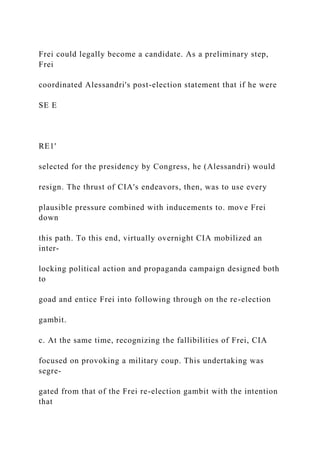
Frei could legally become a candidate. As a preliminary step,
Frei
coordinated Alessandri's post-election statement that if he were
SE E
RE1'
selected for the presidency by Congress, he (Alessandri) would
resign. The thrust of CIA's endeavors, then, was to use every
plausible pressure combined with inducements to. move Frei
down
this path. To this end, virtually overnight CIA mobilized an
inter-
locking political action and propaganda campaign designed both
to
goad and entice Frei into following through on the re-election
gambit.
c. At the same time, recognizing the fallibilities of Frei, CIA
focused on provoking a military coup. This undertaking was
segre-
gated from that of the Frei re-election gambit with the intention
that
it be pursued independently of Frei if necessary, but with his
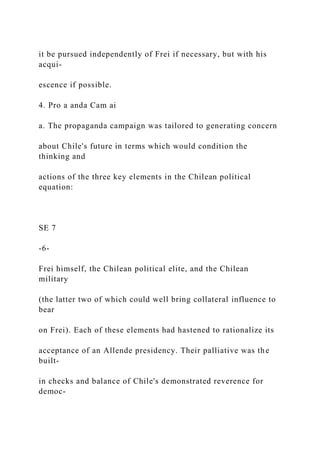
acqui-
escence if possible.
4. Pro a anda Cam ai
a. The propaganda campaign was tailored to generating concern
about Chile's future in terms which would condition the
thinking and
actions of the three key elements in the Chilean political
equation:
SE 7
-6-
Frei himself, the Chilean political elite, and the Chilean
military
(the latter two of which could well bring collateral influence to
bear
on Frei). Each of these elements had hastened to rationalize its
acceptance of an Allende presidency. Their palliative was the
built-
in checks and balance of Chile's demonstrated reverence for
democ-
racy and constitutionality, sweetened by Allende's promise to
honor
these traditions.
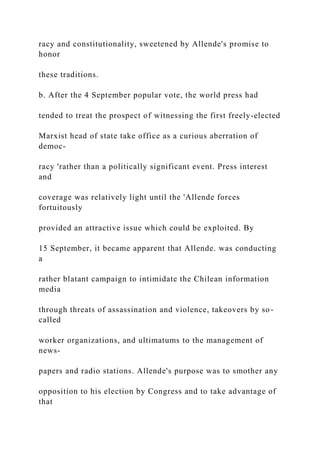
b. After the 4 September popular vote, the world press had
tended to treat the prospect of witnessing the first freely-elected
Marxist head of state take office as a curious aberration of
democ-
racy 'rather than a politically significant event. Press interest
and
coverage was relatively light until the 'Allende forces
fortuitously
provided an attractive issue which could be exploited. By
15 September, it became apparent that Allende. was conducting
a
rather blatant campaign to intimidate the Chilean information
media
through threats of assassination and violence, takeovers by so-
called
worker organizations, and ultimatums to the management of
news-
papers and radio stations. Allende's purpose was to smother any
opposition to his election by Congress and to take advantage of
that
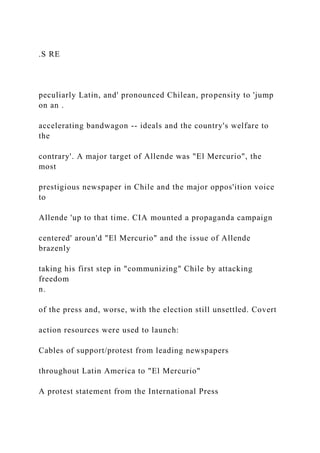
.S RE
peculiarly Latin, and' pronounced Chilean, propensity to 'jump
on an .
accelerating bandwagon -- ideals and the country's welfare to
the
contrary'. A major target of Allende was "El Mercurio", the
most
prestigious newspaper in Chile and the major oppos'ition voice
to
Allende 'up to that time. CIA mounted a propaganda campaign
centered' aroun'd "El Mercurio" and the issue of Allende
brazenly
taking his first step in "communizing" Chile by attacking
freedom
n.
of the press and, worse, with the election still unsettled. Covert
action resources were used to launch:
Cables of support/protest from leading newspapers
throughout Latin America to "El Mercurio"
A protest statement from the International Press
Associatio
"Freedom of the press in Chile is being
strangled by Communist and Marxist forces and
their allies. ")
World press coverage of the International Press
Association protest and on the details of the
Comznunist efforts to seize control of the Chilean
press.
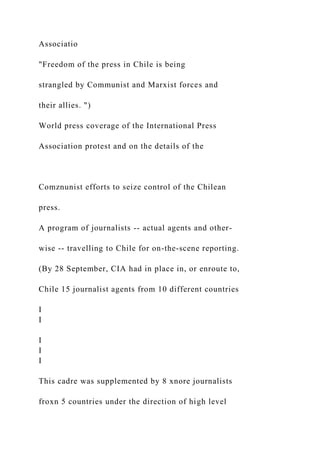
A program of journalists -- actual agents and other-
wise -- travelling to Chile for on-the-scene reporting.
(By 28 September, CIA had in place in, or enroute to,
Chile 15 journalist agents from 10 different countries
I
I
I
I
I
This cadre was supplemented by 8 xnore journalists
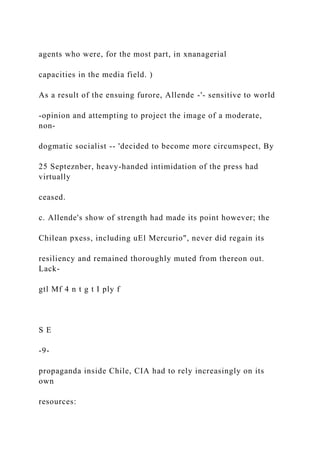
froxn 5 countries under the direction of high level
agents who were, for the most part, in xnanagerial
capacities in the media field. )
As a result of the ensuing furore, Allende -'- sensitive to world
-opinion and attempting to project the image of a moderate,
non-
dogmatic socialist -- 'decided to become more circumspect, By
25 Septeznber, heavy-handed intimidation of the press had
virtually
ceased.
c. Allende's show of strength had made its point however; the
Chilean pxess, including uEl Mercurio", never did regain its
resiliency and remained thoroughly muted from thereon out.
Lack-
gtl Mf 4 n t g t I ply f
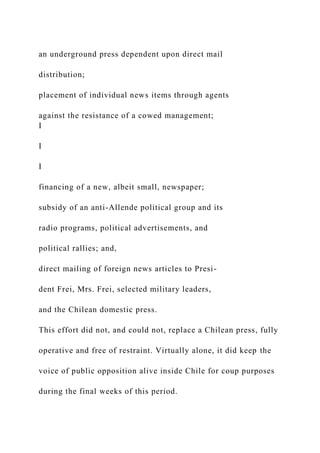
S E
-9-
propaganda inside Chile, CIA had to rely increasingly on its
own
resources:
an underground press dependent upon direct mail
distribution;
placement of individual news items through agents
against the resistance of a cowed management;
I
I
I
financing of a new, albeit small, newspaper;
subsidy of an anti-Allende political group and its
radio programs, political advertisements, and
political rallies; and,
direct mailing of foreign news articles to Presi-
dent Frei, Mrs. Frei, selected military leaders,
and the Chilean domestic press.
This effort did not, and could not, replace a Chilean press, fully
operative and free of restraint. Virtually alone, it did keep the
voice of public opposition alive inside Chile for coup purposes
during the final weeks of this period.
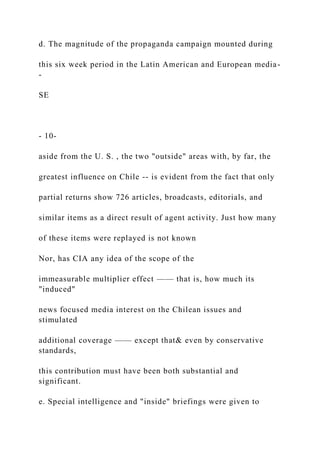
d. The magnitude of the propaganda campaign mounted during
this six week period in the Latin American and European media-
-
SE
- 10-
aside from the U. S. , the two "outside" areas with, by far, the
greatest influence on Chile -- is evident from the fact that only
partial returns show 726 articles, broadcasts, editorials, and
similar items as a direct result of agent activity. Just how many
of these items were replayed is not known
Nor, has CIA any idea of the scope of the
immeasurable multiplier effect —— that is, how much its
"induced"
news focused media interest on the Chilean issues and
stimulated
additional coverage —— except that& even by conservative
standards,
this contribution must have been both substantial and
significant.
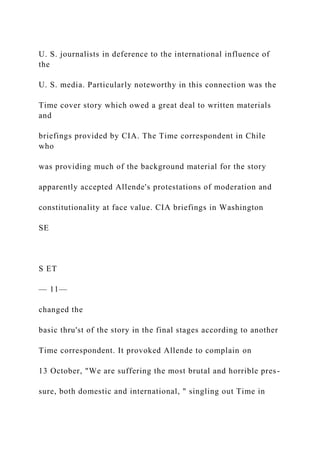
e. Special intelligence and "inside" briefings were given to
U. S. journalists in deference to the international influence of
the
U. S. media. Particularly noteworthy in this connection was the
Time cover story which owed a great deal to written materials
and
briefings provided by CIA. The Time correspondent in Chile
who
was providing much of the background material for the story
apparently accepted Allende's protestations of moderation and
constitutionality at face value. CIA briefings in Washington
SE
S ET
— 11—
changed the
basic thru'st of the story in the final stages according to another
Time correspondent. It provoked Allende to complain on
13 October, "We are suffering the most brutal and horrible pres-
sure, both domestic and international, " singling out Time in
particular as having "openly called" for an invasion of Chile.
5. Political Action
a. The political action program had only one purpose: to
induce President Frei to prevent Allende's election by the
Congress
on 24 October and, failing that, to support -- by benevolent
neutrality
at the least and conspiratorial benediction at the most -- a
military
coup which would prevent Allende from taking office on 3
November.
Realistically, the task was one of attempting to recast Frei, as a
political personality, in a role demanding decisiveness and
"machismo" to a degree that, thus far, had eluded him. Pressures
from those whose opinion and/or approval he valued -- in
combination
with adequate propaganda orchestrations -- represented the only
hope
of converting Frei.
— 12—
Allende as president would be an unparalleled
disaster for Chile (Frei agreed).
Frei had both the power and obligation to prevent
this.
In the event Frei's re-election gambit succeeded,
the U. S. Government would be prepared to provide
substantial support for Frei's presidential campaign
S ET
- 13-
c. In Europe and Latin America, prominent and influential
members of the Christian Democratic movement as well as the
Catholic Church were prompted to visit Frei or send personal
messages to him urging that he save Chile. Some of these
endeavors
were the following:
-14-
The West German Christian Democratic Party--
which enjoyed special equities with Frei by virtue
of generous support to the Christian Democrats in
Chile over a range of many years -- dispatched
several top-level emissaries to Chile. They con-
tacted Frei and other Christian Democratic leaders
in Chil
5 RET
- 15-
one of the international figures
in Catholicism most respected by Frei, sent a
personal message indicating that Frei and his
party must oppose Marxism.
of the Italian
Christian Democratic Party -- which had good
fraternal relations with Frei and his party--
refused to intervene. (He said it was a hopeless
situation and he saw no point in risking his reputa-
tion in a lost cause. )
Collateral efforts were made to influence Frei or those close to
Frei, such as:
Influential lay Catholics sent messages to or
visited the Vatican.
through a series of lay
and clerical pressures from other countries, was
dissuaded from ceding an Allende victory prior to
his Congressional election actually taking place. .
Telegrams were sent Mrs. Frei from women' s
groups in other Latin American countries.
SE E
SE E
- I6-
Foreign press items were mailed directly to Frei,
Mrs. Frei, and Christian Democratic Congressmen
in Chile.
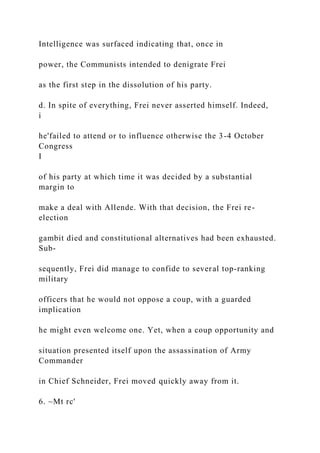
Intelligence was surfaced indicating that, once in
power, the Communists intended to denigrate Frei
as the first step in the dissolution of his party.
d. In spite of everything, Frei never asserted himself. Indeed,
i
he'failed to attend or to influence otherwise the 3-4 October
Congress
I
of his party at which time it was decided by a substantial
margin to
make a deal with Allende. With that decision, the Frei re-
election
gambit died and constitutional alternatives had been exhausted.
Sub-
sequently, Frei did manage to confide to several top-ranking
military
officers that he would not oppose a coup, with a guarded
implication
he might even welcome one. Yet, when a coup opportunity and
situation presented itself upon the assassination of Army
Commander
in Chief Schneider, Frei moved quickly away from it.
6. ~Mt rc'
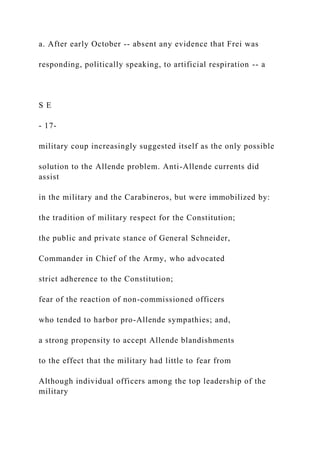
a. After early October -- absent any evidence that Frei was
responding, politically speaking, to artificial respiration -- a
S E
- 17-
military coup increasingly suggested itself as the only possible
solution to the Allende problem. Anti-Allende currents did
assist
in the military and the Carabineros, but were immobilized by:
the tradition of military respect for the Constitution;
the public and private stance of General Schneider,
Commander in Chief of the Army, who advocated
strict adherence to the Constitution;
fear of the reaction of non-commissioned officers
who tended to harbor pro-Allende sympathies; and,
a strong propensity to accept Allende blandishments
to the effect that the military had little to fear from
Although individual officers among the top leadership of the
military
and Carabineros were pre-disposed to take action, they felt the
Army
was central to a successful coup, and, as long as General
Schneider
remained the head of the Army, the Army could not be counted
upon.
General Schneider's attitude could. only be changed through the
personal intervention and forceful advocacy of a coup by
President
Frei; something, it became obvious, the latter was most unlikely
to
bring himself to do.
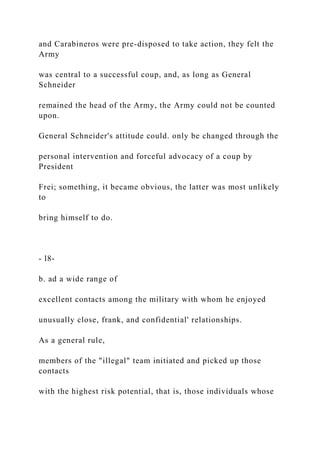
- l8-
b. ad a wide range of
excellent contacts among the military with whom he enjoyed
unusually close, frank, and confidential' relationships.
As a general rule,
members of the "illegal" team initiated and picked up those
contacts
with the highest risk potential, that is, those individuals whose
credentials, reliability, and security quotient were unproven and
unknown.
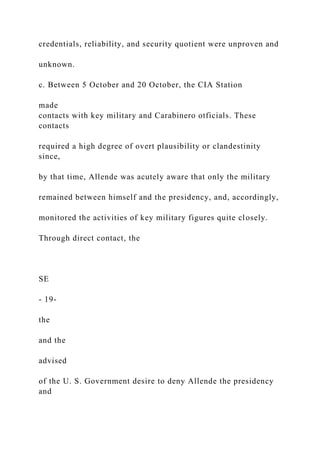
c. Between 5 October and 20 October, the CIA Station
made
contacts with key military and Carabinero otficials. These
contacts
required a high degree of overt plausibility or clandestinity
since,
by that time, Allende was acutely aware that only the military
remained between himself and the presidency, and, accordingly,
monitored the activities of key military figures quite closely.
Through direct contact, the
SE
- 19-
the
and the
advised
of the U. S. Government desire to deny Allende the presidency
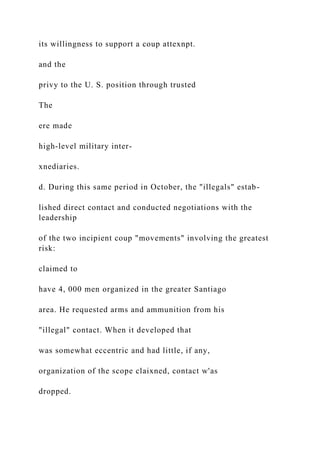
and
its willingness to support a coup attexnpt.
and the
privy to the U. S. position through trusted
The
ere made
high-level military inter-
xnediaries.
d. During this same period in October, the "illegals" estab-
lished direct contact and conducted negotiations with the
leadership
of the two incipient coup "movements" involving the greatest
risk:
claimed to
have 4, 000 men organized in the greater Santiago
area. He requested arms and ammunition from his
"illegal" contact. When it developed that
was somewhat eccentric and had little, if any,
organization of the scope claixned, contact w'as
dropped.
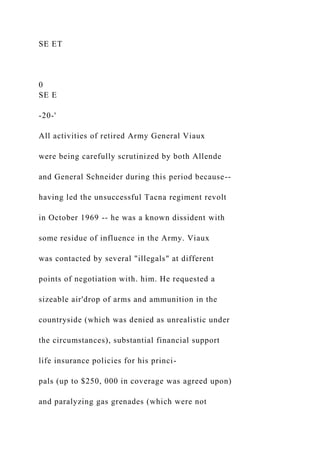
SE ET
0
SE E
-20-'
All activities of retired Army General Viaux
were being carefully scrutinized by both Allende
and General Schneider during this period because--
having led the unsuccessful Tacna regiment revolt
in October 1969 -- he was a known dissident with
some residue of influence in the Army. Viaux
was contacted by several "illegals" at different
points of negotiation with. him. He requested a
sizeable air'drop of arms and ammunition in the
countryside (which was denied as unrealistic under
the circumstances), substantial financial support
life insurance policies for his princi-
pals (up to $250, 000 in coverage was agreed upon)
and paralyzing gas grenades (which were not
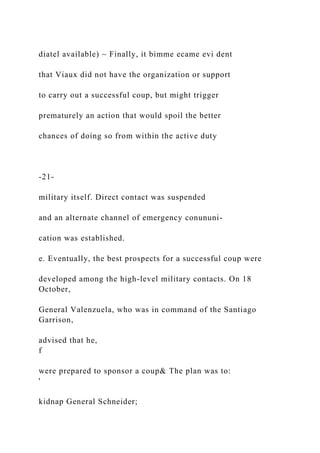
diatel available) ~ Finally, it bimme ecame evi dent
that Viaux did not have the organization or support
to carry out a successful coup, but might trigger
prematurely an action that would spoil the better
chances of doing so from within the active duty
-21-
military itself. Direct contact was suspended
and an alternate channel of emergency conununi-
cation was established.
e. Eventually, the best prospects for a successful coup were
developed among the high-level military contacts. On 18
October,
General Valenzuela, who was in command of the Santiago
Garrison,
advised that he,
f
were prepared to sponsor a coup& The plan was to:
'
kidnap General Schneider;
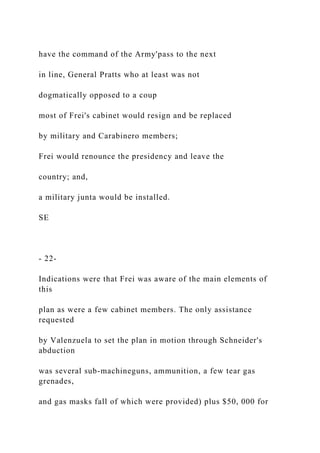
have the command of the Army'pass to the next
in line, General Pratts who at least was not
dogmatically opposed to a coup
most of Frei's cabinet would resign and be replaced
by military and Carabinero members;
Frei would renounce the presidency and leave the
country; and,
a military junta would be installed.
SE
- 22-
Indications were that Frei was aware of the main elements of
this
plan as were a few cabinet members. The only assistance
requested
by Valenzuela to set the plan in motion through Schneider's
abduction
was several sub-machineguns, ammunition, a few tear gas
grenades,
and gas masks fall of which were provided) plus $50, 000 for
expenses
(which was ready to be passed upon demand).
f. On 2Z October, General Schneider was mortally wounded on
his way to work. General Pratts was appointed to command the
Army in place of Schneider. Frei made a strong statement
denouncing
the assassination and declared a state of emergency; as a result
thereof, General Valenzuela assumed control of the Santiago
area.
In effect, the military were in control of Chile and in an
excellent
position to follow through with a successful coup irrespective of
Frei's
actions or inactions. They did not -- probably because of the
strong
reaction of Frei and the public to the Schneider affair and lack
of any
positive encouragement from Frei. Their rationale is not certain
at
this stage, nor, for that matter, is it certain who or what group
was
ultimately responsible for Schneider's assassination. The
Valenzuela
grou j claimed that it was not and that all materiel passed~ to it
is still
SE
- 23-
in its possession unused. In any event, the opportunity for a
coup
soon passed; and, Allende mas easily elected by Congress on
24 October and quietly inaugurated on 3 November.
S ET
This is a copy of the Introduction to the “Report of CIA Chilean
Task Force Activities, 15 September to 3
November 1970” at http://cryptome.org/cia-track2.htm. It
provides necessary background information,
which – along with lecture/discussion materials – should serve
as your corroborating evidence.
21 November 2000
The 1973 military coup which overthrew the Allende
government of Chile is well-known. Less known is
a short-lived, deep cover attempt of President Nixon and Henry
Kissinger to arrange a military coup to
prevent Allende from taking office. While the US Senate
Church Committee in the mid-70s reported on
this and other covert activities by US intelligence agencies,
many of the documents provided to the
committee for its investigation remained classified until their
release on November 13, 2000, over protests
of the CIA that the documents would reveal intelligence means
and methods.
The 1970 covert action commenced within days after Allende's
election on September 3, and had two
parts, designated Track I and Track II.
Track I aimed at persuading and supporting Chilean opponents
of Allende to prevent his taking office as
president using political and constitutional means. It involved
the CIA, the State Department, Defense
Department and the US ambassador to Chile.
Track II (also called codeword FUBELT) was a special
organization set up by the CIA at President
Nixon's request to foster a military coup, and it involved only
the CIA, Henry Kissinger and Kissinger's
staff. Track II was kept secret from the agencies executing
Track I and it used Track I to cloak its
activities. Track II was headed by Thomas Karamessines, CIA
Deputy Director of Plans.
The CIA claims that Track II was terminated after the
assassination of Chilean General Schneider on
October 22, 1970, when a planned military coup failed to
materialize. However, the Church Committee
alleged that it was never terminated and probably assisted the
military coup of 1973 by going deeper
under cover.
The CIA Track II document below is one of several dozen in
the Chile Collection (search on "Track II,"
FUBELT, "false flag," machine guns") which describe means
and methods, these among them:
1. Kept secret from other US government agencies and their
oversight committees by presidential order.
2. Deployed CIA "false flag" officers ("illegals") who pretended
to be from non-US countries.
3. Arranged anti-Allende press coverage: "15 journalist agents
from 10 different countries, supplemented
by 8 more journalists from 5 countries under the direction of
high level agents who were, for the most
part, in managerial capacities in the media field."
4. Concealed the existence of Track II after its mission failed
until exposed during the Church Committee
hearings.
Many redactions in the document can be filled in by reference
to other documents in the collection.
Paper #2
Due Week Eight, Friday, 22 May 2020, 11:59 p.m.
through SafeAssign through Discussion Section Web site
(follow your TA's instructions about how to submit your paper)
In five concisely argued pages (about 1250 words), analyze the
"Report of CIA Chilean Task Force Activities," assigned for
class. What was
the CIA task force's main goal in Chile? This document also
reveals a number of the CIA's operating assumptions and
conceptions that
motivated and supported their activities. How would you
characterize these conceptions and how do they establish CIA
priorities? You may
find it helpful to ask yourself the following questions:
What did the author(s) of this report think of
elections?
What did the author(s) think of the press?
How did they define "free press" and what role did
the press play in their operations?
What did they think of constitutionality?
What did they think about political violence?
As always, your response should be complete, but succinct, and
supported with short quotations and/or citations from the text.
Late papers will
not be accepted. Papers shorter than 1200 words and papers
longer than about six pages (double spaced, standard 12-point
font, 1-inch margins,
minimal headers) will be substantially penalized. Remember,
your paper should be structured around an argument based on
analysis of the
assigned reading.
Do not consult any outside sources beyond the assigned or
recommended readings while writing this paper. If you violate
this rule and consult
outside sources, you must cite them. Plagiarism carries a much
stronger penalty than consulting unnecessary and often
misleading secondary
materials.

Fiscal Admin. - Budget A.docx

  • 1.
    Fiscal Admin. -Budget Analyst's Role, Mikesell 181.pdfFiscal Admin. - Budget Analyst's Role, Mikesell 182.pdfFiscal Admin. - Budget Analyst's Role, Mikesell 183.pdfFiscal Admin. - Budget Analyst's Role, Mikesell 184.pdfFiscal Admin. - Budget Analyst's Role, Mikesell 185.pdfFiscal Admin. - Budget Analyst's Role, Mikesell 186.pdfFiscal Admin. - Budget Analyst's Role, Mikesell 187.pdfFiscal Admin. - Budget Analyst's Role, Mikesell 188.pdfFiscal Admin. - Budget Analyst's Role, Mikesell 189.pdfFiscal Admin. - Budget Analyst's Role, Mikesell 190.pdfFiscal Admin. - Budget Analyst's Role, Mikesell 191.pdf
  • 2.
    I. Workshop 2Ticket In Assignment: History 20W Spring 2020: Instructions The assignment below is the prewriting assignment required for credit in the second writing workshop. It is due by Wednesday, May 13th by 11am. Fill out the form and submit it when complete. You can edit it after you have submitted it, and you should receive a copy of your responses for your own use. This assignment is meant to prepare you for the second, required paper in History 20W. It covers breaking down the prompt and sources, crafting a thesis, using evidence, and structuring paragraphs, all of which will be developed in the writing workshop. II. Breaking Down the Prompt: Finding the Subject and Context Answer the following questions in complete sentences. 1. There are two main questions at the beginning of the prompt that are the main focus of the paper. What are they? * Your answer 2. Restate these questions in your own words * 3. Using information from the first paragraph in the prompt: what do you think the goal of this paper is? * Your answer
  • 3.
    4. List thepossible subjects that you have to analyze for this paper. Remember - your subject will always be a who (as in a person or institution) or a what (as in an thing or idea). * Your answer 5. Define the terms, "Assumptions" and "Priorities," and explain why they are important to this paper. * Your answer 6. List the possible context of your subjects. Remember - context is the parameters that define when/how you analyze your subjects. Often historians will base the context around the "when" and "where" of their primary sources. * Your answer III. Crafting a Claim: Drafting a preliminary thesis statement Consider the questions of the prompt from above and think about how you might answer them. Remember a good thesis answers a why or how question. 1. List three other global issues the U.S. was involved in around the same time as the Chilean task force. * Your answer
  • 4.
    2. How wasChile connected to the other global forces at this time? What did the U.S. "assume" about Chile's impact on the global stage? * Your answer 3. What was the result of the Chilean task force? * Your answer 4. In one to two sentences: Why do you think the CIA created a task force focused on Chile and how does that connect to their assumptions and conceptions? * Your answer IV. Breaking Down the Sources: Close Reading Analysis Consider the close reading process you used to break down Freud and use the same close reading techniques as you read the CIA's report. Sourcing the Text: Think about the author, artist, or writer and the creation of the primary source. Who created it? When? Why was it created? For what purpose? Who is the audience? What information is provided by the source? Summarize it. How trustworthy is this source? * Your answer Close Reading: Carefully consider what the document says and
  • 5.
    the language used tosay it. Note interesting words or phrases and why you think they are important. How do the authors organize their ideas? Think about major points made in the beginning, middle, and end . What consistent ideas, themes, or motifs does the author use? Consider contextual clues about time, place, or people; identify and explain any questions, facts, assumptions/arguments, and priorities/purposes of the text. * Your answer Contextualizing: Situate the source in time and place. What major events, themes, or peoples distinguish the era or period in which the source was created? What does the source reveal about the period or its audience? * Your answer Corroborating: What other sources are there that shed light on this subject? What do they say? Do the documents agree? Are they reliable? What other evidence supports or disputes the conclusions/interpretations you have made about the main source? (Hint: Your only corroborating evidence comes from lecture and the extra background essay. You cannot
  • 6.
    and should not useother outside sources.) * Your answer V. Using and Incorporating Evidence Use the information from above to think about what you need to prove and the type of evidence you need to support your argument. 1. Think about the prompt's subquestions and how you might answer them. Pick one subquestion and find a quote in the CIA Report that responds to it. State which question you picked, and copy the quote - make sure to cite! * Your answer 2. Explain how your quote responds to the subquestion. * Your answer 3. How does the quote you picked above support your answer for question #4 in Section III? What CIA assumptions and conceptions does it reveal? What priorities does it reveal? * Your answer 4. Describe the context of this quote. Where/when does it come from in the text? Restate the quote in your own words. * Your answer
  • 7.
    5. Describe thesubject of the quote. What is the quote about? What is the main idea? What are some interesting words or phrases that you note? * Your answer VI. Paragraph Construction: Complete in Workshop This section will be done during the writing workshop. If you are doing the Asynchronous Workshop there will be instructions posted on how to complete this section. This section needs to be written following the workshop guidelines. Approved for Release July 2000 18 November 1970 SUBJECT: Report on CIA Chilean Task Force Activities, 15 September to 3 November 1970 1. General a. On 15 September 1970, CIA was directed to try to prevent Marxist Salvador Allende's assent to the Chilean presidency on 3 November. This effort was to be independent of concurrent endeavors being undertaken through, or with the knowledge of, the 40 Committee,
  • 8.
    Department of State,and Ambassador Korry. b. Briefly, the situation at that time was the following: Allende had attained a plurality of only some 40, 000 in the Chilean popular vote for president. Jorge Alessandri, a conservative and the runner-up, would face Allende in a.Congressional run-off on 24 October The run-off winner would be invested as president on 3 November. Allende's designation as president by Congress was very probable given all known factors in 'the Chilean political equation. Given the. dismal prospects of a political formula being worked out to prevent Allende's designation as president by Congress, remaining alternatives centered around overcoming the apolitical, constitu- tional-or'iented inertia of the Chilean military. U. S. Government intentions were highly suspect,
  • 9.
    particularly in Allendeand certain government sectors. Suspicions eztended to all Americans in Chile for whatever declared purpose. In addition, the Chilean military were being monitoredguite closely by the Allende forces for warning signals of any interventionist proclivities. Z. S ecial Or anization a. A Chilean Task Force was assembled and functioning three days after CIA was assigned the mission. It was headed and highly-. qualified CIA recalled from thei SE osts specifically for this purpose. A special communi- cations channel was set up simultaneously to Santiago, Chile, and Buenos Aires, Argentina, to handle sensitive cable traffic for the Task Force. It consisted of four CIA officers with the appearance,
  • 10.
    language, and arperienceto sustain the fiction of various foreign nationalities. They were recalled from their overseas posts to Washington, briefed, and inserted individually into Chile nationals. In Santiago, their only U, S. contact was a CIA officer who had resided in Santiago established con+et with Chilean intermediaries or principals interested in promoting a military coup. c. By a special (and unique) arrangement requested by CIA, the U, S. Army Attache in Santiago was placed under operational direction of the CIA Chief of Station there. His assistance and Chilean military contacts were invaluable in this program S ET 3. The Dual A roach: Constitutional and Cou a. Prospects for inducing Congress to vote for Alessandri rather than Allende were never bright and, they all focused on
  • 11.
    inspiring a reluctant,indecisive President Fxei to assume an out- of-character role: dynamic leadership within his own party, with the "persuadables" in Congress, and with the military, Frei was under no illusions about Chile's fate under an Allende regime. "Chile has a very short future, " he said, "and after 4 November it will only have a past. " b. Initially, Frei was willing to consider and even advocate a constitutional solution: the so-called Frei re-election gambit. The question was whether he would be willing to commit his prestige completely in following through on such a difficult political maneuver with the outcome, at best, unassu'red. The basic gambit consisted of marshalling enough Congressional votes to elect Alessandri over Allende with the understanding Alessandri would resign immediately after inauguration and pave the way for a special election in which
  • 12.
    Frei could legallybecome a candidate. As a preliminary step, Frei coordinated Alessandri's post-election statement that if he were SE E RE1' selected for the presidency by Congress, he (Alessandri) would resign. The thrust of CIA's endeavors, then, was to use every plausible pressure combined with inducements to. move Frei down this path. To this end, virtually overnight CIA mobilized an inter- locking political action and propaganda campaign designed both to goad and entice Frei into following through on the re-election gambit. c. At the same time, recognizing the fallibilities of Frei, CIA focused on provoking a military coup. This undertaking was segre- gated from that of the Frei re-election gambit with the intention that
  • 13.
    it be pursuedindependently of Frei if necessary, but with his acqui- escence if possible. 4. Pro a anda Cam ai a. The propaganda campaign was tailored to generating concern about Chile's future in terms which would condition the thinking and actions of the three key elements in the Chilean political equation: SE 7 -6- Frei himself, the Chilean political elite, and the Chilean military (the latter two of which could well bring collateral influence to bear on Frei). Each of these elements had hastened to rationalize its acceptance of an Allende presidency. Their palliative was the built- in checks and balance of Chile's demonstrated reverence for democ-
  • 14.
    racy and constitutionality,sweetened by Allende's promise to honor these traditions. b. After the 4 September popular vote, the world press had tended to treat the prospect of witnessing the first freely-elected Marxist head of state take office as a curious aberration of democ- racy 'rather than a politically significant event. Press interest and coverage was relatively light until the 'Allende forces fortuitously provided an attractive issue which could be exploited. By 15 September, it became apparent that Allende. was conducting a rather blatant campaign to intimidate the Chilean information media through threats of assassination and violence, takeovers by so- called worker organizations, and ultimatums to the management of news- papers and radio stations. Allende's purpose was to smother any opposition to his election by Congress and to take advantage of that
  • 15.
    .S RE peculiarly Latin,and' pronounced Chilean, propensity to 'jump on an . accelerating bandwagon -- ideals and the country's welfare to the contrary'. A major target of Allende was "El Mercurio", the most prestigious newspaper in Chile and the major oppos'ition voice to Allende 'up to that time. CIA mounted a propaganda campaign centered' aroun'd "El Mercurio" and the issue of Allende brazenly taking his first step in "communizing" Chile by attacking freedom n. of the press and, worse, with the election still unsettled. Covert action resources were used to launch: Cables of support/protest from leading newspapers throughout Latin America to "El Mercurio" A protest statement from the International Press
  • 16.
    Associatio "Freedom of thepress in Chile is being strangled by Communist and Marxist forces and their allies. ") World press coverage of the International Press Association protest and on the details of the Comznunist efforts to seize control of the Chilean press. A program of journalists -- actual agents and other- wise -- travelling to Chile for on-the-scene reporting. (By 28 September, CIA had in place in, or enroute to, Chile 15 journalist agents from 10 different countries I I I I I This cadre was supplemented by 8 xnore journalists froxn 5 countries under the direction of high level
  • 17.
    agents who were,for the most part, in xnanagerial capacities in the media field. ) As a result of the ensuing furore, Allende -'- sensitive to world -opinion and attempting to project the image of a moderate, non- dogmatic socialist -- 'decided to become more circumspect, By 25 Septeznber, heavy-handed intimidation of the press had virtually ceased. c. Allende's show of strength had made its point however; the Chilean pxess, including uEl Mercurio", never did regain its resiliency and remained thoroughly muted from thereon out. Lack- gtl Mf 4 n t g t I ply f S E -9- propaganda inside Chile, CIA had to rely increasingly on its own resources:
  • 18.
    an underground pressdependent upon direct mail distribution; placement of individual news items through agents against the resistance of a cowed management; I I I financing of a new, albeit small, newspaper; subsidy of an anti-Allende political group and its radio programs, political advertisements, and political rallies; and, direct mailing of foreign news articles to Presi- dent Frei, Mrs. Frei, selected military leaders, and the Chilean domestic press. This effort did not, and could not, replace a Chilean press, fully operative and free of restraint. Virtually alone, it did keep the voice of public opposition alive inside Chile for coup purposes during the final weeks of this period.
  • 19.
    d. The magnitudeof the propaganda campaign mounted during this six week period in the Latin American and European media- - SE - 10- aside from the U. S. , the two "outside" areas with, by far, the greatest influence on Chile -- is evident from the fact that only partial returns show 726 articles, broadcasts, editorials, and similar items as a direct result of agent activity. Just how many of these items were replayed is not known Nor, has CIA any idea of the scope of the immeasurable multiplier effect —— that is, how much its "induced" news focused media interest on the Chilean issues and stimulated additional coverage —— except that& even by conservative standards, this contribution must have been both substantial and significant. e. Special intelligence and "inside" briefings were given to
  • 20.
    U. S. journalistsin deference to the international influence of the U. S. media. Particularly noteworthy in this connection was the Time cover story which owed a great deal to written materials and briefings provided by CIA. The Time correspondent in Chile who was providing much of the background material for the story apparently accepted Allende's protestations of moderation and constitutionality at face value. CIA briefings in Washington SE S ET — 11— changed the basic thru'st of the story in the final stages according to another Time correspondent. It provoked Allende to complain on 13 October, "We are suffering the most brutal and horrible pres- sure, both domestic and international, " singling out Time in
  • 21.
    particular as having"openly called" for an invasion of Chile. 5. Political Action a. The political action program had only one purpose: to induce President Frei to prevent Allende's election by the Congress on 24 October and, failing that, to support -- by benevolent neutrality at the least and conspiratorial benediction at the most -- a military coup which would prevent Allende from taking office on 3 November. Realistically, the task was one of attempting to recast Frei, as a political personality, in a role demanding decisiveness and "machismo" to a degree that, thus far, had eluded him. Pressures from those whose opinion and/or approval he valued -- in combination with adequate propaganda orchestrations -- represented the only hope of converting Frei. — 12—
  • 22.
    Allende as presidentwould be an unparalleled disaster for Chile (Frei agreed). Frei had both the power and obligation to prevent this. In the event Frei's re-election gambit succeeded, the U. S. Government would be prepared to provide substantial support for Frei's presidential campaign S ET - 13- c. In Europe and Latin America, prominent and influential members of the Christian Democratic movement as well as the Catholic Church were prompted to visit Frei or send personal messages to him urging that he save Chile. Some of these endeavors were the following: -14- The West German Christian Democratic Party--
  • 23.
    which enjoyed specialequities with Frei by virtue of generous support to the Christian Democrats in Chile over a range of many years -- dispatched several top-level emissaries to Chile. They con- tacted Frei and other Christian Democratic leaders in Chil 5 RET - 15- one of the international figures in Catholicism most respected by Frei, sent a personal message indicating that Frei and his party must oppose Marxism. of the Italian Christian Democratic Party -- which had good fraternal relations with Frei and his party-- refused to intervene. (He said it was a hopeless situation and he saw no point in risking his reputa-
  • 24.
    tion in alost cause. ) Collateral efforts were made to influence Frei or those close to Frei, such as: Influential lay Catholics sent messages to or visited the Vatican. through a series of lay and clerical pressures from other countries, was dissuaded from ceding an Allende victory prior to his Congressional election actually taking place. . Telegrams were sent Mrs. Frei from women' s groups in other Latin American countries. SE E SE E - I6- Foreign press items were mailed directly to Frei, Mrs. Frei, and Christian Democratic Congressmen in Chile.
  • 25.
    Intelligence was surfacedindicating that, once in power, the Communists intended to denigrate Frei as the first step in the dissolution of his party. d. In spite of everything, Frei never asserted himself. Indeed, i he'failed to attend or to influence otherwise the 3-4 October Congress I of his party at which time it was decided by a substantial margin to make a deal with Allende. With that decision, the Frei re- election gambit died and constitutional alternatives had been exhausted. Sub- sequently, Frei did manage to confide to several top-ranking military officers that he would not oppose a coup, with a guarded implication he might even welcome one. Yet, when a coup opportunity and situation presented itself upon the assassination of Army Commander in Chief Schneider, Frei moved quickly away from it. 6. ~Mt rc'
  • 26.
    a. After earlyOctober -- absent any evidence that Frei was responding, politically speaking, to artificial respiration -- a S E - 17- military coup increasingly suggested itself as the only possible solution to the Allende problem. Anti-Allende currents did assist in the military and the Carabineros, but were immobilized by: the tradition of military respect for the Constitution; the public and private stance of General Schneider, Commander in Chief of the Army, who advocated strict adherence to the Constitution; fear of the reaction of non-commissioned officers who tended to harbor pro-Allende sympathies; and, a strong propensity to accept Allende blandishments to the effect that the military had little to fear from Although individual officers among the top leadership of the military
  • 27.
    and Carabineros werepre-disposed to take action, they felt the Army was central to a successful coup, and, as long as General Schneider remained the head of the Army, the Army could not be counted upon. General Schneider's attitude could. only be changed through the personal intervention and forceful advocacy of a coup by President Frei; something, it became obvious, the latter was most unlikely to bring himself to do. - l8- b. ad a wide range of excellent contacts among the military with whom he enjoyed unusually close, frank, and confidential' relationships. As a general rule, members of the "illegal" team initiated and picked up those contacts with the highest risk potential, that is, those individuals whose
  • 28.
    credentials, reliability, andsecurity quotient were unproven and unknown. c. Between 5 October and 20 October, the CIA Station made contacts with key military and Carabinero otficials. These contacts required a high degree of overt plausibility or clandestinity since, by that time, Allende was acutely aware that only the military remained between himself and the presidency, and, accordingly, monitored the activities of key military figures quite closely. Through direct contact, the SE - 19- the and the advised of the U. S. Government desire to deny Allende the presidency and
  • 29.
    its willingness tosupport a coup attexnpt. and the privy to the U. S. position through trusted The ere made high-level military inter- xnediaries. d. During this same period in October, the "illegals" estab- lished direct contact and conducted negotiations with the leadership of the two incipient coup "movements" involving the greatest risk: claimed to have 4, 000 men organized in the greater Santiago area. He requested arms and ammunition from his "illegal" contact. When it developed that was somewhat eccentric and had little, if any, organization of the scope claixned, contact w'as dropped.
  • 30.
    SE ET 0 SE E -20-' Allactivities of retired Army General Viaux were being carefully scrutinized by both Allende and General Schneider during this period because-- having led the unsuccessful Tacna regiment revolt in October 1969 -- he was a known dissident with some residue of influence in the Army. Viaux was contacted by several "illegals" at different points of negotiation with. him. He requested a sizeable air'drop of arms and ammunition in the countryside (which was denied as unrealistic under the circumstances), substantial financial support life insurance policies for his princi- pals (up to $250, 000 in coverage was agreed upon) and paralyzing gas grenades (which were not
  • 31.
    diatel available) ~Finally, it bimme ecame evi dent that Viaux did not have the organization or support to carry out a successful coup, but might trigger prematurely an action that would spoil the better chances of doing so from within the active duty -21- military itself. Direct contact was suspended and an alternate channel of emergency conununi- cation was established. e. Eventually, the best prospects for a successful coup were developed among the high-level military contacts. On 18 October, General Valenzuela, who was in command of the Santiago Garrison, advised that he, f were prepared to sponsor a coup& The plan was to: ' kidnap General Schneider;
  • 32.
    have the commandof the Army'pass to the next in line, General Pratts who at least was not dogmatically opposed to a coup most of Frei's cabinet would resign and be replaced by military and Carabinero members; Frei would renounce the presidency and leave the country; and, a military junta would be installed. SE - 22- Indications were that Frei was aware of the main elements of this plan as were a few cabinet members. The only assistance requested by Valenzuela to set the plan in motion through Schneider's abduction was several sub-machineguns, ammunition, a few tear gas grenades, and gas masks fall of which were provided) plus $50, 000 for
  • 33.
    expenses (which was readyto be passed upon demand). f. On 2Z October, General Schneider was mortally wounded on his way to work. General Pratts was appointed to command the Army in place of Schneider. Frei made a strong statement denouncing the assassination and declared a state of emergency; as a result thereof, General Valenzuela assumed control of the Santiago area. In effect, the military were in control of Chile and in an excellent position to follow through with a successful coup irrespective of Frei's actions or inactions. They did not -- probably because of the strong reaction of Frei and the public to the Schneider affair and lack of any positive encouragement from Frei. Their rationale is not certain at this stage, nor, for that matter, is it certain who or what group was ultimately responsible for Schneider's assassination. The Valenzuela
  • 34.
    grou j claimedthat it was not and that all materiel passed~ to it is still SE - 23- in its possession unused. In any event, the opportunity for a coup soon passed; and, Allende mas easily elected by Congress on 24 October and quietly inaugurated on 3 November. S ET This is a copy of the Introduction to the “Report of CIA Chilean Task Force Activities, 15 September to 3 November 1970” at http://cryptome.org/cia-track2.htm. It provides necessary background information, which – along with lecture/discussion materials – should serve as your corroborating evidence. 21 November 2000 The 1973 military coup which overthrew the Allende government of Chile is well-known. Less known is a short-lived, deep cover attempt of President Nixon and Henry
  • 35.
    Kissinger to arrangea military coup to prevent Allende from taking office. While the US Senate Church Committee in the mid-70s reported on this and other covert activities by US intelligence agencies, many of the documents provided to the committee for its investigation remained classified until their release on November 13, 2000, over protests of the CIA that the documents would reveal intelligence means and methods. The 1970 covert action commenced within days after Allende's election on September 3, and had two parts, designated Track I and Track II. Track I aimed at persuading and supporting Chilean opponents of Allende to prevent his taking office as president using political and constitutional means. It involved the CIA, the State Department, Defense Department and the US ambassador to Chile. Track II (also called codeword FUBELT) was a special organization set up by the CIA at President Nixon's request to foster a military coup, and it involved only the CIA, Henry Kissinger and Kissinger's staff. Track II was kept secret from the agencies executing Track I and it used Track I to cloak its activities. Track II was headed by Thomas Karamessines, CIA Deputy Director of Plans. The CIA claims that Track II was terminated after the assassination of Chilean General Schneider on October 22, 1970, when a planned military coup failed to materialize. However, the Church Committee alleged that it was never terminated and probably assisted the military coup of 1973 by going deeper under cover.
  • 36.
    The CIA TrackII document below is one of several dozen in the Chile Collection (search on "Track II," FUBELT, "false flag," machine guns") which describe means and methods, these among them: 1. Kept secret from other US government agencies and their oversight committees by presidential order. 2. Deployed CIA "false flag" officers ("illegals") who pretended to be from non-US countries. 3. Arranged anti-Allende press coverage: "15 journalist agents from 10 different countries, supplemented by 8 more journalists from 5 countries under the direction of high level agents who were, for the most part, in managerial capacities in the media field." 4. Concealed the existence of Track II after its mission failed until exposed during the Church Committee hearings. Many redactions in the document can be filled in by reference to other documents in the collection. Paper #2 Due Week Eight, Friday, 22 May 2020, 11:59 p.m. through SafeAssign through Discussion Section Web site (follow your TA's instructions about how to submit your paper)
  • 37.
    In five conciselyargued pages (about 1250 words), analyze the "Report of CIA Chilean Task Force Activities," assigned for class. What was the CIA task force's main goal in Chile? This document also reveals a number of the CIA's operating assumptions and conceptions that motivated and supported their activities. How would you characterize these conceptions and how do they establish CIA priorities? You may find it helpful to ask yourself the following questions: What did the author(s) of this report think of elections? What did the author(s) think of the press? How did they define "free press" and what role did the press play in their operations? What did they think of constitutionality? What did they think about political violence? As always, your response should be complete, but succinct, and supported with short quotations and/or citations from the text. Late papers will not be accepted. Papers shorter than 1200 words and papers longer than about six pages (double spaced, standard 12-point font, 1-inch margins, minimal headers) will be substantially penalized. Remember, your paper should be structured around an argument based on analysis of the assigned reading. Do not consult any outside sources beyond the assigned or recommended readings while writing this paper. If you violate this rule and consult outside sources, you must cite them. Plagiarism carries a much stronger penalty than consulting unnecessary and often misleading secondary
  • 38.