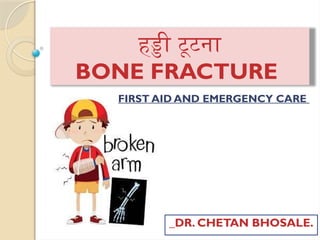
हड्डी टूटने कोचिकित्सका भाषा में बोन फ्रैक्चर या हड्डी में
फ्रैक्चर कहा जाता है, यह एक मेडिकल स्थिति होती है।
यह तब होती है, जब शरीर की किसी हड्डी या उसकी
बनावट में दरार पड़ जाती है या वह टूट या कट जाती है।
A fracture is any break in a bone, including
cracks, splintering, and complete breaks
ज्यादातर हड्डी क
े फ्र
ै क्चर, हड्डियों पर अत्यधिक दबाव या
तनाव पड़ने पर होता है।
हड्डी टूटना क्या होता है?
3.
कुछ अन्य मेडिकलपरिस्थियां भी हैं जो हड्डियों को
कमजोरबनाती हैं और उनके टूटने का कारण बनती हैं।
उदाहरण के लिए ऑस्टियोपोरोसिस (Osteoporosis),
कुछ प्रकार के कैंसर या ऑस्टियोजेनेसिस इंपरफे क्टा
(Osteogenesis imperfecta / इसे भंगुर हड्डी रोग के
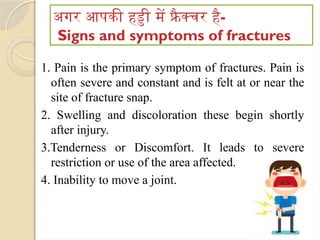
नाम से भी जाना जाता हैं)
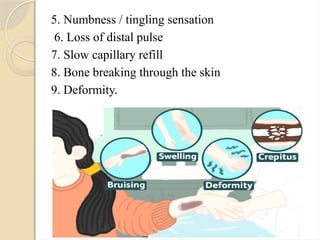
पैथोलोजिकल फ्रै क्चर (Pathological fracture) के नाम
से जानी जाने वाली मेडिकल परिस्थिति के
परिणामस्वरूप भी हड्डियों में फ्रैक्चर हो जाता है।
4.
INDEX
हड्डी टूटने(फ्रै क्चर) के प्रकार (Types)
हड्डी टूटने (फ्रै क्चर) के लक्षण (Symptoms)
हड्डी टूटने (फ्रै क्चर) के कारण (Causes)
हड्डी टूटने (फ्रै क्चर) से बचाव के उपाय(Prevention)
हड्डी टूटने (फ्रै क्चर) पर प्राथमिक उपचार(First Aid)
हड्डी टूटने (फ्रै क्चर) पर इलाज (Treatment)
हड्डी टूटने (फ्रै क्चर) की जटिलताएं (Complications)
5.
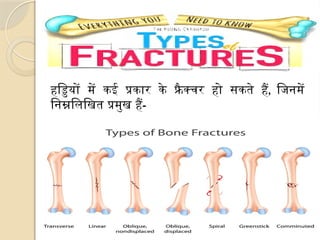
हड्डियों में कईप्रकार के फ्रै क्चर हो सकते हैं, जिनमें
निम्नलिखित प्रमुख हैं-
6.
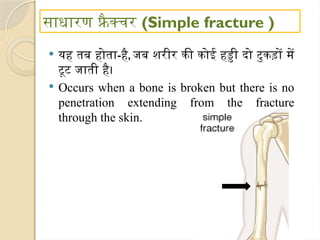
यह तबहोता-है, जब शरीर की कोई हड्डी दो टुकड़ों में
टूट जाती है।
Occurs when a bone is broken but there is no
penetration extending from the fracture
through the skin.
साधारण फ्रै क्चर (Simple fracture )
7.
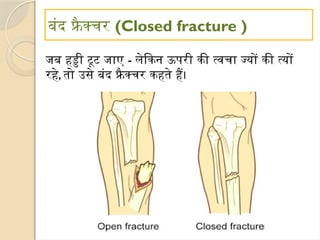
बंद फ्रै क्चर(Closed fracture )
जब हड्डी टूट जाए - लेकिन ऊपरी की त्वचा ज्यों की त्यों
रहे, तो उसे बंद फ्रैक्चर कहते हैं।
8.
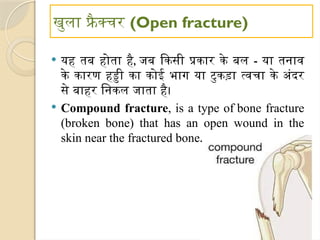
खुला फ्रै क्चर(Open fracture)
यह तब होता है, जब किसी प्रकार के बल - या तनाव
के कारण हड्डी का कोई भाग या टुकड़ा त्वचा के अंदर
से बाहर निकल जाता है।
Compound fracture, is a type of bone fracture
(broken bone) that has an open wound in the
skin near the fractured bone.
9.
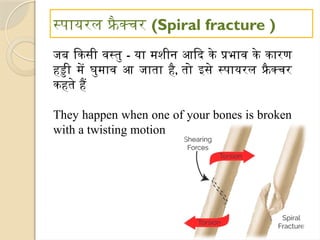
स्पायरल फ्रै क्चर(Spiral fracture )
जब किसी वस्तु - या मशीन आदि के प्रभाव के कारण
हड्डी में घुमाव आ जाता है, तो इसे स्पायरल फ्रैक्चर
कहते हैं
They happen when one of your bones is broken
with a twisting motion
10.
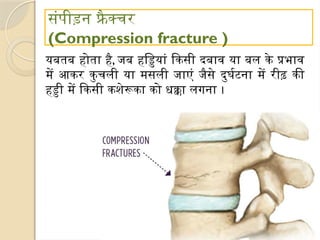
संपीड़न फ्रै क्चर
(Compressionfracture )
यबतब होता है, जब हड्डियां किसी दबाव या बल के प्रभाव
में आकर कुचली या मसली जाएं जैसे दुर्घटना में रीढ़ की
हड्डी में किसी कशेरूका को धक्का लगना ।
11.
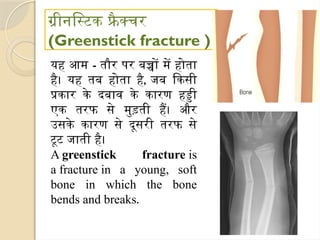
ग्रीनस्टिक फ्रै क्चर
(Greenstickfracture )
यह आम - तौर पर बच्चों में होता
है। यह तब होता है, जब किसी
प्रकार के दबाव के कारण हड्डी
एक तरफ से मुड़ती हैं। और
उसके कारण से दूसरी तरफ से
टूट जाती है।
A greenstick fracture is
a fracture in a young, soft
bone in which the bone
bends and breaks.
12.
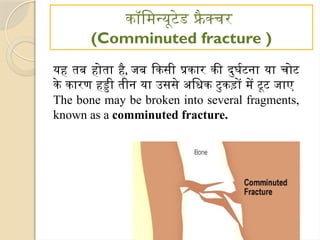
कॉमिन्यूटेड फ्रै क्चर
(Comminutedfracture )
यह तब होता है, जब किसी प्रकार की दुर्घटना या चोट
के कारण हड्डी तीन या उससे अधिक टुकड़ों में टूट जाए
The bone may be broken into several fragments,
known as a comminuted fracture.
13.
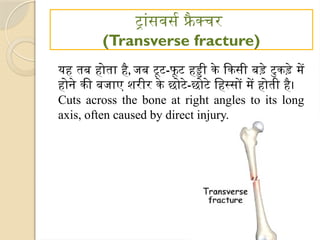
ट्रांसवर्स फ्रै क्चर
(Transversefracture)
यह तब होता है, जब टूट-फू ट हड्डी के किसी बड़े टुकड़े में
होने की बजाए शरीर के छोटे-छोटे हिस्सों में होती है।
Cuts across the bone at right angles to its long
axis, often caused by direct injury.
14.
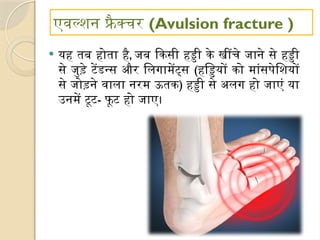
एवल्शन फ्रै क्चर(Avulsion fracture )
यह तब होता है, जब किसी हड्डी के खींचे जाने से हड्डी
से जुड़े टेंडन्स और लिगामेंट्स (हड्डियों को मांसपेशियों
से जोड़ने वाला नरम ऊतक) हड्डी से अलग हो जाएं या
उनमें टूट- फूट हो जाए।
15.
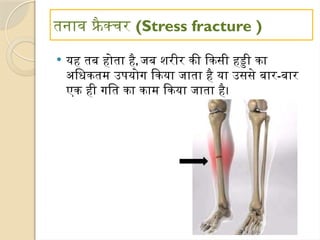
तनाव फ्रै क्चर(Stress fracture )
यह तब होता है, जब शरीर की किसी हड्डी का
अधिकतम उपयोग किया जाता है या उससे बार-बार
एक ही गति का काम किया जाता है।
16.
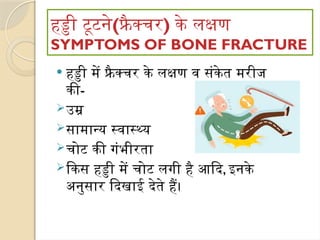
हड्डी टूटने(फ्रै क्चर)के लक्षण
SYMPTOMS OF BONE FRACTURE
हड्डी में फ्रै क्चर के लक्षण व संकेत मरीज
की-
उम्र
सामान्य स्वास्थ्य
चोट की गंभीरता
किस हड्डी में चोट लगी है आदि, इनके
अनुसार दिखाई देते हैं।
17.
अगर आपकी हड्डीमें फ्रै क्चर है-
Signs and symptoms of fractures
1. Pain is the primary symptom of fractures. Pain is
often severe and constant and is felt at or near the
site of fracture snap.
2. Swelling and discoloration these begin shortly
after injury.
3.Tenderness or Discomfort. It leads to severe
restriction or use of the area affected.
4. Inability to move a joint.
18.
5. Numbness /tingling sensation
6. Loss of distal pulse
7. Slow capillary refill
8. Bone breaking through the skin
9. Deformity.
19.
अगर आपकीहड्डी में फ्रैक्चर है, तो आपको हड्डी या
उसके आस-पास की जगह में काफी दर्द महसूस हो
सकता है
साथ ही सूजन भी आ सकती है।
जब हड्डी टूटती है, तो उस समय पॉपिंग या क्रेकिंग की
ध्वनी सुनाई दे सकती है।
अगर हाथों या पैरों की किसी हड्डी में फ्रै क्चर हुआ है,
तो वह अंग किसी एक तरफ असामान्य रूप से मुड़ा
हुआ या उसमें विकृत रूप दिखाई दे सकता है
अगर आपकी हड्डी में फ्रै क्चर है-
20.
CONTINUE…
फ्रैक्चर वालीहड्डी की ऊपरी त्वचा नीली हो सकती है
या खून भी निकल सकता है।
अगर कंपाउड फ्रैक्चर है, तो हड्डी का कोई टुकड़ा त्वचा
से बाहर निकला हुआ दिखाई दे सकता है और वहां पर
एक बड़ा घाव बन सकता है।
टूटी हुई हड्डी को हिलाना काफी मुश्किल हो सकता है.
फ्रैक्चर अगर पैर की हड्डी में है, तो चलने में काफी
परेशानी हो सकती है.
21.
हड्डी टूटने केकारण
(Causes of Fractured Bones)
हड्डियां काफी मजबूत होती है ये शरीर में इस तरह से
डिजाइन होती हैं कि गिरने या दुर्घटना जैसी स्थिति में
यह दबाव को झेल लेती हैं। लेकिन, हड्डियां टूटने से
पहले ही अधिक दबाव झेल पाती हैं। सामान्य रूप से
हड्डी निम्न कारणों से टूट सकती है।
22.
1. Direct Force:The bone breaks at the spot of
application of the force such as in direct hit over
a bone, bullet injury
2. Indirect Force: The bone breaks away from the
application of force somewhere else such as after
falling on outside stretched hands.
3. Force of powerful muscle actions: such as
violent cough may cause rib fracture.
CAUSES OF FRACTURES
23.
4. Aging: andbone disease which can increase the
risk of fractures (pathologic fractures), with
bones breaking even with minor accidents
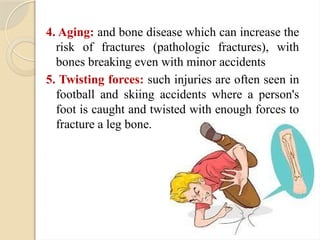
5. Twisting forces: such injuries are often seen in
football and skiing accidents where a person's
foot is caught and twisted with enough forces to
fracture a leg bone.
24.
हड्डी टूटने (फ्रैक्चर) से बचाव के उपाय
Prevention of Fracture
फ्रैक्चर की रोकथाम करने के लिए आप अपनी हड्डियों
को मजबूत बनाने के लिए कुछ कदम उठा सकते हैं, ये
आपकी उम्रके हिसाब से आपके लिए मददगार हो सकते
हैं।
25.
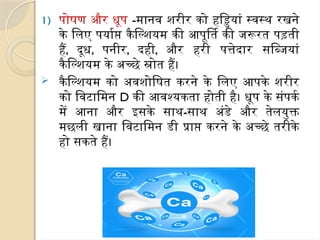
1) पोषण औरधूप -मानव शरीर को हड्डियां स्वस्थ रखने
के लिए पर्याप्त कैल्शियम की आपूर्ति की जरूरत पड़ती
हैं, दूध, पनीर, दही, और हरी पत्तेदार सब्जियां
कैल्शियम के अच्छे स्रोत हैं।
कैल्शियम को अवशोषित करने के लिए आपके शरीर
को विटामिन D की आवश्यकता होती है। धूप के संपर्क
में आना और इसके साथ-साथ अंडे और तेलयुक्त
मछली खाना विटामिन डी प्राप्त करने के अच्छे तरीके
हो सकते हैं।
26.
2) शारीरिक गतिविधि-आप जितना अधिक वजन उठाने
वाले व्यायाम करते हैं, आपकी हड्डियां उतनी ही अधिक
मजबूत और सघन बनती हैं।
इसके उदाहरणों में कूदना, चलना, दौड़ना, नाचना या
अन्य व्यायाम जिनमें शरीर के कंकाल में खिंचाव बढ़ता
है आदि शामिल है।
वृद्धावस्था के कारण ही सिर्फ हड्डियां कमजोर नहीं
पड़ती, शारीरिक गतिविधियों का कम होना भी इसका
कारण है, जिससे आगे जीवन में हड्डियों के कमजोर
पड़ने के जोखिम बढ़ जाते हैं। हर उम्र के लोगों के लिए
यह जरूरी होता है कि वे अपनी शारीरिक गतिविधियों
के प्रति गतिशील रहें।
27.
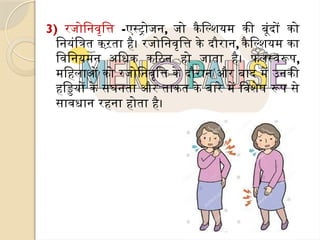
3) रजोनिवृत्ति -एस्ट्रोजन,जो कैल्शियम की बूंदों को
नियंत्रित करता है। रजोनिवृत्ति के दौरान, कैल्शियम का
विनियमन अधिक कठिन हो जाता है। फलस्वरूप,
महिलाओं को रजोनिवृत्ति के दौरान और बाद में उनकी
हड्डियों के सघनता और ताकत के बारे में विशेष रूप से
सावधान रहना होता है।
28.
हड्डी टूटने परप्राथमिक उपचार
First-Aid of Fracture Bone
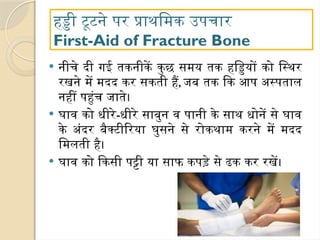
नीचे दी गई तकनीकें कुछ समय तक हड्डियों को स्थिर
रखने में मदद कर सकती हैं, जब तक कि आप अस्पताल
नहीं पहुंच जाते।
घाव को धीरे-धीरे साबुन व पानी के साथ धोनें से घाव
के अंदर बैक्टीरिया घुसने से रोकथाम करने में मदद
मिलती है।
घाव को किसी पट्टी या साफ कपड़े से ढक कर रखें।
29.
अगर हाथोंया पैरों की हड्डी टूटी हुई है, तो एक स्लिंग (Sling) या
स्पलिंट (Splint) की मदद से टूटी हुई हड्डी को हिलने से रोका जा
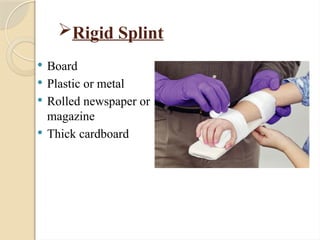
सकता है और स्थिर बना कर के रखा जा सकता है। अखबार या
किसी मैग्ज़ीन को गोल करके घरेलू स्पलिंट बनाया जा सकता है।
अगर संभावित रूप से लगता है कि ऊपरी पैर, रीढ़, श्रोणि या कूल्हे
की हड्डी में फ्रै क्चर है, तो मेडिकल सहायता आने तक वहीं रहना
चाहिए और हड्डियों को हिलाने की कोशिश नहीं करनी चाहिए।
इसे हिलाने का प्रयास करने से घायल क्षेत्र को और अधिक नुकसान
हो सकता है।
30.
Emergency care stepsfor patient
1. Primary assessment:
Assess and provide support for the CABs.
Manage life-threatening conditions first.
Prioritize and manage other injuries second
2. Carefully cut away the clothing to expose the injury
site. Control bleeding (open wound).
Check for distal circulation, sensation.
31.
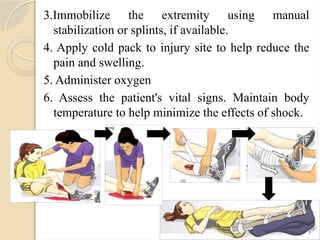
3.Immobilize the extremityusing manual
stabilization or splints, if available.
4. Apply cold pack to injury site to help reduce the
pain and swelling.
5. Administer oxygen
6. Assess the patient's vital signs. Maintain body
temperature to help minimize the effects of shock.
32.
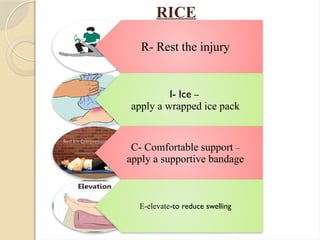
R- Rest theinjury
I- Ice –
apply a wrapped ice pack
C- Comfortable support –
apply a supportive bandage
E-elevate-to reduce swelling
RICE
33.
हड्डी टूटने (फ्रैक्चर) पर इलाज
Treatment OF Fracture Bone
टूटी हुई हड्डियां पुनः वापस जुड़ना एक प्राकृतिक
प्रक्रिया होती है, जो ज्यादातर मामलों में अपने आप
होती है। फ्रैक्चर के उपचार का उद्देश्य आम तौर पर
यह सुनिश्चित करना होता है कि उपचार के बाद शरीर
का घायल हिस्सा जितना हो सके उतना अच्छा संभव
कार्य कर सके।
34.
Continue…
प्राकृतिक उपचारप्रक्रिया शुरू करने के लिए, टूटी हुई
हड्डियों के सिरे आपस में मिलने जरूरी होते हैं, इसे फ्रै क्चर
को कम करने के रूप में जाना जाता है। जब फ्रै क्चर को
कम किया जाता है, उस दौरान डॉक्टर मरीज को सामान्य
बेहोशी की अवस्था में रखते हैं।
स्थिरीकरण (Immobilization). जोड़ने के लिए हड्डियों के
सिरों को मिलाया जाता है और ठीक तरीके से जुड़ने तक
उनको उसी दशा में रखा जाता है। जिसे निम्न की मदद से
किया जाता है
प्लास्टर कास्ट या प्लास्टर के फं क्शनल ब्रेसिज़ - ये हड्डी
को उसी दशा में बनाए रखते जब तक वह जुड़ नहीं जाती।
धातु की प्लेट व पेच - वर्तमान प्रक्रियाएं कम से कम
आक्रामक तकनीकों का उपयोग कर सकती हैं
35.
इंट्रा- मेड्यूलरीकील - आंतरिक धातु की छड़ी को लंबी
हड्डियों के बीच में डाला जाता है और बच्चों में लचीले
तारों का इस्तेमाल
आम तौर पर फ्रैक्चर हुई हड्डी व उसके आस-पास के
क्षेत्र का 2 से 8 हफ्तों को लिए स्थिरीकरण कर दिया
जाता है। स्थिरीकरण की अवधि इसपर निर्भर करती है
कि कौन सी हड्डी में फ्रै क्चर हुआ है या फिर कुछ
जटिलताओं पर जैसे खून की आपूर्ति में समस्या या
संक्रमण । किया जाता है।
ठीक होना - अगर हड्डी के टूटे हुए सिरों को ठीक प्रकार
से जोड़ दिया गया है और उनको स्थिर कर दिया गया
है। तो ठीक होने की प्रतिक्रिया का काम आसान हो
जाता है।
36.
शारीरिक थेरेपी(Physiotherapy) - हड्डी जुड़ने के बाद
मांसपेशियों की मजबूती और प्रभावित जगह की
गतिशीलता को फिर से लौटाने की जरूरत पड़ सकती
है। अगर फ्रैक्चर किसी जोड़ में या उसके आस-पास
हुआ है, तो इसमें स्थायी रूप से जकड़न या गठिया का
जोखिम हो सकता है। ऐसे में लोग अपने जोड़ों को
पहले की तरह नहीं मोड़ सकते।
सर्जरी अगर प्रभावित हड्डी या जोड़ के आसपास कि
मांसपेशियों या नरम ऊतकों को नुकसान पहुंचा है तो
प्लास्टिक सर्जरी की जरूरत पड़ सकती है।
37.
हड्डी टूटने (फ्रैक्चर) की जटिलताएं
Complications OF Fracture Bone
गलत जगह में जुड़ना- इसे कुसम्मिलन (Malunion) के नाम
से जाना जाता है, इसमें या तो हड्डी गलत स्थिति में जुड़
जाती है या समय के साथ जहां है वहीं जुड़ जाती है।
हड्डी का विकास रुकना अगर बचपन में हड्डी का फ्रै क्चर
ग्रोथ प्लेट (Growth plate) को प्रभावित करता है, तो उसमें
हड्डी का सामान्य विकास प्रभावित हो सकता है और उसके
बाद विकृति (Deformity) का खतरा भी बढ़ सकता है।
38.
हड्डी याअस्थि मज्जा में संक्रमण–(Infection) अगर फ्रै क्चर के
कारण त्वचा में घाव हो गया है, जैसा कि कम्पाउंड फ्रै क्चर में होता
है तो घाव के माध्यम से बैक्टीरिया अंदर घुस सकते हैं और हड्डी व
अस्थि मज्जा को संक्रमित कर सकते हैं। जिससे संक्रमण हो सकता है।
इलाज के लिए रोगियों को अस्पताल में भर्ती होने और एंटीबायोटिक
दवाओं का सेवन करने की आवश्यकता हो सकती है। कई बार
सर्जिकल ड्रेनेज (Surgical drainage ) और क्योरटेज (Curettage)
की आवश्यकता भी पड़ सकती है।
हड्डियां मरना (Avascular necrosis) - अगर हड्डी में खून की
आवश्यक आपूर्ति बंद हो जाती है, तो हड्डियों की मौत (हड्डियों का
सड़ जाना) हो सकती है।
39.
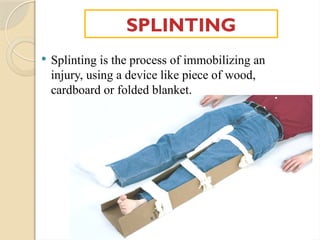
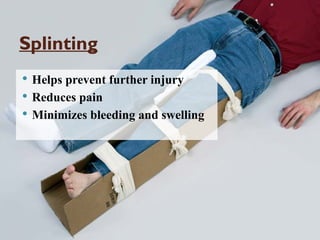
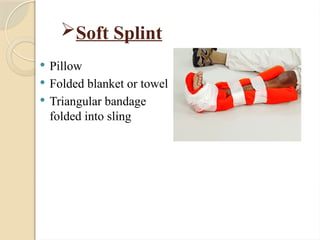
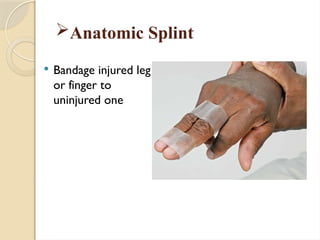
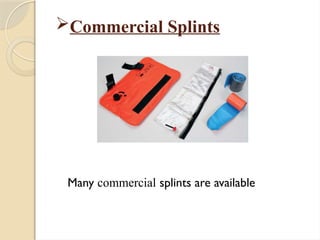
SPLINTING
Splinting isthe process of immobilizing an
injury, using a device like piece of wood,
cardboard or folded blanket.
General Principles OfSplinting
The clothing is best removed from the area of any
suspected fracture or dislocation
Note and record motion and sensation status distal
to the site of injury
The splint should immobilize the joints above and
the joints below the fracture.
During splint application, minimal movement of
the limb should be allowed.
42.
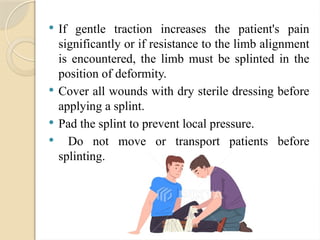
If gentletraction increases the patient's pain
significantly or if resistance to the limb alignment
is encountered, the limb must be splinted in the
position of deformity.
Cover all wounds with dry sterile dressing before
applying a splint.
Pad the splint to prevent local pressure.
Do not move or transport patients before
splinting.
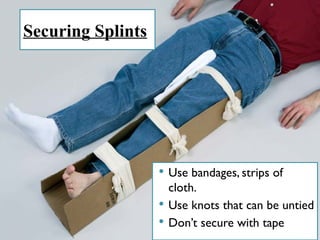
Securing Splints
Usebandages, strips of
cloth.
Use knots that can be untied
Don’t secure with tape
49.
Guidelines for AllSplints
Dress open wounds
Splint only if it doesn’t cause more pain
Splint in position found
Immobilize entire area
Pad between splint and skin
50.
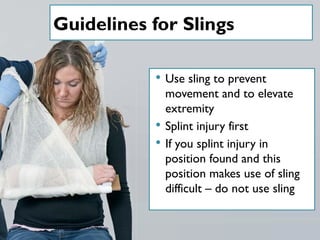
Guidelines for Slings
Use sling to prevent
movement and to elevate
extremity
Splint injury first
If you splint injury in
position found and this
position makes use of sling
difficult – do not use sling
51.
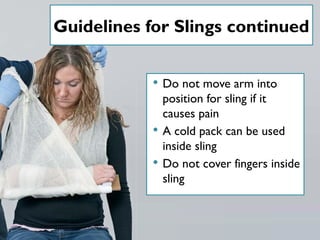
Guidelines for Slingscontinued
Do not move arm into
position for sling if it
causes pain
A cold pack can be used
inside sling
Do not cover fingers inside
sling