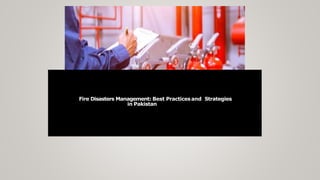
Fire Disasters Management: Best Practicesand Strategies
in Pakistan
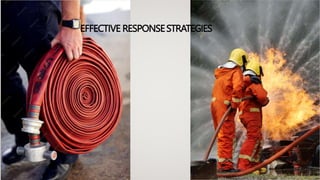
EFFECTIVE RESPONSESTRATEGIES
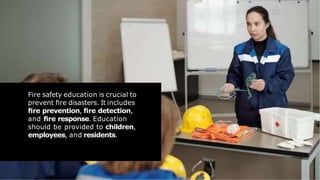
Fire safety education is crucial to
prevent fire disasters. It includes
fire prevention, fire detection,
and fire response. Education
should be provided to children,
employees, and residents.
Fire safety inspections ensure that
buildings meet fire codes and
standards. They are conducted by
fire inspectors and cover fire
hazards, fire protection systems,
and emergencyexits.
SMOKE DETECTORS ARE
ELECTRONIC DEVICES THAT
DETECT SMOKE AND ALERT
OCCUPANTS OF A POTENTIAL
fiRE. THEY SHOULD BE
INSTALLED IN EVERY ROOM AND
TESTEDREGULARLY.
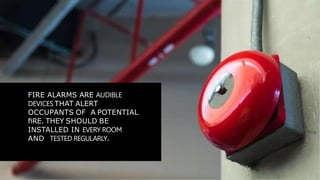
FIRE ALARMS ARE AUDIBLE
DEVICES THAT ALERT
OCCUPANTS OF A POTENTIAL
fiRE. THEY SHOULD BE
INSTALLED IN EVERY ROOM
AND TESTED REGULARLY.
Automaticsprinkler systems are
fire suppression systems that
detect and extinguish fires. They
should be installed in high-risk
areas such as kitchens and
server rooms.
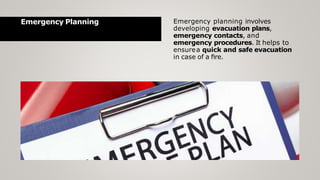
Emergency Planning
ABOUT THEPROJECT
Emergency planning involves
developing evacuation plans,
emergency contacts, and
emergency procedures. It helps to
ensurea quick and safe evacuation
in case of a fire.
Firefighting Equipment
ABOUT THEPROJECT
Firefighting equipment includes
fire extinguishers, fire hoses,and
fire blankets. They should be
easily accessible and maintained
regularly.
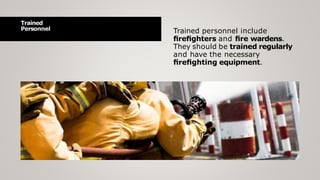
Trained
Personnel
ABOUT THEPROJECT Trained personnel include
firefighters and fire wardens.
They should be trained regularly
and have the necessary
firefighting equipment.
Mitigating the impact of fire disasters
requires acomprehensive approach that
includes prevention, early detection,and
effective response. By implementing
best practices and strategies, we can
reduce the risk of fire disasters and
protect lives andproperties.
CON
CLUSI
ON Where we are
Thanks!
Do you have any questions?

fire disaster management presentation.pptx

  • 1.
    Fire Disasters Management:Best Practicesand Strategies in Pakistan
  • 2.
  • 3.
    Fire safety educationis crucial to prevent fire disasters. It includes fire prevention, fire detection, and fire response. Education should be provided to children, employees, and residents.
  • 4.
    Fire safety inspectionsensure that buildings meet fire codes and standards. They are conducted by fire inspectors and cover fire hazards, fire protection systems, and emergencyexits.
  • 5.
    SMOKE DETECTORS ARE ELECTRONICDEVICES THAT DETECT SMOKE AND ALERT OCCUPANTS OF A POTENTIAL fiRE. THEY SHOULD BE INSTALLED IN EVERY ROOM AND TESTEDREGULARLY.
  • 6.
    FIRE ALARMS AREAUDIBLE DEVICES THAT ALERT OCCUPANTS OF A POTENTIAL fiRE. THEY SHOULD BE INSTALLED IN EVERY ROOM AND TESTED REGULARLY.
  • 7.
    Automaticsprinkler systems are firesuppression systems that detect and extinguish fires. They should be installed in high-risk areas such as kitchens and server rooms.
  • 8.
    Emergency Planning ABOUT THEPROJECT Emergencyplanning involves developing evacuation plans, emergency contacts, and emergency procedures. It helps to ensurea quick and safe evacuation in case of a fire.
  • 9.
    Firefighting Equipment ABOUT THEPROJECT Firefightingequipment includes fire extinguishers, fire hoses,and fire blankets. They should be easily accessible and maintained regularly.
  • 10.
    Trained Personnel ABOUT THEPROJECT Trainedpersonnel include firefighters and fire wardens. They should be trained regularly and have the necessary firefighting equipment.
  • 11.
    Mitigating the impactof fire disasters requires acomprehensive approach that includes prevention, early detection,and effective response. By implementing best practices and strategies, we can reduce the risk of fire disasters and protect lives andproperties. CON CLUSI ON Where we are
  • 12.
    Thanks! Do you haveany questions?