Financial Reporting
Table of content
• Financial Reporting
• Key components of financial reporting
• Audit report
• Types of audit report
• Creative Accounting
• Is creative accounting an evil?
• Limitations of financial statements
What is financial
reporting?
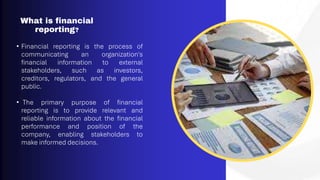
• Financial reporting is the process of
communicating an organization's
financial information to external
stakeholders, such as investors,
creditors, regulators, and the general
public.
• The primary purpose of financial
reporting is to provide relevant and
reliable information about the financial
performance and position of the
company, enabling stakeholders to
make informed decisions.
Key
Components
• Financial statements:
1. Balance Sheet
2. Income Statement
3. Cashflow Statement
• Notes to financial Statements
• Audit Reports
Audit
Report
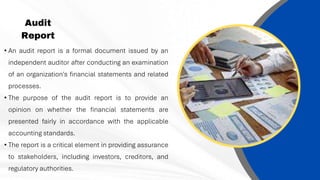
• An audit report is a formal document issued by an
independent auditor after conducting an examination
of an organization's financial statements and related
processes.
• The purpose of the audit report is to provide an
opinion on whether the financial statements are
presented fairly in accordance with the applicable
accounting standards.
• The report is a critical element in providing assurance
to stakeholders, including investors, creditors, and
regulatory authorities.
Types of audit
reports
• Unqualified Opinion
• Qualified Opinion
• Adverse Opinion
• Disclaimer of opinion
Creative Accounting
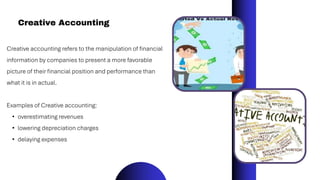
Creative accounting refers to the manipulation of financial
information by companies to present a more favorable
picture of their financial position and performance than
what it is in actual.
Examples of Creative accounting:
• overestimating revenues
• lowering depreciation charges
• delaying expenses
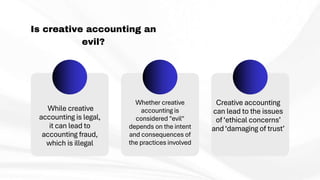
Is creative accounting an
evil?
While creative
accounting is legal,
it can lead to
accounting fraud,
which is illegal
Whether creative
accounting is
considered "evil"
depends on the intent
and consequences of
the practices involved
Creative accounting
can lead to the issues
of ‘ethical concerns’
and‘damaging of trust’
Limitations of financial
statements
Historical Information:
Financial statements primarily provide historical information about a
company's performance which may not necessarily predict future
performance.
Estimates and Assumptions:
Financial statements often include estimates and assumptions, such as
depreciation methods, bad debt provisions, and useful life of assets.
Qualitative Factors:
It ignores qualitative factors such as employee morale, quality of
management, market conditions.
Cont’d
Window dressing/creative accounting:
Companies may involve in creative accounting and manipulate the data which can affect
the transparency.
Ignoring Inflation:
Traditional financial statements may not fully account for the impact of inflation on the
value of money over time, particularly in periods of high inflation.
Complexity for Non-Experts:
Interpreting financial statements requires a certain level of financial education. Non-
experts can find it challenging to understand the complex accounting principles and
financial jargon.
Thank You!

Financial Reporting.pptx

  • 1.
  • 2.
    Table of content •Financial Reporting • Key components of financial reporting • Audit report • Types of audit report • Creative Accounting • Is creative accounting an evil? • Limitations of financial statements
  • 3.
    What is financial reporting? •Financial reporting is the process of communicating an organization's financial information to external stakeholders, such as investors, creditors, regulators, and the general public. • The primary purpose of financial reporting is to provide relevant and reliable information about the financial performance and position of the company, enabling stakeholders to make informed decisions.
  • 4.
    Key Components • Financial statements: 1.Balance Sheet 2. Income Statement 3. Cashflow Statement • Notes to financial Statements • Audit Reports
  • 5.
    Audit Report • An auditreport is a formal document issued by an independent auditor after conducting an examination of an organization's financial statements and related processes. • The purpose of the audit report is to provide an opinion on whether the financial statements are presented fairly in accordance with the applicable accounting standards. • The report is a critical element in providing assurance to stakeholders, including investors, creditors, and regulatory authorities.
  • 6.
    Types of audit reports •Unqualified Opinion • Qualified Opinion • Adverse Opinion • Disclaimer of opinion
  • 7.
    Creative Accounting Creative accountingrefers to the manipulation of financial information by companies to present a more favorable picture of their financial position and performance than what it is in actual. Examples of Creative accounting: • overestimating revenues • lowering depreciation charges • delaying expenses
  • 8.
    Is creative accountingan evil? While creative accounting is legal, it can lead to accounting fraud, which is illegal Whether creative accounting is considered "evil" depends on the intent and consequences of the practices involved Creative accounting can lead to the issues of ‘ethical concerns’ and‘damaging of trust’
  • 9.
    Limitations of financial statements HistoricalInformation: Financial statements primarily provide historical information about a company's performance which may not necessarily predict future performance. Estimates and Assumptions: Financial statements often include estimates and assumptions, such as depreciation methods, bad debt provisions, and useful life of assets. Qualitative Factors: It ignores qualitative factors such as employee morale, quality of management, market conditions.
  • 10.
    Cont’d Window dressing/creative accounting: Companiesmay involve in creative accounting and manipulate the data which can affect the transparency. Ignoring Inflation: Traditional financial statements may not fully account for the impact of inflation on the value of money over time, particularly in periods of high inflation. Complexity for Non-Experts: Interpreting financial statements requires a certain level of financial education. Non- experts can find it challenging to understand the complex accounting principles and financial jargon.
  • 11.