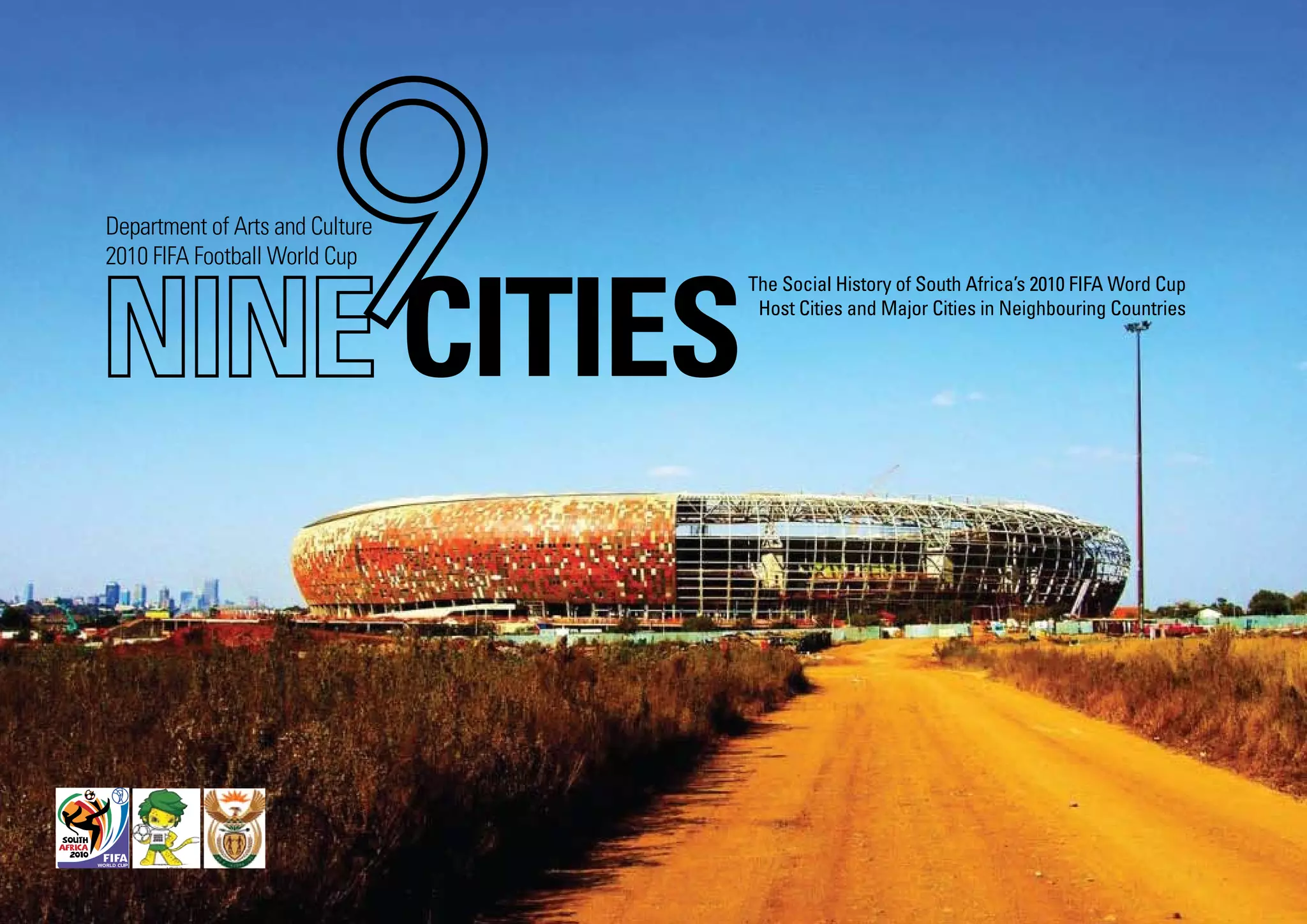
Department of Arts and Culture
2010 FIFA Football World Cup


                                 CITIES
                                          The Social History of South Africa’s 2010 FIFA Word Cup
                                           Host Cities and Major Cities in Neighbouring Countries
Peter
Mokaba
     t
Stadium
                                                                                                                           LIMPOPO
                                                                                                                      Polokwane


          Polokwane
                                                                                      Introduction
                                                                                      [Please note that the following is filler text.]
                                                                                      Polokwane (formerly Pietersburg) is a city,
                                                                                      municipality and the capital of the Limpopo
                                                                                      province in South Africa.
                                                                                          In the 1840s, Voortrekkers under the
                                                                                      leadership of Andries Potgieter established
    1     Introduction to Polokwane    65   Main stats                                Zoutpansbergdorp, a town 100 km to the
    2     History                      66                                             north west. This settlement had to be aban-
                                            Population: 312 430
    3     Art & Culture                69                                             doned because of clashes with the local
                                            Languages: Sesotho, Sepedi, English,
    4     People                       76   Afrikaans
                                                                                      inhabitants. They founded a new town in
    5     Sport                        80                                             1886, named Pietersburg. The British built
                                            Size: 32 000 km2                          a concentration camp here during the Boer
    6     Industry & Business          83   Main industry: Farming, Mining, Tourism   War to house almost 4,000 Boer.
    7     Local economic initiatives   85   Local soccer team: Winners Park
    8     Transport infrastructure     88

                                                                                                                         Polokwane 65
Peter Mokaba Stadium                                       History
                                                            Pre-1886
                                                                                                                   within the municipality resides in rural vil-
                                                            [Please note that the following is filler text.] Ac-   lages, followed by urban settlements.
                                                            cording to the 2001 census conducted by Statistics         This area is seen as a place of “myths and
                                                            South Africa, the population of the greater Polok-     legends”. There are many game viewing oppor-
                                                            wane municipality is 302,957, of which 91.2%           tunities, making Polokwane a popular ecotour-
                                                            are black, 7.2% white, 0.9% Coloured and 0.7%          ism destination in Southern Africa. Limpopo is
                                                            Asian.                                                 divided into four tourism regions, each repre-
Capacity: 46,000                                                Despite its position on the tropic of Capri-       senting a microcosm of the area’s varied and
Address:                                                    corn, the climate is tempered by its position on       interesting cultures.
Architect: Roydon                                           a plateau 1230 meters above sea level. Average             Hunting in Polok-        Polokwane is con-
                                                            temperatures reach around 21-22°C in January           wane is considered the
Cost: R1,100,000,000                                                                                                                            sidered the premier
                                                            and fall to 11°C in July. As with much of inland       premier hunting desti-
History: [Filler text:] Mokaba, a member of parliament                                                                                          hunting destination
                                                            South Africa, Polokwane has experienced notably        nation in South Africa.
and deputy minister in Nelson Mandela’s government,                                                                                             in South Africa.
                                                            warmer seasons over the last decade than its long          Eersteling Monu-
was 43 when he died of acute pneumonia linked to a          term average.[2] Polokwane has a dry climate with      ments The site of the
respiratory problem, following an illness of three years.   a summer rainy season and a pronounced dry spell       country’s first gold crushing site and its first
Born into a poor labouring family, he was expelled from     during winter. Average annual rainfall is 495mm,       gold power plant are marked by monuments.
school as a troublemaker after the student revolt of        with December or (less often) January the wettest
the 1970s, working later as a gardener while trying to      month and July the driest.[3]                          Early years 1886 - 1901
                                                                The area of the Polokwane Municipality ac-
make up for his lost education. He was elected Presi-                                                              Open-Air Museum This museum depicts the
                                                            counts for 3% of the total surface of the province
dent of the South African Youth Congress (Sayco) in                                                                traditional and modern-day culture and lifestyle
                                                            of Limpopo; about 10% of the population of
1987, towards the end of the period of mass township                                                               of the Bakone people.
                                                            Limpopo resides in the Municipal area. Polokwane
revolt in which he won his spurs with repeated arrests                                                             Other attractions include:
                                                            serves as the economic hub of Limpopo and has
and two jail sentences. Sayco was effectively the old       the highest population density in the Capricorn
                                                                                                                    Temperature        Date            Rainfall
ANC Youth League under another name, while the ANC          district. The majority of Polokwane’s population is
                                                            rural: that is, the largest sector of the community        16 °C         Jan - Feb          13 mm
remained banned.
                                                                                                                       21 °C        March - April       61 mm

Polokwane 66
summer rainy season and a pronounced dry spell
 Temperature         Date            Rainfall
                                                      during winter. Average annual rainfall is 495mm,        Racial Demographic
    25 °C          May - June          3 mm
    32 °C          July - Aug          6 mm           with December or (less often) January the wettest                                         white    7.2%
                                                      month and July the driest.[3]
    16 °C          Sep - Oct          21 mm                                                                                                     coloured 0.9%
                                                           The area of the Polokwane Municipality ac-
    14 °C          Nov - Dec         104 mm                                                                                                     black    91.2%
                                                      counts for 3% of the total surface of the province
                                                      of Limpopo; about 10% of the population of Lim-
[Please note that the following is filler text.] Ac-
                                                      popo resides in the Municipal area. Polokwane
cording to the 2001 census conducted by Statistics
                                                      serves as the economic hub of Limpopo and has
South Africa, the population of the greater Polok-
                                                      the highest population density in the Capricorn
wane municipality is 302,957, of which 91.2%
                                                      district. The majority of Polokwane’s population
are black, 7.2% white, 0.9% Coloured and 0.7%
                                                      is rural: that is, the largest sector of the communi-
Asian.
                                                      ty within the municipality resides in rural villages,
     Despite its position on the tropic of Capricorn,
                                                      followed by urban settlements.                          [Filler text:]
the climate is tempered by its position on a pla-
                                                          This area is seen as a place of “myths and
teau 1230 meters above sea level. Average tem-
                                                      legends”. There are many game viewing oppor-
peratures reach around 21-22°C in January and
                                                      tunities, making Polokwane a popular ecotourism
                                                                                                              Age Demographic
fall to 11°C in July. As with much of inland South
                                                      destination in Southern Africa. Limpopo is di-                                81 - 90
Africa, Polokwane has experienced notably warm-
                                                      vided into four tourism regions, each representing
er seasons over the last decade than its long term                                                                                  71 - 80
                                                      a microcosm of the area’s varied and interesting
average.[2] Polokwane has a dry climate with a                                                                                      61 - 70
                                                      cultures.
                                                                                                                                    51 - 60
                                                                                                                                    41 - 50
                                                                                                                                    31 - 40
                                                                                                                                    21 - 30
                                                                                                                                    13 - 20
                                                                                         ANC members                                 6 - 12
                                                                                         celebrating Jacob                            0-5
                                                                                         Zuma’s election
                                                                                         as ANC president
                                                                                         at the Polokwane
                                                                                                              [Filler text:] The youth form the majority in
                                                                                         conference in
                                                                                                              Polokwane.
                                                                                         2008

                                                                                                                                                   Polokwane 67
Peter Mokaba Stadium


Capacity: 46,000
Address:
Architect: Roydon
Cost: R1,100,000,000
History: [Filler text:] Mokaba, a member of parliament
and deputy minister in Nelson Mandela’s government,
was 43 when he died of acute pneumonia linked to a
respiratory problem, following an illness of three years.
Born into a poor labouring family, he was expelled from
school as a troublemaker after the student revolt of
the 1970s, working later as a gardener while trying to
make up for his lost education. He was elected Presi-
dent of the South African Youth Congress (Sayco) in
1987, towards the end of the period of mass township
revolt in which he won his spurs with repeated arrests
and two jail sentences. Sayco was effectively the old
ANC Youth League under another name, while the ANC
remained banned.


Polokwane 66
Polokwane 67
Greenpoint
Stadium
     t


        Cape Town                                                                         Western Cape
                                                                                           Cape Town


                                                                                    Introduction
                                                                                    [Please note that the following is filler text.]
                                                                                    Polokwane (formerly Pietersburg) is a city,
                                                                                    municipality and the capital of the Limpopo
                                                                                    province in South Africa.
                                                                                        In the 1840s, Voortrekkers under the
                                                                                    leadership of Andries Potgieter established
    1   Introduction to Cape Town    14   Main stats                                Zoutpansbergdorp, a town 100 km to the
    2   History                      16   Population: 2 312 430                     north west. This settlement had to be aban-
    3   Art & Culture                18   Languages: Xhosa, Zulu, English
                                                                                    doned because of clashes with the local
                                                                                    inhabitants. They founded a new town in
    4   People                       20   Afrikaans
                                                                                    1886, named Pietersburg. The British built
    5   Sport                        21   Size: 162 000 km2                         a concentration camp here during the Boer
                                          Main industry: Farming, Mining, Tourism   War to house almost 4,000 Boer.
    6   Industry & Business          23   Local soccer team: Winners Park
    7   Local economic initiatives   26

                                                                                                                      Cape Town 14

Fifa 9 Host Cities Book Proposal

  • 1.
    Department of Artsand Culture 2010 FIFA Football World Cup CITIES The Social History of South Africa’s 2010 FIFA Word Cup Host Cities and Major Cities in Neighbouring Countries
  • 2.
    Peter Mokaba t Stadium LIMPOPO Polokwane Polokwane Introduction [Please note that the following is filler text.] Polokwane (formerly Pietersburg) is a city, municipality and the capital of the Limpopo province in South Africa. In the 1840s, Voortrekkers under the leadership of Andries Potgieter established 1 Introduction to Polokwane 65 Main stats Zoutpansbergdorp, a town 100 km to the 2 History 66 north west. This settlement had to be aban- Population: 312 430 3 Art & Culture 69 doned because of clashes with the local Languages: Sesotho, Sepedi, English, 4 People 76 Afrikaans inhabitants. They founded a new town in 5 Sport 80 1886, named Pietersburg. The British built Size: 32 000 km2 a concentration camp here during the Boer 6 Industry & Business 83 Main industry: Farming, Mining, Tourism War to house almost 4,000 Boer. 7 Local economic initiatives 85 Local soccer team: Winners Park 8 Transport infrastructure 88 Polokwane 65
  • 3.
    Peter Mokaba Stadium History Pre-1886 within the municipality resides in rural vil- [Please note that the following is filler text.] Ac- lages, followed by urban settlements. cording to the 2001 census conducted by Statistics This area is seen as a place of “myths and South Africa, the population of the greater Polok- legends”. There are many game viewing oppor- wane municipality is 302,957, of which 91.2% tunities, making Polokwane a popular ecotour- are black, 7.2% white, 0.9% Coloured and 0.7% ism destination in Southern Africa. Limpopo is Asian. divided into four tourism regions, each repre- Capacity: 46,000 Despite its position on the tropic of Capri- senting a microcosm of the area’s varied and Address: corn, the climate is tempered by its position on interesting cultures. Architect: Roydon a plateau 1230 meters above sea level. Average Hunting in Polok- Polokwane is con- temperatures reach around 21-22°C in January wane is considered the Cost: R1,100,000,000 sidered the premier and fall to 11°C in July. As with much of inland premier hunting desti- History: [Filler text:] Mokaba, a member of parliament hunting destination South Africa, Polokwane has experienced notably nation in South Africa. and deputy minister in Nelson Mandela’s government, in South Africa. warmer seasons over the last decade than its long Eersteling Monu- was 43 when he died of acute pneumonia linked to a term average.[2] Polokwane has a dry climate with ments The site of the respiratory problem, following an illness of three years. a summer rainy season and a pronounced dry spell country’s first gold crushing site and its first Born into a poor labouring family, he was expelled from during winter. Average annual rainfall is 495mm, gold power plant are marked by monuments. school as a troublemaker after the student revolt of with December or (less often) January the wettest the 1970s, working later as a gardener while trying to month and July the driest.[3] Early years 1886 - 1901 The area of the Polokwane Municipality ac- make up for his lost education. He was elected Presi- Open-Air Museum This museum depicts the counts for 3% of the total surface of the province dent of the South African Youth Congress (Sayco) in traditional and modern-day culture and lifestyle of Limpopo; about 10% of the population of 1987, towards the end of the period of mass township of the Bakone people. Limpopo resides in the Municipal area. Polokwane revolt in which he won his spurs with repeated arrests Other attractions include: serves as the economic hub of Limpopo and has and two jail sentences. Sayco was effectively the old the highest population density in the Capricorn Temperature Date Rainfall ANC Youth League under another name, while the ANC district. The majority of Polokwane’s population is rural: that is, the largest sector of the community 16 °C Jan - Feb 13 mm remained banned. 21 °C March - April 61 mm Polokwane 66
  • 4.
    summer rainy seasonand a pronounced dry spell Temperature Date Rainfall during winter. Average annual rainfall is 495mm, Racial Demographic 25 °C May - June 3 mm 32 °C July - Aug 6 mm with December or (less often) January the wettest white 7.2% month and July the driest.[3] 16 °C Sep - Oct 21 mm coloured 0.9% The area of the Polokwane Municipality ac- 14 °C Nov - Dec 104 mm black 91.2% counts for 3% of the total surface of the province of Limpopo; about 10% of the population of Lim- [Please note that the following is filler text.] Ac- popo resides in the Municipal area. Polokwane cording to the 2001 census conducted by Statistics serves as the economic hub of Limpopo and has South Africa, the population of the greater Polok- the highest population density in the Capricorn wane municipality is 302,957, of which 91.2% district. The majority of Polokwane’s population are black, 7.2% white, 0.9% Coloured and 0.7% is rural: that is, the largest sector of the communi- Asian. ty within the municipality resides in rural villages, Despite its position on the tropic of Capricorn, followed by urban settlements. [Filler text:] the climate is tempered by its position on a pla- This area is seen as a place of “myths and teau 1230 meters above sea level. Average tem- legends”. There are many game viewing oppor- peratures reach around 21-22°C in January and tunities, making Polokwane a popular ecotourism Age Demographic fall to 11°C in July. As with much of inland South destination in Southern Africa. Limpopo is di- 81 - 90 Africa, Polokwane has experienced notably warm- vided into four tourism regions, each representing er seasons over the last decade than its long term 71 - 80 a microcosm of the area’s varied and interesting average.[2] Polokwane has a dry climate with a 61 - 70 cultures. 51 - 60 41 - 50 31 - 40 21 - 30 13 - 20 ANC members 6 - 12 celebrating Jacob 0-5 Zuma’s election as ANC president at the Polokwane [Filler text:] The youth form the majority in conference in Polokwane. 2008 Polokwane 67
  • 5.
    Peter Mokaba Stadium Capacity:46,000 Address: Architect: Roydon Cost: R1,100,000,000 History: [Filler text:] Mokaba, a member of parliament and deputy minister in Nelson Mandela’s government, was 43 when he died of acute pneumonia linked to a respiratory problem, following an illness of three years. Born into a poor labouring family, he was expelled from school as a troublemaker after the student revolt of the 1970s, working later as a gardener while trying to make up for his lost education. He was elected Presi- dent of the South African Youth Congress (Sayco) in 1987, towards the end of the period of mass township revolt in which he won his spurs with repeated arrests and two jail sentences. Sayco was effectively the old ANC Youth League under another name, while the ANC remained banned. Polokwane 66
  • 6.
  • 7.
    Greenpoint Stadium t Cape Town Western Cape Cape Town Introduction [Please note that the following is filler text.] Polokwane (formerly Pietersburg) is a city, municipality and the capital of the Limpopo province in South Africa. In the 1840s, Voortrekkers under the leadership of Andries Potgieter established 1 Introduction to Cape Town 14 Main stats Zoutpansbergdorp, a town 100 km to the 2 History 16 Population: 2 312 430 north west. This settlement had to be aban- 3 Art & Culture 18 Languages: Xhosa, Zulu, English doned because of clashes with the local inhabitants. They founded a new town in 4 People 20 Afrikaans 1886, named Pietersburg. The British built 5 Sport 21 Size: 162 000 km2 a concentration camp here during the Boer Main industry: Farming, Mining, Tourism War to house almost 4,000 Boer. 6 Industry & Business 23 Local soccer team: Winners Park 7 Local economic initiatives 26 Cape Town 14