--
--
CSE
The Uses of Fertilizer and Ripening Agents in our
Country and it’s Harmful Effect on nature & our
health and how to overcome it.
Topic:
• An adulterant is a chemical substance which should not
be contained within other substances (e.g. food,
beverages, and fuels) for legal or other reasons.
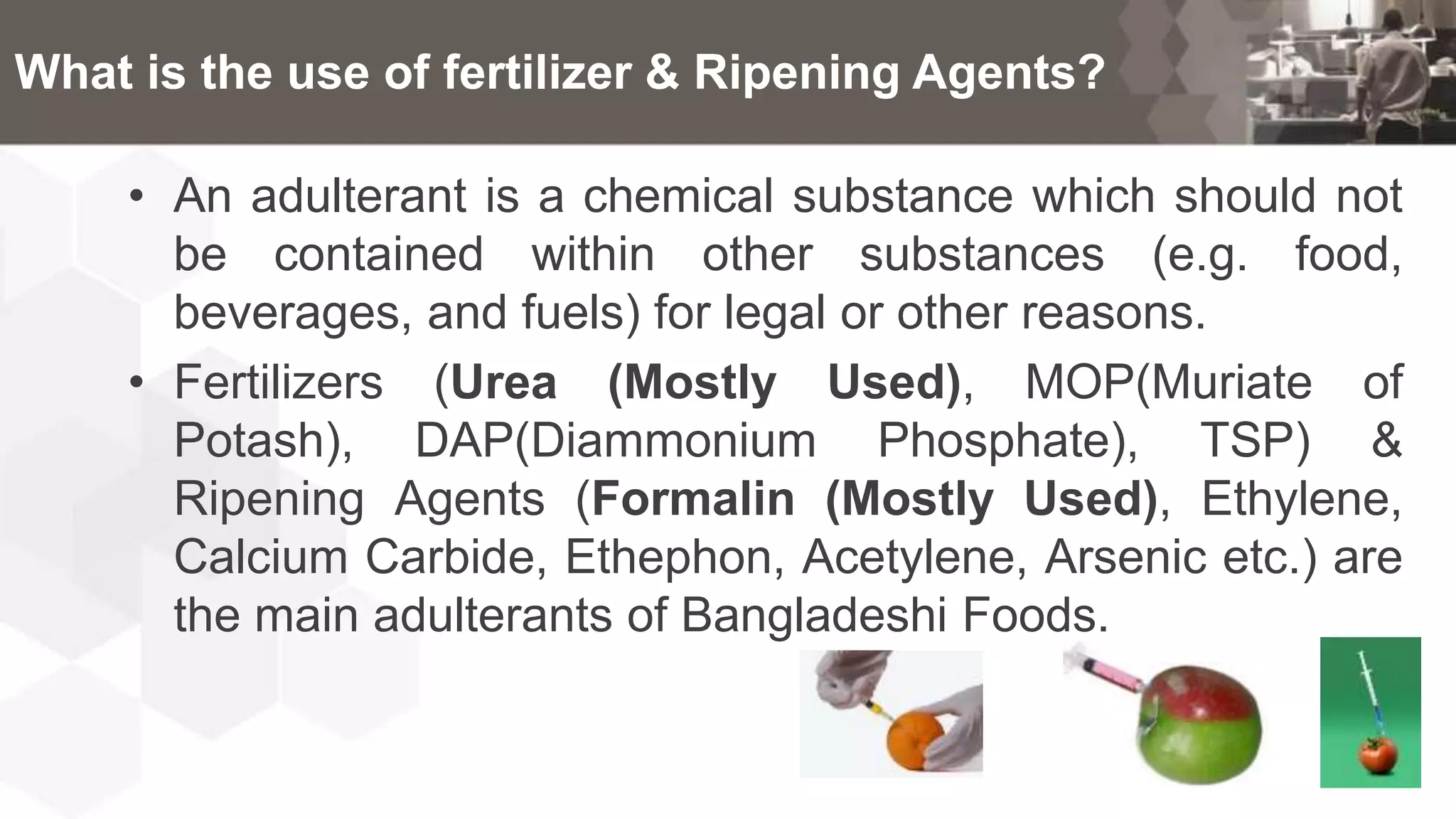
• Fertilizers (Urea (Mostly Used), MOP(Muriate of
Potash), DAP(Diammonium Phosphate), TSP) &
Ripening Agents (Formalin (Mostly Used), Ethylene,
Calcium Carbide, Ethephon, Acetylene, Arsenic etc.) are
the main adulterants of Bangladeshi Foods.
What is the use of fertilizer & Ripening Agents?
Samples Tested & Found Adulterated Every Year
Food is said to be adulterated if…
Some Adulterated Foods In Market (1)
Turmeric, Dals and Pulses
• Adulterant: Metanil Yellow and Kesari Dal
• Health hazard: highly carcinogenic, stomach di
sorders.
Green Chilies, Green Peas & other vegetables
• Adulterant : Malachite Green, Agrimony seeds
• Health hazard: carcinogenic if consumed over
a long period of time
Some Adulterated Foods In Market (2)
Mustard seeds and mustard oil
• Adulterant : Agrimony seeds, Papaya seeds
• Health Hazard: epidemic dropsy and severe gl
aucoma
Paneer, khoya, condensed milk and milk
• Adulterant: Starch and water
• Health hazard: stomach disorders
Some Adulterated Foods In Market (3)
Ice cream
• Adulterant: Pepperonil, Ethylacetate, Butraldehyde, Nitr
ate, Washing powder etc
• Health hazard: Pepperonil is used as a pesticide and et
hyl acetate causes diseases affecting lungs, kidneys an
d heart.
Coffee powder
• Adulterant : Tamarind seeds, chicory powder
• Health hazard: diarrhea, stomach disorders, giddines
s and severe joint pains
• Intentional: Sand, marble chips, stones, mud, other filth, talc, chalk powder,
water, mineral oil etc.
• Incidental: Pesticide residues tin from can, droppings of rodents, larvae in
foods etc.
• Metallic Contamination: Arsenic from pesticides, lead from water, mercury
from effluent, from chemical industries, tins from cans etc.
• Packaging Hazards: Polyethylene, polyvinyl chloride and allied compounds
are used to produce flexible packaging material etc.
Different Types of Food Adulteration
 Cream is adulterated with gelatin, and formaldehyde is employed as
a preservative for it.
 Butter is adulterated to an enormous extent with oleomargarine, a pro
duct of beef fat.
 Brick dust in chili powder, colored chalk powder in turmeric.
 In confectionery, dangerous colors, such as chrome yellow, Prussian
blue, copper and arsenic compounds are employed.
 Pickles and canned vegetables are sometimes colored green with
copper salts.
Some Other Adulterants…
 Carcinogens can convert normal human cells into cancer
cells.
 It is very difficult to say if calcium carbide will translate int
o any kind of malignancy in human body. Though this che
mical is not listed as a cancer-causing agent, it has been d
efined as a carcinogen.
Possible Health Hazards
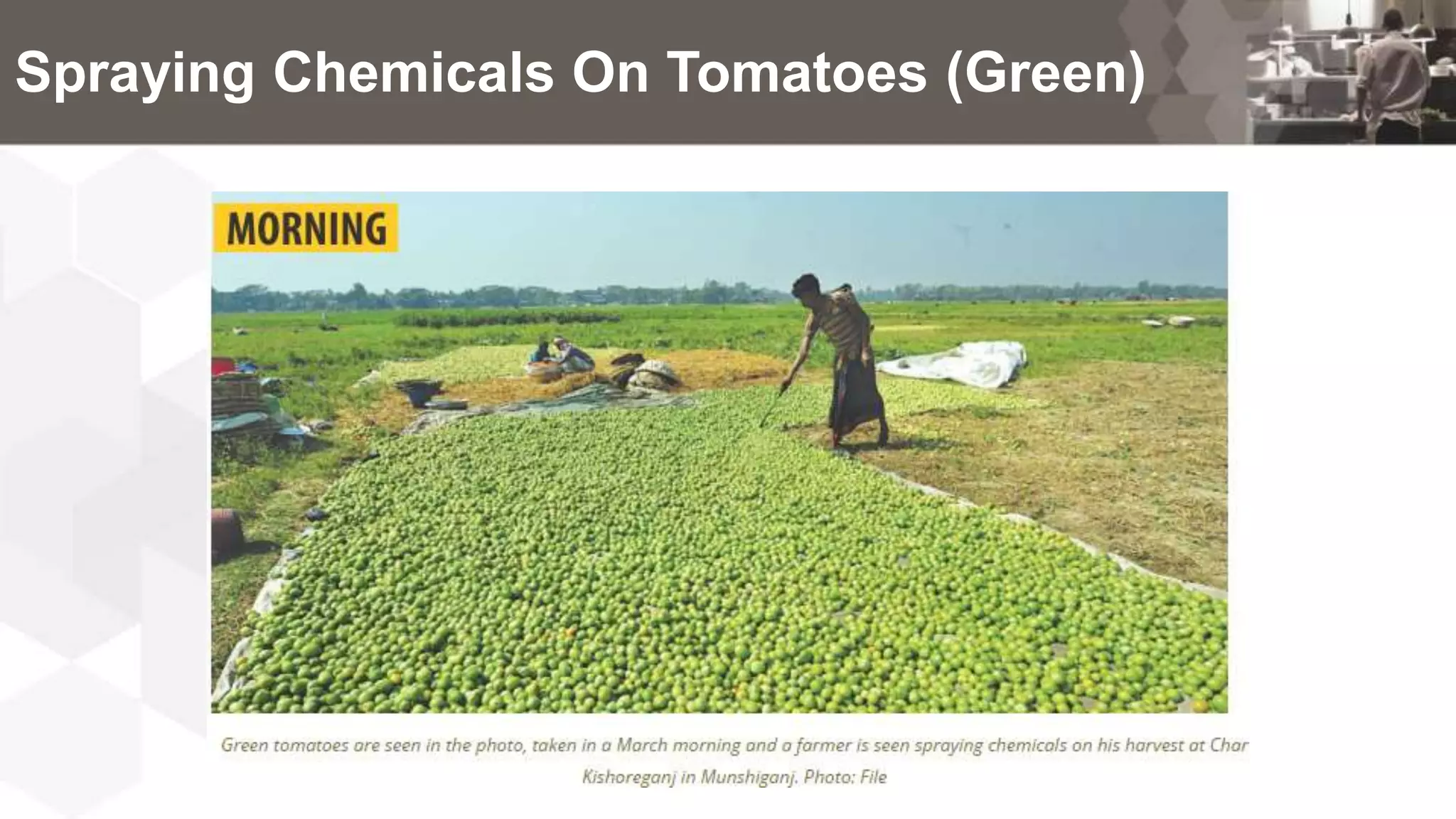
Spraying Chemicals On Tomatoes (Green)
Red In The Afternoon ! Ripen !
How The Public Can Be Decieved
• Select fruits and vegetables without spots or necrosis (lesions) and
any abnormality.
• Wash fruits and vegetables thoroughly with water (preferably)
running potable water before eating and cooking.
• Purchase fruits and vegetables from known dealers.
• Peeling of fruits before consumption and vegetables before cooking
will reduce exposure to pesticide.
• Do not buy and consume cut fruits from open market.
• Throw away fruits and vegetables infected by mold/ fungus.
Advice to Consumer
Some Good Ways To Prevent
The Prevention of Food Adulteration Bill was passed by both the house of
Parliament and received the assent of the President on 29th September, 1954.
• It came into force on 1st June, 1975 as THE PREVENTION OF FOOD
ADULTERATION ACT, 1974 (37 of 1974).
• In this Act unless the context otherwise requires,
– "adulterant" means any material which is or could be employed for
the purposes of adulteration;
– "adulterated"—an article of food shall be deemed to be adulterated.
The Prevention of Food Adulteration Act, 1974
Thank You !

Fertilizer and Ripening Agents - Bangladesh

  • 1.
    -- -- CSE The Uses ofFertilizer and Ripening Agents in our Country and it’s Harmful Effect on nature & our health and how to overcome it. Topic:
  • 2.
    • An adulterantis a chemical substance which should not be contained within other substances (e.g. food, beverages, and fuels) for legal or other reasons. • Fertilizers (Urea (Mostly Used), MOP(Muriate of Potash), DAP(Diammonium Phosphate), TSP) & Ripening Agents (Formalin (Mostly Used), Ethylene, Calcium Carbide, Ethephon, Acetylene, Arsenic etc.) are the main adulterants of Bangladeshi Foods. What is the use of fertilizer & Ripening Agents?
  • 3.
    Samples Tested &Found Adulterated Every Year
  • 4.
    Food is saidto be adulterated if…
  • 5.
    Some Adulterated FoodsIn Market (1) Turmeric, Dals and Pulses • Adulterant: Metanil Yellow and Kesari Dal • Health hazard: highly carcinogenic, stomach di sorders. Green Chilies, Green Peas & other vegetables • Adulterant : Malachite Green, Agrimony seeds • Health hazard: carcinogenic if consumed over a long period of time
  • 6.
    Some Adulterated FoodsIn Market (2) Mustard seeds and mustard oil • Adulterant : Agrimony seeds, Papaya seeds • Health Hazard: epidemic dropsy and severe gl aucoma Paneer, khoya, condensed milk and milk • Adulterant: Starch and water • Health hazard: stomach disorders
  • 7.
    Some Adulterated FoodsIn Market (3) Ice cream • Adulterant: Pepperonil, Ethylacetate, Butraldehyde, Nitr ate, Washing powder etc • Health hazard: Pepperonil is used as a pesticide and et hyl acetate causes diseases affecting lungs, kidneys an d heart. Coffee powder • Adulterant : Tamarind seeds, chicory powder • Health hazard: diarrhea, stomach disorders, giddines s and severe joint pains
  • 8.
    • Intentional: Sand,marble chips, stones, mud, other filth, talc, chalk powder, water, mineral oil etc. • Incidental: Pesticide residues tin from can, droppings of rodents, larvae in foods etc. • Metallic Contamination: Arsenic from pesticides, lead from water, mercury from effluent, from chemical industries, tins from cans etc. • Packaging Hazards: Polyethylene, polyvinyl chloride and allied compounds are used to produce flexible packaging material etc. Different Types of Food Adulteration
  • 9.
     Cream isadulterated with gelatin, and formaldehyde is employed as a preservative for it.  Butter is adulterated to an enormous extent with oleomargarine, a pro duct of beef fat.  Brick dust in chili powder, colored chalk powder in turmeric.  In confectionery, dangerous colors, such as chrome yellow, Prussian blue, copper and arsenic compounds are employed.  Pickles and canned vegetables are sometimes colored green with copper salts. Some Other Adulterants…
  • 10.
     Carcinogens canconvert normal human cells into cancer cells.  It is very difficult to say if calcium carbide will translate int o any kind of malignancy in human body. Though this che mical is not listed as a cancer-causing agent, it has been d efined as a carcinogen. Possible Health Hazards
  • 11.
    Spraying Chemicals OnTomatoes (Green)
  • 12.
    Red In TheAfternoon ! Ripen !
  • 13.
    How The PublicCan Be Decieved
  • 14.
    • Select fruitsand vegetables without spots or necrosis (lesions) and any abnormality. • Wash fruits and vegetables thoroughly with water (preferably) running potable water before eating and cooking. • Purchase fruits and vegetables from known dealers. • Peeling of fruits before consumption and vegetables before cooking will reduce exposure to pesticide. • Do not buy and consume cut fruits from open market. • Throw away fruits and vegetables infected by mold/ fungus. Advice to Consumer
  • 15.
    Some Good WaysTo Prevent
  • 16.
    The Prevention ofFood Adulteration Bill was passed by both the house of Parliament and received the assent of the President on 29th September, 1954. • It came into force on 1st June, 1975 as THE PREVENTION OF FOOD ADULTERATION ACT, 1974 (37 of 1974). • In this Act unless the context otherwise requires, – "adulterant" means any material which is or could be employed for the purposes of adulteration; – "adulterated"—an article of food shall be deemed to be adulterated. The Prevention of Food Adulteration Act, 1974
  • 17.