Systems Thinking: Systems modeling feedback
presentation
Feedbacks in a system
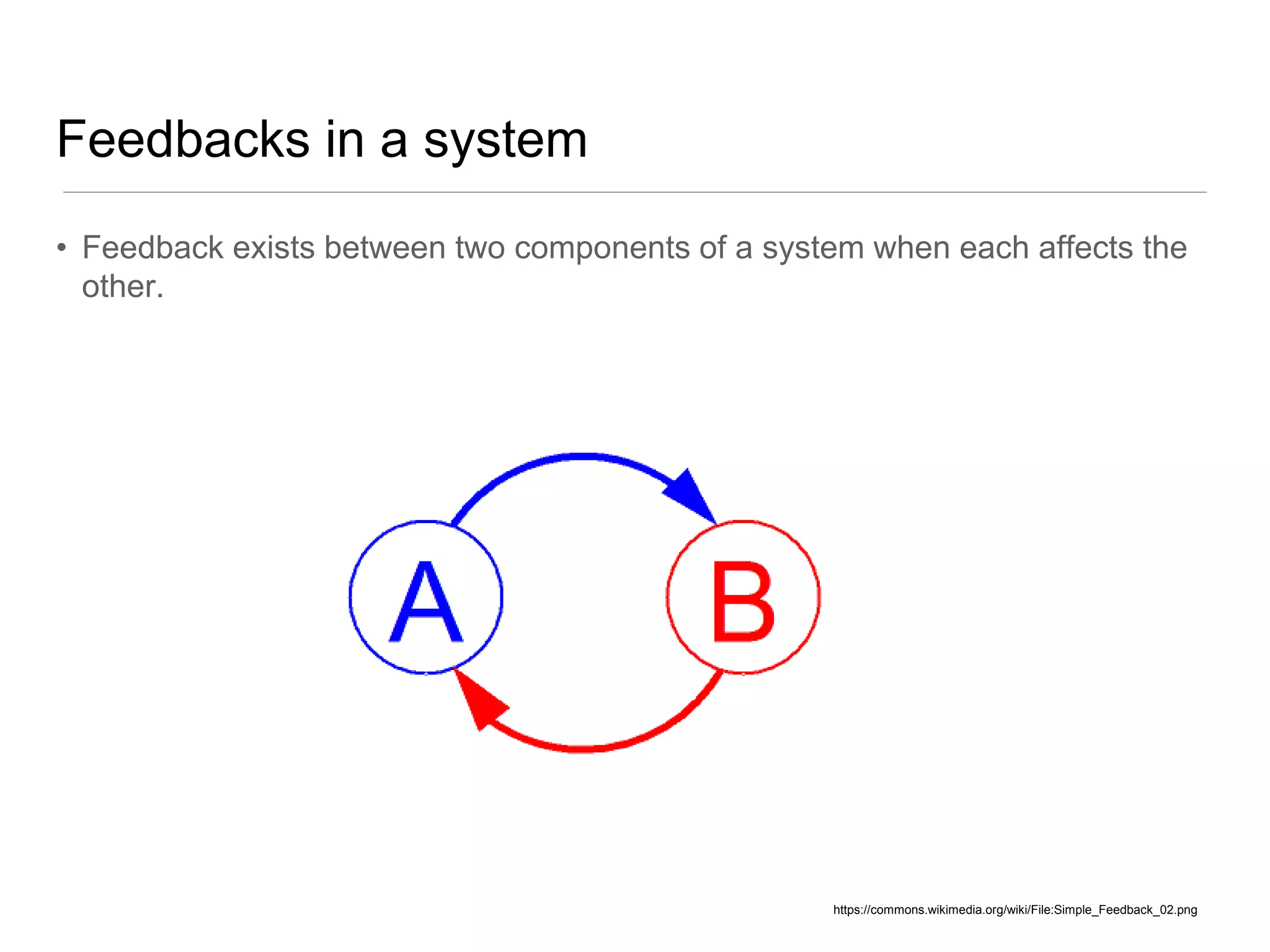
• Feedback exists between two components of a system when each affects the
other.
https://commons.wikimedia.org/wiki/File:Simple_Feedback_02.png
Feedbacks can cause undesirable outcomes…
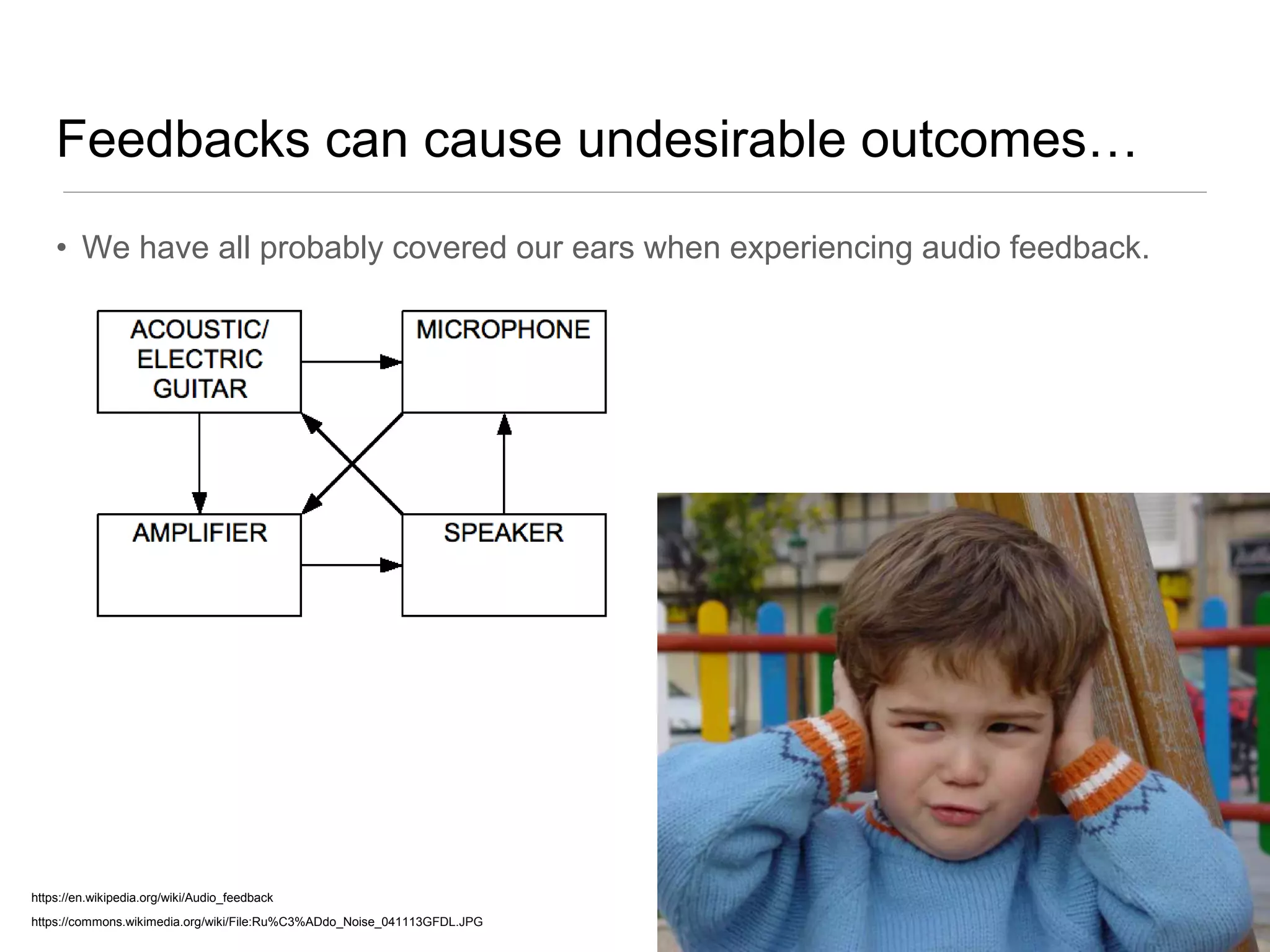
• We have all probably covered our ears when experiencing audio feedback.
https://en.wikipedia.org/wiki/Audio_feedback
https://commons.wikimedia.org/wiki/File:Ru%C3%ADdo_Noise_041113GFDL.JPG
Feedbacks can cause desirable outcomes …
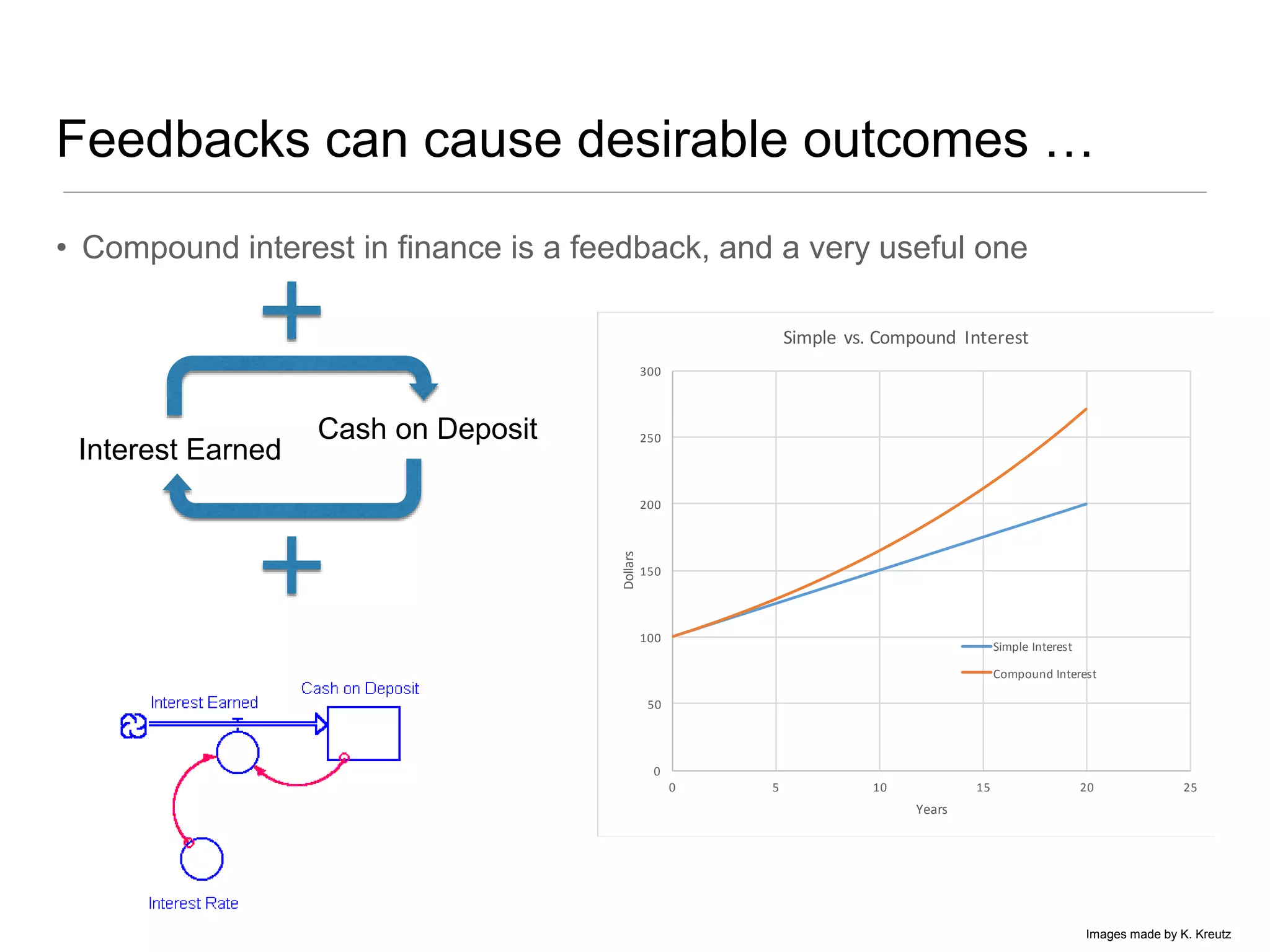
• Compound interest in finance is a feedback, and a very useful one
Cash on Deposit
Interest Earned
0
50
100
150
200
250
300
0 5 10 15 20 25
Dollars
Years
Simple vs. Compound Interest
Simple Interest
Compound Interest
Images made by K. Kreutz
Systemsmodelof the bathtub — review
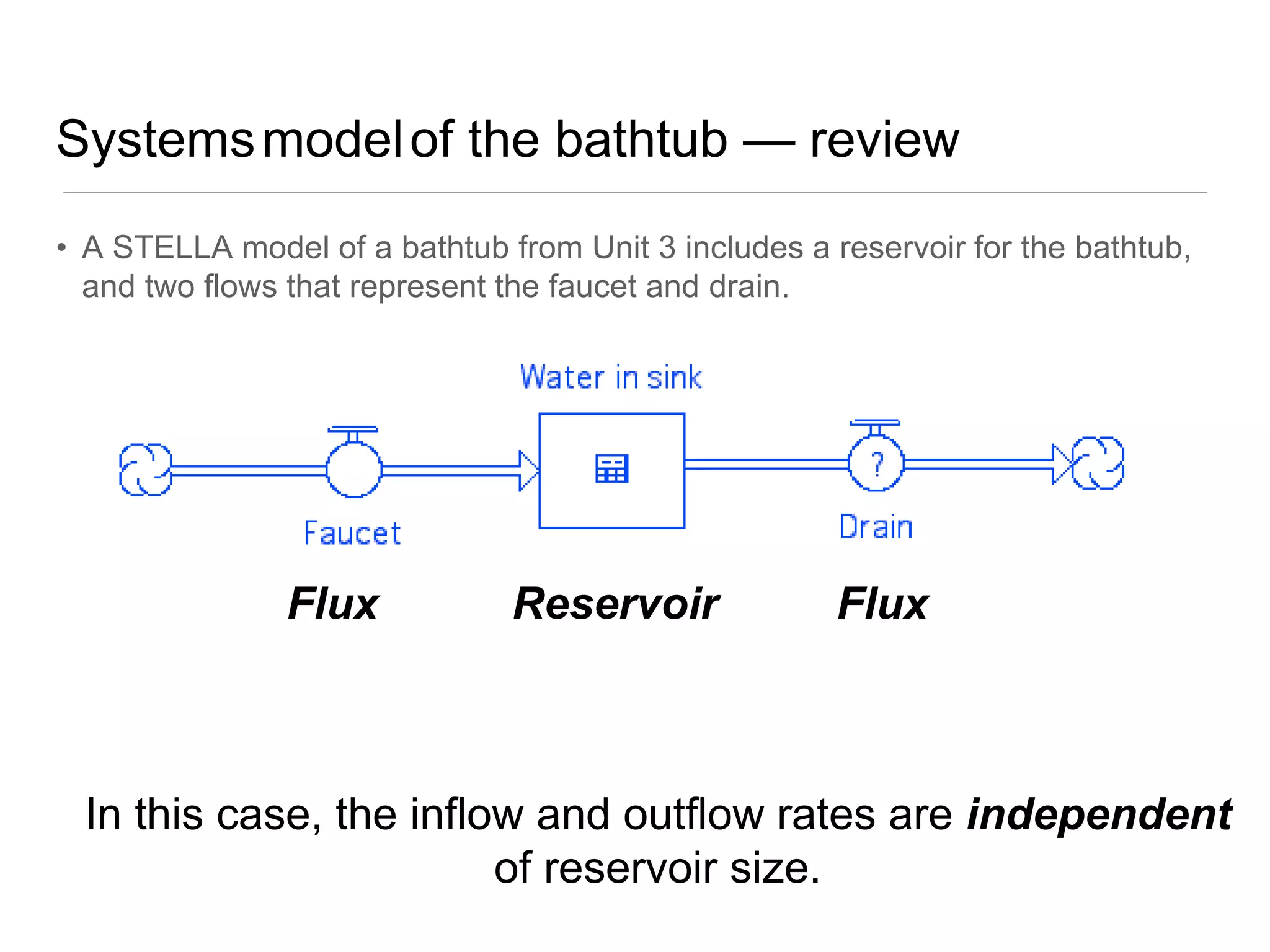
• A STELLA model of a bathtub from Unit 3 includes a reservoir for the bathtub,
and two flows that represent the faucet and drain.
Flux Flux
Reservoir
In this case, the inflow and outflow rates are independent
of reservoir size.
Adding a feedback loop
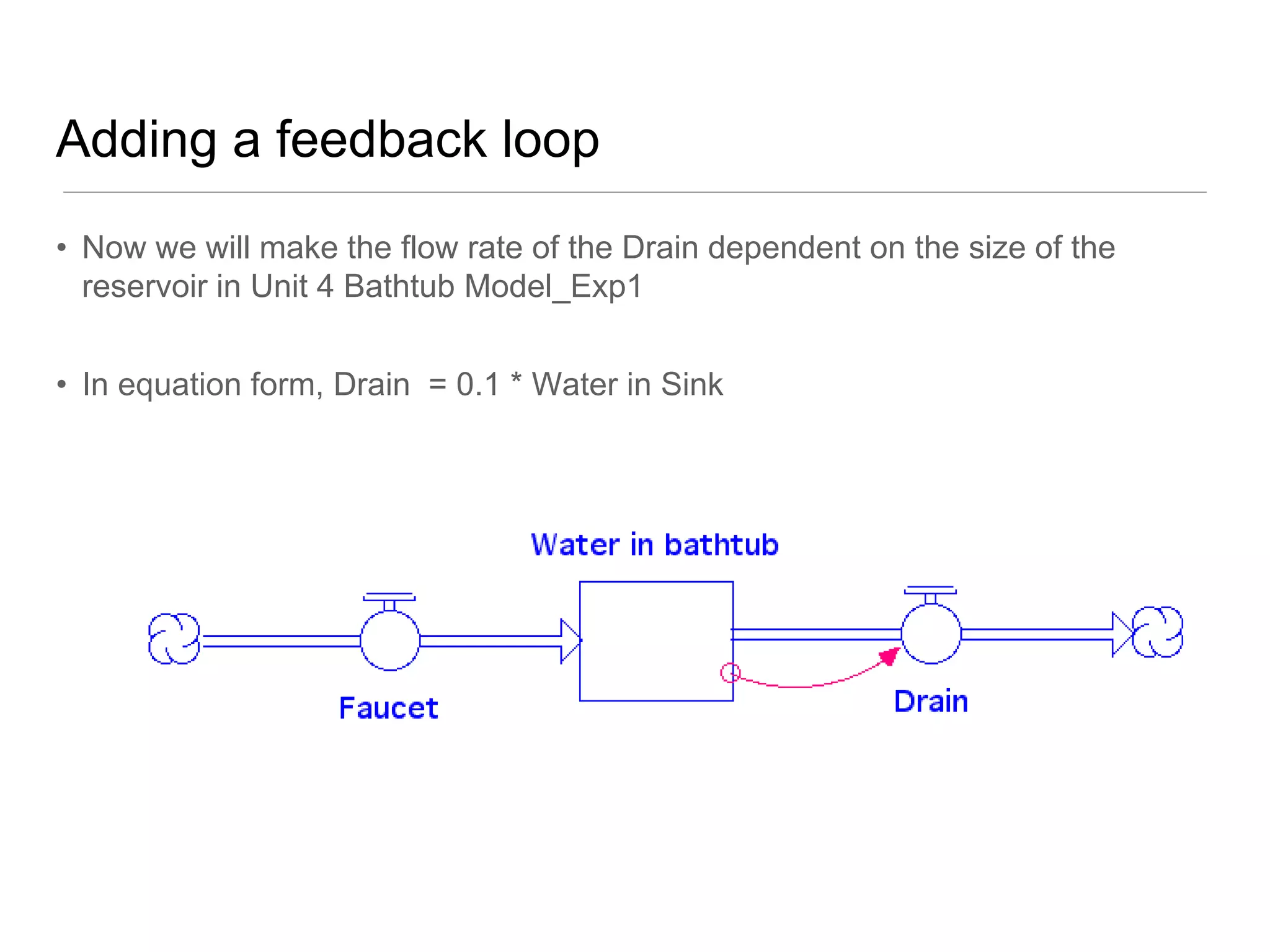
• Now we will make the flow rate of the Drain dependent on the size of the
reservoir in Unit 4 Bathtub Model_Exp1
• In equation form, Drain = 0.1 * Water in Sink
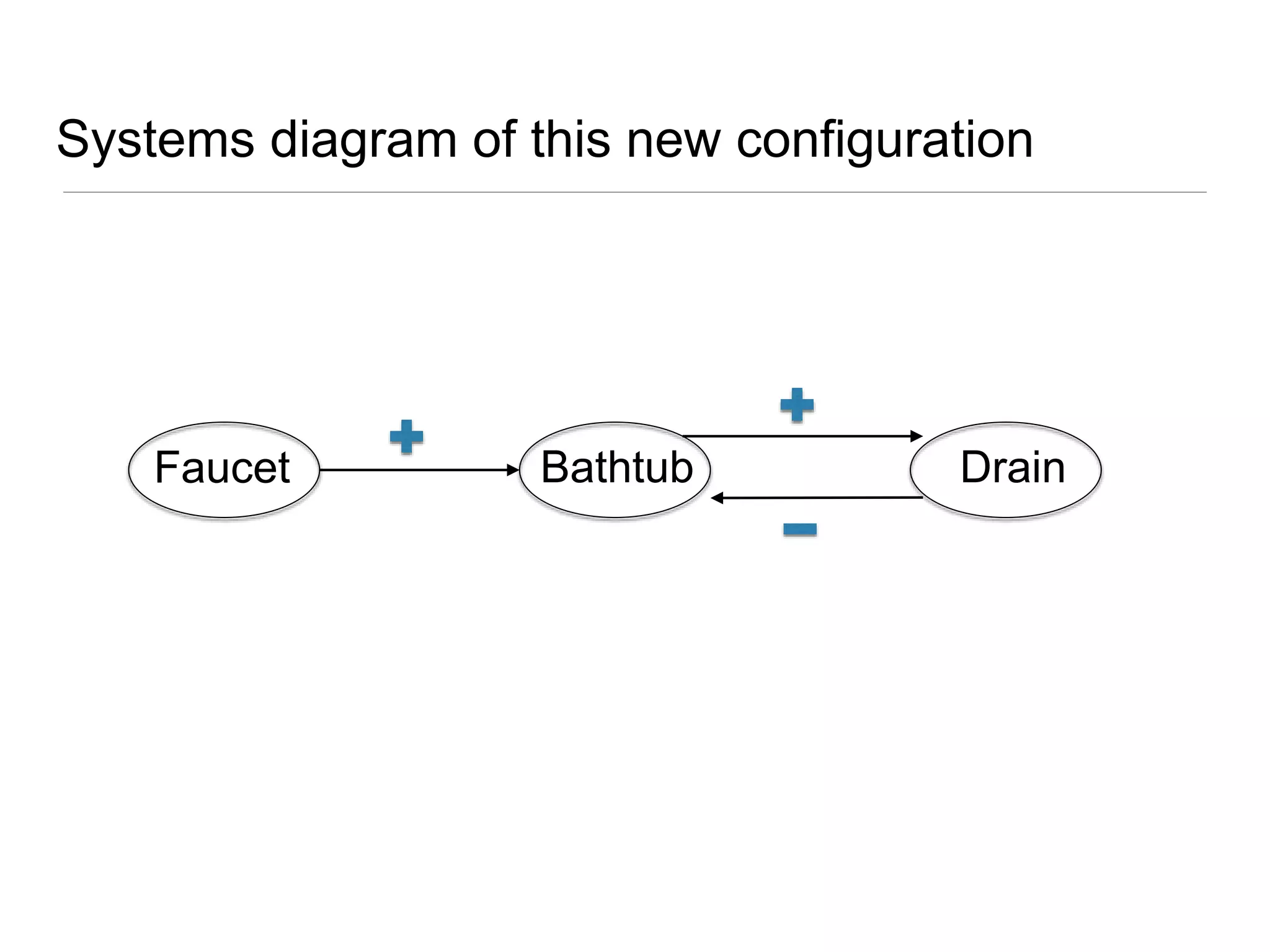
Systems diagram of this new configuration
Faucet Bathtub Drain

Feedback model.ppt

  • 1.
    Systems Thinking: Systemsmodeling feedback presentation
  • 2.
    Feedbacks in asystem • Feedback exists between two components of a system when each affects the other. https://commons.wikimedia.org/wiki/File:Simple_Feedback_02.png
  • 3.
    Feedbacks can causeundesirable outcomes… • We have all probably covered our ears when experiencing audio feedback. https://en.wikipedia.org/wiki/Audio_feedback https://commons.wikimedia.org/wiki/File:Ru%C3%ADdo_Noise_041113GFDL.JPG
  • 4.
    Feedbacks can causedesirable outcomes … • Compound interest in finance is a feedback, and a very useful one Cash on Deposit Interest Earned 0 50 100 150 200 250 300 0 5 10 15 20 25 Dollars Years Simple vs. Compound Interest Simple Interest Compound Interest Images made by K. Kreutz
  • 5.
    Systemsmodelof the bathtub— review • A STELLA model of a bathtub from Unit 3 includes a reservoir for the bathtub, and two flows that represent the faucet and drain. Flux Flux Reservoir In this case, the inflow and outflow rates are independent of reservoir size.
  • 6.
    Adding a feedbackloop • Now we will make the flow rate of the Drain dependent on the size of the reservoir in Unit 4 Bathtub Model_Exp1 • In equation form, Drain = 0.1 * Water in Sink
  • 7.
    Systems diagram ofthis new configuration Faucet Bathtub Drain

Editor's Notes

  • #3 https://commons.wikimedia.org/wiki/File:Simple_Feedback_02.png Creative Commons
  • #4 https://en.wikipedia.org/wiki/Audio_feedback Creative Commons https://commons.wikimedia.org/wiki/File:Ru%C3%ADdo_Noise_041113GFDL.JPG Creative Commons
  • #5 • Note the difference between linear growth in simple interest (i.e., interest paid on original principal only) vs. exponential growth in compound interest (i.e., interest earned not only on original principal but also on all interest earned previously). • Reinvesting all interest earned is the feedback, and can be seen in the STELLA model in the lower left as the connector (arrow) between the Cash on Deposit reservoir and the Interest Earned flow. • The difference between having a feedback (exponential growth of your money) and not having a feedback in a system (linear growth of your money) can be extremely important (in this case $71 after 20 years)! • Images made by K. Kreutz
  • #7 • Note the connector (arrow) between the Water in bathtub reservoir and the Drain flow. The fact that the two are influencing each other is evidence of a feedback, just as in the compound interest example.