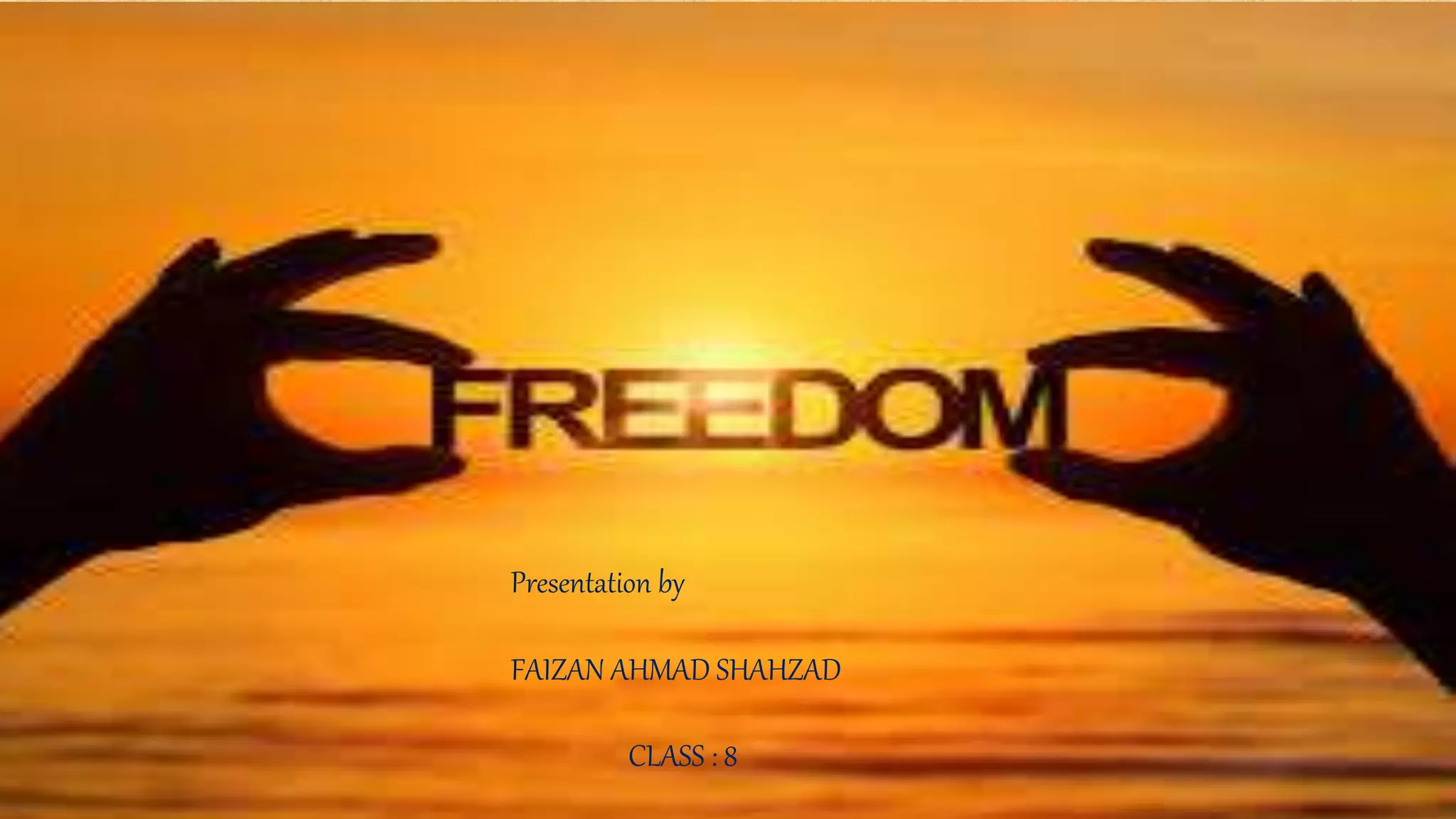
Presentation by
FAIZAN AHMAD SHAHZAD
CLASS : 8
What is Freedom ?
1: Defining Freedom:
1 The concept of freedom:
Freedom refers to the state of being unrestricted, unrestrained, and able
to act or think as one desires.
2 Personal freedom:
The ability to exercise individual choices, express oneself, and pursue personal
goals without undue limitations.
3 Societal freedom:
The collective freedom enjoyed by a community or nation, encompassing
civil liberties, human rights, and the absence of oppressive systems.
2: Historical Perspectives on Freedom:
1 Ancient civilizations:
Tracing the origins of freedom in ancient Greece, where democratic
ideals and individual liberties were born.
2 Enlightenment era:
The Age of Reason and the philosophical movements that
sparked the fight for personal freedoms and societal progress.
3 Modern struggles for freedom:
Examining key historical events like the American and French
Revolutions, civil rights movements, and
3: The Value of Freedom:
1 Individual fulfillment:
How freedom enables self-expression, personal growth, and the pursuit of
happiness.
2 Social progress:
The role of freedom in fostering innovation, creativity, and entrepreneurship, leading to
economic and societal development.
3 Democracy and governance:
Exploring the connection between freedom and democratic systems, citizen
participation, and accountable governance.
4: The Challenges and Boundaries of Freedom:
1 Balancing individual rights and societal well-being:
Navigating the delicate equilibrium between personal freedom and
the greater good.
2 Social responsibility:
Understanding that freedom comes with responsibilities towards
others and the environment.
3 Addressing systemic injustices:
Recognizing that certain individuals or groups may face barriers to
their freedom due to discrimination, poverty, or oppression
5: Cultivating Freedom in Everyday Life:
1 Education and knowledge:
Empowering individuals with critical thinking, information, and skills to make
informed choices.
2 Promoting inclusivity and diversity:
Building societies that value and respect different perspectives, cultures, and
identities.
3 Embracing digital freedom:
Navigating the digital age while safeguarding privacy, online rights, and combating
cyber threats.
Conclusion :
In conclusion, freedom is an indispensable aspect of human existence,
granting us the power to shape our lives and the world around us. It is a
fundamental principle that continues to inspire revolutions, ignite social
movements, and fuel progress. Let us embrace the gift of freedom, protect it
where it flourishes, and strive to extend its reach to those who yearn for it.
Remember, true freedom is not just the absence of constraints but the ability
to manifest our potential and make a positive impact on the world.
Faizan Ahmad.pptx

Faizan Ahmad.pptx

  • 1.
  • 2.
    What is Freedom? 1: Defining Freedom: 1 The concept of freedom: Freedom refers to the state of being unrestricted, unrestrained, and able to act or think as one desires. 2 Personal freedom: The ability to exercise individual choices, express oneself, and pursue personal goals without undue limitations. 3 Societal freedom: The collective freedom enjoyed by a community or nation, encompassing civil liberties, human rights, and the absence of oppressive systems.
  • 3.
    2: Historical Perspectiveson Freedom: 1 Ancient civilizations: Tracing the origins of freedom in ancient Greece, where democratic ideals and individual liberties were born. 2 Enlightenment era: The Age of Reason and the philosophical movements that sparked the fight for personal freedoms and societal progress. 3 Modern struggles for freedom: Examining key historical events like the American and French Revolutions, civil rights movements, and
  • 4.
    3: The Valueof Freedom: 1 Individual fulfillment: How freedom enables self-expression, personal growth, and the pursuit of happiness. 2 Social progress: The role of freedom in fostering innovation, creativity, and entrepreneurship, leading to economic and societal development. 3 Democracy and governance: Exploring the connection between freedom and democratic systems, citizen participation, and accountable governance.
  • 5.
    4: The Challengesand Boundaries of Freedom: 1 Balancing individual rights and societal well-being: Navigating the delicate equilibrium between personal freedom and the greater good. 2 Social responsibility: Understanding that freedom comes with responsibilities towards others and the environment. 3 Addressing systemic injustices: Recognizing that certain individuals or groups may face barriers to their freedom due to discrimination, poverty, or oppression
  • 6.
    5: Cultivating Freedomin Everyday Life: 1 Education and knowledge: Empowering individuals with critical thinking, information, and skills to make informed choices. 2 Promoting inclusivity and diversity: Building societies that value and respect different perspectives, cultures, and identities. 3 Embracing digital freedom: Navigating the digital age while safeguarding privacy, online rights, and combating cyber threats.
  • 7.
    Conclusion : In conclusion,freedom is an indispensable aspect of human existence, granting us the power to shape our lives and the world around us. It is a fundamental principle that continues to inspire revolutions, ignite social movements, and fuel progress. Let us embrace the gift of freedom, protect it where it flourishes, and strive to extend its reach to those who yearn for it. Remember, true freedom is not just the absence of constraints but the ability to manifest our potential and make a positive impact on the world.