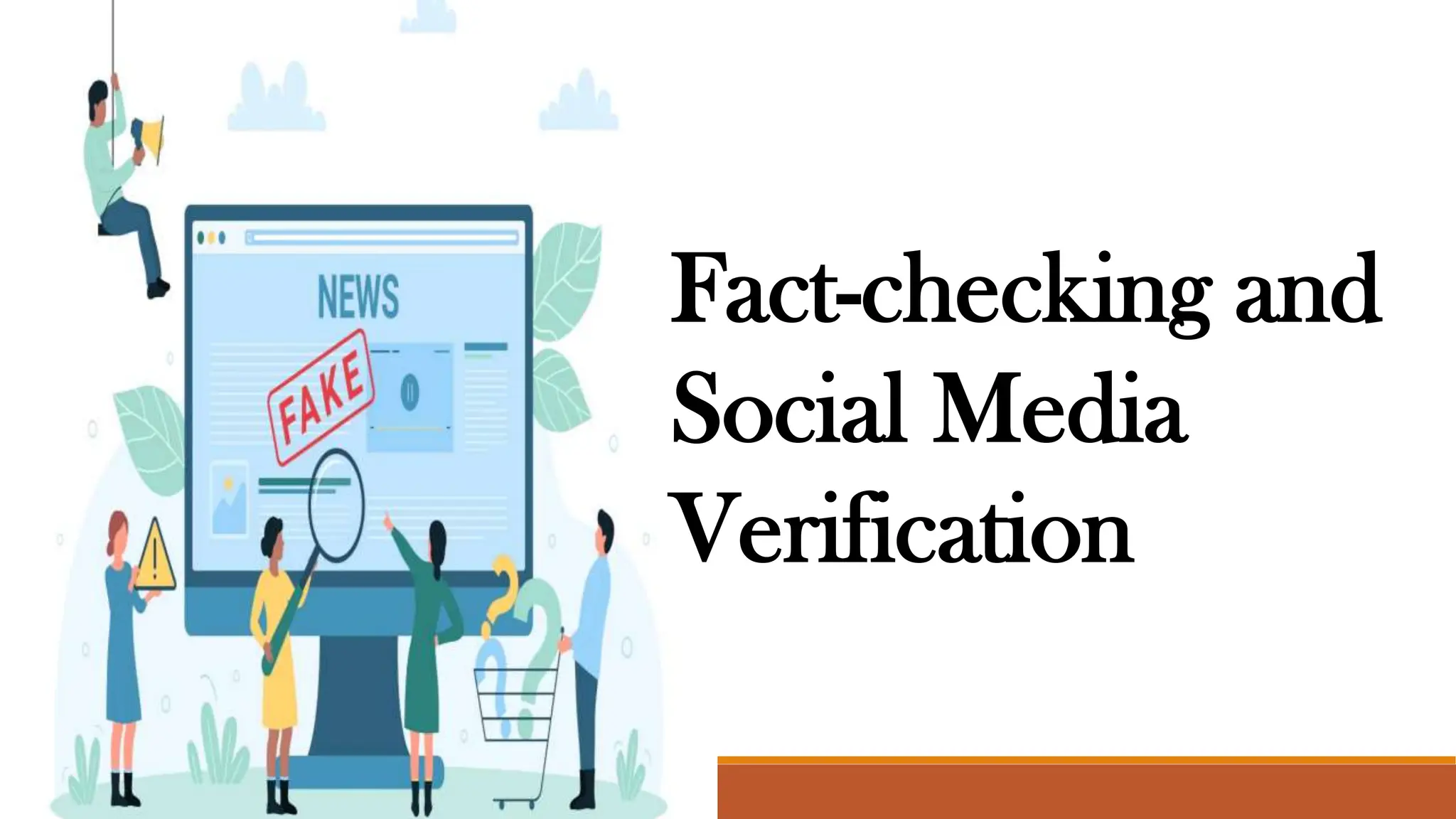
Fact-checking and
Social Media
Verification
Content
Introduction to information
disorder
Overview of fact-checking
Fact-checking tools
Basics of social media
verification
Training objectives
• To build the capacity of the participants in fact-
checking.
• To understand various fact-checking tools.
• To give understanding on how to manage
mis/disinformation on digital space.
• Difference between mis/disinformation and
malformation.
• Common tactics used by dis/misinformation
actors.
• Learning social media verification basics.
Information disorder refers to the sharing or
development of false information, which can be
categorized as misinformation, disinformation
and malinformation.
Introduction to
information
disorder
false information that is not created with
the intention of causing harm. An example
would be sharing a rumor that something
has happened, before finding out its
actually false. It can be categories as
misinformation unintentional mistakes,
such as inaccurate photo captions, dates,
statistics or when satire is taken seriously.
Misinformation
false content that is intentionally created to cause harm, often
motivated by financial, political or psychological factor.
Misleading piece of information spread with the intention to
deceive. It can appear in the form of the fabricated or
deliberately manipulated audio/ visual content, intentionally
created conspiracy theories or rumors spread to harm or cause
distrust. Example: when people in power share only selected
piece of information together with their biased commentary,
which distort reality
Disinformation
It is based on reality but used to inflict harm
on individuals, social groups, organizations, or
countries
It is deliberate publication of private
information for personal, corporate or
political, rather than public interest, such as
leaking certain emails hacked in order to
damage someone’s reputation.
Misinformation
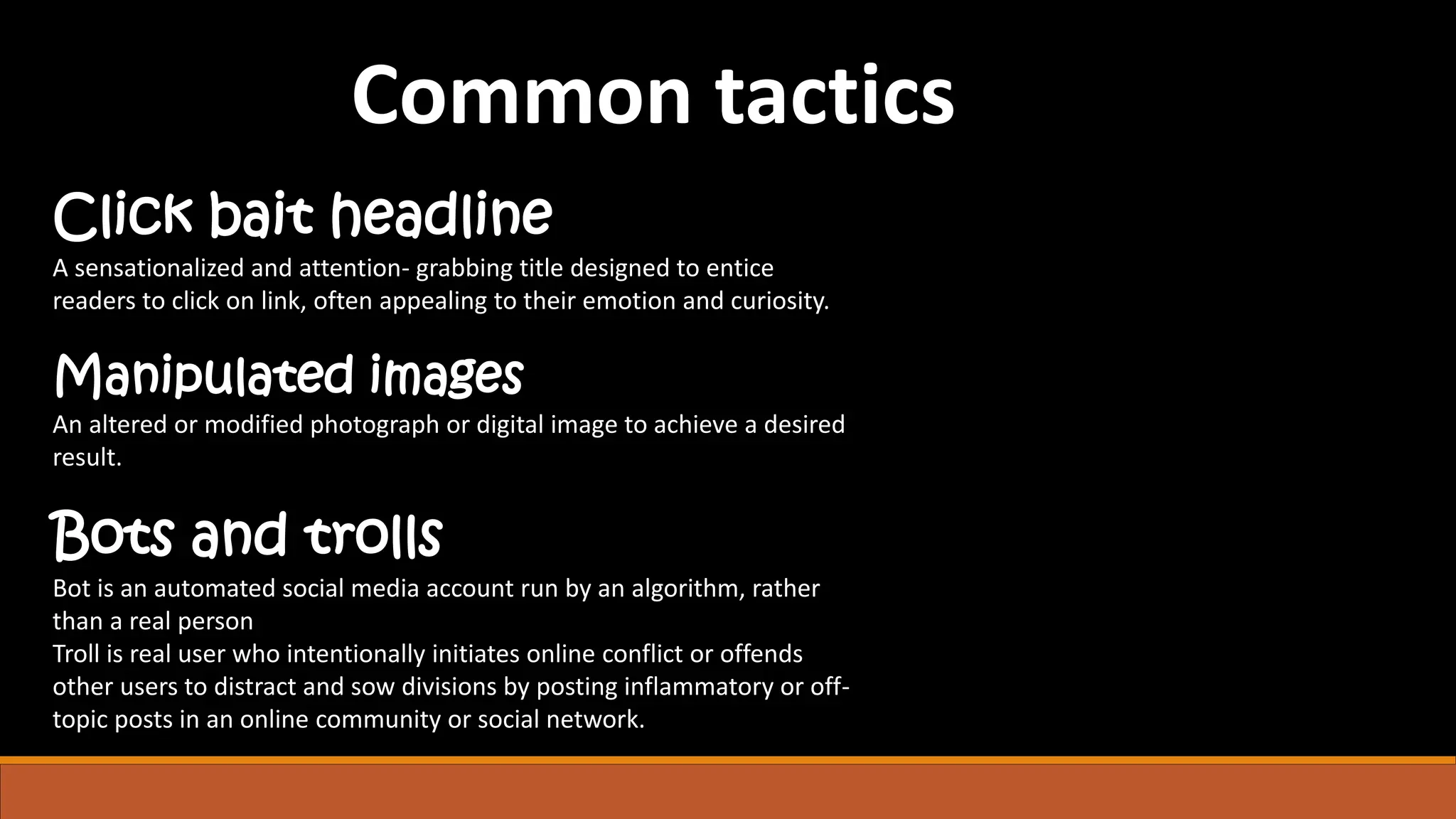
Click bait headline
A sensationalized and attention- grabbing title designed to entice
readers to click on link, often appealing to their emotion and curiosity.
Manipulated images
An altered or modified photograph or digital image to achieve a desired
result.
Bots and trolls
Bot is an automated social media account run by an algorithm, rather
than a real person
Troll is real user who intentionally initiates online conflict or offends
other users to distract and sow divisions by posting inflammatory or off-
topic posts in an online community or social network.
Common tactics
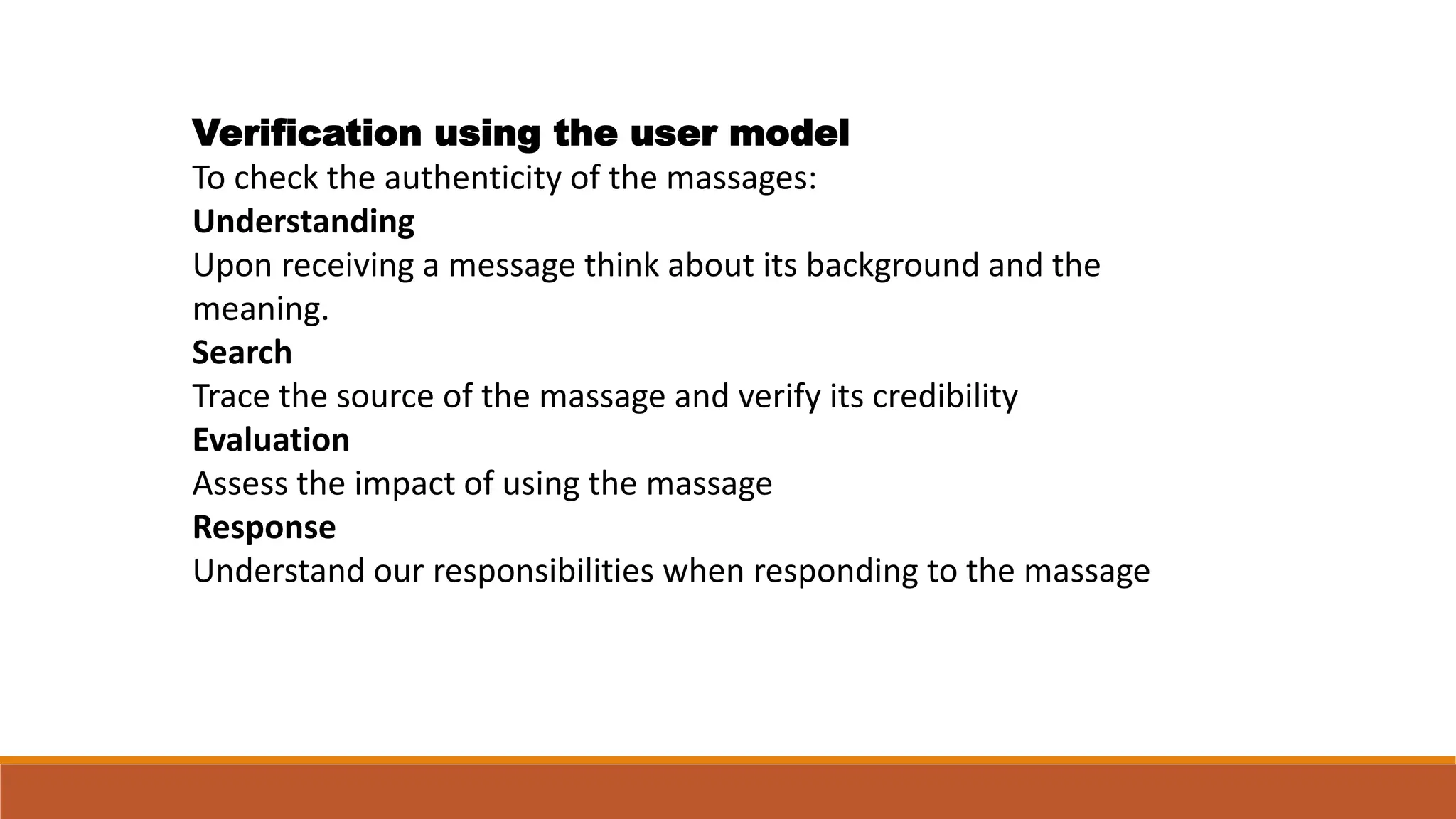
Verification using the user model
To check the authenticity of the massages:
Understanding
Upon receiving a message think about its background and the
meaning.
Search
Trace the source of the massage and verify its credibility
Evaluation
Assess the impact of using the massage
Response
Understand our responsibilities when responding to the massage
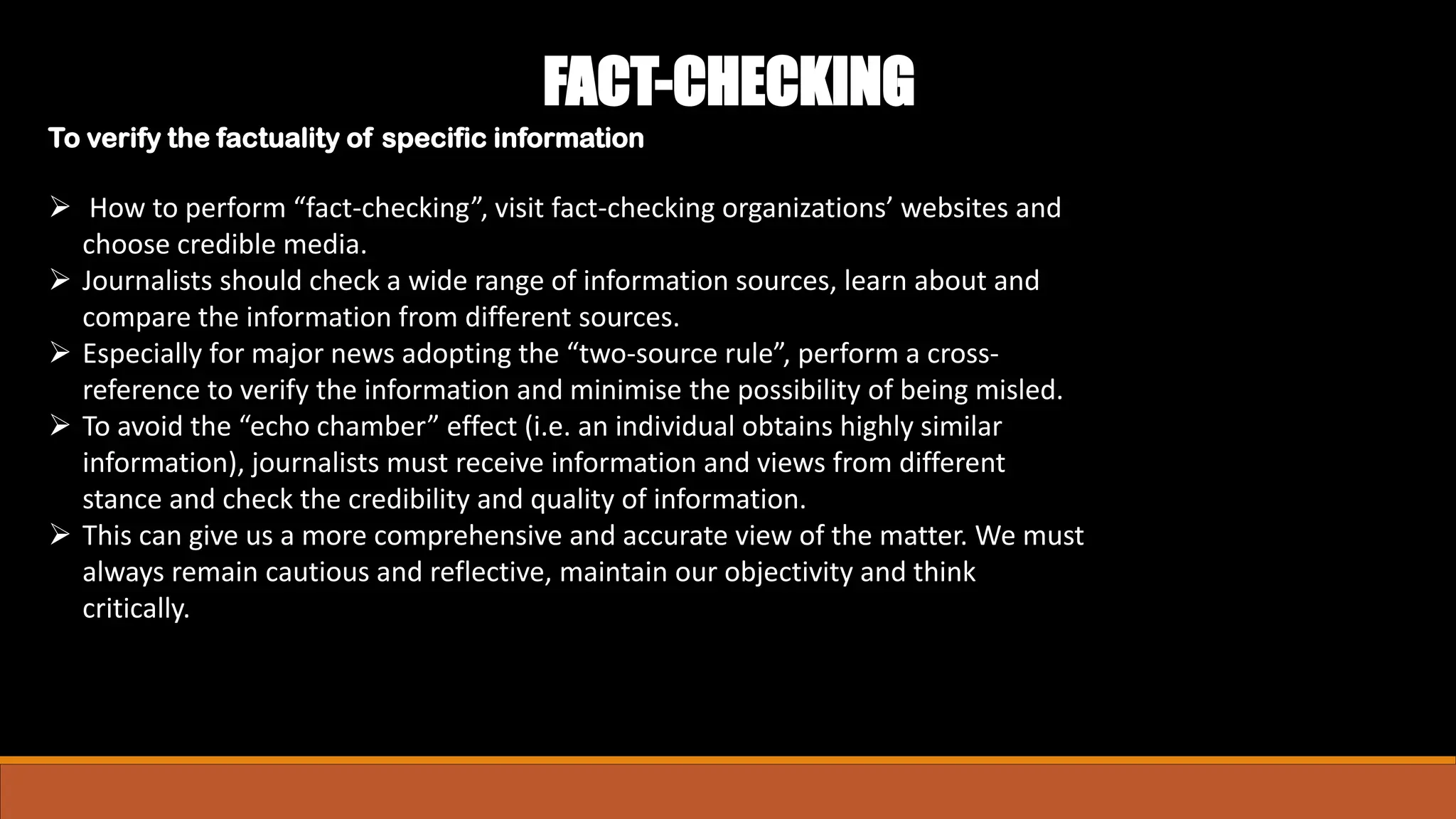
➢ How to perform “fact-checking”, visit fact-checking organizations’ websites and
choose credible media.
➢ Journalists should check a wide range of information sources, learn about and
compare the information from different sources.
➢ Especially for major news adopting the “two-source rule”, perform a cross-
reference to verify the information and minimise the possibility of being misled.
➢ To avoid the “echo chamber” effect (i.e. an individual obtains highly similar
information), journalists must receive information and views from different
stance and check the credibility and quality of information.
➢ This can give us a more comprehensive and accurate view of the matter. We must
always remain cautious and reflective, maintain our objectivity and think
critically.
FACT-CHECKING
To verify the factuality of specific information
AUTHENTICITY OF INFORMATION ON SOCIAL MEDIA
Steps for verification:
1. Check the URL;
2. Check the date of issue;
3. Find out the source of information;
4. Compare the same content from other information
sources;
5. Check whether the title and content are consistent;
6. Find out whether the evidence in the information is
sufficient and reasonable;
7. Reflect on yourself if you agree with the information
based on your personal preference.
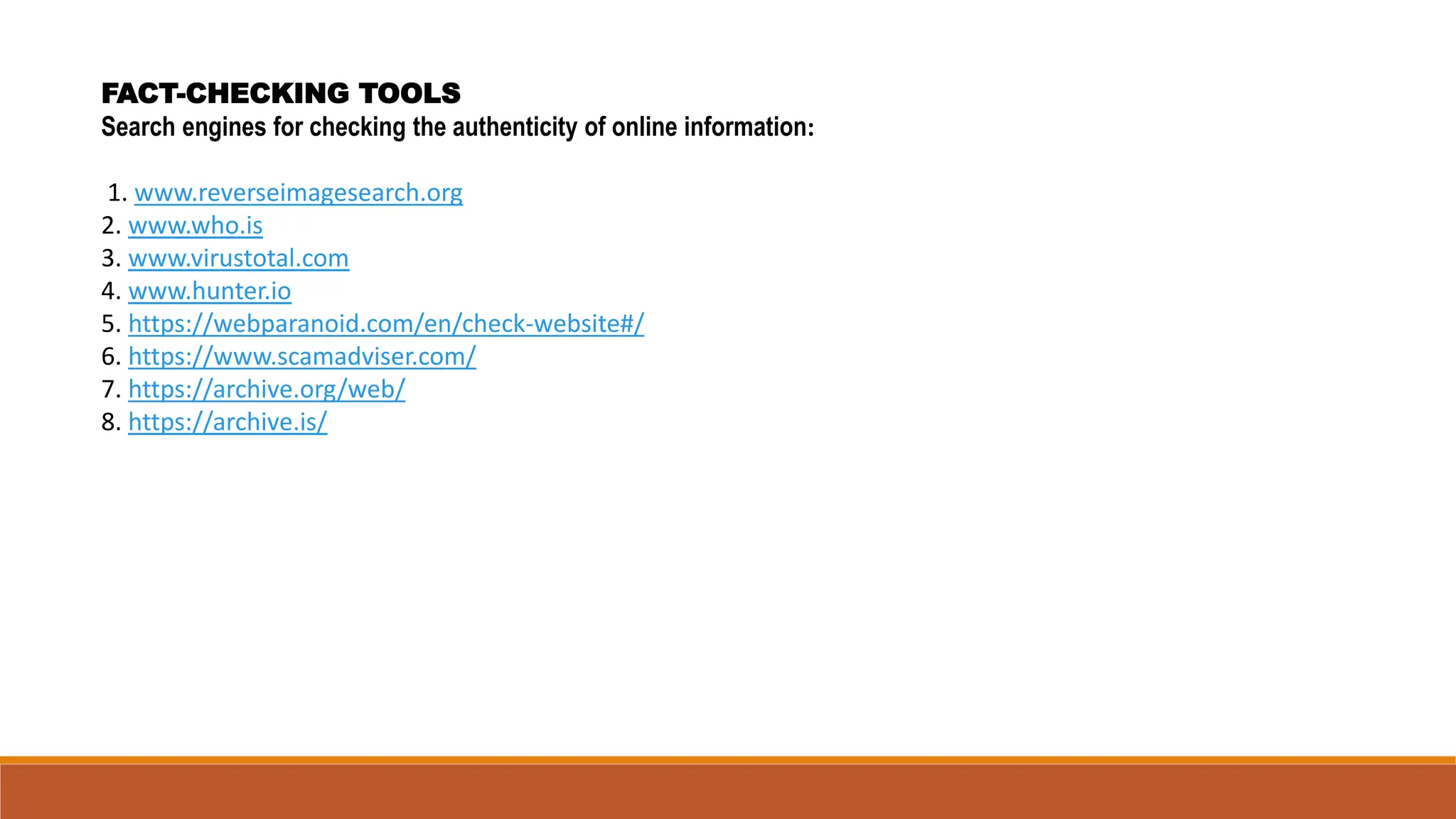
FACT-CHECKING TOOLS
Search engines for checking the authenticity of online information:
1. www.reverseimagesearch.org
2. www.who.is
3. www.virustotal.com
4. www.hunter.io
5. https://webparanoid.com/en/check-website#/
6. https://www.scamadviser.com/
7. https://archive.org/web/
8. https://archive.is/
REMEMBER!
CARE BEFORE YOU SHARE!
1. Name It to Tame It!
2. Take responsibility. Know that YOU are the
information gatekeeper. Don’t spread
dis/misinformation!
3. Acknowledge what you may not know.
4. If you have time, check it out! Do what you can to
verify information.
5. If you’re still not sure it’s true, don’t share it
Thank You
Questions, Observations, Objections
Angelina Adut Akech
angelinaadutakech@gmail.com
+211929028104

Fact-checking and Social Media Verification in 2025 with Adut Angelina.pdf

  • 1.
  • 2.
    Content Introduction to information disorder Overviewof fact-checking Fact-checking tools Basics of social media verification
  • 3.
    Training objectives • Tobuild the capacity of the participants in fact- checking. • To understand various fact-checking tools. • To give understanding on how to manage mis/disinformation on digital space. • Difference between mis/disinformation and malformation. • Common tactics used by dis/misinformation actors. • Learning social media verification basics.
  • 4.
    Information disorder refersto the sharing or development of false information, which can be categorized as misinformation, disinformation and malinformation. Introduction to information disorder
  • 5.
    false information thatis not created with the intention of causing harm. An example would be sharing a rumor that something has happened, before finding out its actually false. It can be categories as misinformation unintentional mistakes, such as inaccurate photo captions, dates, statistics or when satire is taken seriously. Misinformation
  • 6.
    false content thatis intentionally created to cause harm, often motivated by financial, political or psychological factor. Misleading piece of information spread with the intention to deceive. It can appear in the form of the fabricated or deliberately manipulated audio/ visual content, intentionally created conspiracy theories or rumors spread to harm or cause distrust. Example: when people in power share only selected piece of information together with their biased commentary, which distort reality Disinformation
  • 7.
    It is basedon reality but used to inflict harm on individuals, social groups, organizations, or countries It is deliberate publication of private information for personal, corporate or political, rather than public interest, such as leaking certain emails hacked in order to damage someone’s reputation. Misinformation
  • 9.
    Click bait headline Asensationalized and attention- grabbing title designed to entice readers to click on link, often appealing to their emotion and curiosity. Manipulated images An altered or modified photograph or digital image to achieve a desired result. Bots and trolls Bot is an automated social media account run by an algorithm, rather than a real person Troll is real user who intentionally initiates online conflict or offends other users to distract and sow divisions by posting inflammatory or off- topic posts in an online community or social network. Common tactics
  • 10.
    Verification using theuser model To check the authenticity of the massages: Understanding Upon receiving a message think about its background and the meaning. Search Trace the source of the massage and verify its credibility Evaluation Assess the impact of using the massage Response Understand our responsibilities when responding to the massage
  • 11.
    ➢ How toperform “fact-checking”, visit fact-checking organizations’ websites and choose credible media. ➢ Journalists should check a wide range of information sources, learn about and compare the information from different sources. ➢ Especially for major news adopting the “two-source rule”, perform a cross- reference to verify the information and minimise the possibility of being misled. ➢ To avoid the “echo chamber” effect (i.e. an individual obtains highly similar information), journalists must receive information and views from different stance and check the credibility and quality of information. ➢ This can give us a more comprehensive and accurate view of the matter. We must always remain cautious and reflective, maintain our objectivity and think critically. FACT-CHECKING To verify the factuality of specific information
  • 12.
    AUTHENTICITY OF INFORMATIONON SOCIAL MEDIA Steps for verification: 1. Check the URL; 2. Check the date of issue; 3. Find out the source of information; 4. Compare the same content from other information sources; 5. Check whether the title and content are consistent; 6. Find out whether the evidence in the information is sufficient and reasonable; 7. Reflect on yourself if you agree with the information based on your personal preference.
  • 13.
    FACT-CHECKING TOOLS Search enginesfor checking the authenticity of online information: 1. www.reverseimagesearch.org 2. www.who.is 3. www.virustotal.com 4. www.hunter.io 5. https://webparanoid.com/en/check-website#/ 6. https://www.scamadviser.com/ 7. https://archive.org/web/ 8. https://archive.is/
  • 14.
    REMEMBER! CARE BEFORE YOUSHARE! 1. Name It to Tame It! 2. Take responsibility. Know that YOU are the information gatekeeper. Don’t spread dis/misinformation! 3. Acknowledge what you may not know. 4. If you have time, check it out! Do what you can to verify information. 5. If you’re still not sure it’s true, don’t share it
  • 15.
    Thank You Questions, Observations,Objections Angelina Adut Akech angelinaadutakech@gmail.com +211929028104