Eye
Anatomy
Discover the essentials
of how our eyes function
1
vision & strategy
Introduction
The eye is an incredible organ that lets us see the world in all its colors
and shapes. Understanding its structure helps us appreciate how vision
works and why eye care matters. Let’s explore the basics of eye anatomy
together in a simple and friendly way.
2
Eye Structure Basics
3
Parts of the Eye
The eye has key parts like the cornea, iris, pupil, lens, and retina. Each
plays a unique role: the cornea protects, the iris controls light, the lens
focuses images, and the retina converts light into signals for the brain.
These parts work together seamlessly to help us see clearly.
4
How the Eye
Works
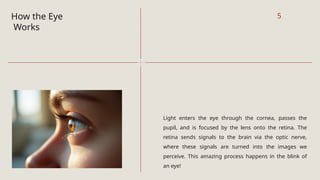
Light enters the eye through the cornea, passes the
pupil, and is focused by the lens onto the retina. The
retina sends signals to the brain via the optic nerve,
where these signals are turned into the images we
perceive. This amazing process happens in the blink of
an eye!
5
Common Eye Terms
Here are some common eye terms to know: optic nerve carries visual
signals to the brain, retina is where light turns into signals, and lens
adjusts focus. Knowing these helps us understand how our eyes work
and how to describe any issues we might have.
6
Vision and Health
7
How We See
Colors
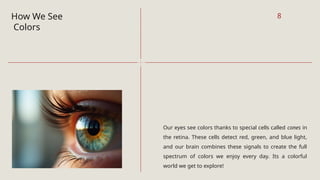
Our eyes see colors thanks to special cells called cones in
the retina. These cells detect red, green, and blue light,
and our brain combines these signals to create the full
spectrum of colors we enjoy every day. Its a colorful
world we get to explore!
8
Protecting Your Eyes
Taking care of your eyes is super important. Wearing sunglasses to block
UV rays, taking breaks from screens, and eating foods rich in vitamins
like A and C help keep your eyes healthy and sharp for years to come.
9
Common Eye Problems
Some common eye issues include nearsightedness (difficulty seeing far),
farsightedness (difficulty seeing close), and dry eyes. Many are easily
treated with glasses, drops, or lifestyle changes, so don’t hesitate to get a
checkup if you notice vision changes.
10
Conclusions
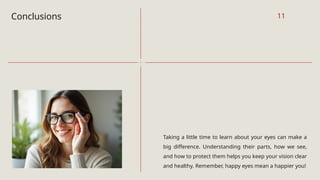
Taking a little time to learn about your eyes can make a
big difference. Understanding their parts, how we see,
and how to protect them helps you keep your vision clear
and healthy. Remember, happy eyes mean a happier you!
11
CREDITS: This presentation template was created
by Slidesgo, and includes icons, infographics &
images by Freepik
THANK
YOU.
Do you have any questions?
youremail@freepik.com
+00 000 000 000
yourwebsite.com please keep this slide for attribution
12
Eye Anatomy for basic understanding.pptx

  • 1.
    Eye Anatomy Discover the essentials ofhow our eyes function 1 vision & strategy
  • 2.
    Introduction The eye isan incredible organ that lets us see the world in all its colors and shapes. Understanding its structure helps us appreciate how vision works and why eye care matters. Let’s explore the basics of eye anatomy together in a simple and friendly way. 2
  • 3.
  • 4.
    Parts of theEye The eye has key parts like the cornea, iris, pupil, lens, and retina. Each plays a unique role: the cornea protects, the iris controls light, the lens focuses images, and the retina converts light into signals for the brain. These parts work together seamlessly to help us see clearly. 4
  • 5.
    How the Eye Works Lightenters the eye through the cornea, passes the pupil, and is focused by the lens onto the retina. The retina sends signals to the brain via the optic nerve, where these signals are turned into the images we perceive. This amazing process happens in the blink of an eye! 5
  • 6.
    Common Eye Terms Hereare some common eye terms to know: optic nerve carries visual signals to the brain, retina is where light turns into signals, and lens adjusts focus. Knowing these helps us understand how our eyes work and how to describe any issues we might have. 6
  • 7.
  • 8.
    How We See Colors Oureyes see colors thanks to special cells called cones in the retina. These cells detect red, green, and blue light, and our brain combines these signals to create the full spectrum of colors we enjoy every day. Its a colorful world we get to explore! 8
  • 9.
    Protecting Your Eyes Takingcare of your eyes is super important. Wearing sunglasses to block UV rays, taking breaks from screens, and eating foods rich in vitamins like A and C help keep your eyes healthy and sharp for years to come. 9
  • 10.
    Common Eye Problems Somecommon eye issues include nearsightedness (difficulty seeing far), farsightedness (difficulty seeing close), and dry eyes. Many are easily treated with glasses, drops, or lifestyle changes, so don’t hesitate to get a checkup if you notice vision changes. 10
  • 11.
    Conclusions Taking a littletime to learn about your eyes can make a big difference. Understanding their parts, how we see, and how to protect them helps you keep your vision clear and healthy. Remember, happy eyes mean a happier you! 11
  • 12.
    CREDITS: This presentationtemplate was created by Slidesgo, and includes icons, infographics & images by Freepik THANK YOU. Do you have any questions? youremail@freepik.com +00 000 000 000 yourwebsite.com please keep this slide for attribution 12