Experiment 1Performing a Precipitation Reaction
Experiment Inventory
EXPERIMENT 1: PERFORMING A PRECIPITATION
REACTION
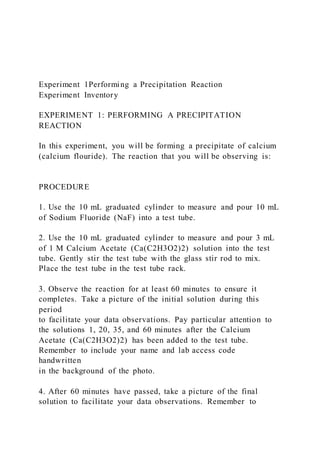
In this experiment, you will be forming a precipitate of calcium
(calcium flouride). The reaction that you will be observing is:
PROCEDURE
1. Use the 10 mL graduated cylinder to measure and pour 10 mL
of Sodium Fluoride (NaF) into a test tube.
2. Use the 10 mL graduated cylinder to measure and pour 3 mL
of 1 M Calcium Acetate (Ca(C2H3O2)2) solution into the test
tube. Gently stir the test tube with the glass stir rod to mix.
Place the test tube in the test tube rack.
3. Observe the reaction for at least 60 minutes to ensure it
completes. Take a picture of the initial solution during this
period
to facilitate your data observations. Pay particular attention to
the solutions 1, 20, 35, and 60 minutes after the Calcium
Acetate (Ca(C2H3O2)2) has been added to the test tube.
Remember to include your name and lab access code
handwritten
in the background of the photo.
4. After 60 minutes have passed, take a picture of the final
solution to facilitate your data observations. Remember to
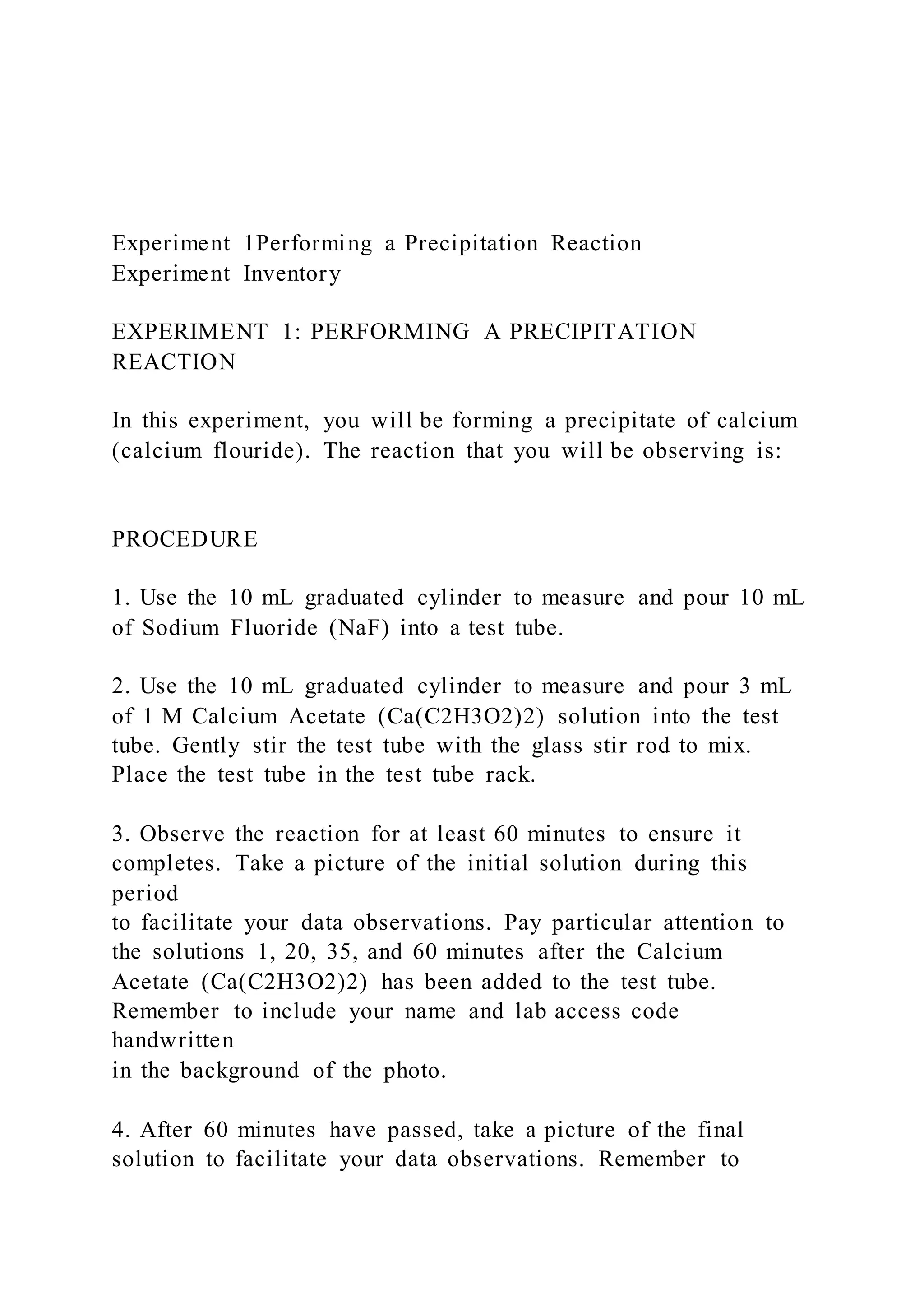
include
your name and lab access code handwritten in the background of
the photo.
Note: The precipitate formed can be more easily seen if the test
tube is held up to the light. The precipitate
will eventually settle to the bottom of the test tube.
5. Record all observations in the Observation section on the
Experiment 1 Data Sheet. Make sure to submit the initial and
final images along with your Post-Lab assignment to your
instructor.
6. To clean up, rinse the small amount of precipitate down the
drain with running water.
Materials
3 mL of 1 M Calcium Acetate (Ca(C2H3O2)2)
10 mL Sodium Fluoride (NaF)
*Camera (camera phone is fine)
*Tap Water
Labware
10 mL Graduated Cylinder
Test Tube
Pipette
Glass Stir Rod
Test Tube Rack
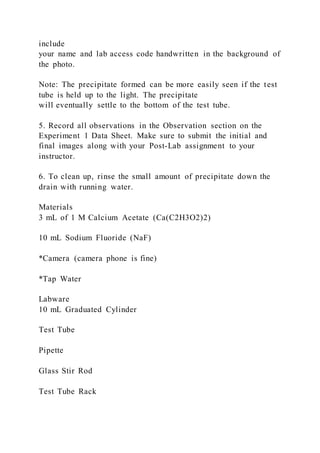
Note: You must provide the materials listed in *red.
Lab 7 Precipitation Reactions CHEM101L
Student Name:
Access Code (located on the lid of your lab kit):
Pre-Lab Questions:
1. Under what conditions will a precipitate form?
2. What information do you need to calculate percent yield?
3. Where can you go to find the information regarding the
atomic mass of an element?
4. Why is atomic mass significant to calculating percent yield?
Experiment 1: Testing for Calcium Ion, Ca2+
Insert initial image with your name and access code handwritten
in the background.
Post-Lab Questions:
1. In your own words define and describe a precipitation
reaction.
2. What is the name of your precipitate?
3. What is the difference between Ca and Ca2+?
Record your observations here.
Click here to enter text.
Insert final image with your name and access code handwritten
in the background.
Experiment 1 performing a precipitation reactionexperiment in

Experiment 1 performing a precipitation reactionexperiment in

  • 1.
    Experiment 1Performing aPrecipitation Reaction Experiment Inventory EXPERIMENT 1: PERFORMING A PRECIPITATION REACTION In this experiment, you will be forming a precipitate of calcium (calcium flouride). The reaction that you will be observing is: PROCEDURE 1. Use the 10 mL graduated cylinder to measure and pour 10 mL of Sodium Fluoride (NaF) into a test tube. 2. Use the 10 mL graduated cylinder to measure and pour 3 mL of 1 M Calcium Acetate (Ca(C2H3O2)2) solution into the test tube. Gently stir the test tube with the glass stir rod to mix. Place the test tube in the test tube rack. 3. Observe the reaction for at least 60 minutes to ensure it completes. Take a picture of the initial solution during this period to facilitate your data observations. Pay particular attention to the solutions 1, 20, 35, and 60 minutes after the Calcium Acetate (Ca(C2H3O2)2) has been added to the test tube. Remember to include your name and lab access code handwritten in the background of the photo. 4. After 60 minutes have passed, take a picture of the final solution to facilitate your data observations. Remember to
  • 2.
    include your name andlab access code handwritten in the background of the photo. Note: The precipitate formed can be more easily seen if the test tube is held up to the light. The precipitate will eventually settle to the bottom of the test tube. 5. Record all observations in the Observation section on the Experiment 1 Data Sheet. Make sure to submit the initial and final images along with your Post-Lab assignment to your instructor. 6. To clean up, rinse the small amount of precipitate down the drain with running water. Materials 3 mL of 1 M Calcium Acetate (Ca(C2H3O2)2) 10 mL Sodium Fluoride (NaF) *Camera (camera phone is fine) *Tap Water Labware 10 mL Graduated Cylinder Test Tube Pipette Glass Stir Rod Test Tube Rack
  • 3.
    Note: You mustprovide the materials listed in *red. Lab 7 Precipitation Reactions CHEM101L Student Name: Access Code (located on the lid of your lab kit): Pre-Lab Questions: 1. Under what conditions will a precipitate form? 2. What information do you need to calculate percent yield? 3. Where can you go to find the information regarding the atomic mass of an element? 4. Why is atomic mass significant to calculating percent yield? Experiment 1: Testing for Calcium Ion, Ca2+ Insert initial image with your name and access code handwritten in the background. Post-Lab Questions: 1. In your own words define and describe a precipitation reaction. 2. What is the name of your precipitate? 3. What is the difference between Ca and Ca2+? Record your observations here. Click here to enter text. Insert final image with your name and access code handwritten in the background.