Examples Of Iterators
Presentation by:
SHAMRAIZ TASAWAR
02-131232-112
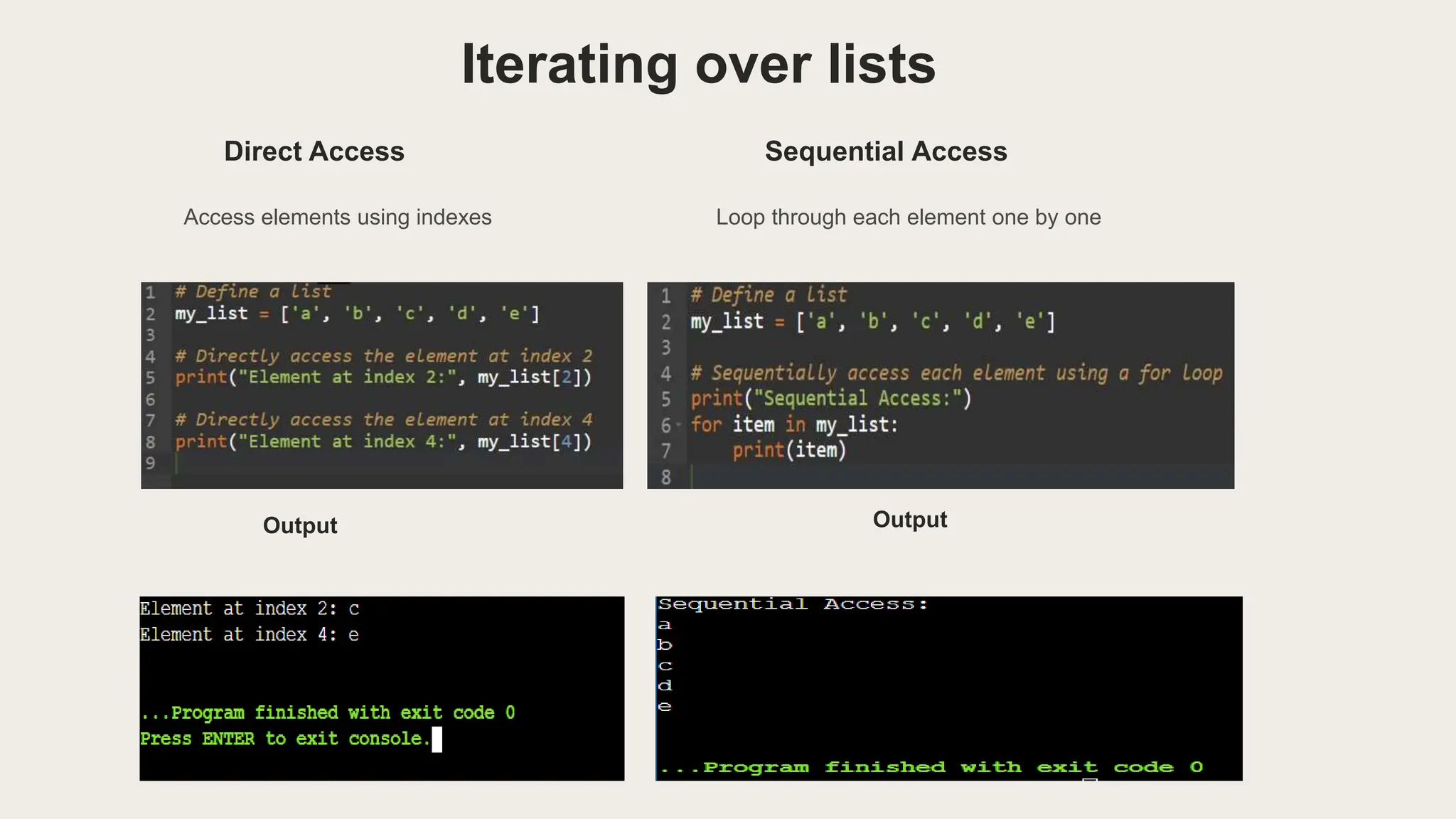
Iterating over lists
Direct Access
Access elements using indexes
Sequential Access
Loop through each element one by one
Output Output
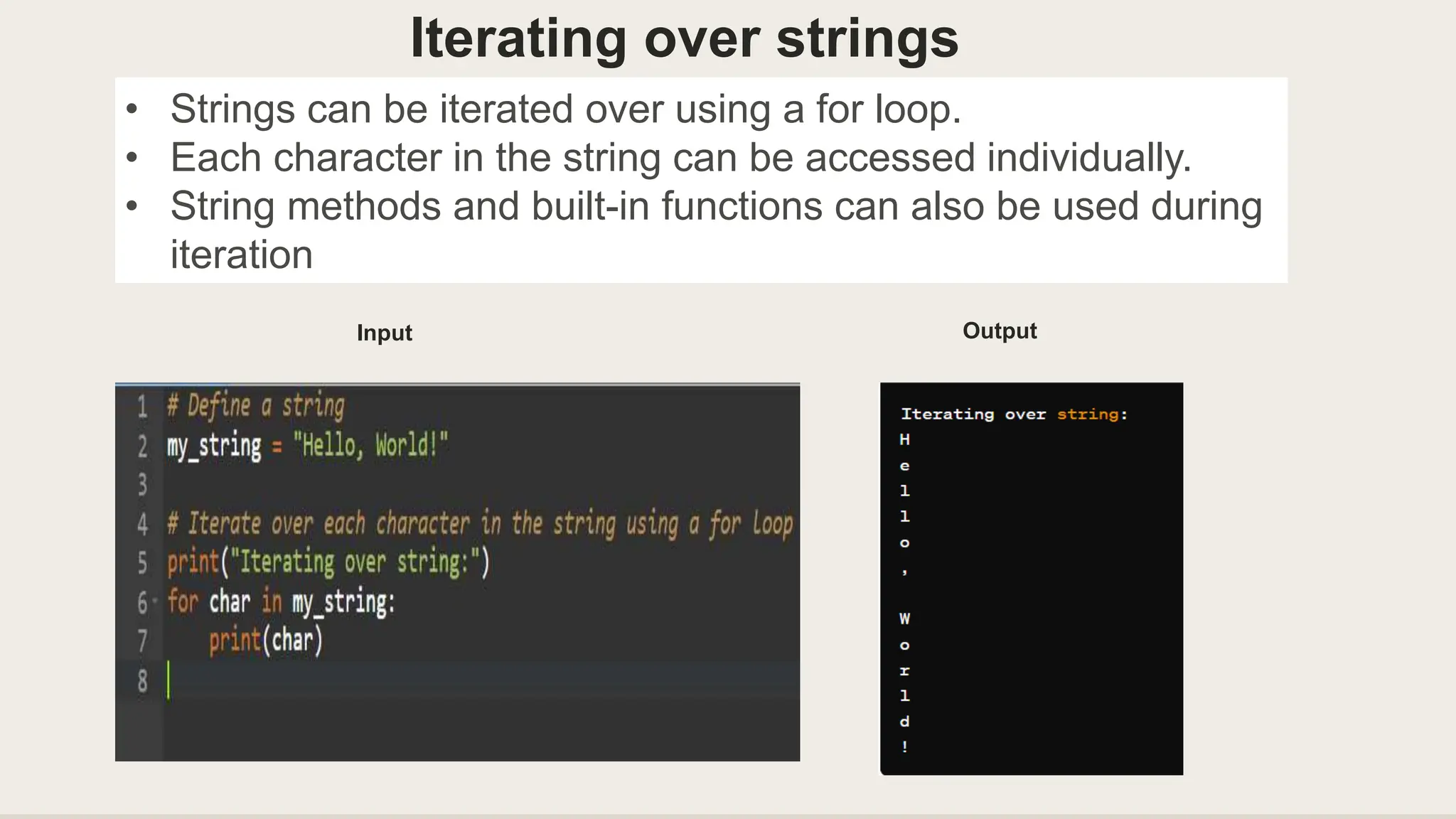
Iterating over strings
• .
Output
Input
• Strings can be iterated over using a for loop.
• Each character in the string can be accessed individually.
• String methods and built-in functions can also be used during
iteration
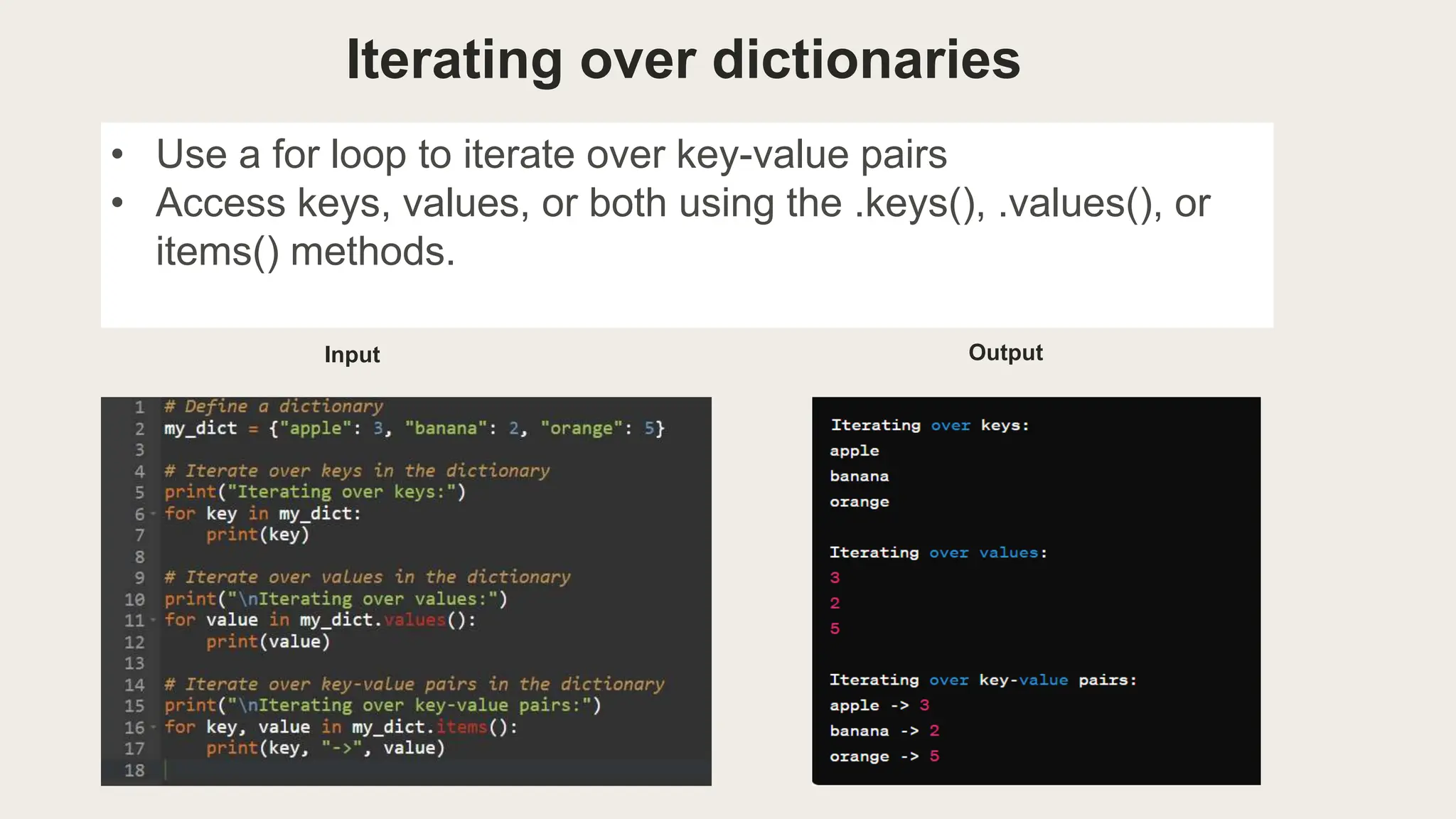
Iterating over dictionaries
• .
Input Output
• Use a for loop to iterate over key-value pairs
• Access keys, values, or both using the .keys(), .values(), or
items() methods.
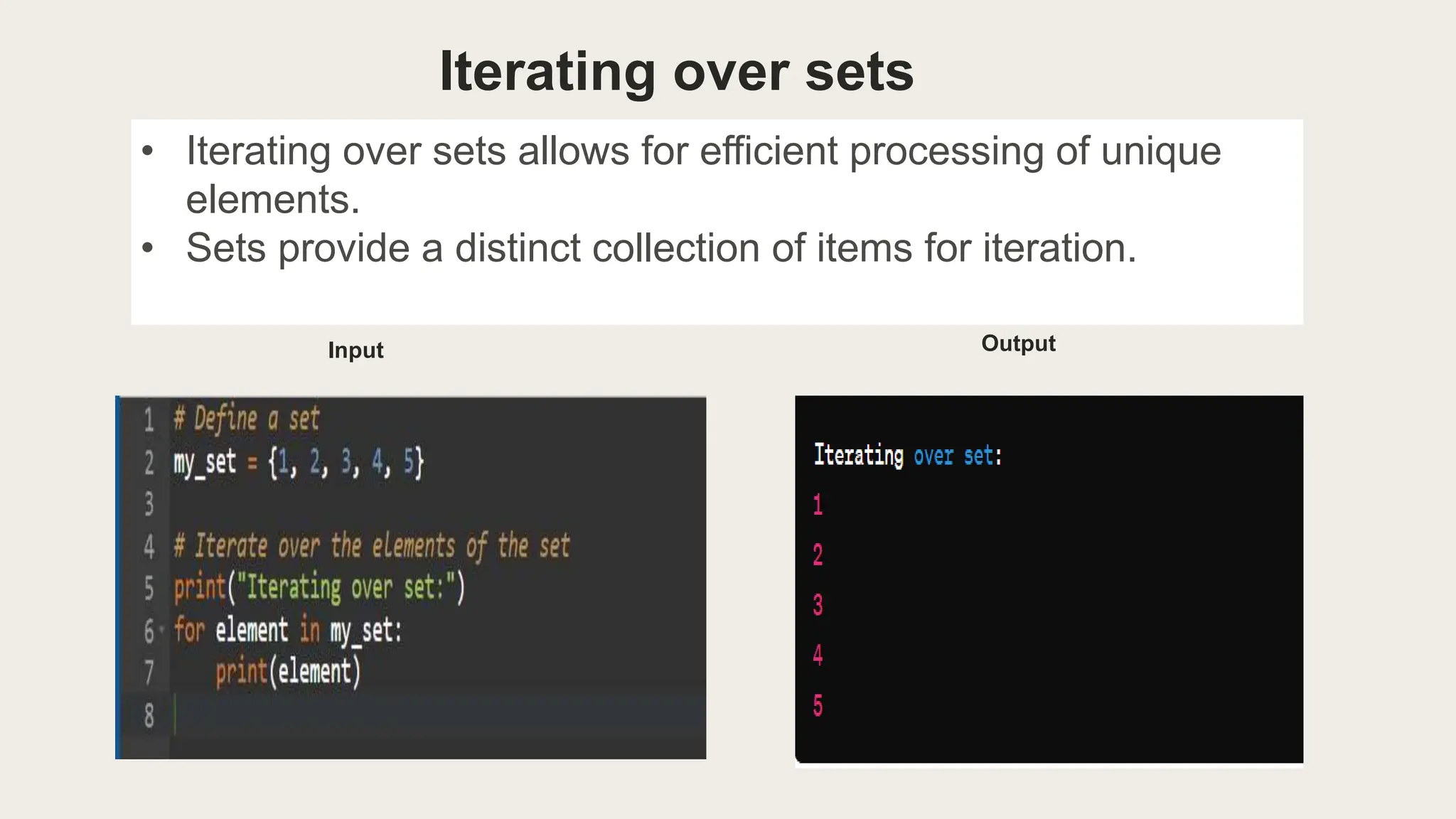
Iterating over sets
Input Output
• Iterating over sets allows for efficient processing of unique
elements.
• Sets provide a distinct collection of items for iteration.
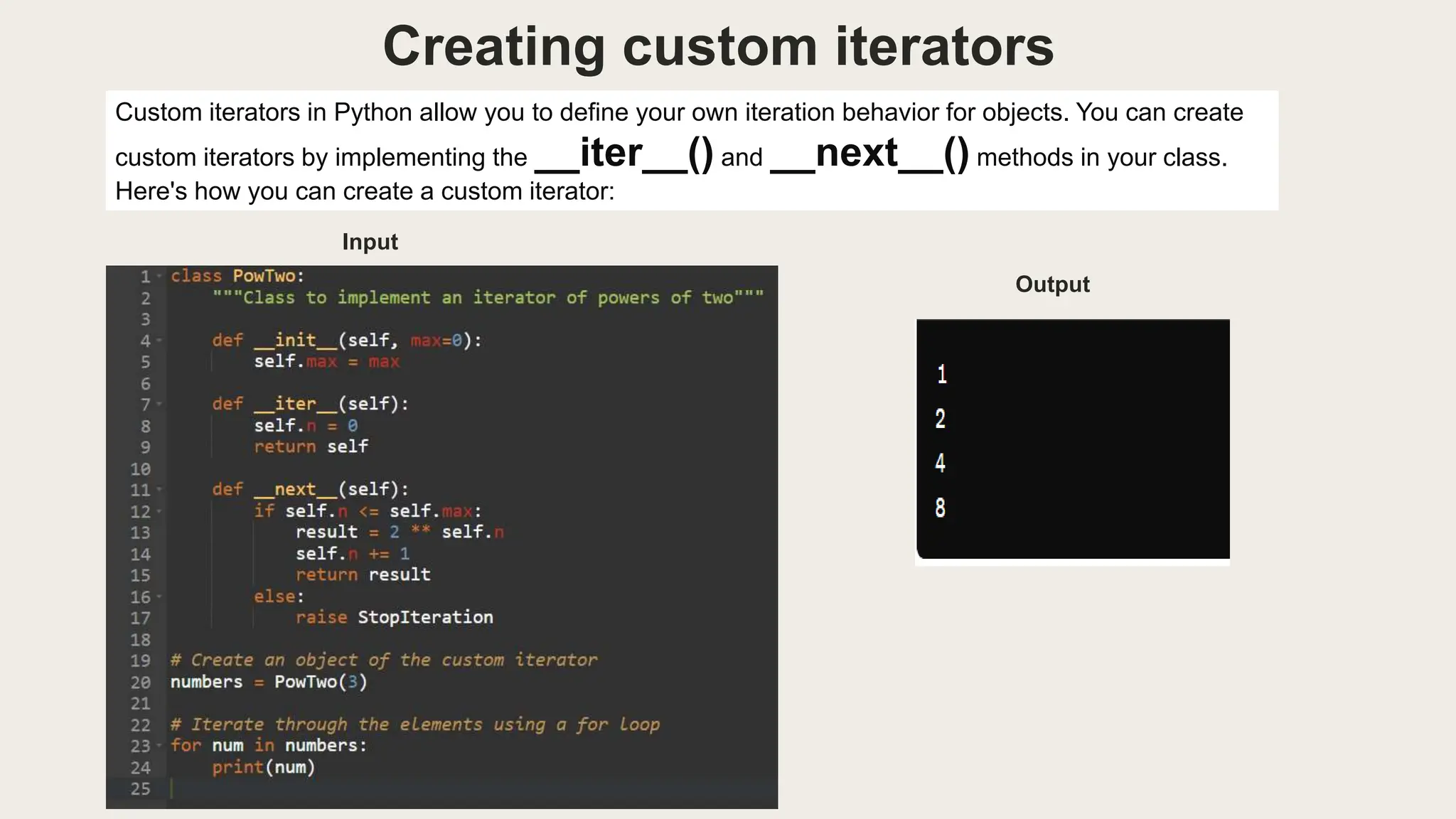
Creating custom iterators
Custom iterators in Python allow you to define your own iteration behavior for objects. You can create
custom iterators by implementing the __iter__() and __next__() methods in your class.
Here's how you can create a custom iterator:
Input
Output
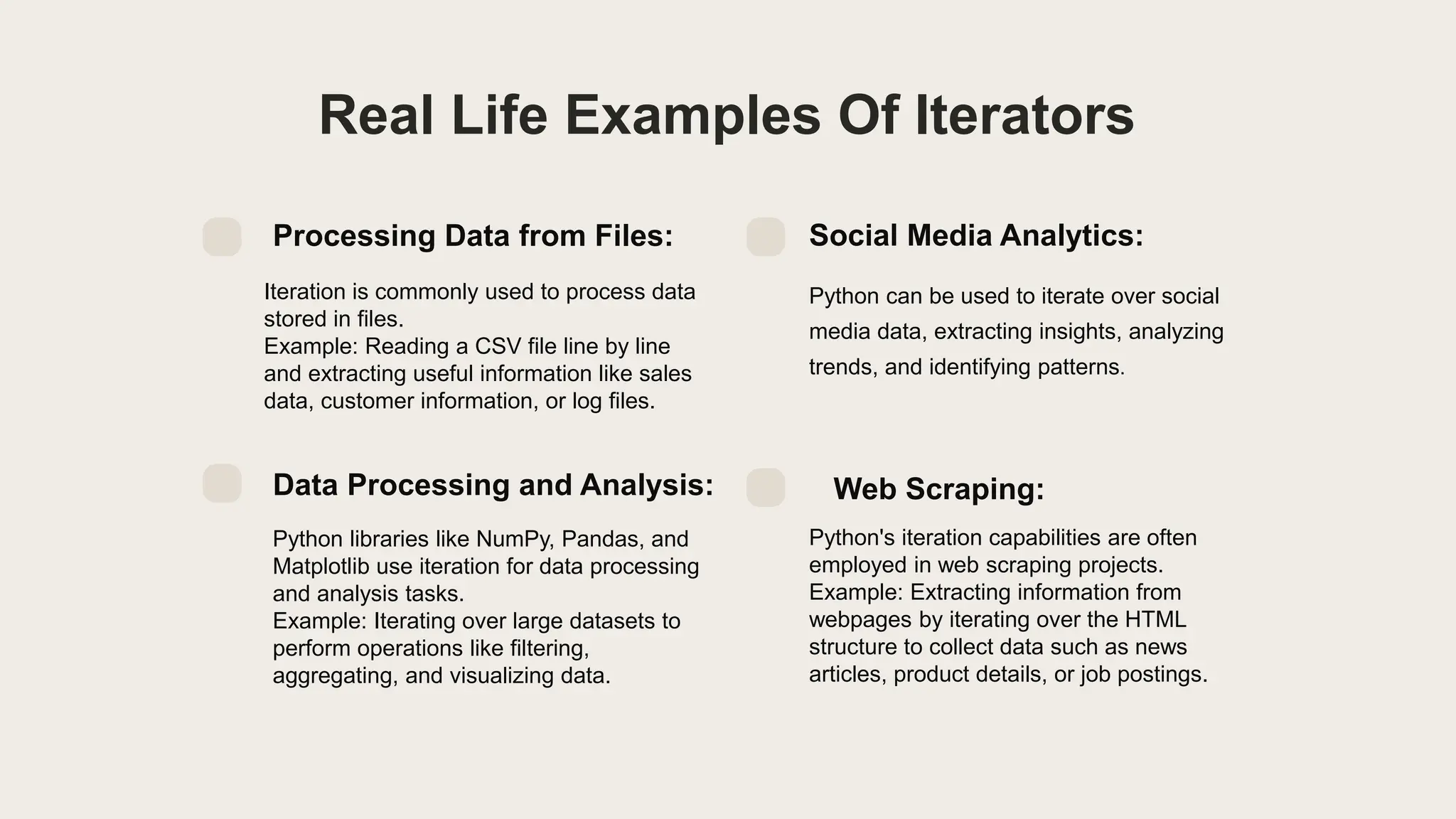
Real Life Examples Of Iterators
Processing Data from Files:
Iteration is commonly used to process data
stored in files.
Example: Reading a CSV file line by line
and extracting useful information like sales
data, customer information, or log files.
Social Media Analytics:
Python can be used to iterate over social
media data, extracting insights, analyzing
trends, and identifying patterns.
Data Processing and Analysis:
Python libraries like NumPy, Pandas, and
Matplotlib use iteration for data processing
and analysis tasks.
Example: Iterating over large datasets to
perform operations like filtering,
aggregating, and visualizing data.
Web Scraping:
Python's iteration capabilities are often
employed in web scraping projects.
Example: Extracting information from
webpages by iterating over the HTML
structure to collect data such as news
articles, product details, or job postings.
THANK YOU !

examples of iterators in python for university level

  • 1.
    Examples Of Iterators Presentationby: SHAMRAIZ TASAWAR 02-131232-112
  • 2.
    Iterating over lists DirectAccess Access elements using indexes Sequential Access Loop through each element one by one Output Output
  • 3.
    Iterating over strings •. Output Input • Strings can be iterated over using a for loop. • Each character in the string can be accessed individually. • String methods and built-in functions can also be used during iteration
  • 4.
    Iterating over dictionaries •. Input Output • Use a for loop to iterate over key-value pairs • Access keys, values, or both using the .keys(), .values(), or items() methods.
  • 5.
    Iterating over sets InputOutput • Iterating over sets allows for efficient processing of unique elements. • Sets provide a distinct collection of items for iteration.
  • 6.
    Creating custom iterators Customiterators in Python allow you to define your own iteration behavior for objects. You can create custom iterators by implementing the __iter__() and __next__() methods in your class. Here's how you can create a custom iterator: Input Output
  • 7.
    Real Life ExamplesOf Iterators Processing Data from Files: Iteration is commonly used to process data stored in files. Example: Reading a CSV file line by line and extracting useful information like sales data, customer information, or log files. Social Media Analytics: Python can be used to iterate over social media data, extracting insights, analyzing trends, and identifying patterns. Data Processing and Analysis: Python libraries like NumPy, Pandas, and Matplotlib use iteration for data processing and analysis tasks. Example: Iterating over large datasets to perform operations like filtering, aggregating, and visualizing data. Web Scraping: Python's iteration capabilities are often employed in web scraping projects. Example: Extracting information from webpages by iterating over the HTML structure to collect data such as news articles, product details, or job postings.
  • 8.