Download to read offline
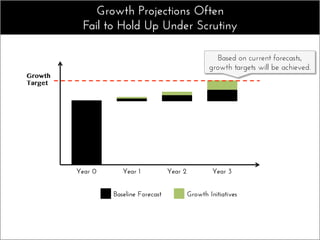
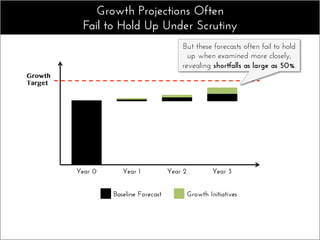
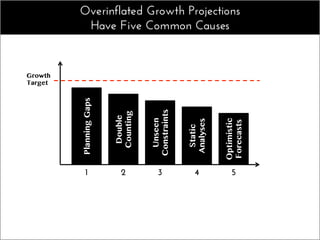
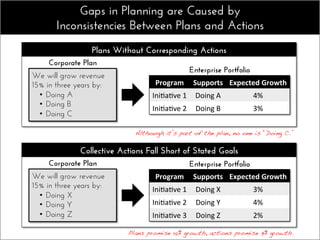
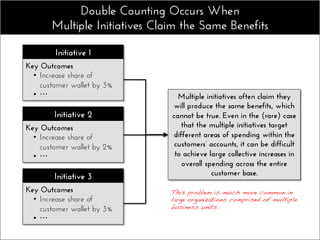
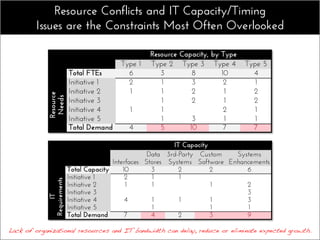
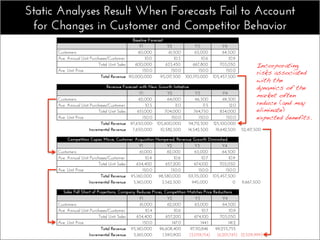
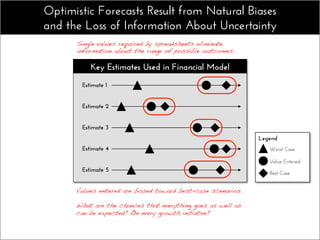
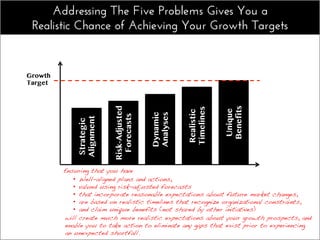


This document discusses common issues that cause companies' growth projections to fail. It identifies five main causes of overinflated growth projections: (1) double counting of benefits across initiatives, (2) overlooking constraints like resources and IT capabilities, (3) static analyses that don't account for market changes, (4) overly optimistic forecasts due to biases, and (5) a lack of unique benefits for each initiative. The document advocates addressing these issues by ensuring growth plans are well-aligned with actions, use risk-adjusted forecasts, incorporate market dynamics, are based on realistic timelines, and have initiatives with unique benefits. This will create more realistic expectations of growth prospects and enable companies to address any gaps before experiencing an unexpected shortfall


