INSTRUCTOR’S LESSON PLAN
Subject: 5th Grade Technology and Mathematics

Instructor: Katie Nipp

Title of Lesson: Robotics: Area and Volume Calculator
Date: November 2013
Time Period: 2-3 class periods
Objectives: Students should be able to follow directions and assemble a simple robot. (This NXT
Mindstorm Robot is pre-programmed, so students will not be involved in programming.) After
the robot is built, students should use it [Area and Volume Calculator] to calculate the area and
volume of various sized boxes. Then, students should record their results.
Materials: NXT Mindstorm Webpage, LEGO Mindstorm Activity Kits, Various boxes, handout
Time

Topical Outline
Sequence of Activities

20 mins

Handout

20 mins

Lesson

Instructional Aids/Strategies
Handout [see attachment on eLC] will be used after the
robot is constructed and boxes have been measured.
Students will individually complete the worksheet and
answer the questions about the boxes and the robot.
5th Grade GPS Science Standard
S5CS8. Students will understand important features of
the process of scientific inquiry.
c. Scientists use technology to increase their
power to observe things and to measure
and compare things accurately.
5th Grade GPS Math Standard
MCC5.MD.3 Recognize volume as an
attribute of solid figures and understand
concepts of volume measurement.

Discuss robots with students and show the class as a
whole the NXT webpage with different robot examples.
Highlight the robot they will be building- the Area and
Volume Calculator and discuss the procedure with
students. Review the concepts of area and volume and
have students explain the difference between length,
depth, and width.
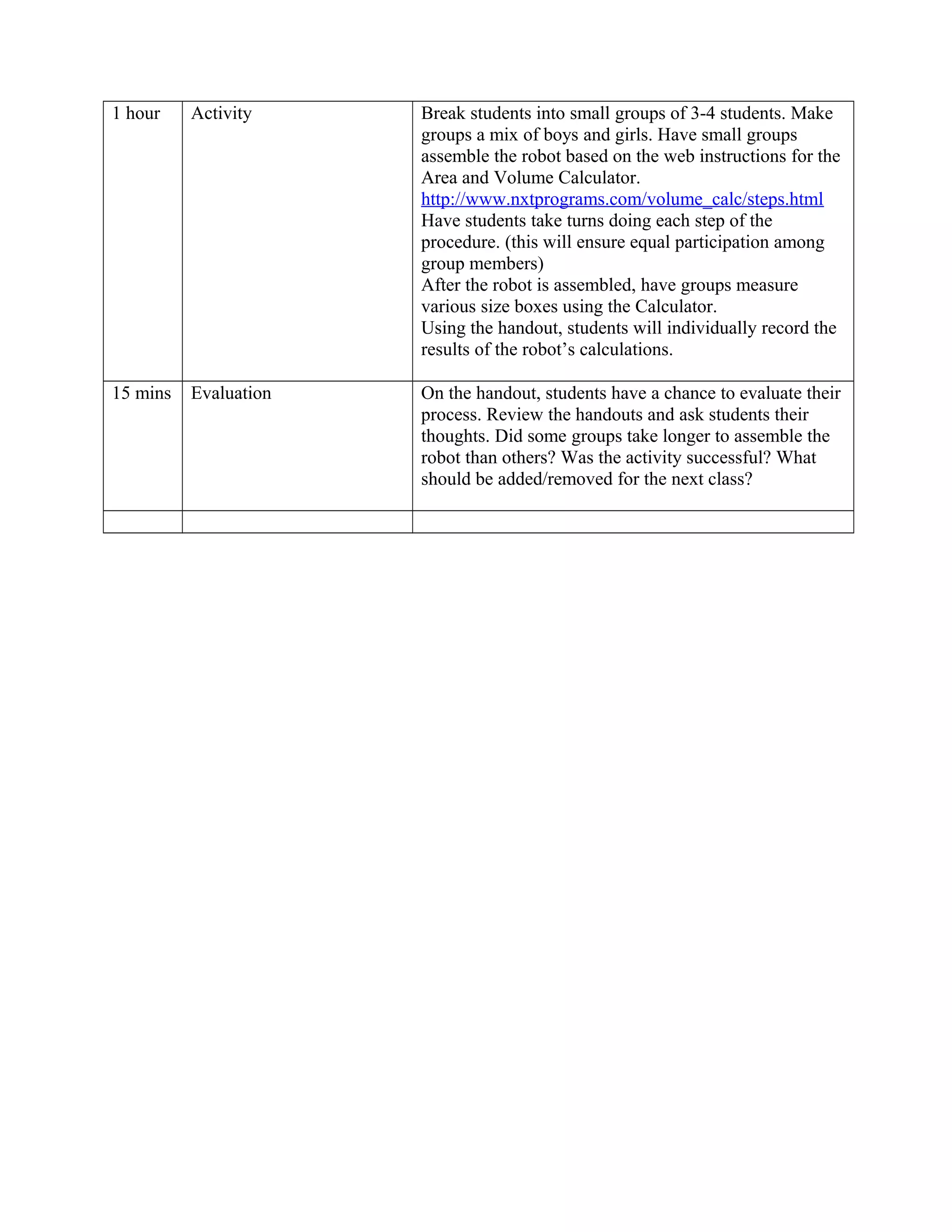
1 hour

Activity

Break students into small groups of 3-4 students. Make
groups a mix of boys and girls. Have small groups
assemble the robot based on the web instructions for the
Area and Volume Calculator.
http://www.nxtprograms.com/volume_calc/steps.html
Have students take turns doing each step of the
procedure. (this will ensure equal participation among
group members)
After the robot is assembled, have groups measure
various size boxes using the Calculator.
Using the handout, students will individually record the
results of the robot’s calculations.

15 mins

Evaluation

On the handout, students have a chance to evaluate their
process. Review the handouts and ask students their
thoughts. Did some groups take longer to assemble the
robot than others? Was the activity successful? What
should be added/removed for the next class?

Ex11 lesson plan

  • 1.
    INSTRUCTOR’S LESSON PLAN Subject:5th Grade Technology and Mathematics Instructor: Katie Nipp Title of Lesson: Robotics: Area and Volume Calculator Date: November 2013 Time Period: 2-3 class periods Objectives: Students should be able to follow directions and assemble a simple robot. (This NXT Mindstorm Robot is pre-programmed, so students will not be involved in programming.) After the robot is built, students should use it [Area and Volume Calculator] to calculate the area and volume of various sized boxes. Then, students should record their results. Materials: NXT Mindstorm Webpage, LEGO Mindstorm Activity Kits, Various boxes, handout Time Topical Outline Sequence of Activities 20 mins Handout 20 mins Lesson Instructional Aids/Strategies Handout [see attachment on eLC] will be used after the robot is constructed and boxes have been measured. Students will individually complete the worksheet and answer the questions about the boxes and the robot. 5th Grade GPS Science Standard S5CS8. Students will understand important features of the process of scientific inquiry. c. Scientists use technology to increase their power to observe things and to measure and compare things accurately. 5th Grade GPS Math Standard MCC5.MD.3 Recognize volume as an attribute of solid figures and understand concepts of volume measurement. Discuss robots with students and show the class as a whole the NXT webpage with different robot examples. Highlight the robot they will be building- the Area and Volume Calculator and discuss the procedure with students. Review the concepts of area and volume and have students explain the difference between length, depth, and width.
  • 2.
    1 hour Activity Break studentsinto small groups of 3-4 students. Make groups a mix of boys and girls. Have small groups assemble the robot based on the web instructions for the Area and Volume Calculator. http://www.nxtprograms.com/volume_calc/steps.html Have students take turns doing each step of the procedure. (this will ensure equal participation among group members) After the robot is assembled, have groups measure various size boxes using the Calculator. Using the handout, students will individually record the results of the robot’s calculations. 15 mins Evaluation On the handout, students have a chance to evaluate their process. Review the handouts and ask students their thoughts. Did some groups take longer to assemble the robot than others? Was the activity successful? What should be added/removed for the next class?