E-Waste Management
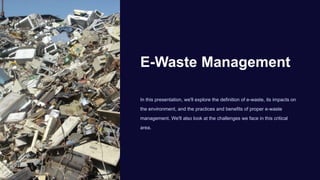
In this presentation, we'll explore the definition of e-waste, its impacts on
the environment, and the practices and benefits of proper e-waste
management. We'll also look at the challenges we face in this critical
area.
What is E-Waste?
Electronic devices
E-waste includes discarded
electronic devices like
phones, computers, and
TVs.
Batteries
E-waste also includes all
types of batteries, which
contain harmful toxins like
lead and mercury.
Machines
E-waste also includes home
appliances like refrigerators,
microwaves, and washing
machines.
Interior components
E-waste also includes the
internal components of
electronic devices such as
circuit boards, wires, and
motors.
The Impacts of Improper
Disposal
1 Pollution of water
sources
Electronic waste often contains
harmful chemicals like lead,
cadmium, and mercury. When
these substances end up in
landfills or are burned, they can
leach into the water supply and
cause serious health problems.
2 Release of toxins into the
air
Burning e-waste releases toxic
fumes into the air, such as
dioxins, furans, and brominated
flame retardants. These
substances can cause respiratory
problems and other health issues.
3 Waste of valuable resources
Electronic devices often contain precious metals like gold, silver, and copper, as
well as other materials that can be recycled. When e-waste is not properly
managed, these resources are lost.
E-Waste Management Practices
Reuse
Electronic devices that are still functioning
can often be reused. This is a sustainable
and cost-effective way to extend the life of
electronic devices and reduce e-waste.
Recycling
E-waste can be recycled to extract
valuable materials from devices that can
no longer be reused.
Donation
Electronic devices that are still functional
can be donated to individuals or
organizations in need. This is a great way
to reduce e-waste and bridge the digital
divide.
Responsible disposal
Electronic devices that can no longer be
reused or recycled can still be disposed of
responsibly. This involves taking them to a
certified e-waste disposal site, where they
will be safely disposed of.
The Benefits of Proper E-Waste
Management
1 Environmental benefits
Proper e-waste management
reduces pollution, conserves
resources, and reduces
greenhouse gas emissions.
2
Social benefits
E-waste management can create
jobs, reduce health risks from
toxins, and bridge the digital divide
for marginalized communities.
3 Economic benefits
Recycling e-waste can boost the
economy by creating jobs and
reducing the cost of raw materials.
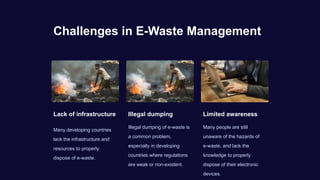
Challenges in E-Waste Management
Lack of infrastructure
Many developing countries
lack the infrastructure and
resources to properly
dispose of e-waste.
Illegal dumping
Illegal dumping of e-waste is
a common problem,
especially in developing
countries where regulations
are weak or non-existent.
Limited awareness
Many people are still
unaware of the hazards of
e-waste, and lack the
knowledge to properly
dispose of their electronic
devices.
Conclusion
E-waste management is a crucial issue that requires global attention and cooperation. The benefits
of proper e-waste management are clear, but we must overcome the challenges and increase
awareness in order to achieve a more earth friendly and balanced future.

E-Waste-Management [EST].pptx

  • 1.
    E-Waste Management In thispresentation, we'll explore the definition of e-waste, its impacts on the environment, and the practices and benefits of proper e-waste management. We'll also look at the challenges we face in this critical area.
  • 2.
    What is E-Waste? Electronicdevices E-waste includes discarded electronic devices like phones, computers, and TVs. Batteries E-waste also includes all types of batteries, which contain harmful toxins like lead and mercury. Machines E-waste also includes home appliances like refrigerators, microwaves, and washing machines. Interior components E-waste also includes the internal components of electronic devices such as circuit boards, wires, and motors.
  • 3.
    The Impacts ofImproper Disposal 1 Pollution of water sources Electronic waste often contains harmful chemicals like lead, cadmium, and mercury. When these substances end up in landfills or are burned, they can leach into the water supply and cause serious health problems. 2 Release of toxins into the air Burning e-waste releases toxic fumes into the air, such as dioxins, furans, and brominated flame retardants. These substances can cause respiratory problems and other health issues. 3 Waste of valuable resources Electronic devices often contain precious metals like gold, silver, and copper, as well as other materials that can be recycled. When e-waste is not properly managed, these resources are lost.
  • 4.
    E-Waste Management Practices Reuse Electronicdevices that are still functioning can often be reused. This is a sustainable and cost-effective way to extend the life of electronic devices and reduce e-waste. Recycling E-waste can be recycled to extract valuable materials from devices that can no longer be reused. Donation Electronic devices that are still functional can be donated to individuals or organizations in need. This is a great way to reduce e-waste and bridge the digital divide. Responsible disposal Electronic devices that can no longer be reused or recycled can still be disposed of responsibly. This involves taking them to a certified e-waste disposal site, where they will be safely disposed of.
  • 5.
    The Benefits ofProper E-Waste Management 1 Environmental benefits Proper e-waste management reduces pollution, conserves resources, and reduces greenhouse gas emissions. 2 Social benefits E-waste management can create jobs, reduce health risks from toxins, and bridge the digital divide for marginalized communities. 3 Economic benefits Recycling e-waste can boost the economy by creating jobs and reducing the cost of raw materials.
  • 6.
    Challenges in E-WasteManagement Lack of infrastructure Many developing countries lack the infrastructure and resources to properly dispose of e-waste. Illegal dumping Illegal dumping of e-waste is a common problem, especially in developing countries where regulations are weak or non-existent. Limited awareness Many people are still unaware of the hazards of e-waste, and lack the knowledge to properly dispose of their electronic devices.
  • 7.
    Conclusion E-waste management isa crucial issue that requires global attention and cooperation. The benefits of proper e-waste management are clear, but we must overcome the challenges and increase awareness in order to achieve a more earth friendly and balanced future.