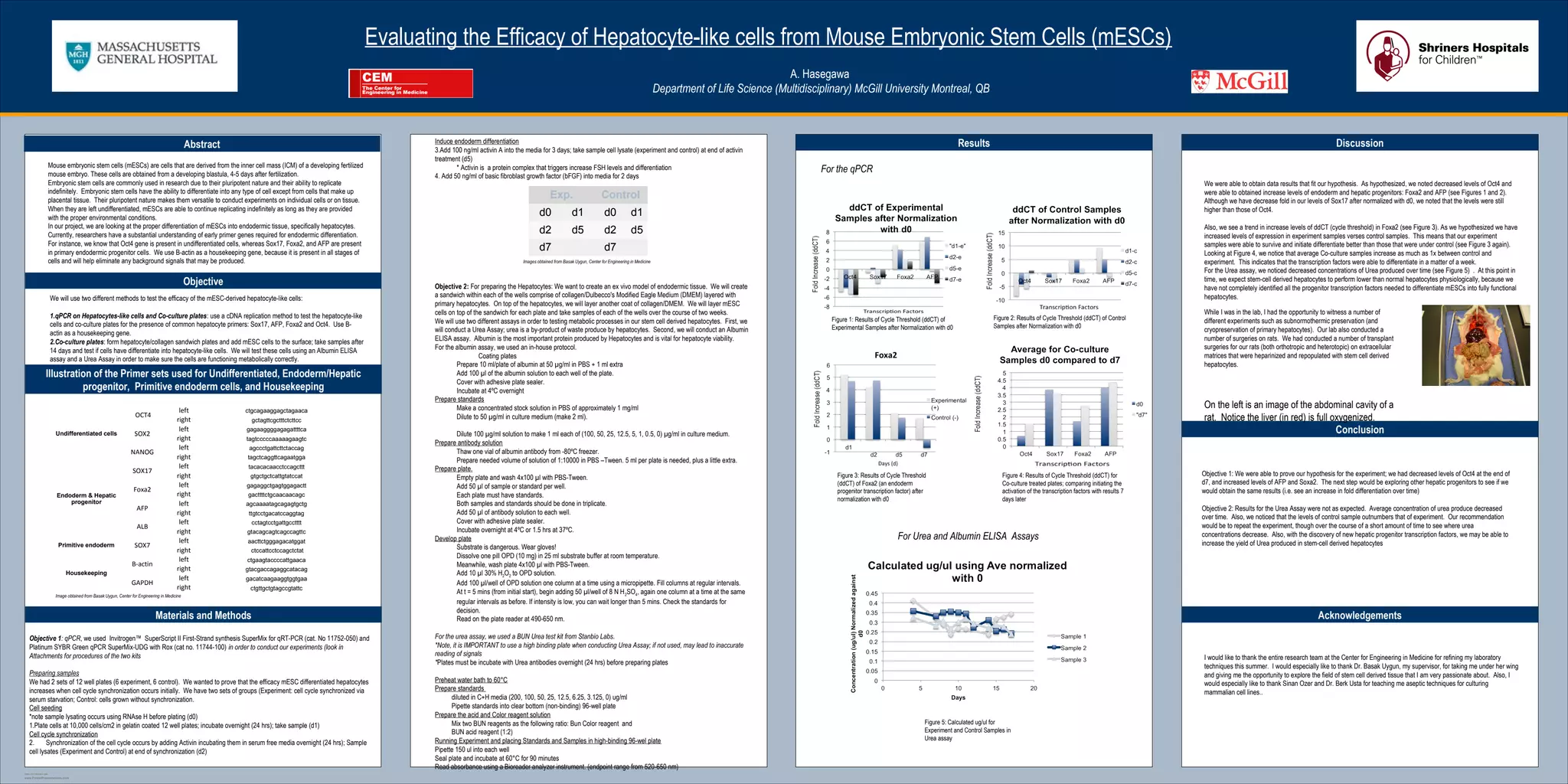
This document summarizes a study evaluating the efficacy of differentiating mouse embryonic stem cells (mESCs) into hepatocyte-like cells. The researchers found that cell cycle synchronization of mESCs prior to differentiation led to decreased expression of the pluripotency marker Oct4 and increased expression of endoderm and hepatic progenitor markers, indicating improved differentiation. Assays of stem cell-derived hepatocyte-like cells showed production of the liver proteins albumin and urea, though urea levels decreased over time, suggesting further optimization is needed to generate fully functional hepatocytes from mESCs. The researchers concluded cell cycle synchronization enhanced differentiation but that identifying additional progenitor factors could improve hepatic function of the derived cells.