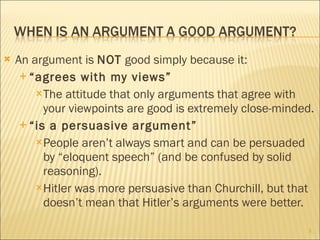
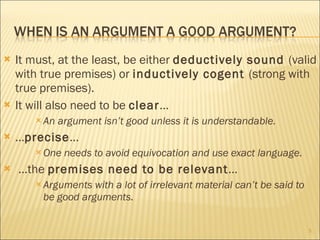
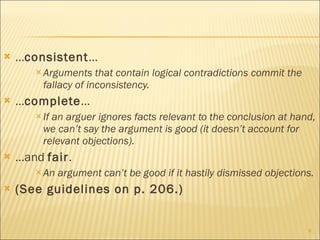
This document discusses evaluating arguments. It provides guidelines for determining whether an argument is good and whether its premises are acceptable. A good argument must be deductively valid or inductively strong, clear, precise, relevant, consistent, complete and fair. Premises must be true for the argument to be sound. Background beliefs and testimony from credible sources can provide evidence for accepting premises. Arguments can be refuted by showing a critical premise is false or dubious, or that the conclusion does not follow from the premises.