EU- EUROPEAN IDENTITY MED 413 ESRA YILDIRIM HANDE KANMAZ BELİNDA AZDİKOĞLU
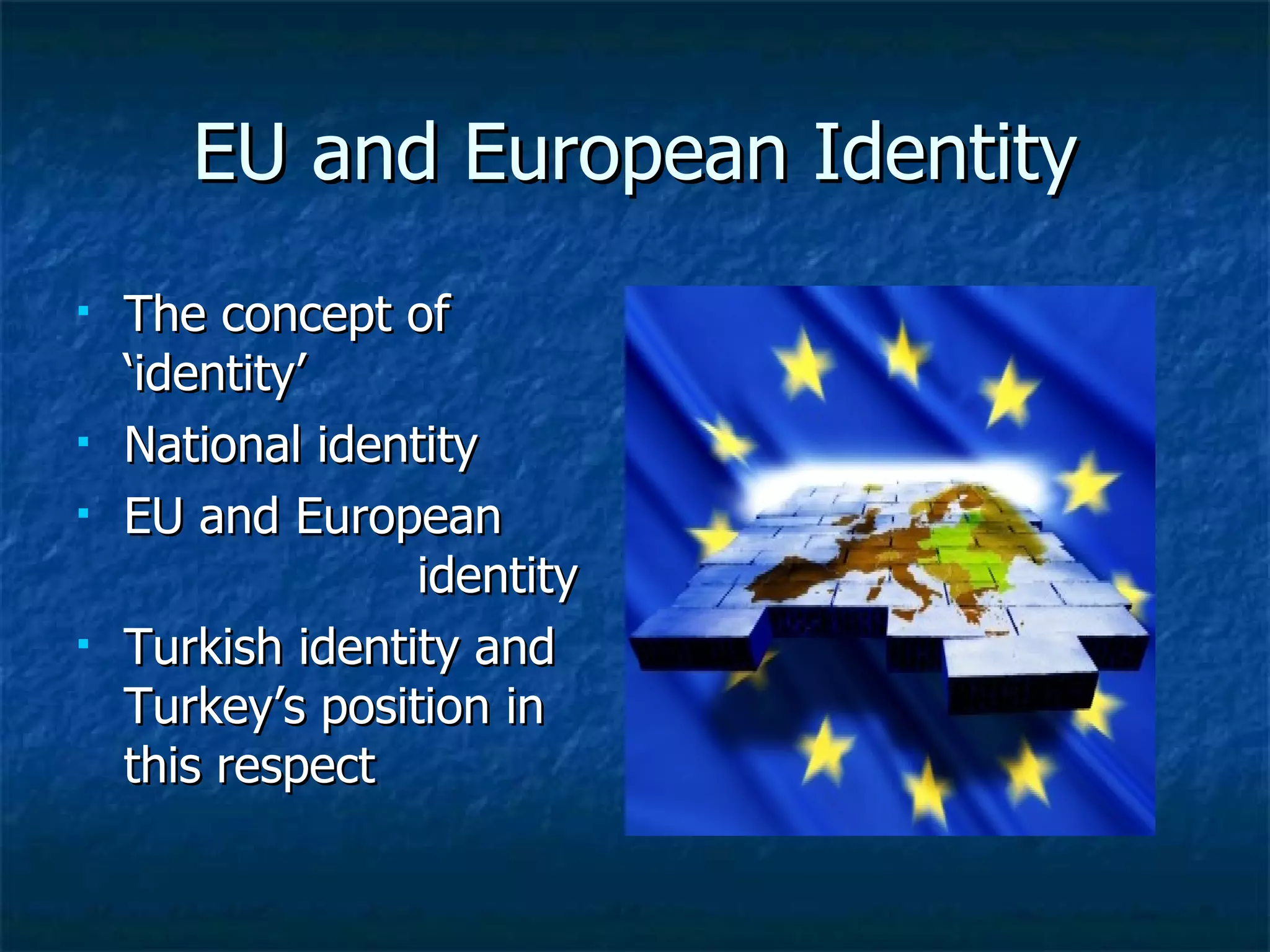
EU and European Identity The concept of ‘identity’ National identity EU and European  identity Turkish identity and Turkey’s position in this respect
What is identity??  Although the definitions are variable, there is one general explanation for identity.
Some reference points for identity  issues are; 1- a dynamic issue. 2- a changing notion. 3- time dimensions effect the symbolic  structure.
National Identity Nationalism ‘ imagined’ community Europe Christian religion as a connection
European Identity Conceptions of Greek democracy Roman law Common history and high culture (classical music, art, literature)
European Project As a threat for national identity.  Is it difficult for people to identify with EU??
How EU apply its project stratgies? Strategies; 1- use of the Christian heritage 2- common political and legal history 3- Roman period and  tradition of humanism 4- the performance for secular rituals (European elections) and common Euro symbolism (flag,anthem, format of passport)
National identity more conceivable!!
EU citizens continue to identify first of all with their own country .  According to a Eurobarometer  survey , at the end of 2004, only 47 % of EU citizens saw themselves as  citizens of both their country and Europe, 41 % as citizens of their country only.
86 % of the interviewees felt pride in their country, while 68 % were proud of being European.  In general, people feel more attached to their country (92 %), region (88 %), city (87 %) than to Europe (67 %).
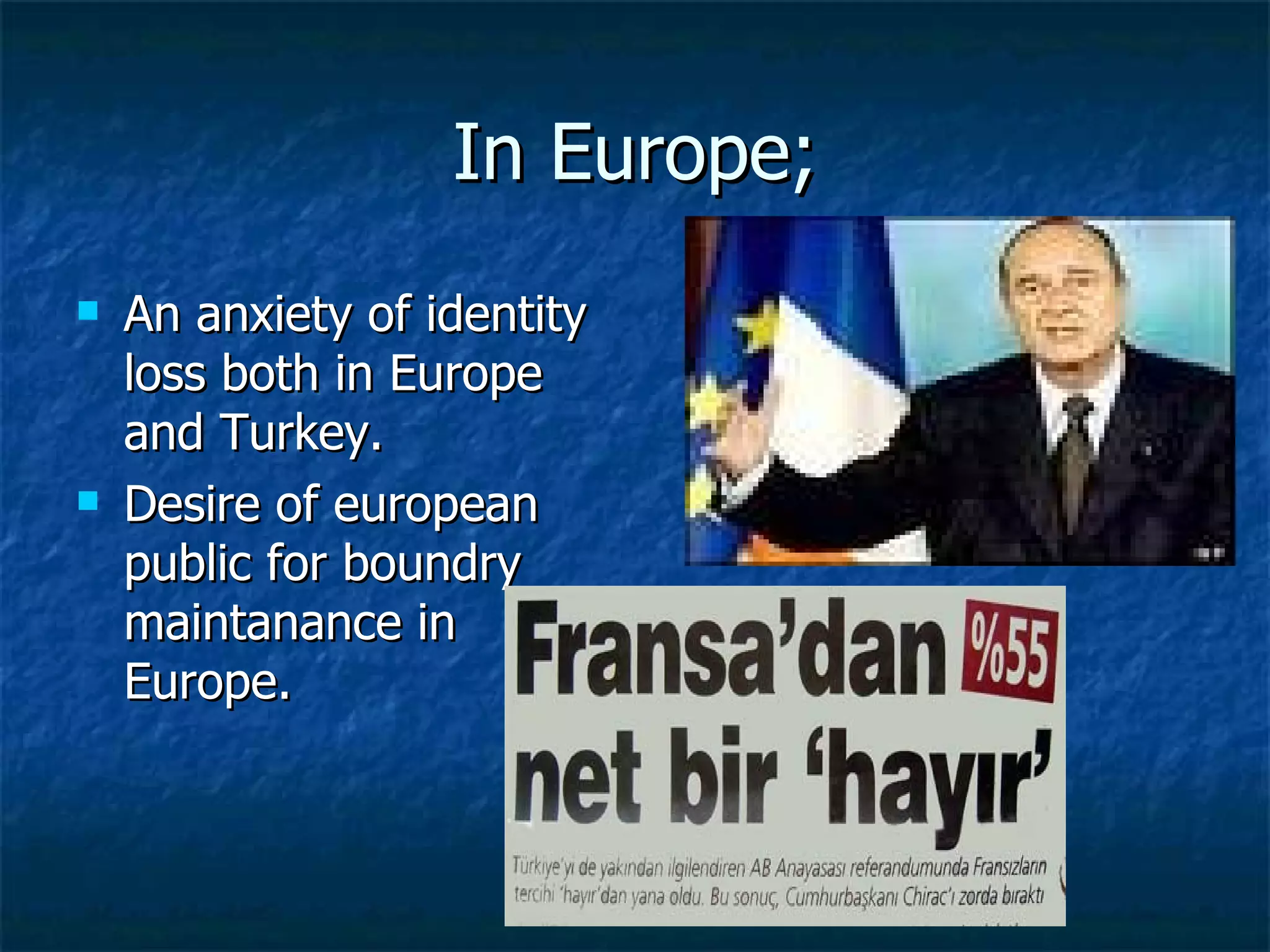
In Europe; An anxiety of identity loss both in Europe and Turkey.  Desire of european public for boundry maintanance in Europe.
The mozaic of Turkish culture;  Cultural, religious and civilizational differences in Turkey. Kurd, Circassian, sunni… Turkish society has identity issues within itself.  Is becoming a part of a bigger culture possible??
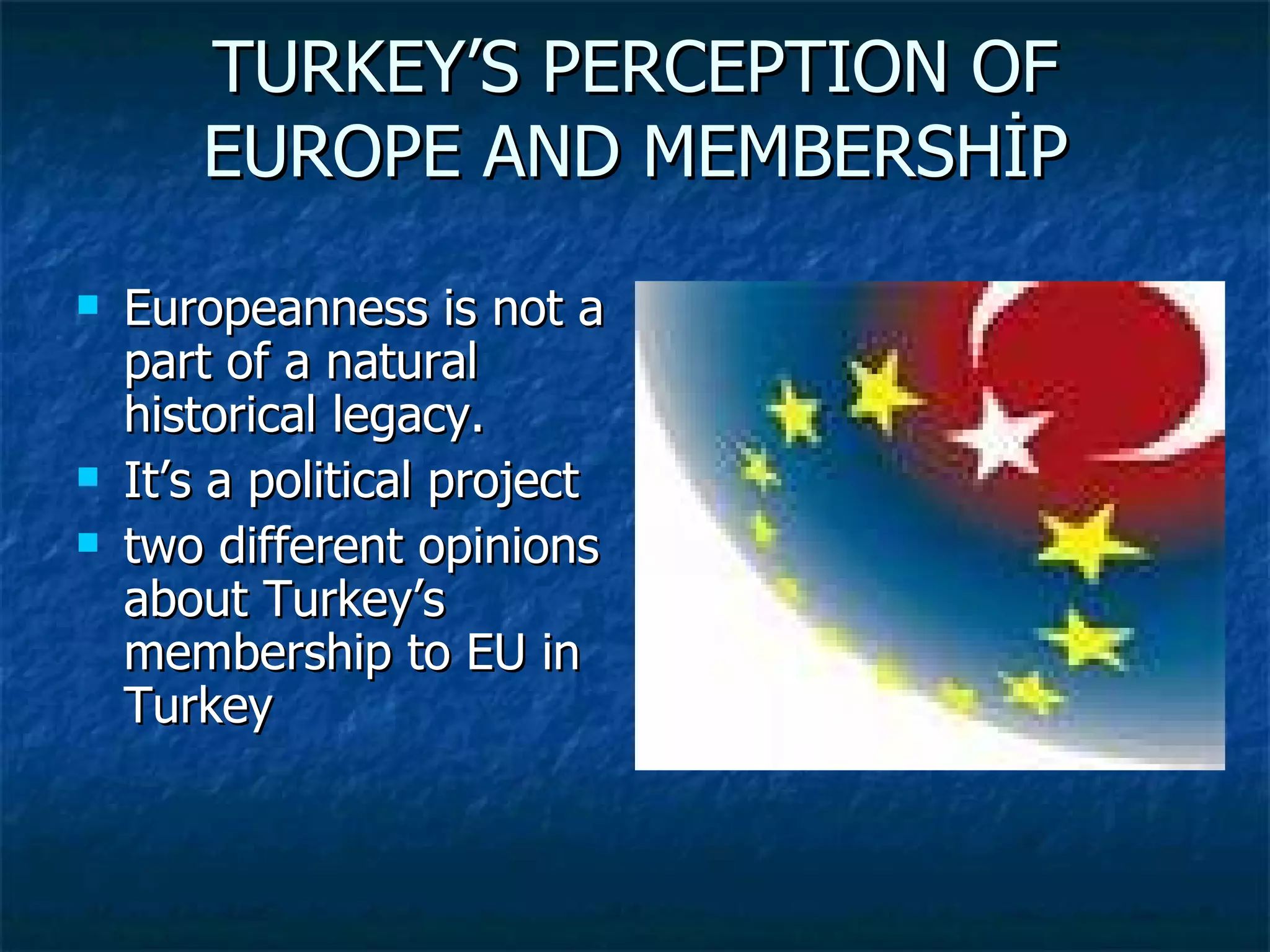
TURKEY’S PERCEPTION OF EUROPE AND MEMBERSHİP Europeanness is not a part of a natural historical legacy.  It’s a political project two different opinions about Turkey’s membership to EU in Turkey
Is there a hope for integration and reconciling the identity issues somehow??
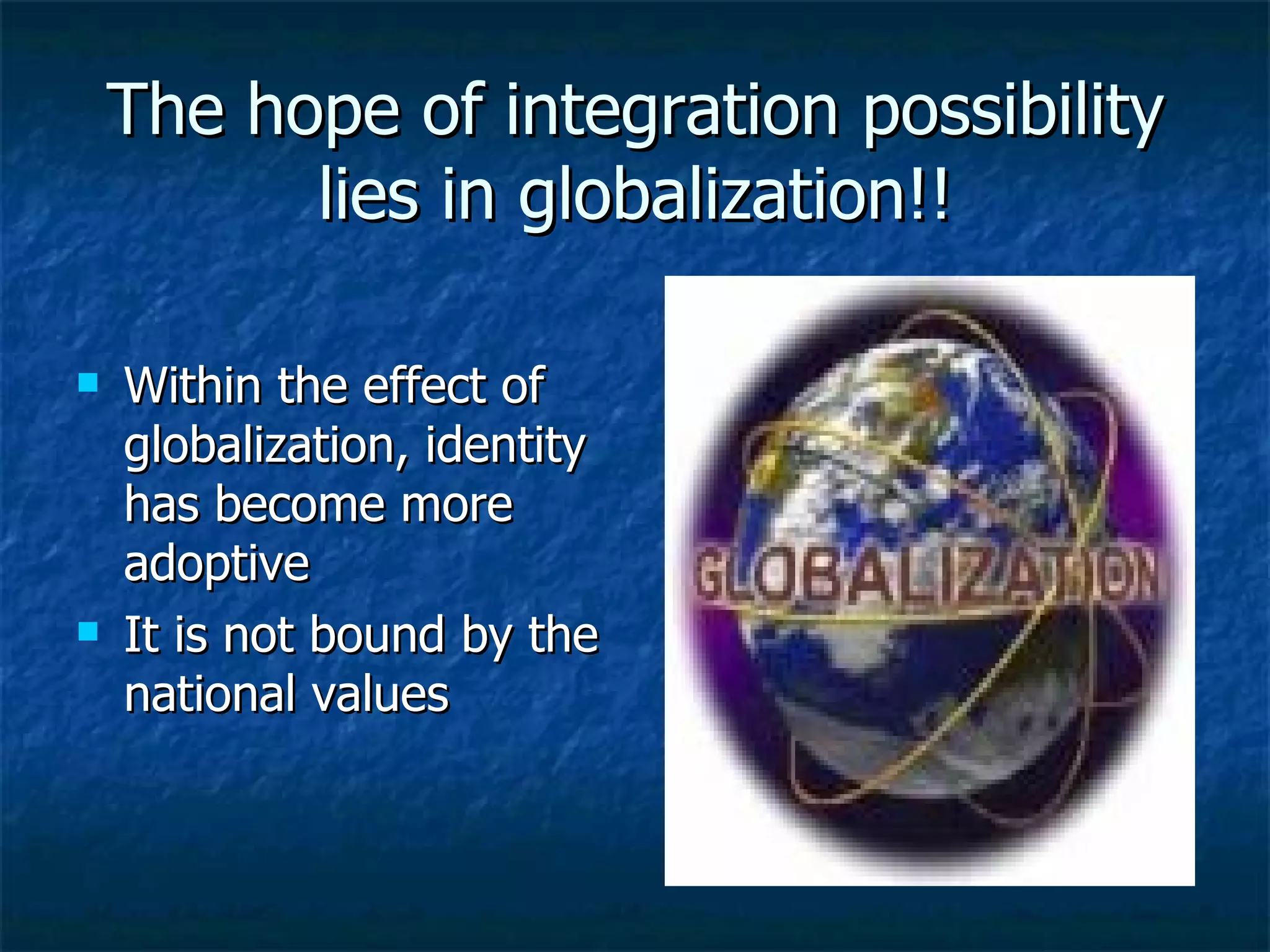
The hope of integration possibility lies in globalization!! Within the effect of globalization, identity has become more adoptive It is not bound by the national values
Individuals of our age deny the significance of their own nationness. New cosmopolitan identity
In this perspective; Turkish and European identity are very different from each other Globalization could melt down these differences  In stead it may unite them!!
To conclude; The strict divisions in culture and beliefs that form the identity needs to loosen up and the publics should be open to reconciliation!!
References www.globalpolicy.org  by the Emmanuel Georges Picot Associated press, April 29, 2004 Richard Jenkins, not simple at all: Danish identity and the European Union, pp. 159-178 Stacia E. Zabusky, Boundries at work: discourses and practices of belonging in the European Space Agency,pp. 179-200 www.euractiv.com/en/constitution/european-values-identity/article-154441 http://ec.europa.eu/public_opinion/archives/eb/eb62/eb_62_en.pdf   Eurobarameter  62/  public opinion in the European Union http://wordnet.princeton.edu/perl/webwn http://users.belgacom.net/jacobs/europa.pdf  European identity: construct, fact and fiction, Dirk Jacobs and Robert Maier, Utrecht University, published in: Gastelaars, M.& de Rujiter, A. (eds) p.13-34

EU-Turkey: Identity issues; A Student presentation

  • 1.
    EU- EUROPEAN IDENTITYMED 413 ESRA YILDIRIM HANDE KANMAZ BELİNDA AZDİKOĞLU
  • 2.
    EU and EuropeanIdentity The concept of ‘identity’ National identity EU and European identity Turkish identity and Turkey’s position in this respect
  • 3.
    What is identity?? Although the definitions are variable, there is one general explanation for identity.
  • 4.
    Some reference pointsfor identity issues are; 1- a dynamic issue. 2- a changing notion. 3- time dimensions effect the symbolic structure.
  • 5.
    National Identity Nationalism‘ imagined’ community Europe Christian religion as a connection
  • 6.
    European Identity Conceptionsof Greek democracy Roman law Common history and high culture (classical music, art, literature)
  • 7.
    European Project Asa threat for national identity. Is it difficult for people to identify with EU??
  • 8.
    How EU applyits project stratgies? Strategies; 1- use of the Christian heritage 2- common political and legal history 3- Roman period and tradition of humanism 4- the performance for secular rituals (European elections) and common Euro symbolism (flag,anthem, format of passport)
  • 9.
  • 10.
    EU citizens continueto identify first of all with their own country .  According to a Eurobarometer  survey , at the end of 2004, only 47 % of EU citizens saw themselves as citizens of both their country and Europe, 41 % as citizens of their country only.
  • 11.
    86 % ofthe interviewees felt pride in their country, while 68 % were proud of being European.  In general, people feel more attached to their country (92 %), region (88 %), city (87 %) than to Europe (67 %).
  • 12.
    In Europe; Ananxiety of identity loss both in Europe and Turkey. Desire of european public for boundry maintanance in Europe.
  • 13.
    The mozaic ofTurkish culture; Cultural, religious and civilizational differences in Turkey. Kurd, Circassian, sunni… Turkish society has identity issues within itself. Is becoming a part of a bigger culture possible??
  • 14.
    TURKEY’S PERCEPTION OFEUROPE AND MEMBERSHİP Europeanness is not a part of a natural historical legacy. It’s a political project two different opinions about Turkey’s membership to EU in Turkey
  • 15.
    Is there ahope for integration and reconciling the identity issues somehow??
  • 16.
    The hope ofintegration possibility lies in globalization!! Within the effect of globalization, identity has become more adoptive It is not bound by the national values
  • 17.
    Individuals of ourage deny the significance of their own nationness. New cosmopolitan identity
  • 18.
    In this perspective;Turkish and European identity are very different from each other Globalization could melt down these differences In stead it may unite them!!
  • 19.
    To conclude; Thestrict divisions in culture and beliefs that form the identity needs to loosen up and the publics should be open to reconciliation!!
  • 20.
    References www.globalpolicy.org by the Emmanuel Georges Picot Associated press, April 29, 2004 Richard Jenkins, not simple at all: Danish identity and the European Union, pp. 159-178 Stacia E. Zabusky, Boundries at work: discourses and practices of belonging in the European Space Agency,pp. 179-200 www.euractiv.com/en/constitution/european-values-identity/article-154441 http://ec.europa.eu/public_opinion/archives/eb/eb62/eb_62_en.pdf Eurobarameter 62/ public opinion in the European Union http://wordnet.princeton.edu/perl/webwn http://users.belgacom.net/jacobs/europa.pdf European identity: construct, fact and fiction, Dirk Jacobs and Robert Maier, Utrecht University, published in: Gastelaars, M.& de Rujiter, A. (eds) p.13-34