DEPARTMENT OF JOURNALSIM AND Mass communication
Ethical considerations and challenges in reporting on
development
Dr. Sumit Kumar Pandey
Ethical considerations and challenges
 Accuracy and Truthfulness: Journalists must strive for
accuracy and truthfulness in their reporting. Misrepresenting
facts or exaggerating the impact of a development project can
mislead the public and policymakers, potentially leading to
poor decisions and the misallocation of resources.
 Objectivity and Bias: Maintaining objectivity is
challenging when reporting on development, as journalists
may have personal biases or conflicts of interest. It's essential
to present a balanced view of development initiatives,
including their potential benefits and drawbacks.
 Informed Consent: Obtaining informed consent from
individuals or communities involved in a development story is
crucial.This includes ensuring that those affected understand
the implications of being interviewed or photographed and
that their voices are accurately represented.
Ethical considerations and challenges
 Sensitivity to Vulnerable Populations:
Development often involves marginalized or vulnerable
populations. Journalists should exercise caution and
sensitivity when reporting on these groups, avoiding
harm or exploitation.
 Avoiding Stereotypes and Stigmatization:
Journalists should avoid perpetuating stereotypes or
stigmatizing communities or regions in their reporting.
This can negatively impact how development projects are
perceived and received.
 Privacy and Dignity: Respecting the privacy and
dignity of individuals involved in development stories is
essential. This includes protecting their personal
information and avoiding invasive reporting methods.
Ethical considerations and challenges
 Transparency: Journalists should be transparent about their
sources, affiliations, and potential conflicts of interest. Transparency
builds trust with the audience and ensures the integrity of the
reporting.
 Cultural Sensitivity: Development stories often intersect with
cultural, religious, or indigenous practices. Journalists should
approach these topics with cultural sensitivity and seek to understand
and respect local customs and traditions.
 Balancing Local and Global Perspectives: Development stories
often have both local and global implications. Journalists should
balance these perspectives and consider how development initiatives
may affect both the immediate community and the broader region or
world.
Ethical considerations and challenges
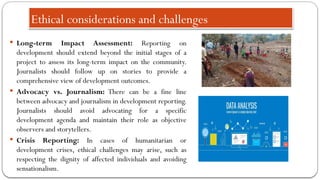
 Long-term Impact Assessment: Reporting on
development should extend beyond the initial stages of a
project to assess its long-term impact on the community.
Journalists should follow up on stories to provide a
comprehensive view of development outcomes.
 Advocacy vs. Journalism: There can be a fine line
between advocacy and journalism in development reporting.
Journalists should avoid advocating for a specific
development agenda and maintain their role as objective
observers and storytellers.
 Crisis Reporting: In cases of humanitarian or
development crises, ethical challenges may arise, such as
respecting the dignity of affected individuals and avoiding
sensationalism.
Media Ownership:
 Corporate Influence: Media organizations are often
owned by corporations or conglomerates with diverse
business interests, including those related to
development projects. This ownership can create
conflicts of interest, as media outlets may be inclined
to favor projects or policies that benefit their owners
financially.
 Political Ownership: In some cases, media outlets
are owned by political figures or parties.This can lead
to biased reporting that aligns with the political agenda
of the owner, potentially influencing development
coverage in favor of particular projects or policies.
Conflicts of Interest
 FinancialTies: Journalists or media organizations
may have financial ties to development projects,
NGOs, or government agencies.These financial
interests can compromise objectivity and lead to
biased reporting in favor of the parties involved.
 Access to Sources: Journalists often rely on
access to sources for information. If they have close
relationships with development organizations or
government officials, they may be less likely to
scrutinize or question these sources, potentially
leading to uncritical reporting.
Bias in Development Reporting
 Confirmation Bias: Journalists, like all individuals, can be
prone to confirmation bias, where they seek or interpret
information in a way that confirms their pre-existing beliefs or
perspectives.This bias can influence how they frame and present
development stories.
 Sensationalism: Media outlets may exaggerate or
sensationalize certain aspects of development stories to attract
more readers or viewers.This can distort the overall perception
of development initiatives and their impact.
 Political Bias: Some media outlets may have inherent political
biases that affect their coverage of development issues. For
example, a conservative-leaning outlet may be critical of social
welfare programs, while a liberal-leaning outlet may be more
supportive.
 Lack of Diversity in Newsrooms:
 Homogeneity among journalists and editorial staff can contribute to bias in development
reporting. If newsrooms lack diversity in terms of background, experience, and
perspectives, certain voices and viewpoints may be underrepresented or ignored.
 Pressure to Meet Deadlines and Attract Audiences:
 Journalists are often under pressure to meet tight deadlines and attract audiences in a
competitive media landscape.This can lead to shortcuts in reporting, reliance on
sensationalism, and a focus on stories that are more likely to generate clicks or views rather
than comprehensive development reporting.
Privacy
 Respect for Personal Space: Privacy in development
communication means respecting individuals' personal space
and boundaries.This includes physical space as well as digital or
virtual spaces in the context of online communication.
 Protection of Personal Information: Development
practitioners should take measures to protect sensitive personal
information, such as health records, identification details, or
personal stories. Unauthorized disclosure or mishandling of
such information can lead to harm or stigma.
 Balancing Transparency and Privacy: Striking a balance
between transparency and privacy is essential. While
transparency is crucial for accountability in development
projects, it should not compromise the privacy and security of
individuals or communities.
Consent
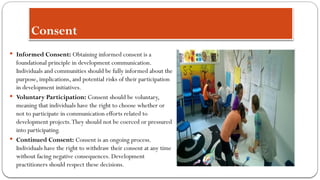
 Informed Consent: Obtaining informed consent is a
foundational principle in development communication.
Individuals and communities should be fully informed about the
purpose, implications, and potential risks of their participation
in development initiatives.
 Voluntary Participation: Consent should be voluntary,
meaning that individuals have the right to choose whether or
not to participate in communication efforts related to
development projects.They should not be coerced or pressured
into participating.
 Continued Consent: Consent is an ongoing process.
Individuals have the right to withdraw their consent at any time
without facing negative consequences. Development
practitioners should respect these decisions.
Confidentiality
 Protecting Sensitive Information:
Confidentiality involves safeguarding sensitive
information shared during development
communication efforts.This includes personal
stories, experiences, and any data that individuals
or communities may consider confidential.
 Anonymity: In some cases, individuals may
choose to remain anonymous when sharing their
experiences or insights. Respecting this choice is
crucial for maintaining confidentiality.
Communication Best Practices
 Clear Communication: Development practitioners
should communicate their intentions clearly, ensuring that
individuals and communities understand the purpose and
potential outcomes of the communication.
 Two-Way Communication: Effective development
communication involves a two-way exchange of
information. It's essential to listen to the voices, concerns,
and feedback of the target audience and engage in
meaningful dialogue.
 Cultural Sensitivity: Understanding and respecting
cultural norms and practices related to privacy and consent
is crucial. Different cultures may have varying expectations
regarding personal space and disclosure.
Ethical Review and Oversight
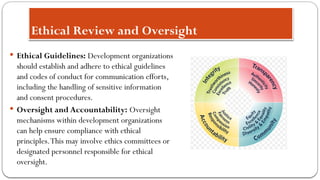
 Ethical Guidelines: Development organizations
should establish and adhere to ethical guidelines
and codes of conduct for communication efforts,
including the handling of sensitive information
and consent procedures.
 Oversight and Accountability: Oversight
mechanisms within development organizations
can help ensure compliance with ethical
principles.This may involve ethics committees or
designated personnel responsible for ethical
oversight.
Capacity Building & Community Engagement
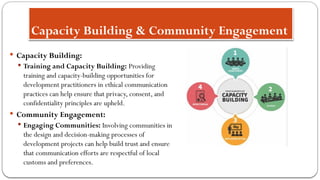
 Capacity Building:
 Training and Capacity Building: Providing
training and capacity-building opportunities for
development practitioners in ethical communication
practices can help ensure that privacy, consent, and
confidentiality principles are upheld.
 Community Engagement:
 Engaging Communities: Involving communities in
the design and decision-making processes of
development projects can help build trust and ensure
that communication efforts are respectful of local
customs and preferences.
Any Question?
ethical considerations and challenges in reporting.pptx

ethical considerations and challenges in reporting.pptx

  • 1.
    DEPARTMENT OF JOURNALSIMAND Mass communication Ethical considerations and challenges in reporting on development Dr. Sumit Kumar Pandey
  • 2.
    Ethical considerations andchallenges  Accuracy and Truthfulness: Journalists must strive for accuracy and truthfulness in their reporting. Misrepresenting facts or exaggerating the impact of a development project can mislead the public and policymakers, potentially leading to poor decisions and the misallocation of resources.  Objectivity and Bias: Maintaining objectivity is challenging when reporting on development, as journalists may have personal biases or conflicts of interest. It's essential to present a balanced view of development initiatives, including their potential benefits and drawbacks.  Informed Consent: Obtaining informed consent from individuals or communities involved in a development story is crucial.This includes ensuring that those affected understand the implications of being interviewed or photographed and that their voices are accurately represented.
  • 3.
    Ethical considerations andchallenges  Sensitivity to Vulnerable Populations: Development often involves marginalized or vulnerable populations. Journalists should exercise caution and sensitivity when reporting on these groups, avoiding harm or exploitation.  Avoiding Stereotypes and Stigmatization: Journalists should avoid perpetuating stereotypes or stigmatizing communities or regions in their reporting. This can negatively impact how development projects are perceived and received.  Privacy and Dignity: Respecting the privacy and dignity of individuals involved in development stories is essential. This includes protecting their personal information and avoiding invasive reporting methods.
  • 4.
    Ethical considerations andchallenges  Transparency: Journalists should be transparent about their sources, affiliations, and potential conflicts of interest. Transparency builds trust with the audience and ensures the integrity of the reporting.  Cultural Sensitivity: Development stories often intersect with cultural, religious, or indigenous practices. Journalists should approach these topics with cultural sensitivity and seek to understand and respect local customs and traditions.  Balancing Local and Global Perspectives: Development stories often have both local and global implications. Journalists should balance these perspectives and consider how development initiatives may affect both the immediate community and the broader region or world.
  • 5.
    Ethical considerations andchallenges  Long-term Impact Assessment: Reporting on development should extend beyond the initial stages of a project to assess its long-term impact on the community. Journalists should follow up on stories to provide a comprehensive view of development outcomes.  Advocacy vs. Journalism: There can be a fine line between advocacy and journalism in development reporting. Journalists should avoid advocating for a specific development agenda and maintain their role as objective observers and storytellers.  Crisis Reporting: In cases of humanitarian or development crises, ethical challenges may arise, such as respecting the dignity of affected individuals and avoiding sensationalism.
  • 6.
    Media Ownership:  CorporateInfluence: Media organizations are often owned by corporations or conglomerates with diverse business interests, including those related to development projects. This ownership can create conflicts of interest, as media outlets may be inclined to favor projects or policies that benefit their owners financially.  Political Ownership: In some cases, media outlets are owned by political figures or parties.This can lead to biased reporting that aligns with the political agenda of the owner, potentially influencing development coverage in favor of particular projects or policies.
  • 7.
    Conflicts of Interest FinancialTies: Journalists or media organizations may have financial ties to development projects, NGOs, or government agencies.These financial interests can compromise objectivity and lead to biased reporting in favor of the parties involved.  Access to Sources: Journalists often rely on access to sources for information. If they have close relationships with development organizations or government officials, they may be less likely to scrutinize or question these sources, potentially leading to uncritical reporting.
  • 8.
    Bias in DevelopmentReporting  Confirmation Bias: Journalists, like all individuals, can be prone to confirmation bias, where they seek or interpret information in a way that confirms their pre-existing beliefs or perspectives.This bias can influence how they frame and present development stories.  Sensationalism: Media outlets may exaggerate or sensationalize certain aspects of development stories to attract more readers or viewers.This can distort the overall perception of development initiatives and their impact.  Political Bias: Some media outlets may have inherent political biases that affect their coverage of development issues. For example, a conservative-leaning outlet may be critical of social welfare programs, while a liberal-leaning outlet may be more supportive.
  • 9.
     Lack ofDiversity in Newsrooms:  Homogeneity among journalists and editorial staff can contribute to bias in development reporting. If newsrooms lack diversity in terms of background, experience, and perspectives, certain voices and viewpoints may be underrepresented or ignored.  Pressure to Meet Deadlines and Attract Audiences:  Journalists are often under pressure to meet tight deadlines and attract audiences in a competitive media landscape.This can lead to shortcuts in reporting, reliance on sensationalism, and a focus on stories that are more likely to generate clicks or views rather than comprehensive development reporting.
  • 10.
    Privacy  Respect forPersonal Space: Privacy in development communication means respecting individuals' personal space and boundaries.This includes physical space as well as digital or virtual spaces in the context of online communication.  Protection of Personal Information: Development practitioners should take measures to protect sensitive personal information, such as health records, identification details, or personal stories. Unauthorized disclosure or mishandling of such information can lead to harm or stigma.  Balancing Transparency and Privacy: Striking a balance between transparency and privacy is essential. While transparency is crucial for accountability in development projects, it should not compromise the privacy and security of individuals or communities.
  • 11.
    Consent  Informed Consent:Obtaining informed consent is a foundational principle in development communication. Individuals and communities should be fully informed about the purpose, implications, and potential risks of their participation in development initiatives.  Voluntary Participation: Consent should be voluntary, meaning that individuals have the right to choose whether or not to participate in communication efforts related to development projects.They should not be coerced or pressured into participating.  Continued Consent: Consent is an ongoing process. Individuals have the right to withdraw their consent at any time without facing negative consequences. Development practitioners should respect these decisions.
  • 12.
    Confidentiality  Protecting SensitiveInformation: Confidentiality involves safeguarding sensitive information shared during development communication efforts.This includes personal stories, experiences, and any data that individuals or communities may consider confidential.  Anonymity: In some cases, individuals may choose to remain anonymous when sharing their experiences or insights. Respecting this choice is crucial for maintaining confidentiality.
  • 13.
    Communication Best Practices Clear Communication: Development practitioners should communicate their intentions clearly, ensuring that individuals and communities understand the purpose and potential outcomes of the communication.  Two-Way Communication: Effective development communication involves a two-way exchange of information. It's essential to listen to the voices, concerns, and feedback of the target audience and engage in meaningful dialogue.  Cultural Sensitivity: Understanding and respecting cultural norms and practices related to privacy and consent is crucial. Different cultures may have varying expectations regarding personal space and disclosure.
  • 14.
    Ethical Review andOversight  Ethical Guidelines: Development organizations should establish and adhere to ethical guidelines and codes of conduct for communication efforts, including the handling of sensitive information and consent procedures.  Oversight and Accountability: Oversight mechanisms within development organizations can help ensure compliance with ethical principles.This may involve ethics committees or designated personnel responsible for ethical oversight.
  • 15.
    Capacity Building &Community Engagement  Capacity Building:  Training and Capacity Building: Providing training and capacity-building opportunities for development practitioners in ethical communication practices can help ensure that privacy, consent, and confidentiality principles are upheld.  Community Engagement:  Engaging Communities: Involving communities in the design and decision-making processes of development projects can help build trust and ensure that communication efforts are respectful of local customs and preferences.
  • 16.