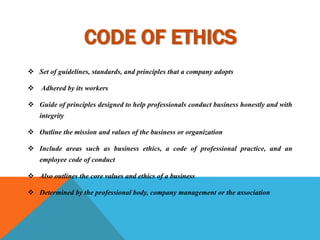
 Set of guidelines, standards, and principles that a company adopts
 Adhered by its workers
 Guide of principles designed to help professionals conduct business honestly and with
integrity
 Outline the mission and values of the business or organization
 Include areas such as business ethics, a code of professional practice, and an
employee code of conduct
 Also outlines the core values and ethics of a business
 Determined by the professional body, company management or the association
CODE OF ETHICS
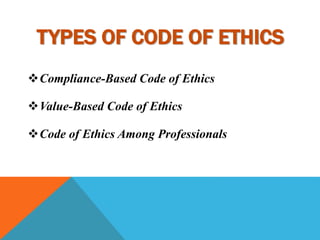
Compliance-Based Code of Ethics
Value-Based Code of Ethics
Code of Ethics Among Professionals
TYPES OF CODE OF ETHICS
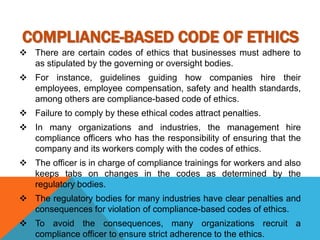
 There are certain codes of ethics that businesses must adhere to
as stipulated by the governing or oversight bodies.
 For instance, guidelines guiding how companies hire their
employees, employee compensation, safety and health standards,
among others are compliance-based code of ethics.
 Failure to comply by these ethical codes attract penalties.
 In many organizations and industries, the management hire
compliance officers who has the responsibility of ensuring that the
company and its workers comply with the codes of ethics.
 The officer is in charge of compliance trainings for workers and also
keeps tabs on changes in the codes as determined by the
regulatory bodies.
 The regulatory bodies for many industries have clear penalties and
consequences for violation of compliance-based codes of ethics.
 To avoid the consequences, many organizations recruit a
compliance officer to ensure strict adherence to the ethics.
COMPLIANCE-BASED CODE OF ETHICS
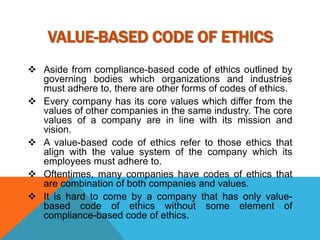
 Aside from compliance-based code of ethics outlined by
governing bodies which organizations and industries
must adhere to, there are other forms of codes of ethics.
 Every company has its core values which differ from the
values of other companies in the same industry. The core
values of a company are in line with its mission and
vision.
 A value-based code of ethics refer to those ethics that
align with the value system of the company which its
employees must adhere to.
 Oftentimes, many companies have codes of ethics that
are combination of both companies and values.
 It is hard to come by a company that has only value-
based code of ethics without some element of
compliance-based code of ethics.
VALUE-BASED CODE OF ETHICS
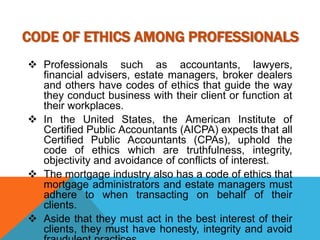
 Professionals such as accountants, lawyers,
financial advisers, estate managers, broker dealers
and others have codes of ethics that guide the way
they conduct business with their client or function at
their workplaces.
 In the United States, the American Institute of
Certified Public Accountants (AICPA) expects that all
Certified Public Accountants (CPAs), uphold the
code of ethics which are truthfulness, integrity,
objectivity and avoidance of conflicts of interest.
 The mortgage industry also has a code of ethics that
mortgage administrators and estate managers must
adhere to when transacting on behalf of their
clients.
 Aside that they must act in the best interest of their
clients, they must have honesty, integrity and avoid
CODE OF ETHICS AMONG PROFESSIONALS
According to the CFAI's (Chartered Financial Analyst) website, Members
of CFA Institute, including CFA Charterholders, and candidates for the
CFA designation must adhere to the following Code of Ethics:
 Act with integrity, competence, diligence, respect, and in an ethical manner
with the public, clients, prospective clients, employers, employees,
colleagues in the investment profession, and other participants in the global
capital markets.
 Place the integrity of the investment profession and the interests of clients
above their own personal interests.
 Use reasonable care and exercise independent professional judgment when
conducting investment analysis, making investment recommendations,
taking investment actions, and engaging in other professional activities.
 Practice and encourage others to practice professionally and ethically that
will reflect credit on themselves and the profession.
 Promote the integrity and viability of the global capital markets for the
ultimate benefit of society.
 Maintain and improve their professional competence and strive to maintain
EXAMPLE OF CODE OF ETHICS

Ethical Codes: Code of Ethics Among Professionals

  • 2.
     Set ofguidelines, standards, and principles that a company adopts  Adhered by its workers  Guide of principles designed to help professionals conduct business honestly and with integrity  Outline the mission and values of the business or organization  Include areas such as business ethics, a code of professional practice, and an employee code of conduct  Also outlines the core values and ethics of a business  Determined by the professional body, company management or the association CODE OF ETHICS
  • 3.
    Compliance-Based Code ofEthics Value-Based Code of Ethics Code of Ethics Among Professionals TYPES OF CODE OF ETHICS
  • 4.
     There arecertain codes of ethics that businesses must adhere to as stipulated by the governing or oversight bodies.  For instance, guidelines guiding how companies hire their employees, employee compensation, safety and health standards, among others are compliance-based code of ethics.  Failure to comply by these ethical codes attract penalties.  In many organizations and industries, the management hire compliance officers who has the responsibility of ensuring that the company and its workers comply with the codes of ethics.  The officer is in charge of compliance trainings for workers and also keeps tabs on changes in the codes as determined by the regulatory bodies.  The regulatory bodies for many industries have clear penalties and consequences for violation of compliance-based codes of ethics.  To avoid the consequences, many organizations recruit a compliance officer to ensure strict adherence to the ethics. COMPLIANCE-BASED CODE OF ETHICS
  • 5.
     Aside fromcompliance-based code of ethics outlined by governing bodies which organizations and industries must adhere to, there are other forms of codes of ethics.  Every company has its core values which differ from the values of other companies in the same industry. The core values of a company are in line with its mission and vision.  A value-based code of ethics refer to those ethics that align with the value system of the company which its employees must adhere to.  Oftentimes, many companies have codes of ethics that are combination of both companies and values.  It is hard to come by a company that has only value- based code of ethics without some element of compliance-based code of ethics. VALUE-BASED CODE OF ETHICS
  • 6.
     Professionals suchas accountants, lawyers, financial advisers, estate managers, broker dealers and others have codes of ethics that guide the way they conduct business with their client or function at their workplaces.  In the United States, the American Institute of Certified Public Accountants (AICPA) expects that all Certified Public Accountants (CPAs), uphold the code of ethics which are truthfulness, integrity, objectivity and avoidance of conflicts of interest.  The mortgage industry also has a code of ethics that mortgage administrators and estate managers must adhere to when transacting on behalf of their clients.  Aside that they must act in the best interest of their clients, they must have honesty, integrity and avoid CODE OF ETHICS AMONG PROFESSIONALS
  • 7.
    According to theCFAI's (Chartered Financial Analyst) website, Members of CFA Institute, including CFA Charterholders, and candidates for the CFA designation must adhere to the following Code of Ethics:  Act with integrity, competence, diligence, respect, and in an ethical manner with the public, clients, prospective clients, employers, employees, colleagues in the investment profession, and other participants in the global capital markets.  Place the integrity of the investment profession and the interests of clients above their own personal interests.  Use reasonable care and exercise independent professional judgment when conducting investment analysis, making investment recommendations, taking investment actions, and engaging in other professional activities.  Practice and encourage others to practice professionally and ethically that will reflect credit on themselves and the profession.  Promote the integrity and viability of the global capital markets for the ultimate benefit of society.  Maintain and improve their professional competence and strive to maintain EXAMPLE OF CODE OF ETHICS