Essentialism
William Bagley 1874- 1946
• He was an American
Philosopher
• He introduced the term
essentialism in 1930.
• He was one of the most
influential advocates
of essentialism
• He introduced the philosophy
of essentialism in education
Philosophy of Essentialism
• Essentialism is an American Philosophy of education
which began in the 1930 and 1940.
• An educational theory that focuses on an essential set
of learning prepares individuals for life by
concentrating on the culture and traditions of the past.
• The two origins of essentialism is from idealism and
realism
• Essentialism refers to "Basic Education".
• Essentialism believe in teaching the basic subjects
Term Essentialism
• Essential meaning Extremely important or
necessary
• while Lism is a Suffix which mean attitude or
belief, belief that something is necessary
• Who believe this belief they known as
Essentialists
Essentialists believes
• Essentialists believe that there exist a critical
core of information and skills that each person
would possess.
• They believe that art and Science is as useful
as it was in past and it will remain useful in
future.
• They raised Slogan "BAK To BASIC“.
Continue…
• Essentialism tries to instill all students with the
most basic knowledge, skills and character
development.
• Essentialists Believe that students should be
taught to be a model citizen.
• Essentialists Believe that teachers should
teach traditional moral values and virtues
• Essentialists Believe in mastery learning
Fundamental of Essentialism
• Learning is a process of hard work insist on the
importance of discipline and focus on more
distant goals.
• The initiative in education should take by the
teacher rather than pupil
• It is largely by the social environment and the
man's material which determines how shall live
• The schools should be keep the methods of
mental discipline by the problem solving.
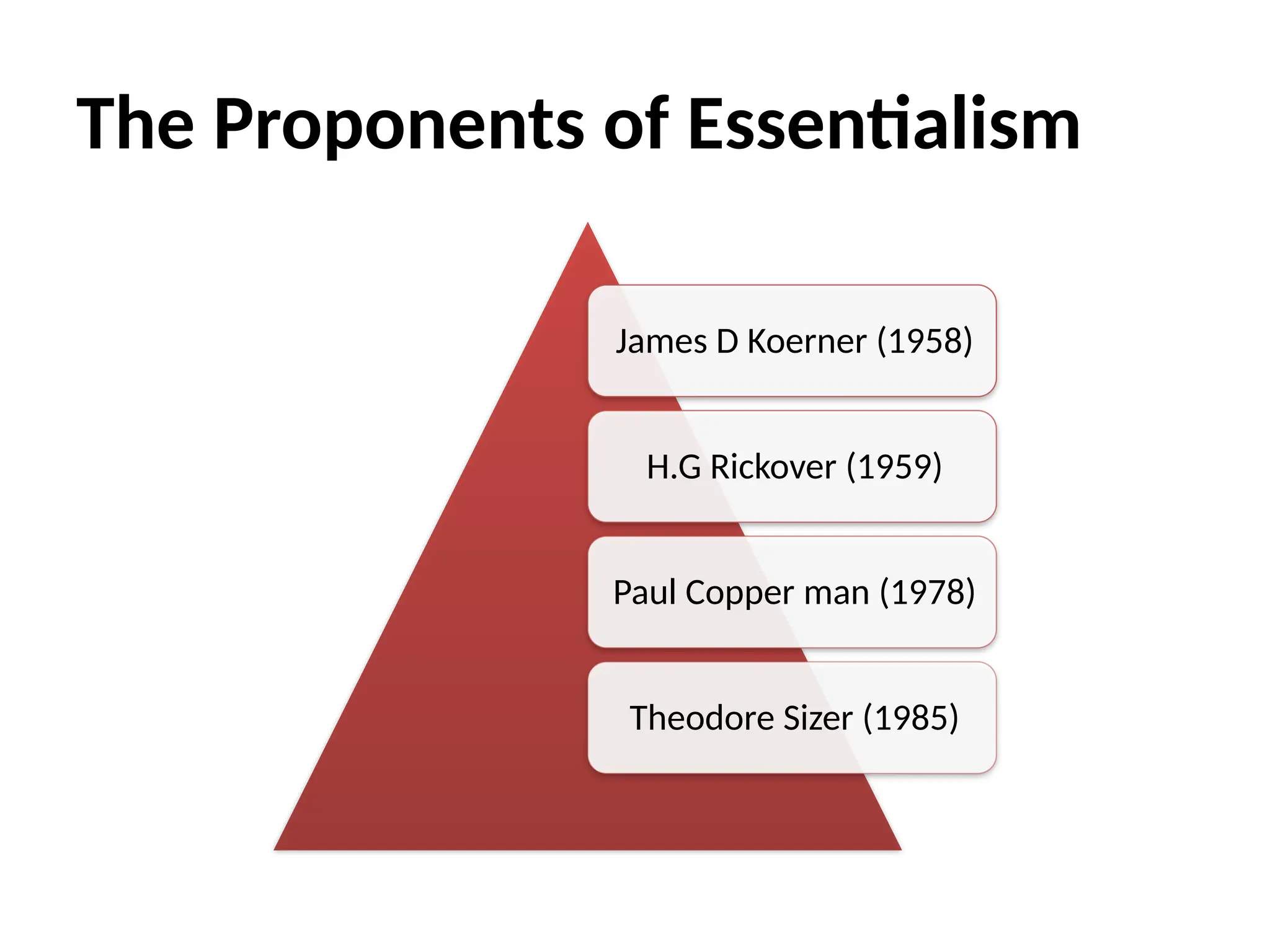
The Proponents of Essentialism
James D Koerner (1958)
H.G Rickover (1959)
Paul Copper man (1978)
Theodore Sizer (1985)
Aim of Education
• To develop students moral and Intellectual qualities
• Purpose of schools is both to preserve the knowledge
and values of the past
• Provide children with the skills essential to live a
successful and meaningful lives in present society.
• The purpose of the schools is to prepare students for
their roles in society
• Curriculum focused on basic skills and traditional
academic content, taught by teachers who expect
respect for authority and discipline.
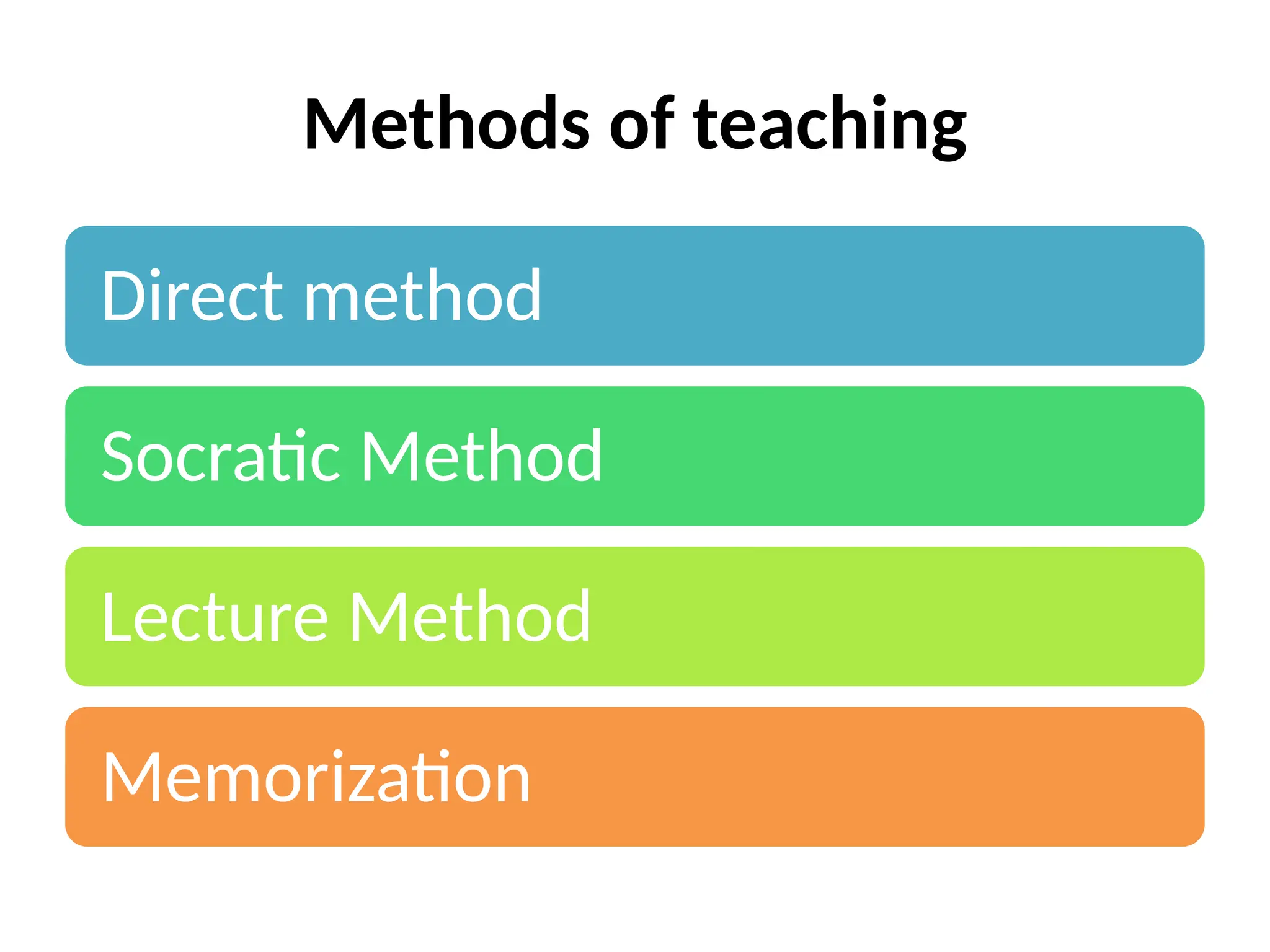
Methods of teaching
Direct method
Socratic Method
Lecture Method
Memorization
Role of Teacher
Teacher should
be active
Expert in
subjects
Motivator for
students
Humanistic
Why Needs Essentialism in school
• For the students to acquire basic knowledge,
skills and values To hopefully transmit the
traditional moral values and Intellectual
knowledge that students need to become
model citizens.
Purpose of Schooling
• Prepare students to be productive,
contributing members of the society For
essentialists, the aim of education is to teach
the young the essential they need to live in
the modern world.Essentialists teach the
basics subjects
Importance of
• Essential provides students with strong basic
education such as reading, writing, listening,
speaking, drawing etc.
• It has largely contributed to the education
field, enabling students to develop a sound
foundation of basic knowledge.
Criticism
Positive
Stability of education
Negative
Students take more passive
role on their education
Conclusion
• The education is a social activity which
simplifies, purifies and integrates social
experience to understand the cultural
heritage.
• The essentialists make sure that young people
should learn should all those things that an
adult needs to be known as useful member of
society.
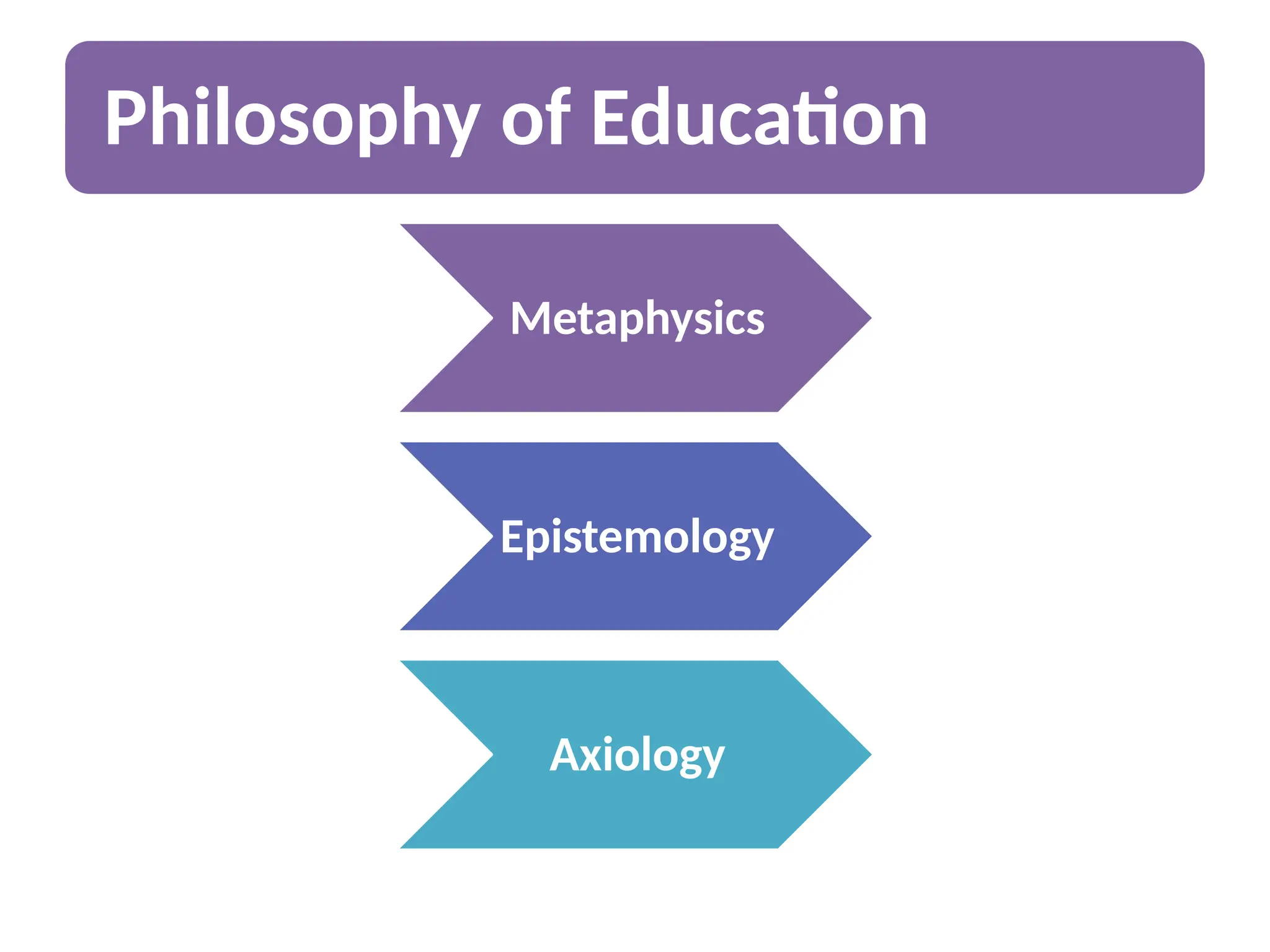
Philosophy of Education
Metaphysics
Epistemology
Axiology
Metaphysics
• The term Metaphysics literally means "beyond
the physical“
• This area of Philosophy focus on the nature of
reality.
• What is reality?
Epistemology
• Epistemology is a branch of Philosophy
concerned with the theory of knowledge.
• It focus on following areas The Philosophical
analysis of the nature of knowledge
• The sources and scope of knowledge and
justified belief
• The criteria for knowledge and just fiction
Axiology
• Axiology is the Philosophical study of value
Axiology studies mainly two kinds of values
Ethics and Aesthetics
• Ethics investigates the concepts of "right and
wrong" in individual and social conduct.
• Aesthetics investigates the concepts of
"beauty and harmony".
Thanks

ESSENTIALSIM.... PRIVATE ONLY FOR EDUCAT

  • 1.
  • 2.
    William Bagley 1874-1946 • He was an American Philosopher • He introduced the term essentialism in 1930. • He was one of the most influential advocates of essentialism • He introduced the philosophy of essentialism in education
  • 3.
    Philosophy of Essentialism •Essentialism is an American Philosophy of education which began in the 1930 and 1940. • An educational theory that focuses on an essential set of learning prepares individuals for life by concentrating on the culture and traditions of the past. • The two origins of essentialism is from idealism and realism • Essentialism refers to "Basic Education". • Essentialism believe in teaching the basic subjects
  • 4.
    Term Essentialism • Essentialmeaning Extremely important or necessary • while Lism is a Suffix which mean attitude or belief, belief that something is necessary • Who believe this belief they known as Essentialists
  • 5.
    Essentialists believes • Essentialistsbelieve that there exist a critical core of information and skills that each person would possess. • They believe that art and Science is as useful as it was in past and it will remain useful in future. • They raised Slogan "BAK To BASIC“.
  • 6.
    Continue… • Essentialism triesto instill all students with the most basic knowledge, skills and character development. • Essentialists Believe that students should be taught to be a model citizen. • Essentialists Believe that teachers should teach traditional moral values and virtues • Essentialists Believe in mastery learning
  • 7.
    Fundamental of Essentialism •Learning is a process of hard work insist on the importance of discipline and focus on more distant goals. • The initiative in education should take by the teacher rather than pupil • It is largely by the social environment and the man's material which determines how shall live • The schools should be keep the methods of mental discipline by the problem solving.
  • 8.
    The Proponents ofEssentialism James D Koerner (1958) H.G Rickover (1959) Paul Copper man (1978) Theodore Sizer (1985)
  • 9.
    Aim of Education •To develop students moral and Intellectual qualities • Purpose of schools is both to preserve the knowledge and values of the past • Provide children with the skills essential to live a successful and meaningful lives in present society. • The purpose of the schools is to prepare students for their roles in society • Curriculum focused on basic skills and traditional academic content, taught by teachers who expect respect for authority and discipline.
  • 10.
    Methods of teaching Directmethod Socratic Method Lecture Method Memorization
  • 11.
    Role of Teacher Teachershould be active Expert in subjects Motivator for students Humanistic
  • 12.
    Why Needs Essentialismin school • For the students to acquire basic knowledge, skills and values To hopefully transmit the traditional moral values and Intellectual knowledge that students need to become model citizens.
  • 13.
    Purpose of Schooling •Prepare students to be productive, contributing members of the society For essentialists, the aim of education is to teach the young the essential they need to live in the modern world.Essentialists teach the basics subjects
  • 14.
    Importance of • Essentialprovides students with strong basic education such as reading, writing, listening, speaking, drawing etc. • It has largely contributed to the education field, enabling students to develop a sound foundation of basic knowledge.
  • 15.
    Criticism Positive Stability of education Negative Studentstake more passive role on their education
  • 16.
    Conclusion • The educationis a social activity which simplifies, purifies and integrates social experience to understand the cultural heritage. • The essentialists make sure that young people should learn should all those things that an adult needs to be known as useful member of society.
  • 17.
  • 18.
    Metaphysics • The termMetaphysics literally means "beyond the physical“ • This area of Philosophy focus on the nature of reality. • What is reality?
  • 19.
    Epistemology • Epistemology isa branch of Philosophy concerned with the theory of knowledge. • It focus on following areas The Philosophical analysis of the nature of knowledge • The sources and scope of knowledge and justified belief • The criteria for knowledge and just fiction
  • 20.
    Axiology • Axiology isthe Philosophical study of value Axiology studies mainly two kinds of values Ethics and Aesthetics • Ethics investigates the concepts of "right and wrong" in individual and social conduct. • Aesthetics investigates the concepts of "beauty and harmony".
  • 21.