Essential Components of a
Successful CloudMigration
Strategy
In today's fast-changing tech world, more and more companies are using
the cloud to make their work better, grow easily, and be more efficient.
However, the journey to the cloud is not without its challenges. A well-
thought-out cloud migration strategy is crucial to ensure a seamless
transition and maximize the benefits of cloud computing. Learn the key
components of a successful cloud migration strategy.
Understanding Cloud Migration
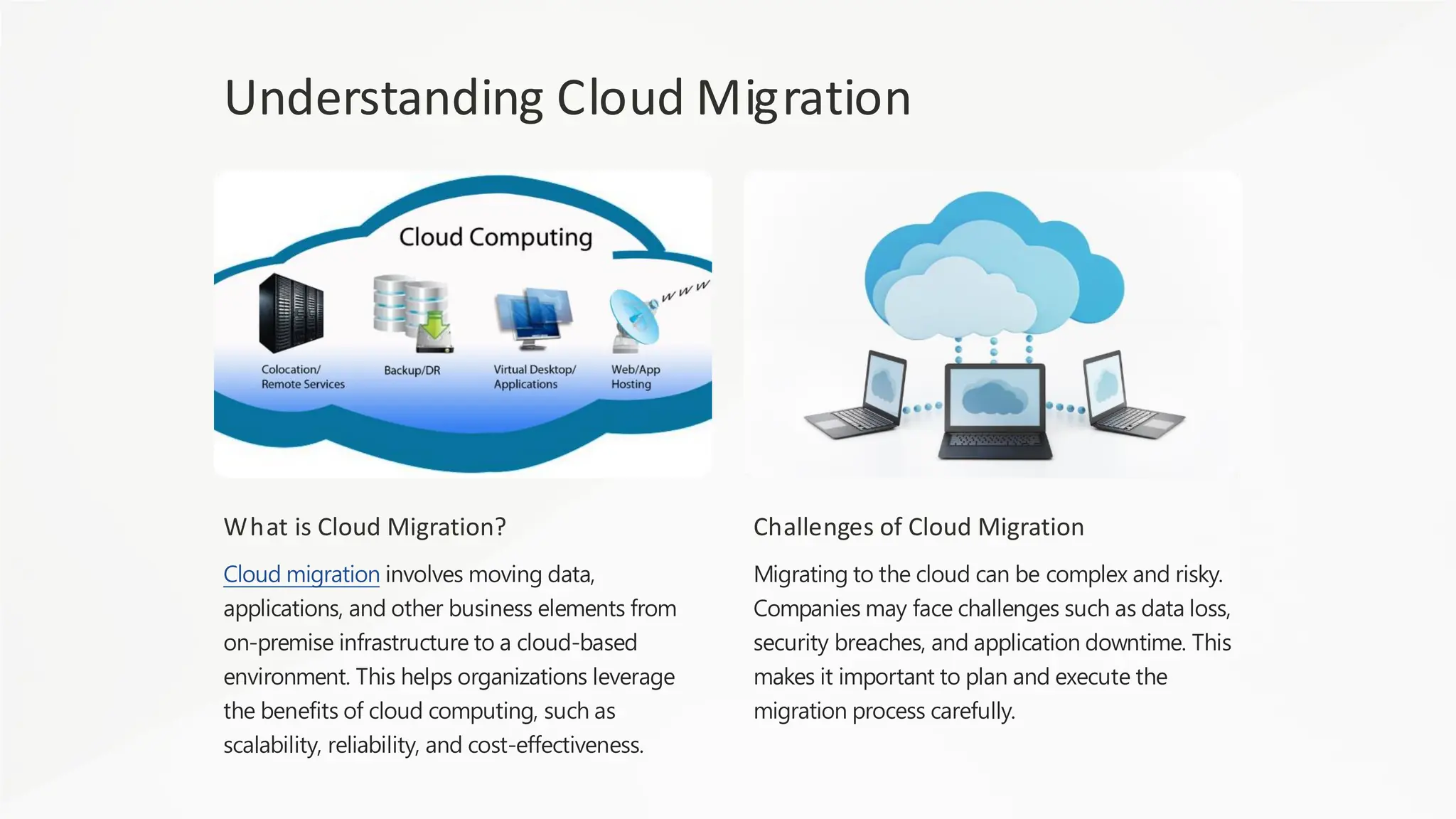
What is Cloud Migration?
Cloud migration involves moving data,
applications, and other business elements from
on-premise infrastructure to a cloud-based
environment. This helps organizations leverage
the benefits of cloud computing, such as
scalability, reliability, and cost-effectiveness.
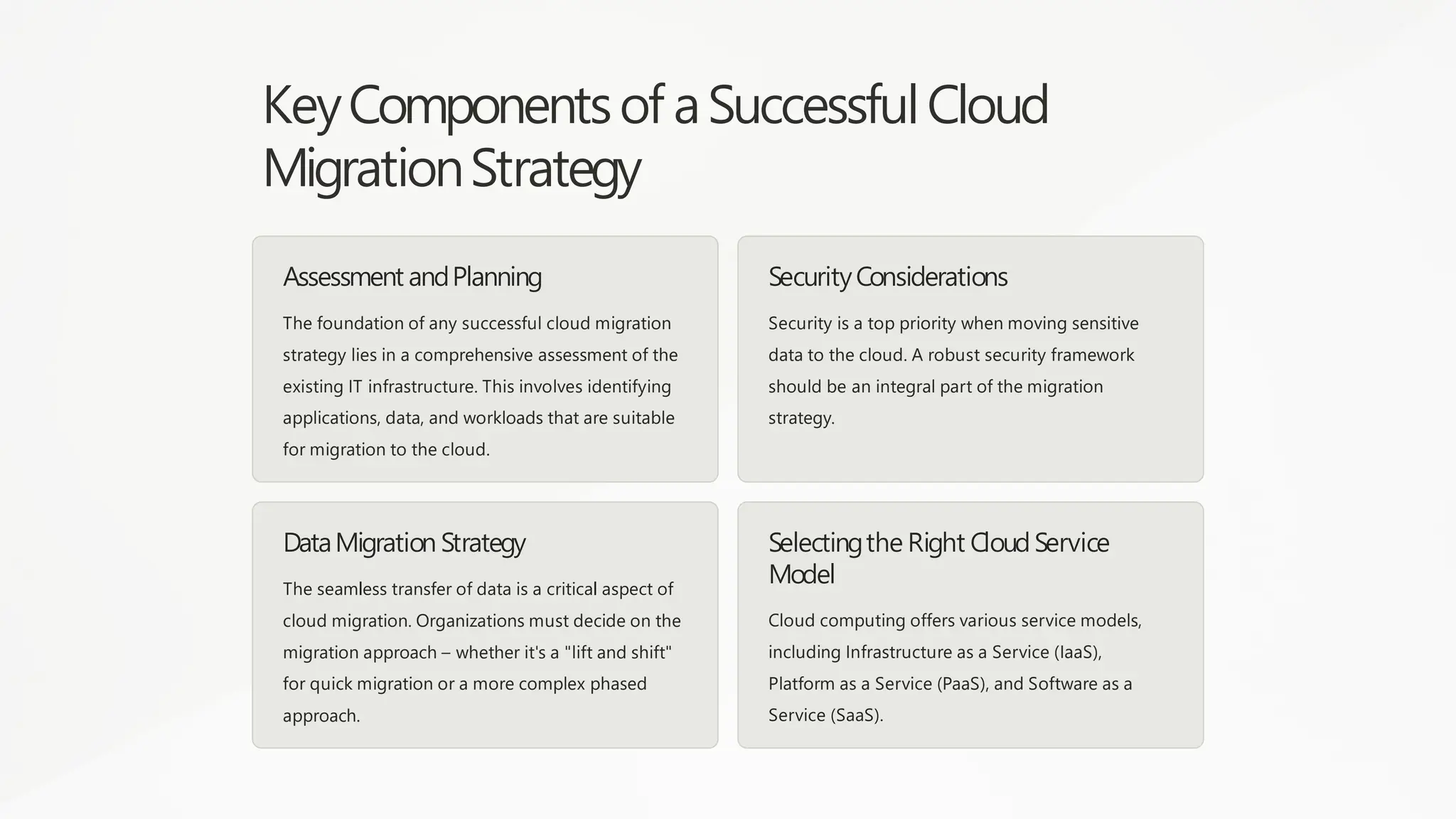
Challenges of Cloud Migration
Migrating to the cloud can be complex and risky.
Companies may face challenges such as data loss,
security breaches, and application downtime. This
makes it important to plan and execute the
migration process carefully.
KeyComponentsof aSuccessfulCloud
MigrationStrategy
Assessment andPlanning
The foundation of any successful cloud migration
strategy lies in a comprehensive assessment of the
existing IT infrastructure. This involves identifying
applications, data, and workloads that are suitable
for migration to the cloud.
SecurityConsiderations
Security is a top priority when moving sensitive
data to the cloud. A robust security framework
should be an integral part of the migration
strategy.
DataMigration Strategy
The seamless transfer of data is a critical aspect of
cloud migration. Organizations must decide on the
migration approach – whether it's a "lift and shift"
for quick migration or a more complex phased
approach.
Selectingthe Right Cloud Service
Model
Cloud computing offers various service models,
including Infrastructure as a Service (IaaS),
Platform as a Service (PaaS), and Software as a
Service (SaaS).
Key Components of a Successful Cloud
MigrationStrategy
PerformanceMonitoringand
Optimization
Post-migration, continuous monitoring of
performance is essential to identify any
bottlenecks or issues. Cloud environments
offer scalability, and organizations should
leverage this capability to optimize resources
based on demand.
Employee TrainingandChange
Management
A successful cloud migration strategy goes
beyond technology; it also involves preparing
the workforce for the changes. Training
programs should be implemented to
familiarize employees with the new cloud-
based tools and processes.
Cost Management
While cloud migration can lead to cost savings, it's crucial to manage expenses effectively.
Implementing cost tracking tools, optimizing resource usage, and selecting the right pricing model
are essential for controlling and predicting costs.
Best Practices to Make Cloud Migration
Successful
1 Start Small and Scale
Begin with a pilot migration of a non-critical workload to gain insights into the process.
Once the organization gains confidence, gradually scale up to more critical systems and
applications.
2 Backup and Disaster Recovery Planning
Develop a robust backup and disaster recovery plan to safeguard against data loss or
system failures.
3 Collaborate with Stakeholders
Involve all relevant stakeholders, including IT teams, business units, and external
partners, in the migration process.
4 Documentation and Communication
Maintain detailed documentation throughout the migration process. Clear
communication with all stakeholders helps manage expectations.
5 Compliance and Governance
Ensure that the cloud migration strategy aligns with industry regulations and internal
governance policies.
Security Considerations
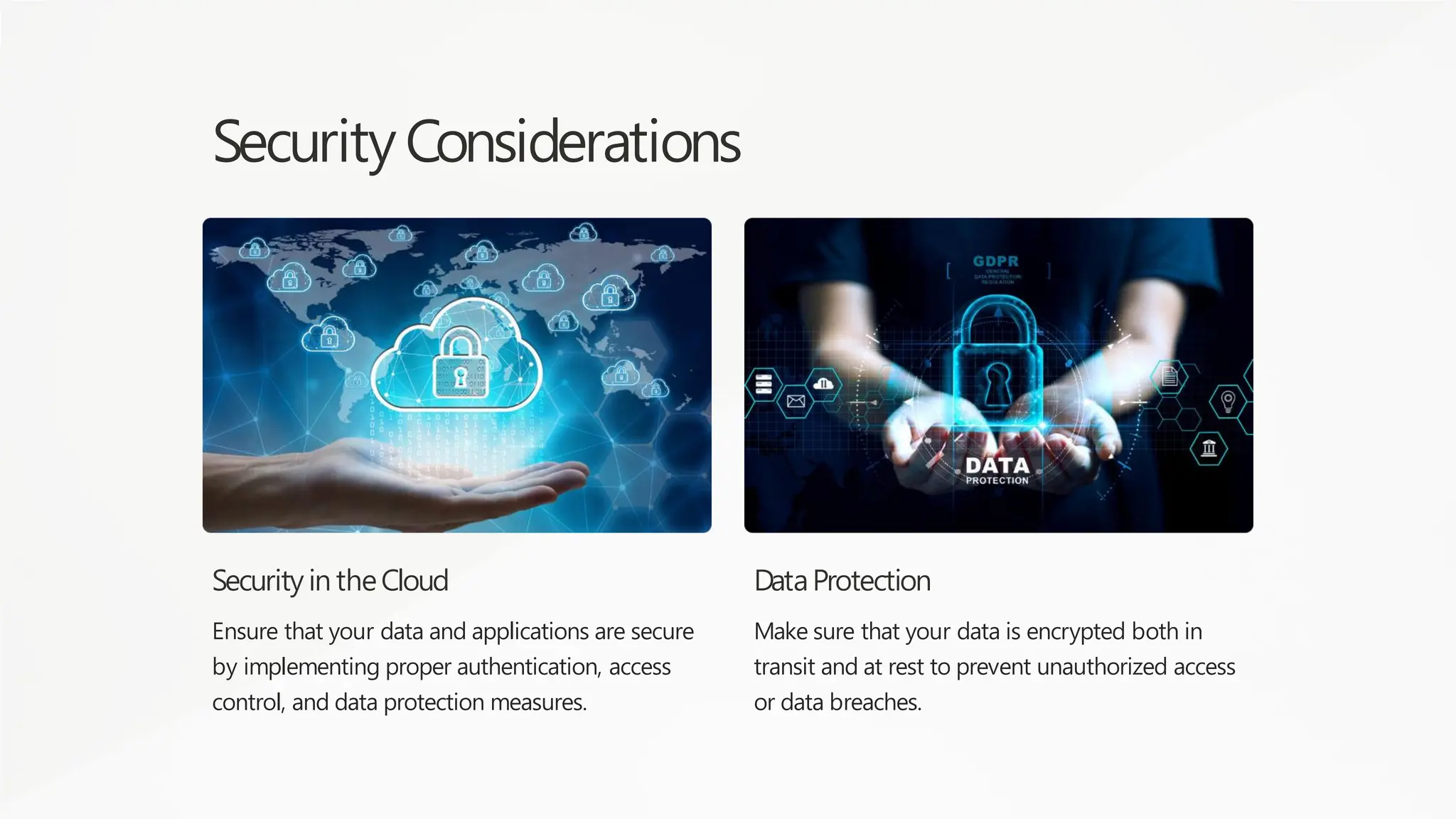
Security in theCloud
Ensure that your data and applications are secure
by implementing proper authentication, access
control, and data protection measures.
DataProtection
Make sure that your data is encrypted both in
transit and at rest to prevent unauthorized access
or data breaches.
TestingandValidation
Functional Testing
Test to ensure that the cloud environment
works with your applications and meets
your business requirements.
Performance Testing
Validate the performance of your
applications in the cloud environment.
User AcceptanceTesting
Confirm that users are satisfied with the cloud environment and that it meets their needs.
Monitoring and Optimization
1 Monitor Performance
Track the performance of your cloud infrastructure to identify and resolve
any issues in a timely manner.
2 Optimize Resource Allocation
Ensure that you are using your cloud resources efficiently by monitoring and
fine-tuning resource allocation.
3 Implement Cost Optimization
Use tools and techniques to reduce your cloud costs without compromising
the performance or quality of your services.
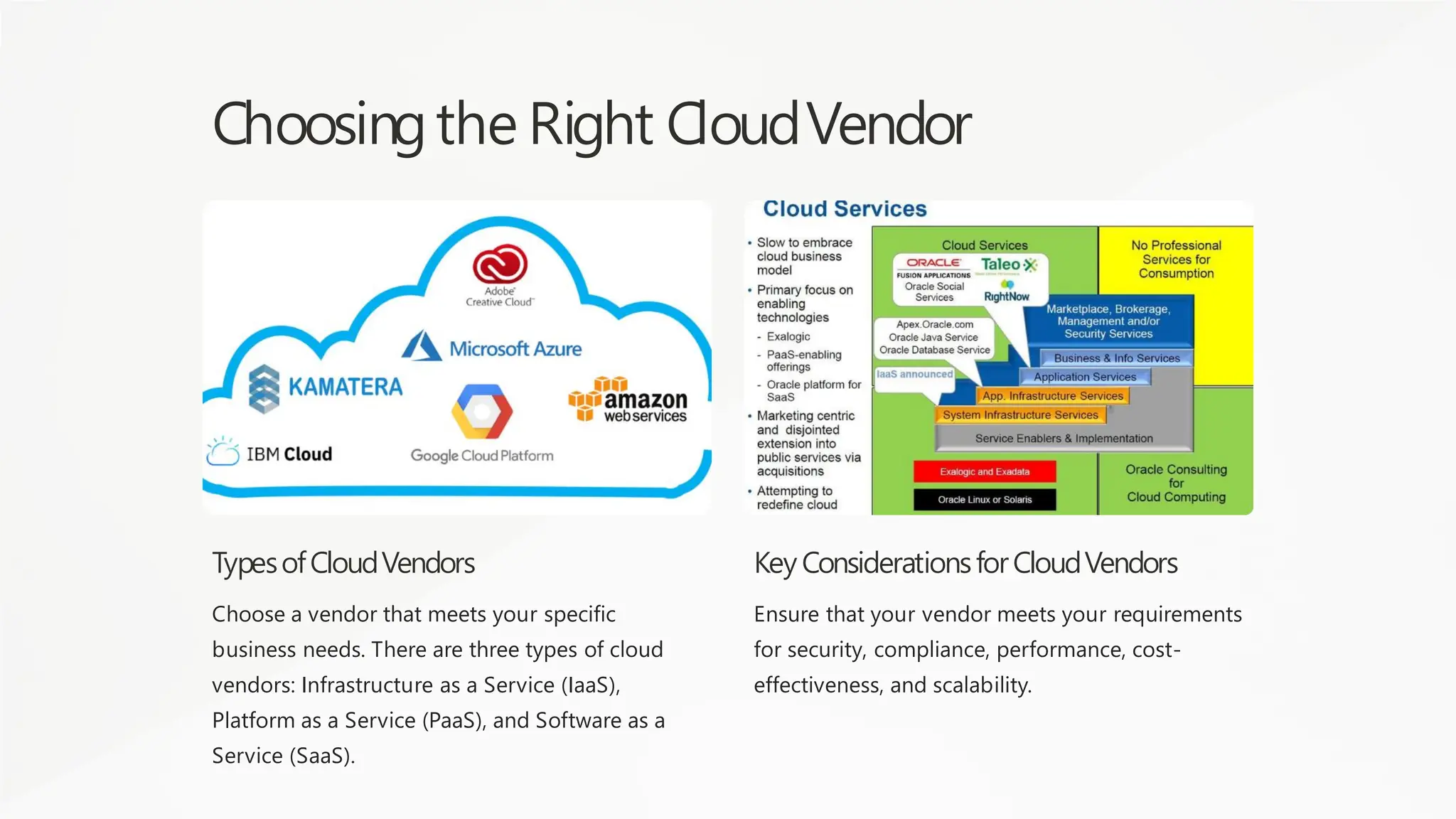
Choosingthe Right CloudVendor
TypesofCloudVendors
Choose a vendor that meets your specific
business needs. There are three types of cloud
vendors: Infrastructure as a Service (IaaS),
Platform as a Service (PaaS), and Software as a
Service (SaaS).
Key ConsiderationsforCloudVendors
Ensure that your vendor meets your requirements
for security, compliance, performance, cost-
effectiveness, and scalability.

Essential Components of a Successful Cloud Migration Strategy

  • 1.
    Essential Components ofa Successful CloudMigration Strategy In today's fast-changing tech world, more and more companies are using the cloud to make their work better, grow easily, and be more efficient. However, the journey to the cloud is not without its challenges. A well- thought-out cloud migration strategy is crucial to ensure a seamless transition and maximize the benefits of cloud computing. Learn the key components of a successful cloud migration strategy.
  • 2.
    Understanding Cloud Migration Whatis Cloud Migration? Cloud migration involves moving data, applications, and other business elements from on-premise infrastructure to a cloud-based environment. This helps organizations leverage the benefits of cloud computing, such as scalability, reliability, and cost-effectiveness. Challenges of Cloud Migration Migrating to the cloud can be complex and risky. Companies may face challenges such as data loss, security breaches, and application downtime. This makes it important to plan and execute the migration process carefully.
  • 3.
    KeyComponentsof aSuccessfulCloud MigrationStrategy Assessment andPlanning Thefoundation of any successful cloud migration strategy lies in a comprehensive assessment of the existing IT infrastructure. This involves identifying applications, data, and workloads that are suitable for migration to the cloud. SecurityConsiderations Security is a top priority when moving sensitive data to the cloud. A robust security framework should be an integral part of the migration strategy. DataMigration Strategy The seamless transfer of data is a critical aspect of cloud migration. Organizations must decide on the migration approach – whether it's a "lift and shift" for quick migration or a more complex phased approach. Selectingthe Right Cloud Service Model Cloud computing offers various service models, including Infrastructure as a Service (IaaS), Platform as a Service (PaaS), and Software as a Service (SaaS).
  • 4.
    Key Components ofa Successful Cloud MigrationStrategy PerformanceMonitoringand Optimization Post-migration, continuous monitoring of performance is essential to identify any bottlenecks or issues. Cloud environments offer scalability, and organizations should leverage this capability to optimize resources based on demand. Employee TrainingandChange Management A successful cloud migration strategy goes beyond technology; it also involves preparing the workforce for the changes. Training programs should be implemented to familiarize employees with the new cloud- based tools and processes. Cost Management While cloud migration can lead to cost savings, it's crucial to manage expenses effectively. Implementing cost tracking tools, optimizing resource usage, and selecting the right pricing model are essential for controlling and predicting costs.
  • 5.
    Best Practices toMake Cloud Migration Successful 1 Start Small and Scale Begin with a pilot migration of a non-critical workload to gain insights into the process. Once the organization gains confidence, gradually scale up to more critical systems and applications. 2 Backup and Disaster Recovery Planning Develop a robust backup and disaster recovery plan to safeguard against data loss or system failures. 3 Collaborate with Stakeholders Involve all relevant stakeholders, including IT teams, business units, and external partners, in the migration process. 4 Documentation and Communication Maintain detailed documentation throughout the migration process. Clear communication with all stakeholders helps manage expectations. 5 Compliance and Governance Ensure that the cloud migration strategy aligns with industry regulations and internal governance policies.
  • 6.
    Security Considerations Security intheCloud Ensure that your data and applications are secure by implementing proper authentication, access control, and data protection measures. DataProtection Make sure that your data is encrypted both in transit and at rest to prevent unauthorized access or data breaches.
  • 7.
    TestingandValidation Functional Testing Test toensure that the cloud environment works with your applications and meets your business requirements. Performance Testing Validate the performance of your applications in the cloud environment. User AcceptanceTesting Confirm that users are satisfied with the cloud environment and that it meets their needs.
  • 8.
    Monitoring and Optimization 1Monitor Performance Track the performance of your cloud infrastructure to identify and resolve any issues in a timely manner. 2 Optimize Resource Allocation Ensure that you are using your cloud resources efficiently by monitoring and fine-tuning resource allocation. 3 Implement Cost Optimization Use tools and techniques to reduce your cloud costs without compromising the performance or quality of your services.
  • 9.
    Choosingthe Right CloudVendor TypesofCloudVendors Choosea vendor that meets your specific business needs. There are three types of cloud vendors: Infrastructure as a Service (IaaS), Platform as a Service (PaaS), and Software as a Service (SaaS). Key ConsiderationsforCloudVendors Ensure that your vendor meets your requirements for security, compliance, performance, cost- effectiveness, and scalability.