Erythrocyte
Osmotic Fragility
Test
The ErythrocyteOsmotic Fragility Test is a laboratory procedure used to
assess the ability of red blood cells (erythrocytes) to withstand changes in
osmotic pressure. This test provides valuable insights into the health and
integrity of the cell membrane.
by AL 7agy
2.
Introduction to Erythrocytes
1Vital Role
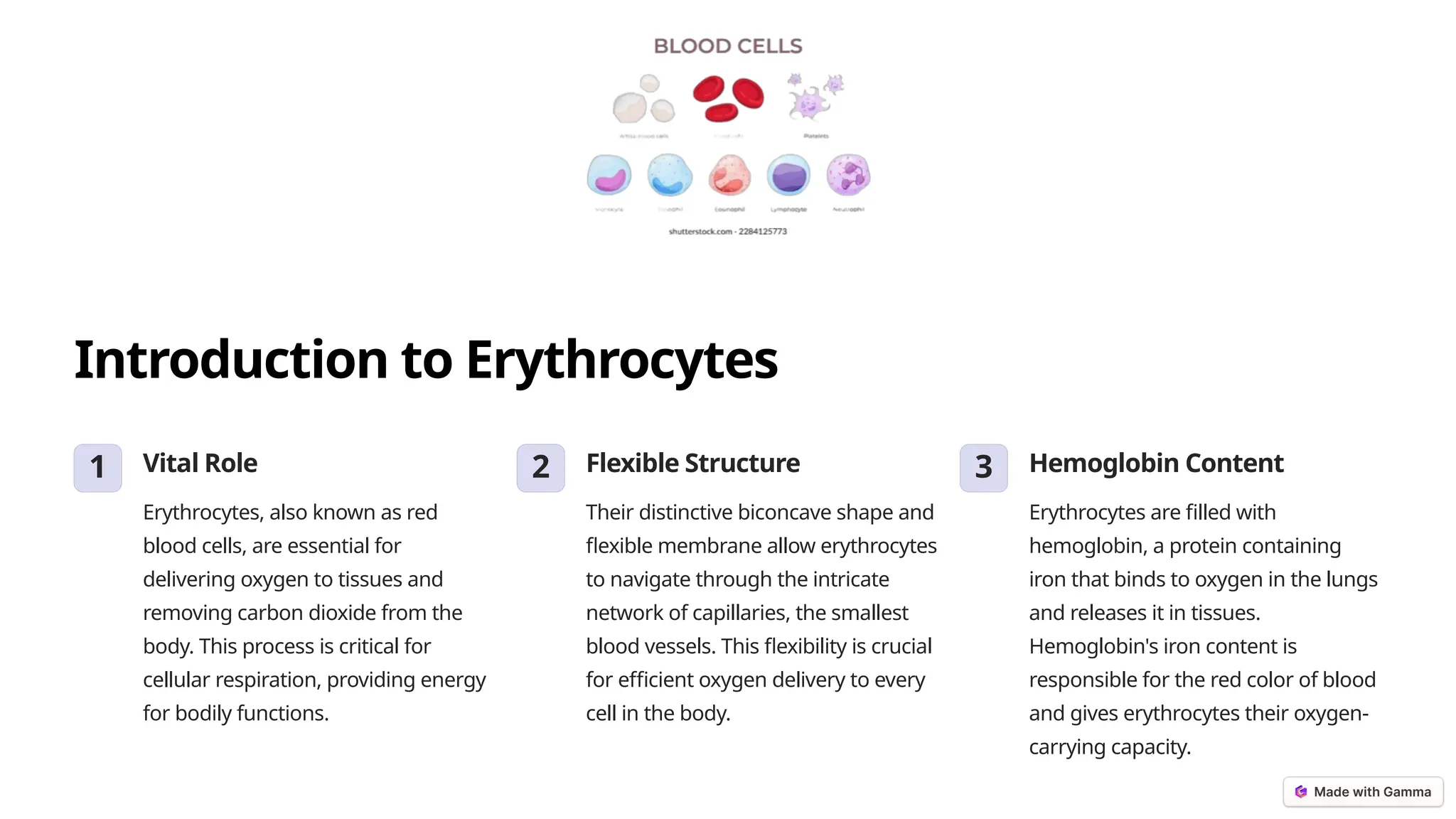
Erythrocytes, also known as red
blood cells, are essential for
delivering oxygen to tissues and
removing carbon dioxide from the
body. This process is critical for
cellular respiration, providing energy
for bodily functions.
2 Flexible Structure
Their distinctive biconcave shape and
flexible membrane allow erythrocytes
to navigate through the intricate
network of capillaries, the smallest
blood vessels. This flexibility is crucial
for efficient oxygen delivery to every
cell in the body.
3 Hemoglobin Content
Erythrocytes are filled with
hemoglobin, a protein containing
iron that binds to oxygen in the lungs
and releases it in tissues.
Hemoglobin's iron content is
responsible for the red color of blood
and gives erythrocytes their oxygen-
carrying capacity.
3.
Osmotic Pressure andRed Blood Cells
Osmotic Balance
Erythrocytes maintain a delicate
balance between the concentration of
solutes inside and outside the cell.
Cell Membrane Permeability
The semi-permeable cell membrane
allows water to move in and out, but
restricts the passage of larger
molecules.
Osmotic Stress
Changes in the external osmotic
environment can cause erythrocytes to
swell, shrink, or even rupture.
4.
Principle of theOsmotic Fragility Test
1 Hypotonic Solution
The test exposes red blood cells to a series of solutions with decreasing osmotic pressure.
2 Cell Membrane Response
As the osmotic pressure decreases, the cells either swell and rupture or remain intact.
3 Hemoglobin Release
The amount of hemoglobin released is measured to determine the osmotic fragility of the erythrocytes.
5.
Sample Collection and
Preparation
BloodSample
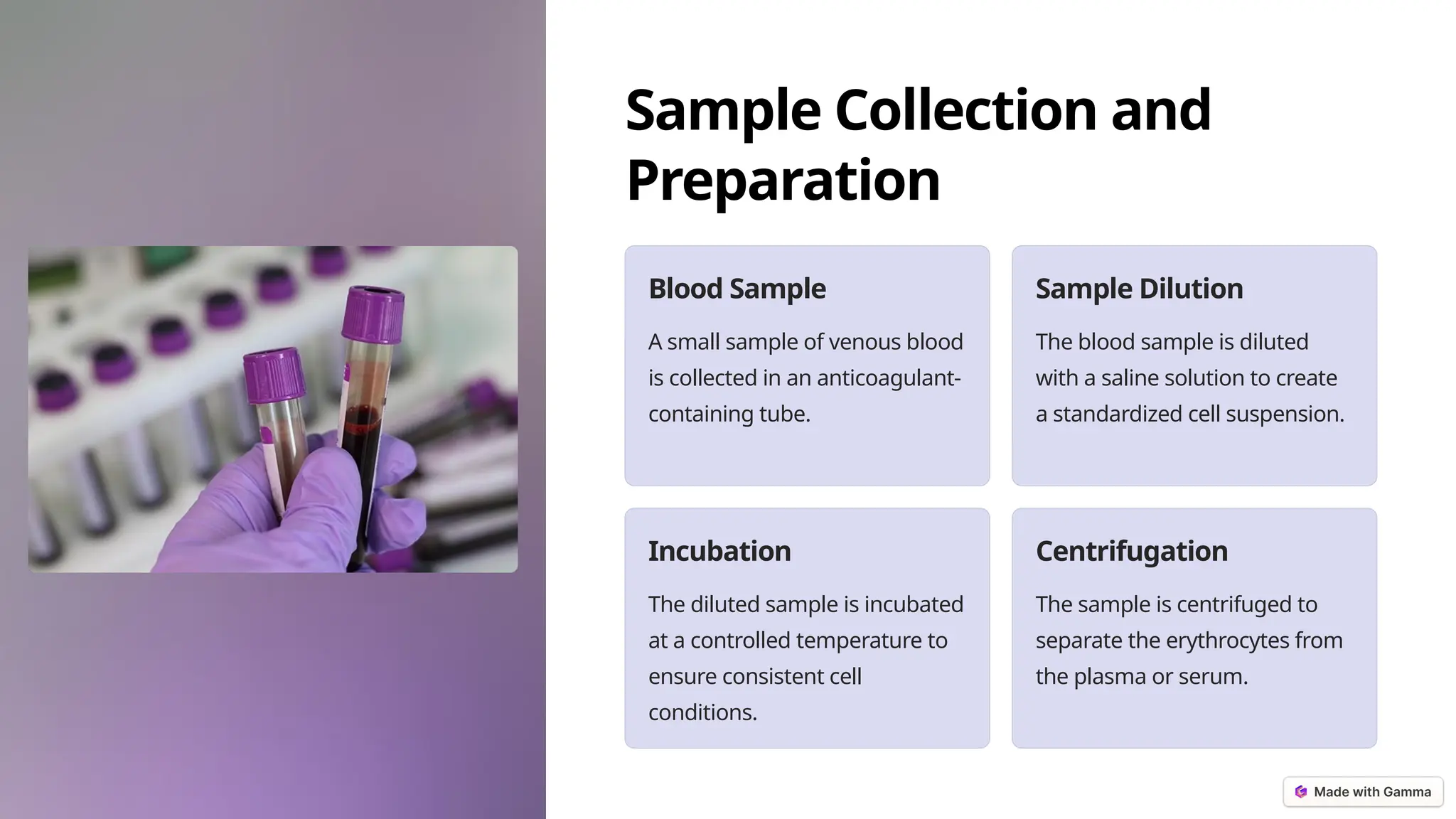
A small sample of venous blood
is collected in an anticoagulant-
containing tube.
Sample Dilution
The blood sample is diluted
with a saline solution to create
a standardized cell suspension.
Incubation
The diluted sample is incubated
at a controlled temperature to
ensure consistent cell
conditions.
Centrifugation
The sample is centrifuged to
separate the erythrocytes from
the plasma or serum.
6.
Procedure of theOsmotic Fragility
Test
Hypotonic Solutions
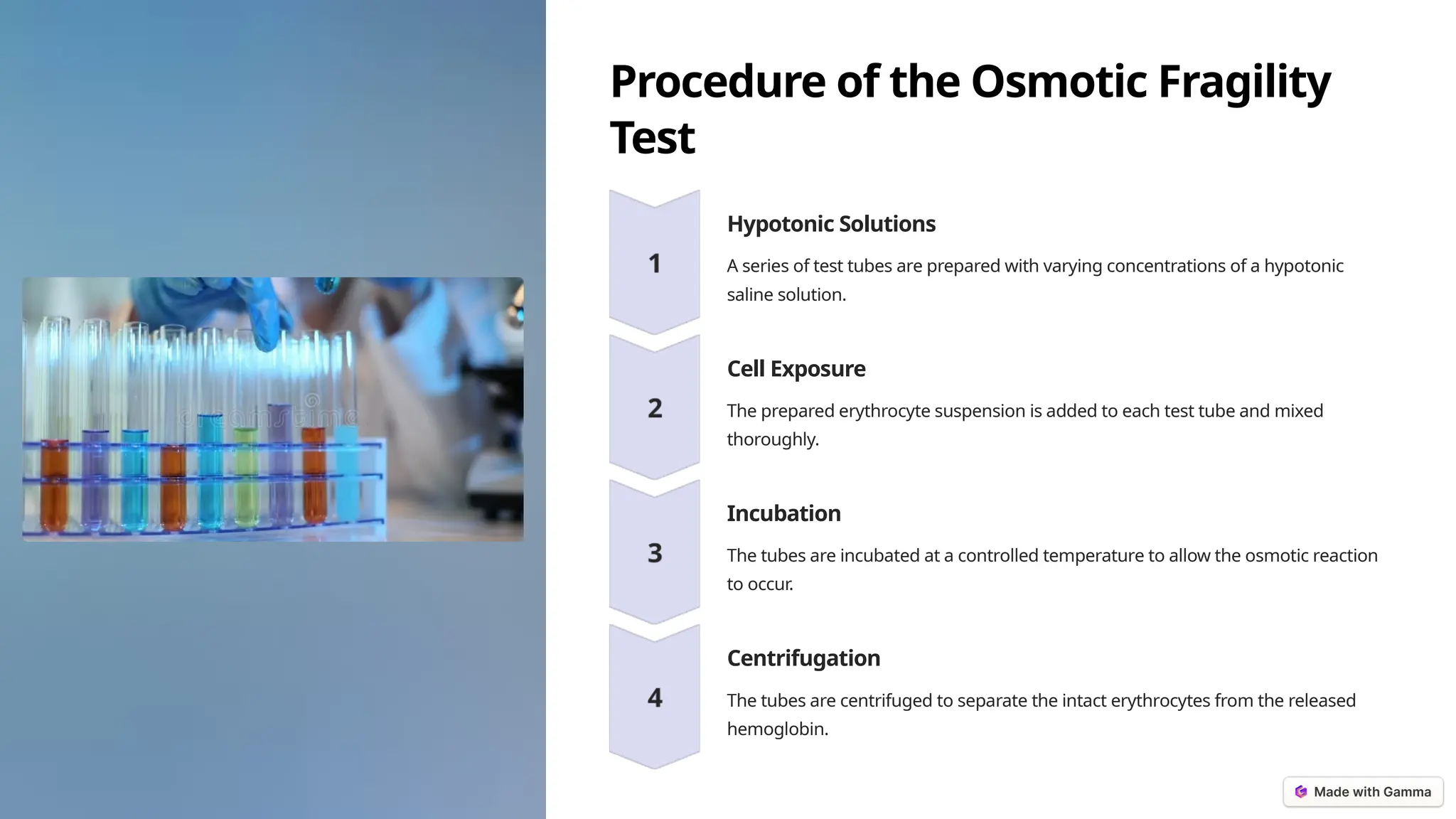
A series of test tubes are prepared with varying concentrations of a hypotonic
saline solution.
Cell Exposure
The prepared erythrocyte suspension is added to each test tube and mixed
thoroughly.
Incubation
The tubes are incubated at a controlled temperature to allow the osmotic reaction
to occur.
Centrifugation
The tubes are centrifuged to separate the intact erythrocytes from the released
hemoglobin.
7.
Calculation and
Interpretation ofResults
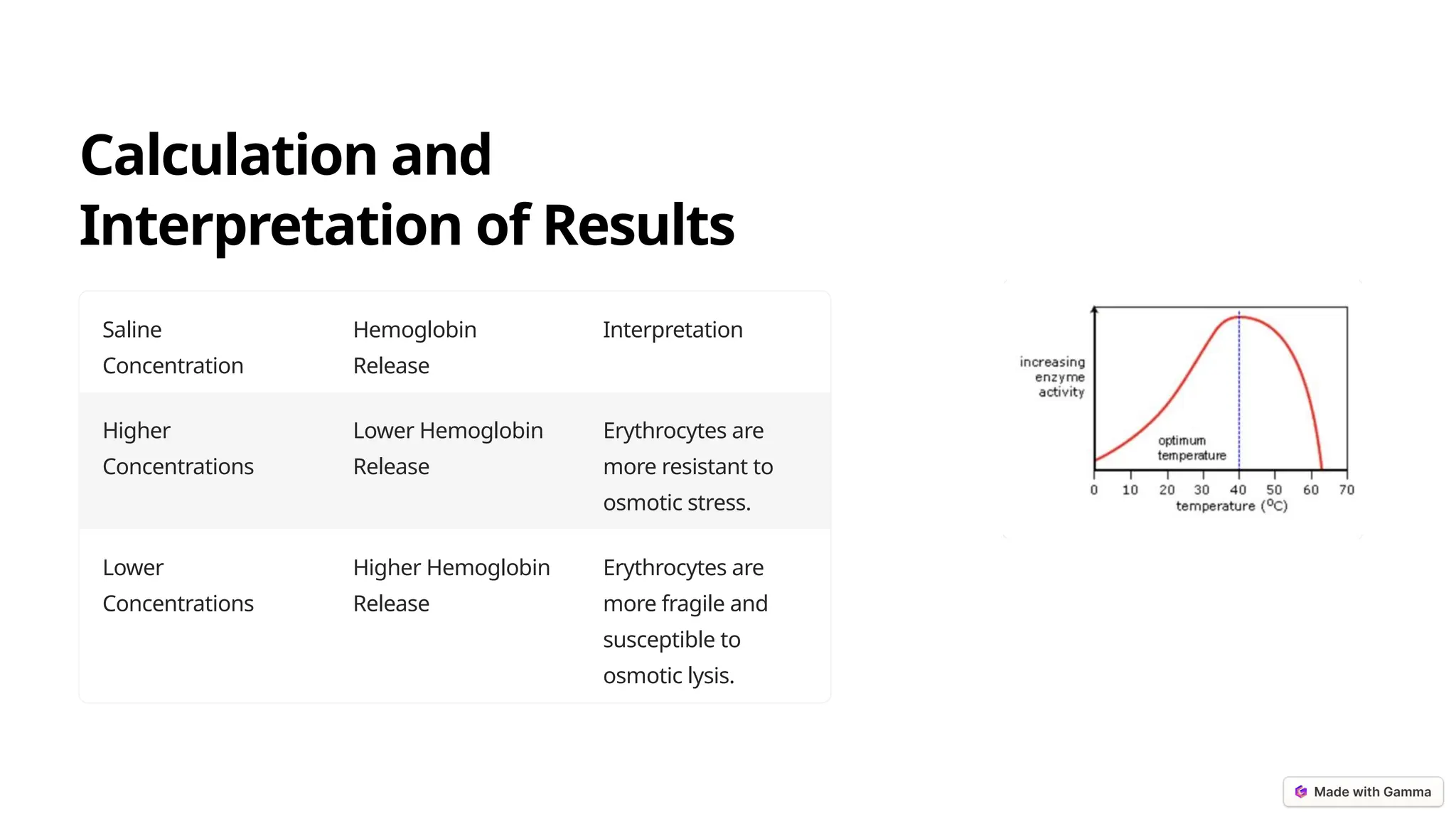
Saline
Concentration
Hemoglobin
Release
Interpretation
Higher
Concentrations
Lower Hemoglobin
Release
Erythrocytes are
more resistant to
osmotic stress.
Lower
Concentrations
Higher Hemoglobin
Release
Erythrocytes are
more fragile and
susceptible to
osmotic lysis.
8.
Clinical Significance ofthe Test
Anemia
Evaluating osmotic fragility can provide insights into certain types of anemia.
Liver Disease
Altered osmotic fragility may indicate underlying liver dysfunction or disease.
Hereditary Disorders
The test can help diagnose genetic conditions affecting red blood cell membrane
structure.
9.
Limitations and
Considerations
1 Variability
Factorslike age, gender, and
individual differences can
affect the normal range of
osmotic fragility.
2 Pre-analytical
Variables
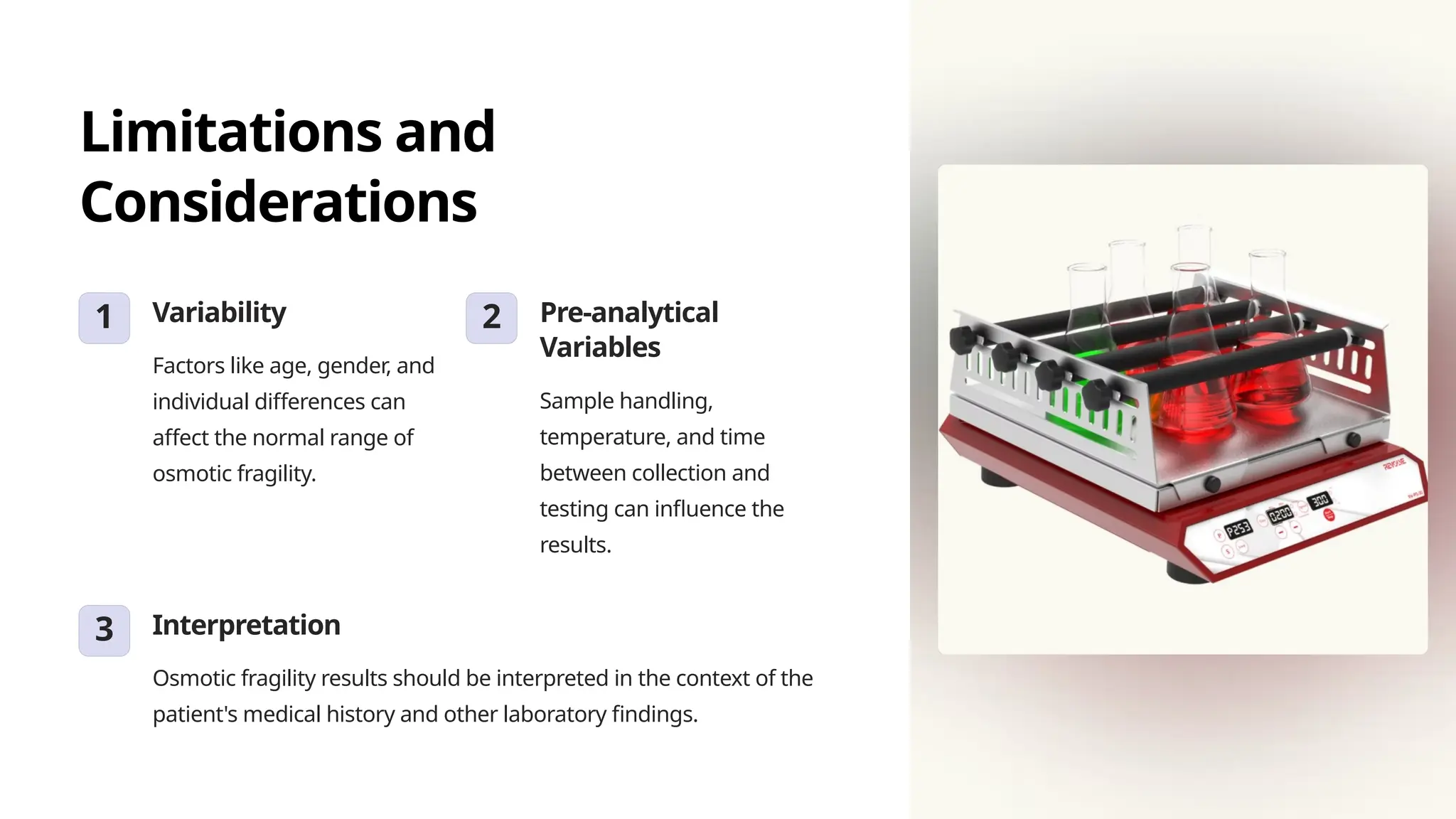
Sample handling,
temperature, and time
between collection and
testing can influence the
results.
3 Interpretation
Osmotic fragility results should be interpreted in the context of the
patient's medical history and other laboratory findings.
10.
Conclusion and Key
Takeaways
Importance
TheErythrocyte Osmotic
Fragility Test is a valuable tool
for assessing the integrity and
function of red blood cells.
Clinical Applications
It provides insights into various
hematological conditions and
can aid in diagnosis and
treatment monitoring.
Careful Interpretation
Accurate interpretation requires consideration of patient factors and
coordination with other laboratory tests.