PROVERBS, MYTH
AND LEGEND
PROVERBS
 A proverb (from Latin:
proverbium) is a simple and
concrete saying, popularly
known and repeated, that
expresses a truth based on
common sense or experience.
They are often metaphorical. A
proverb that describes a basic
rule of conduct may also be
known as a maxim. Proverbs fall
into the category of formulaic
language.
Filipino Proverbs
 Filipino proverbs or
Philippine proverbs are
traditional sayings or maxims
used by Filipinos based on
local culture, wisdom, and
philosophies from Filipino
life. The word proverb
corresponds to the Tagalog
words salawikain, kasabihan
and sawikain, and to the
Ilocano word sarsarita.
Features of Proverbs
 Proverbs are passed down through time with little change in
form.
 Proverbs are often used metaphorically and it is in
understanding their metaphorical nature that we can
unravel their meaning. While “a stitch in time saves nine,”
“don’t count your chickens before they’ve hatched,” and
“don’t throw the baby out with the bathwater” are common
proverbs, few of us stitch clothes, count chickens, or throw
out bathwater.
 Proverbs often make use of grammatical and rhetorical
devices that help make them memorable, including
alliteration, rhyme, parallel structure, repetition of key
words or phrases, and strong imagery
Examples of Filipino
Proverbs
Ang taong walang kibo, nasa
loob ang kulo.
(A quiet person hides his anger.)
MYTH
 A myth is a traditional story
that is rooted in folk beliefs or
religions. They are usually
concerned with the
early history of a people or
explains a natural or social
phenomenon using supernatural
events or beings.
Characteristics of a Myth in
Literature
 Myths are often told as if they were factual. These
stories were meant to offer reasonable explanations;
therefore, the audience believed these stories to be
true.
 Myths include gods and/or goddesses, and these figures
often have supernatural powers.
 Myths include an explanation for how something came to
be in the world. Such stories have ancient origins;
therefore, they did not have the scientific explanations
that we do today for such phenomena as the weather.
 Myths often teach morals to their audience. Within many
myths, there is a lesson to be learned.
Examples of Myths in
Literature
Daedalus and Icarus
FILIPINO MYTH
 Philippine mythology is the
body of stories and epics
originating from, and part
of, the indigenous
Philippine folk religions,
which include various
ethnic faiths distinct from
one another.
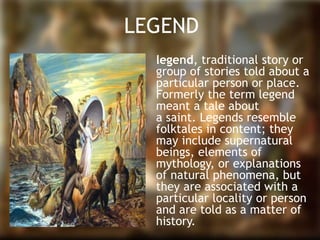
LEGEND
legend, traditional story or
group of stories told about a
particular person or place.
Formerly the term legend
meant a tale about
a saint. Legends resemble
folktales in content; they
may include supernatural
beings, elements of
mythology, or explanations
of natural phenomena, but
they are associated with a
particular locality or person
and are told as a matter of
history.
Characteristics of Legend
 Legends have a specific SETTING: a time, and a place. They often
include beliefs and ideas of a culture.
 Legends have flexible guidelines, and therefore, can begin with
miracles that are believed to have really happened.
 Legends transform over time. Facts will change or be stretched,
HYPERBOLE will enter the PLOTLINE, and colorful details will
remain and/or get more colorful.
 Legends evolve over the years and are kept fresh, lively and
exciting.
 Legends can be prose or poetry. They combine a real event or real
person’s unusual life story with the exaggeration and heroic actions
that we associate with stores of heroes and great national events.
 Legends read like Folk Tales but have a least a bit of historical
truth.
 Legends are different than myths because they portray a historical
hero rather than one who is a god or goddess.
Examples of Legend
The girl who turned into a Fish
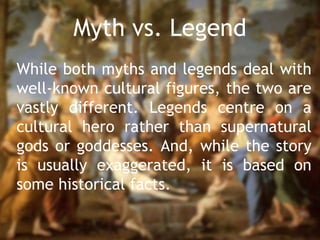
Myth vs. Legend
While both myths and legends deal with
well-known cultural figures, the two are
vastly different. Legends centre on a
cultural hero rather than supernatural
gods or goddesses. And, while the story
is usually exaggerated, it is based on
some historical facts.

E-Portfolio on CMP (1).pptx

  • 1.
  • 2.
    PROVERBS  A proverb(from Latin: proverbium) is a simple and concrete saying, popularly known and repeated, that expresses a truth based on common sense or experience. They are often metaphorical. A proverb that describes a basic rule of conduct may also be known as a maxim. Proverbs fall into the category of formulaic language.
  • 3.
    Filipino Proverbs  Filipinoproverbs or Philippine proverbs are traditional sayings or maxims used by Filipinos based on local culture, wisdom, and philosophies from Filipino life. The word proverb corresponds to the Tagalog words salawikain, kasabihan and sawikain, and to the Ilocano word sarsarita.
  • 4.
    Features of Proverbs Proverbs are passed down through time with little change in form.  Proverbs are often used metaphorically and it is in understanding their metaphorical nature that we can unravel their meaning. While “a stitch in time saves nine,” “don’t count your chickens before they’ve hatched,” and “don’t throw the baby out with the bathwater” are common proverbs, few of us stitch clothes, count chickens, or throw out bathwater.  Proverbs often make use of grammatical and rhetorical devices that help make them memorable, including alliteration, rhyme, parallel structure, repetition of key words or phrases, and strong imagery
  • 5.
    Examples of Filipino Proverbs Angtaong walang kibo, nasa loob ang kulo. (A quiet person hides his anger.)
  • 6.
    MYTH  A mythis a traditional story that is rooted in folk beliefs or religions. They are usually concerned with the early history of a people or explains a natural or social phenomenon using supernatural events or beings.
  • 7.
    Characteristics of aMyth in Literature  Myths are often told as if they were factual. These stories were meant to offer reasonable explanations; therefore, the audience believed these stories to be true.  Myths include gods and/or goddesses, and these figures often have supernatural powers.  Myths include an explanation for how something came to be in the world. Such stories have ancient origins; therefore, they did not have the scientific explanations that we do today for such phenomena as the weather.  Myths often teach morals to their audience. Within many myths, there is a lesson to be learned.
  • 8.
    Examples of Mythsin Literature Daedalus and Icarus
  • 9.
    FILIPINO MYTH  Philippinemythology is the body of stories and epics originating from, and part of, the indigenous Philippine folk religions, which include various ethnic faiths distinct from one another.
  • 10.
    LEGEND legend, traditional storyor group of stories told about a particular person or place. Formerly the term legend meant a tale about a saint. Legends resemble folktales in content; they may include supernatural beings, elements of mythology, or explanations of natural phenomena, but they are associated with a particular locality or person and are told as a matter of history.
  • 11.
    Characteristics of Legend Legends have a specific SETTING: a time, and a place. They often include beliefs and ideas of a culture.  Legends have flexible guidelines, and therefore, can begin with miracles that are believed to have really happened.  Legends transform over time. Facts will change or be stretched, HYPERBOLE will enter the PLOTLINE, and colorful details will remain and/or get more colorful.  Legends evolve over the years and are kept fresh, lively and exciting.  Legends can be prose or poetry. They combine a real event or real person’s unusual life story with the exaggeration and heroic actions that we associate with stores of heroes and great national events.  Legends read like Folk Tales but have a least a bit of historical truth.  Legends are different than myths because they portray a historical hero rather than one who is a god or goddess.
  • 12.
    Examples of Legend Thegirl who turned into a Fish
  • 13.
    Myth vs. Legend Whileboth myths and legends deal with well-known cultural figures, the two are vastly different. Legends centre on a cultural hero rather than supernatural gods or goddesses. And, while the story is usually exaggerated, it is based on some historical facts.