AWARENESS & UTILIZATION OF SOCIAL HEALTH
INSURANCE SCHEME AMONG THE METROPOLITAN
POPULATION OF BIRATNAGAR, NEPAL
Prepared by: Group F
Students Involved:
1. Abhishek Gupta
2. Aditya Vardhan Tiwari
3. Aurindam Banerjee
4. Kumar Gaurav
5. Nishant Rai
6. Pallavi Singh
7. Pawan Kumar Sah
8. Payal Priya
9. Priyasha Choudhary
10. Rohan Raj
11. Sukanya Bharti
12. Ujjwala Singh
13. Umang Raut
Chief Guide:
Dr. Suman Bahadur Singh
Additional Professor
School of Public Health and Community
Medicine
BPKIHS, Dharan
Resident Guides:
1. Dr. Sujil Manandhar
2. Dr. Samir Parajuli
3. Dr. Aakanksha Sharma
4. Dr. Shuvechha Adhikari
Guide
Dr. Vijay Kumar Khanal
Associate Professor
School of Public Health and
Community Medicine
BPKIHS, Dharan
OBJECTIVES
• Introduction
• Rationale
• Objectives of research
• Methodology
Introduction
• The Social Health Insurance is a social protection program of
the Government of Nepal that aims to enable its citizens to
access quality health care services without placing a financial
burden on then.
• The households, communities and govt. are directly involved in
this program.
• It helps prevent people from falling into poverty due to health
care costs i.e. catastrophic expenditure.
• Initiative to health inurance in Nepal began from 1976 through united mission
to Nepal as Lalitpur medical insurance scheme
• National health insurance policy was passed by govt. of Nepal in 2014
• Now the Health Insurance Board covers 75 districts in F/Y 2077/78 being the last
one Mustang
Enrollment:
 people from all ages
 family as a unit(up to 5 members)
 Voluntary
 By enrollment assistant(1/ward)
 Members need to select ‘First service point’
 Yearly Renewal
Contribution amount
• NPR 3,500/yr for family unit (5
members) & NPR 700 for every
additional member.
• 100% subsidy for families of ultra
poor,HIV, MDR-TB, Leprosy, severe
disability patients,etc.
• 100% subsidy for elderly
populaion above 70 yrs
Benefit package
• Public & private health facilities ;
Benefit ceiling of NPR 1,00,000/yr
per family upto 5 members
• with an extra NPR 20,000 for
each additional member(upto
total of NPR 2,00,000)
• Additional NPR 1,00,000 for each
elderly population & for patient
with eight chronic diseases
Rationale
• As access to the highest attainable standard of health is not feasible for
every citizen.
• Some illnesses can impose a huge financial burden on individuals and their
families.
• Health insurance is an effective approach because it alleviates the impact
of illnesses and accident
• Financial burden can be managed wisely by paying small premium which
would lessen stress in medical emergencies.
Rigorous research evidence is lacking regarding the awareness and utilization
of health insurance in Biratnagar, Nepal
Objectives
General Objective
• To explore the awareness and utilization of social health insurance scheme
among the residents of Biratnagar.
Specific objective
• To assess the awareness and enrollment of social health insurance scheme in
selected area of Biratnagar.
• To assess the utilization pattern of health care facilities
• To assess the perception regarding the social health insurance scheme by its
users.
• To find out the factors associated with utilization of social health insurance
scheme.
Methodology
• Study design: Cross-sectional study
• Study population: Permanent resident of
ward no. 18 of Biratnagar Metropolitan
city.
• Study setting: Ward no. 18 of Biratnagar
metropolitan city
Biratnagar serves as the capital of
Province no. 1 located 6km north of
bordering town of Jogbani.According to 2021,
total population is 2,44,750. The total area of
Biratnagar metropolitan city is 77km2 with
population density of 3200/ sq. KM. There
are 19 wards in Biratnagar.
• Study unit: Household
• Sample selection criteria:
• Inclusion Criteria:
• Male or female of age more than 18 years
• Those who gave consent
• Those who have resided in the area for at least 1 year
• Exclusion Criteria:
• People of age less than 18 years of age
• Those who refuse to give consent
• Those who have not resided in the area for at least 1 year
• Study period: 14 days
• Sample size calculation:This study considered 95% Confidential level and 80% power
to estimate the sample size.
About 27.6% of 153 investigated individuals had procured service at least once in a study
conducted among adults of Phulbari-11, Pokhara Metropolitan city.
So, using formula:
Z2 = 4
p = 27.6 ≈ 28
D = 20% of 28 = 2.8
Now using the formula
n = 4*28(100-28)/(5.6)²
= 257.14 ≈ 257
So, we get the sample size of 257
Taking the non-response rate of 10%, we get 282.7
For the matter of convenience, the total sample size will be 285
2
2
D
p)
p(1
X
Z
n


• Sampling techniques
 Households were selected conveniently after taking permission
from ward office. The households from all the seven toles of the
ward were included in this study. The subsequent next house was
approached till the sample size was met.
• Procedure:
Face to face interview was conducted via semi-structured
questionairre which contained socio-demographic characteristics of
respondent and questions regarding awareness and utilization of SHIS.
Objectives
• Results of study
• Limitations
• Conclusion
• Recommendations
Results of the study
Characteristics Category Frequency Percentage(%)
Age
(Mean age 44.48
SD ± 13.435)
<30
30-40
40-50
50-60
>60
65
75
60
69
37
21.2
24.5
19.6
22.5
12.1
Gender Male
Female
196
110
64.1
35.9
Religion Hindu
Muslim
304
2
99.3
0.7
Ethnicity Brahmin
Chhetri
Madhesi
Janjati
Dalit
Others
5
7
201
68
21
4
1.6
2.3
65.7
22.2
6.9
1.3
Table 1: Socio-demographic characteristics of
the respodents
Marital status Never married
Married
Separated
6
297
3
2.0
97.1
1.0
Educational Status Illiterate
Less than primary school
Primary school completed
Secondary school completed
Higher secondary/PCL completed
Bachelor’s degree completed
Post graduate completed
67
3
56
95
59
13
12
21.9
1.0
18.3
31.0
19.3
4.2
3.9
Occupation Government
Non – government
Self employed/Business
Student
Homemaker
Unemployed
24
27
185
5
54
11
7.8
8.8
60.5
1.6
17.6
3.6
Contd.
Table 2: Poverty line
≤1.9
>1.9
Category Frequency Percent(%)
Below poverty line(≤1.9$) 256 83.7
Above poverty line(>1.9$) 50 16.3
B) AWARENESS
Fig 1: Have you heard about health insurance
Table 3: Source of information
Yes
94.8%
No
5.2
%
Category Frequency Percent
Television
Friends/Relatives
Friend/Relatives/Any govt.
awareness programmes
Newspaper/Magazines
Any government programs
Others
5
106
62
2
63
52
5.2
1.6
34.6
20.3
0.7
20.6
17.0
Table 4: Annual contribution amount for a family up to 5 and more than 5
members
Table 5: Annual benefit ceiling for a family up to 5 and more than 5 members?
Category Frequency Percent
NRs. 3500(for ≤ 5 members) and NRs.
700 per extra member.
Other than NRs. 3500(for ≤ 5members)
and other than NRs. 700 per extra
Don’t know
247
13
46
80.7
4.2
15.0
Category Frequency Percent
NRs. 100,000 (for ≤ 5 members) and
NRs. 20,000 per extra member
Other than NRs. 100,000(for ≤ 5
members) and other than NRs.
20,000 per extra member
Don’t know
222
31
53
72.5
10.1
17.3
C)ENROLLMENT
Fig 2: Enrollment in any health insurance scheme
Table 6: If yes, type of health insurance enrolled
Yes
71.2%
No
28.8%
Category Frequency Percent
Public
Private
216
2
99.1
0.9
Fig 3: Enrollment to SHIS
Table 7: Source of financing for premium payment
Yes
69.9%
No
30.1%
Category Frequency Percent
Salary
Sale of assets
Paymnt by the
organizations/donations
198
12
4
92.5
5.6
1.9
Table 8: Duration of enrollment
Fig 4: Renewal percentage among enrolled?
Category Frequency Percent
1-2 years
5-10 years
207
7
96.7
3.3
Yes
75.2%
No
24.8%
D)KNOWLEDGE AND PERCEPTION OF SHIS
Fig 5: Knowledge about the health services provided by SHIS
Yes
79.4%
No
20.6%
Fig 6: Ability to afford SHIS(Those who were not enrolled)
Table 9: Reason of not enrolling to SHIS despite being able to afford
Yes
91.5%
No
8.5%
Category Frequency Percent
Accessibility/service
point is far
Have no trust in
facility
Other options are
easy to access
Unaware
Others
15
34
12
28
3
4.9
11.1
3.9
9.2
1.0
Fig 7: Services provided by SHIS adequate or not as per the
premium paid
Fig 8: Feeling regarding the amount of premium being paid
Adequate
95.8%
Inadequate
4.2%
Affordable
93.9%
Expensive
6.1%
E) UTILIZATION OF SHIS
Table 10: No. of times the family utilized the SHIS in past 1 year
Table 11: Fulfillment of medical requirement by services provided by SHIS
Table 12: Significant reduction of medical expenditure on utilizing SHIS
Category Frequency Percent
1-2 times 157 83.1
More than 2 times 32 16.9
Category Frequency Percent
Yes 196 91.6
No 18 8.4
Category Frequency Percent
Yes 206 67.3
No 10 3.3
F) UTILIZATION OF HEALTH CARE CENTERS
Table 13: Preference of health care centers when sick
Category Frequency Percent
Private hospital 75 24.5
Private clinic 29 9.5
Public hospital 166 54.2
Primary health care center 1 0.3
Others 35 11.4
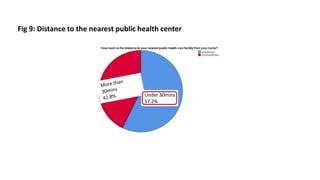
Fig 9: Distance to the nearest public health center
Under 30mins
57.2%
• Limitation
 Time limit of 14 days
 Data could not be generalized among whole population of Biratnagar
• Conclusion
From the study among 306 households of 18 no. ward of Biratnagar metropolitan
city, we came to know that:
 Majority of respondents (83.7%) were below poverty line
 Even though 94.8% of respondents have heard about the health insurance, only
71.2% have enrolled to health insurance out of which 69.9% were enrolled to SHIS
 96.7% of respondents(who were enrolled to SHIS) were enrolled for 1-2yrs &
75.2% already renewed the scheme
contd.
 91.5% of respondents(who were not enrolled) have ability to afford SHIS though they
were not enrolled as 11.1 % of them have no trust in facility & 9.2% were unaware
about scheme.
 About perception, 95.8% of total respondents thought services provided by SHIS was
adequate & 93.9% felt affordable amount of premium being paid.
 Those who were enrolled to SHIS, 83.1% of them have utilized the scheme for 1-2
times in past 1yr & medical requirements of 91.6% of them were fulfilled by services
provided by SHIS
 About utilization of health care centers 54.2% of total respondents used to visit
public hospital and 57.2% replied the time taken to reach nearest public health care
center from home was under 30mins.
• Recommendation
 Government should increase budget in social health insurance.
 Awareness should be provided to people.
 Proper and systemic procedure should be implemented in health
care centers .
 Training should be provided to health care providers
 Sufficient drugs should be provided to health care centers.
THANK YOU

epidman ppt.pptx

  • 1.
    AWARENESS & UTILIZATIONOF SOCIAL HEALTH INSURANCE SCHEME AMONG THE METROPOLITAN POPULATION OF BIRATNAGAR, NEPAL Prepared by: Group F
  • 2.
    Students Involved: 1. AbhishekGupta 2. Aditya Vardhan Tiwari 3. Aurindam Banerjee 4. Kumar Gaurav 5. Nishant Rai 6. Pallavi Singh 7. Pawan Kumar Sah 8. Payal Priya 9. Priyasha Choudhary 10. Rohan Raj 11. Sukanya Bharti 12. Ujjwala Singh 13. Umang Raut
  • 3.
    Chief Guide: Dr. SumanBahadur Singh Additional Professor School of Public Health and Community Medicine BPKIHS, Dharan Resident Guides: 1. Dr. Sujil Manandhar 2. Dr. Samir Parajuli 3. Dr. Aakanksha Sharma 4. Dr. Shuvechha Adhikari Guide Dr. Vijay Kumar Khanal Associate Professor School of Public Health and Community Medicine BPKIHS, Dharan
  • 4.
    OBJECTIVES • Introduction • Rationale •Objectives of research • Methodology
  • 5.
    Introduction • The SocialHealth Insurance is a social protection program of the Government of Nepal that aims to enable its citizens to access quality health care services without placing a financial burden on then. • The households, communities and govt. are directly involved in this program. • It helps prevent people from falling into poverty due to health care costs i.e. catastrophic expenditure.
  • 6.
    • Initiative tohealth inurance in Nepal began from 1976 through united mission to Nepal as Lalitpur medical insurance scheme • National health insurance policy was passed by govt. of Nepal in 2014 • Now the Health Insurance Board covers 75 districts in F/Y 2077/78 being the last one Mustang Enrollment:  people from all ages  family as a unit(up to 5 members)  Voluntary  By enrollment assistant(1/ward)  Members need to select ‘First service point’  Yearly Renewal
  • 7.
    Contribution amount • NPR3,500/yr for family unit (5 members) & NPR 700 for every additional member. • 100% subsidy for families of ultra poor,HIV, MDR-TB, Leprosy, severe disability patients,etc. • 100% subsidy for elderly populaion above 70 yrs Benefit package • Public & private health facilities ; Benefit ceiling of NPR 1,00,000/yr per family upto 5 members • with an extra NPR 20,000 for each additional member(upto total of NPR 2,00,000) • Additional NPR 1,00,000 for each elderly population & for patient with eight chronic diseases
  • 8.
    Rationale • As accessto the highest attainable standard of health is not feasible for every citizen. • Some illnesses can impose a huge financial burden on individuals and their families. • Health insurance is an effective approach because it alleviates the impact of illnesses and accident • Financial burden can be managed wisely by paying small premium which would lessen stress in medical emergencies. Rigorous research evidence is lacking regarding the awareness and utilization of health insurance in Biratnagar, Nepal
  • 9.
    Objectives General Objective • Toexplore the awareness and utilization of social health insurance scheme among the residents of Biratnagar. Specific objective • To assess the awareness and enrollment of social health insurance scheme in selected area of Biratnagar. • To assess the utilization pattern of health care facilities • To assess the perception regarding the social health insurance scheme by its users. • To find out the factors associated with utilization of social health insurance scheme.
  • 10.
    Methodology • Study design:Cross-sectional study • Study population: Permanent resident of ward no. 18 of Biratnagar Metropolitan city. • Study setting: Ward no. 18 of Biratnagar metropolitan city Biratnagar serves as the capital of Province no. 1 located 6km north of bordering town of Jogbani.According to 2021, total population is 2,44,750. The total area of Biratnagar metropolitan city is 77km2 with population density of 3200/ sq. KM. There are 19 wards in Biratnagar.
  • 11.
    • Study unit:Household • Sample selection criteria: • Inclusion Criteria: • Male or female of age more than 18 years • Those who gave consent • Those who have resided in the area for at least 1 year • Exclusion Criteria: • People of age less than 18 years of age • Those who refuse to give consent • Those who have not resided in the area for at least 1 year
  • 12.
    • Study period:14 days • Sample size calculation:This study considered 95% Confidential level and 80% power to estimate the sample size. About 27.6% of 153 investigated individuals had procured service at least once in a study conducted among adults of Phulbari-11, Pokhara Metropolitan city. So, using formula: Z2 = 4 p = 27.6 ≈ 28 D = 20% of 28 = 2.8 Now using the formula n = 4*28(100-28)/(5.6)² = 257.14 ≈ 257 So, we get the sample size of 257 Taking the non-response rate of 10%, we get 282.7 For the matter of convenience, the total sample size will be 285 2 2 D p) p(1 X Z n  
  • 13.
    • Sampling techniques Households were selected conveniently after taking permission from ward office. The households from all the seven toles of the ward were included in this study. The subsequent next house was approached till the sample size was met. • Procedure: Face to face interview was conducted via semi-structured questionairre which contained socio-demographic characteristics of respondent and questions regarding awareness and utilization of SHIS.
  • 14.
    Objectives • Results ofstudy • Limitations • Conclusion • Recommendations
  • 15.
  • 16.
    Characteristics Category FrequencyPercentage(%) Age (Mean age 44.48 SD ± 13.435) <30 30-40 40-50 50-60 >60 65 75 60 69 37 21.2 24.5 19.6 22.5 12.1 Gender Male Female 196 110 64.1 35.9 Religion Hindu Muslim 304 2 99.3 0.7 Ethnicity Brahmin Chhetri Madhesi Janjati Dalit Others 5 7 201 68 21 4 1.6 2.3 65.7 22.2 6.9 1.3 Table 1: Socio-demographic characteristics of the respodents
  • 17.
    Marital status Nevermarried Married Separated 6 297 3 2.0 97.1 1.0 Educational Status Illiterate Less than primary school Primary school completed Secondary school completed Higher secondary/PCL completed Bachelor’s degree completed Post graduate completed 67 3 56 95 59 13 12 21.9 1.0 18.3 31.0 19.3 4.2 3.9 Occupation Government Non – government Self employed/Business Student Homemaker Unemployed 24 27 185 5 54 11 7.8 8.8 60.5 1.6 17.6 3.6 Contd.
  • 18.
    Table 2: Povertyline ≤1.9 >1.9 Category Frequency Percent(%) Below poverty line(≤1.9$) 256 83.7 Above poverty line(>1.9$) 50 16.3
  • 19.
    B) AWARENESS Fig 1:Have you heard about health insurance Table 3: Source of information Yes 94.8% No 5.2 % Category Frequency Percent Television Friends/Relatives Friend/Relatives/Any govt. awareness programmes Newspaper/Magazines Any government programs Others 5 106 62 2 63 52 5.2 1.6 34.6 20.3 0.7 20.6 17.0
  • 20.
    Table 4: Annualcontribution amount for a family up to 5 and more than 5 members Table 5: Annual benefit ceiling for a family up to 5 and more than 5 members? Category Frequency Percent NRs. 3500(for ≤ 5 members) and NRs. 700 per extra member. Other than NRs. 3500(for ≤ 5members) and other than NRs. 700 per extra Don’t know 247 13 46 80.7 4.2 15.0 Category Frequency Percent NRs. 100,000 (for ≤ 5 members) and NRs. 20,000 per extra member Other than NRs. 100,000(for ≤ 5 members) and other than NRs. 20,000 per extra member Don’t know 222 31 53 72.5 10.1 17.3
  • 21.
    C)ENROLLMENT Fig 2: Enrollmentin any health insurance scheme Table 6: If yes, type of health insurance enrolled Yes 71.2% No 28.8% Category Frequency Percent Public Private 216 2 99.1 0.9
  • 22.
    Fig 3: Enrollmentto SHIS Table 7: Source of financing for premium payment Yes 69.9% No 30.1% Category Frequency Percent Salary Sale of assets Paymnt by the organizations/donations 198 12 4 92.5 5.6 1.9
  • 23.
    Table 8: Durationof enrollment Fig 4: Renewal percentage among enrolled? Category Frequency Percent 1-2 years 5-10 years 207 7 96.7 3.3 Yes 75.2% No 24.8%
  • 24.
    D)KNOWLEDGE AND PERCEPTIONOF SHIS Fig 5: Knowledge about the health services provided by SHIS Yes 79.4% No 20.6%
  • 25.
    Fig 6: Abilityto afford SHIS(Those who were not enrolled) Table 9: Reason of not enrolling to SHIS despite being able to afford Yes 91.5% No 8.5% Category Frequency Percent Accessibility/service point is far Have no trust in facility Other options are easy to access Unaware Others 15 34 12 28 3 4.9 11.1 3.9 9.2 1.0
  • 26.
    Fig 7: Servicesprovided by SHIS adequate or not as per the premium paid Fig 8: Feeling regarding the amount of premium being paid Adequate 95.8% Inadequate 4.2% Affordable 93.9% Expensive 6.1%
  • 27.
    E) UTILIZATION OFSHIS Table 10: No. of times the family utilized the SHIS in past 1 year Table 11: Fulfillment of medical requirement by services provided by SHIS Table 12: Significant reduction of medical expenditure on utilizing SHIS Category Frequency Percent 1-2 times 157 83.1 More than 2 times 32 16.9 Category Frequency Percent Yes 196 91.6 No 18 8.4 Category Frequency Percent Yes 206 67.3 No 10 3.3
  • 28.
    F) UTILIZATION OFHEALTH CARE CENTERS Table 13: Preference of health care centers when sick Category Frequency Percent Private hospital 75 24.5 Private clinic 29 9.5 Public hospital 166 54.2 Primary health care center 1 0.3 Others 35 11.4
  • 29.
    Fig 9: Distanceto the nearest public health center Under 30mins 57.2%
  • 30.
    • Limitation  Timelimit of 14 days  Data could not be generalized among whole population of Biratnagar • Conclusion From the study among 306 households of 18 no. ward of Biratnagar metropolitan city, we came to know that:  Majority of respondents (83.7%) were below poverty line  Even though 94.8% of respondents have heard about the health insurance, only 71.2% have enrolled to health insurance out of which 69.9% were enrolled to SHIS  96.7% of respondents(who were enrolled to SHIS) were enrolled for 1-2yrs & 75.2% already renewed the scheme
  • 31.
    contd.  91.5% ofrespondents(who were not enrolled) have ability to afford SHIS though they were not enrolled as 11.1 % of them have no trust in facility & 9.2% were unaware about scheme.  About perception, 95.8% of total respondents thought services provided by SHIS was adequate & 93.9% felt affordable amount of premium being paid.  Those who were enrolled to SHIS, 83.1% of them have utilized the scheme for 1-2 times in past 1yr & medical requirements of 91.6% of them were fulfilled by services provided by SHIS  About utilization of health care centers 54.2% of total respondents used to visit public hospital and 57.2% replied the time taken to reach nearest public health care center from home was under 30mins.
  • 32.
    • Recommendation  Governmentshould increase budget in social health insurance.  Awareness should be provided to people.  Proper and systemic procedure should be implemented in health care centers .  Training should be provided to health care providers  Sufficient drugs should be provided to health care centers.
  • 33.