THE
ENVIRONMENT
SCIENCE, TECHNOLOGY & SOCIETY
INSTRUCTOR: MS. NOVIE JHADE BELLEZA
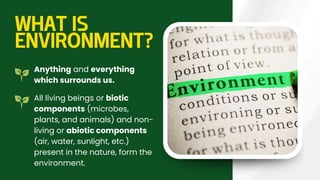
WHAT IS
ENVIRONMENT?
Anything and everything
which surrounds us.
All living beings or biotic
components (microbes,
plants, and animals) and non-
living or abiotic components
(air, water, sunlight, etc.)
present in the nature, form the
environment.
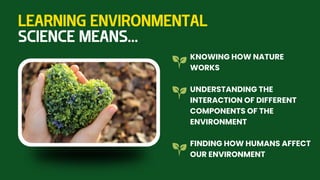
LEARNING ENVIRONMENTAL
SCIENCE MEANS...
KNOWING HOW NATURE
WORKS
UNDERSTANDING THE
INTERACTION OF DIFFERENT
COMPONENTS OF THE
ENVIRONMENT
FINDING HOW HUMANS AFFECT
OUR ENVIRONMENT
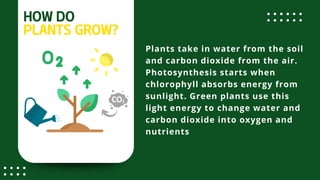
HOW DO
PLANTS GROW?
Plants take in water from the soil
and carbon dioxide from the air.
Photosynthesis starts when
chlorophyll absorbs energy from
sunlight. Green plants use this
light energy to change water and
carbon dioxide into oxygen and
nutrients
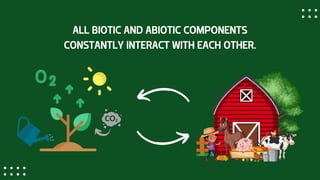
ALL BIOTIC AND ABIOTIC COMPONENTS
CONSTANTLY INTERACT WITH EACH OTHER.
We engage in community outreach through
educational programs focused on sustainable
agriculture and healthy eating habits.
EDUCATION PROGRAMS
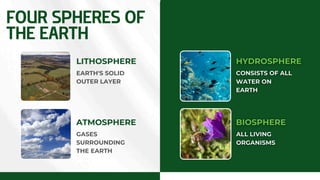
FOUR SPHERES OF
THE EARTH
LITHOSPHERE
ATMOSPHERE
EARTH'S SOLID
OUTER LAYER
GASES
SURROUNDING
THE EARTH
HOWEVER, HUMAN ACTIVITIES
AFFECTS THE BALANCE IN THE
FOUR SPHERES.
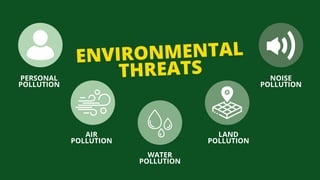
ENVIRONMENTAL
THREATS
PERSONAL
POLLUTION
NOISE
POLLUTION
AIR
POLLUTION
LAND
POLLUTION
WATER
POLLUTION
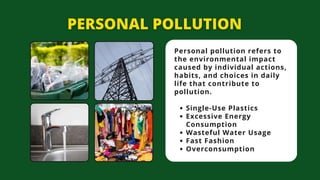
Personal pollution refers to
the environmental impact
caused by individual actions,
habits, and choices in daily
life that contribute to
pollution.
Single-Use Plastics
Excessive Energy
Consumption
Wasteful Water Usage
Fast Fashion
Overconsumption
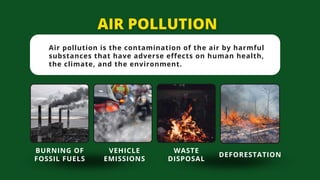
Air pollution is the contamination of the air by harmful
substances that have adverse effects on human health,
the climate, and the environment.
BURNING OF
FOSSIL FUELS
VEHICLE
EMISSIONS
WASTE
DISPOSAL
DEFORESTATION
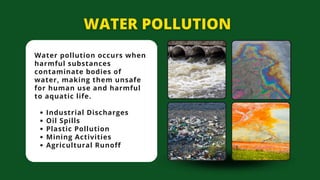
Water pollution occurs when
harmful substances
contaminate bodies of
water, making them unsafe
for human use and harmful
to aquatic life.
Industrial Discharges
Oil Spills
Plastic Pollution
Mining Activities
Agricultural Runoff
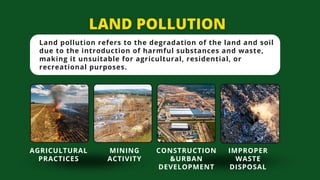
Land pollution refers to the degradation of the land and soil
due to the introduction of harmful substances and waste,
making it unsuitable for agricultural, residential, or
recreational purposes.
AGRICULTURAL
PRACTICES
MINING
ACTIVITY
CONSTRUCTION
&URBAN
DEVELOPMENT
IMPROPER
WASTE
DISPOSAL
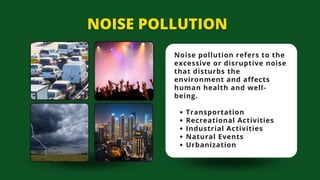
Noise pollution refers to the
excessive or disruptive noise
that disturbs the
environment and affects
human health and well-
being.
Transportation
Recreational Activities
Industrial Activities
Natural Events
Urbanization
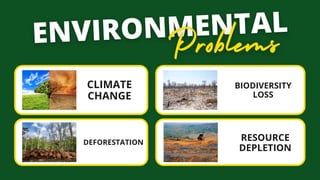
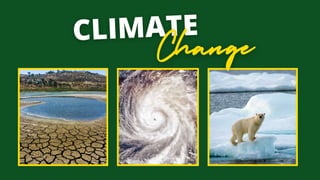
CLIMATE
CHANGE
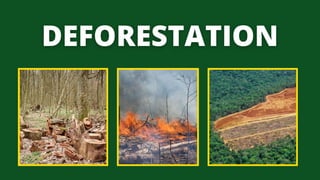
DEFORESTATION
BIODIVERSITY
LOSS
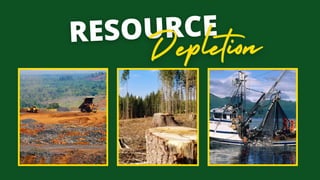
RESOURCE
DEPLETION
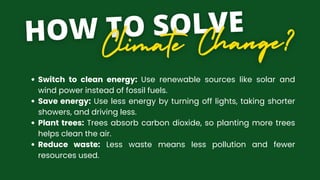
Switch to clean energy: Use renewable sources like solar and
wind power instead of fossil fuels.
Save energy: Use less energy by turning off lights, taking shorter
showers, and driving less.
Plant trees: Trees absorb carbon dioxide, so planting more trees
helps clean the air.
Reduce waste: Less waste means less pollution and fewer
resources used.
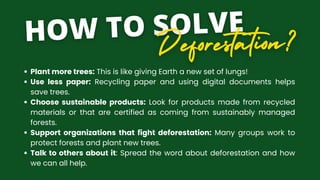
Plant more trees: This is like giving Earth a new set of lungs!
Use less paper: Recycling paper and using digital documents helps
save trees.
Choose sustainable products: Look for products made from recycled
materials or that are certified as coming from sustainably managed
forests.
Support organizations that fight deforestation: Many groups work to
protect forests and plant new trees.
Talk to others about it: Spread the word about deforestation and how
we can all help.
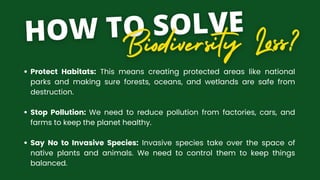
Protect Habitats: This means creating protected areas like national
parks and making sure forests, oceans, and wetlands are safe from
destruction.
Stop Pollution: We need to reduce pollution from factories, cars, and
farms to keep the planet healthy.
Say No to Invasive Species: Invasive species take over the space of
native plants and animals. We need to control them to keep things

balanced.
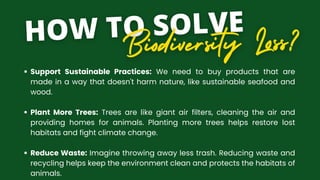
Support Sustainable Practices: We need to buy products that are
made in a way that doesn't harm nature, like sustainable seafood and
wood.
Plant More Trees: Trees are like giant air filters, cleaning the air and
providing homes for animals. Planting more trees helps restore lost
habitats and fight climate change.
Reduce Waste: Imagine throwing away less trash. Reducing waste and
recycling helps keep the environment clean and protects the habitats of
animals.
Use less, waste less: Reduce what we buy, reuse things, and recycle what we can.
Switch to clean energy: Use solar, wind, and water power instead of fossil fuels.
Protect our resources: Use farming and fishing methods that don't harm the
environment.
Be a smart consumer: Choose products made responsibly and support
companies that care about the planet.
WAYS ON HOW YOU CAN PROTECT OUR
ENVIRONMENT
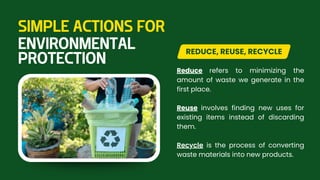
Reduce refers to minimizing the
amount of waste we generate in the
first place.
Reuse involves finding new uses for
existing items instead of discarding
them.
Recycle is the process of converting
waste materials into new products.
REDUCE, REUSE, RECYCLE
SIMPLE ACTIONS FOR
ENVIRONMENTAL
PROTECTION
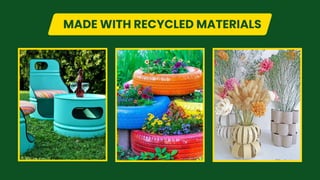
MADE WITH RECYCLED MATERIALS
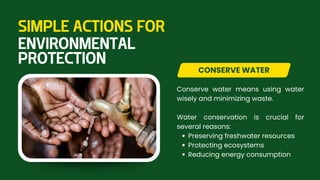
Conserve water means using water
wisely and minimizing waste.
Water conservation is crucial for
several reasons:
Preserving freshwater resources
Protecting ecosystems
Reducing energy consumption
CONSERVE WATER
SIMPLE ACTIONS FOR
ENVIRONMENTAL
PROTECTION
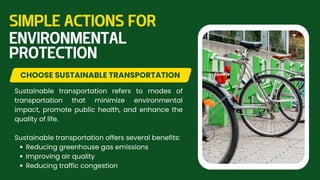
Sustainable transportation refers to modes of
transportation that minimize environmental
impact, promote public health, and enhance the
quality of life.
Sustainable transportation offers several benefits:
Reducing greenhouse gas emissions
Improving air quality
Reducing traffic congestion
CHOOSE SUSTAINABLE TRANSPORTATION
SIMPLE ACTIONS FOR
ENVIRONMENTAL
PROTECTION
Save energy means using energy
efficiently and reducing unnecessary
consumption. This involves adopting
practices that minimize energy use in
homes, workplaces, and transportation.
SAVE ENERGY
SIMPLE ACTIONS FOR
ENVIRONMENTAL
PROTECTION
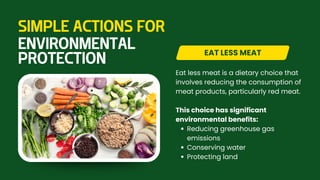
Eat less meat is a dietary choice that
involves reducing the consumption of
meat products, particularly red meat.
This choice has significant
environmental benefits:
Reducing greenhouse gas
emissions
Conserving water
Protecting land
EAT LESS MEAT
SIMPLE ACTIONS FOR
ENVIRONMENTAL
PROTECTION
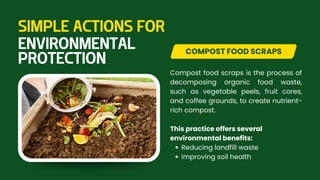
Compost food scraps is the process of
decomposing organic food waste,
such as vegetable peels, fruit cores,
and coffee grounds, to create nutrient-
rich compost.
This practice offers several
environmental benefits:
Reducing landfill waste
Improving soil health
COMPOST FOOD SCRAPS
SIMPLE ACTIONS FOR
ENVIRONMENTAL
PROTECTION
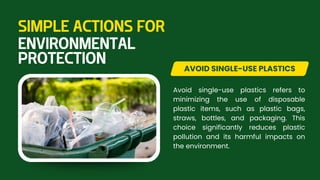
Avoid single-use plastics refers to
minimizing the use of disposable
plastic items, such as plastic bags,
straws, bottles, and packaging. This
choice significantly reduces plastic
pollution and its harmful impacts on
the environment.
AVOID SINGLE-USE PLASTICS
SIMPLE ACTIONS FOR
ENVIRONMENTAL
PROTECTION
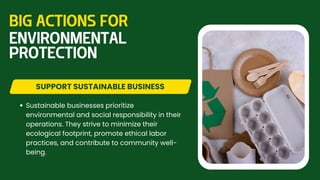
Sustainable businesses prioritize
environmental and social responsibility in their
operations. They strive to minimize their
ecological footprint, promote ethical labor
practices, and contribute to community well-
being.
SUPPORT SUSTAINABLE BUSINESS
BIG ACTIONS FOR
ENVIRONMENTAL
PROTECTION
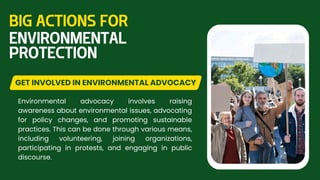
Environmental advocacy involves raising
awareness about environmental issues, advocating
for policy changes, and promoting sustainable
practices. This can be done through various means,
including volunteering, joining organizations,
participating in protests, and engaging in public
discourse.
GET INVOLVED IN ENVIRONMENTAL ADVOCACY
BIG ACTIONS FOR
ENVIRONMENTAL
PROTECTION
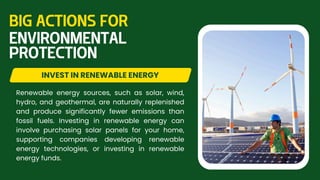
Renewable energy sources, such as solar, wind,
hydro, and geothermal, are naturally replenished
and produce significantly fewer emissions than
fossil fuels. Investing in renewable energy can
involve purchasing solar panels for your home,
supporting companies developing renewable
energy technologies, or investing in renewable
energy funds.
INVEST IN RENEWABLE ENERGY
BIG ACTIONS FOR
ENVIRONMENTAL
PROTECTION
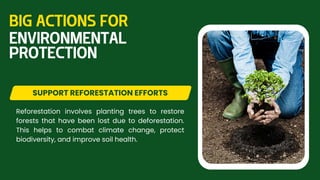
Reforestation involves planting trees to restore
forests that have been lost due to deforestation.
This helps to combat climate change, protect
biodiversity, and improve soil health.
SUPPORT REFORESTATION EFFORTS
BIG ACTIONS FOR
ENVIRONMENTAL
PROTECTION
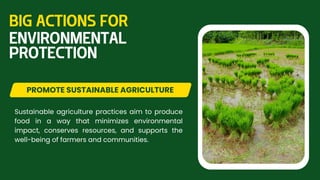
Sustainable agriculture practices aim to produce
food in a way that minimizes environmental
impact, conserves resources, and supports the
well-being of farmers and communities.
PROMOTE SUSTAINABLE AGRICULTURE
BIG ACTIONS FOR
ENVIRONMENTAL
PROTECTION
ENVIRONMENTAL-SCIENCE-WEEK1-3_compressed.pdf

ENVIRONMENTAL-SCIENCE-WEEK1-3_compressed.pdf

  • 1.
    THE ENVIRONMENT SCIENCE, TECHNOLOGY &SOCIETY INSTRUCTOR: MS. NOVIE JHADE BELLEZA
  • 2.
    WHAT IS ENVIRONMENT? Anything andeverything which surrounds us. All living beings or biotic components (microbes, plants, and animals) and non- living or abiotic components (air, water, sunlight, etc.) present in the nature, form the environment.
  • 3.
    LEARNING ENVIRONMENTAL SCIENCE MEANS... KNOWINGHOW NATURE WORKS UNDERSTANDING THE INTERACTION OF DIFFERENT COMPONENTS OF THE ENVIRONMENT FINDING HOW HUMANS AFFECT OUR ENVIRONMENT
  • 4.
    HOW DO PLANTS GROW? Plantstake in water from the soil and carbon dioxide from the air. Photosynthesis starts when chlorophyll absorbs energy from sunlight. Green plants use this light energy to change water and carbon dioxide into oxygen and nutrients
  • 5.
    ALL BIOTIC ANDABIOTIC COMPONENTS CONSTANTLY INTERACT WITH EACH OTHER.
  • 6.
    We engage incommunity outreach through educational programs focused on sustainable agriculture and healthy eating habits. EDUCATION PROGRAMS FOUR SPHERES OF THE EARTH LITHOSPHERE ATMOSPHERE EARTH'S SOLID OUTER LAYER GASES SURROUNDING THE EARTH
  • 7.
    HOWEVER, HUMAN ACTIVITIES AFFECTSTHE BALANCE IN THE FOUR SPHERES.
  • 8.
  • 9.
    Personal pollution refersto the environmental impact caused by individual actions, habits, and choices in daily life that contribute to pollution. Single-Use Plastics Excessive Energy Consumption Wasteful Water Usage Fast Fashion Overconsumption
  • 10.
    Air pollution isthe contamination of the air by harmful substances that have adverse effects on human health, the climate, and the environment. BURNING OF FOSSIL FUELS VEHICLE EMISSIONS WASTE DISPOSAL DEFORESTATION
  • 11.
    Water pollution occurswhen harmful substances contaminate bodies of water, making them unsafe for human use and harmful to aquatic life. Industrial Discharges Oil Spills Plastic Pollution Mining Activities Agricultural Runoff
  • 12.
    Land pollution refersto the degradation of the land and soil due to the introduction of harmful substances and waste, making it unsuitable for agricultural, residential, or recreational purposes. AGRICULTURAL PRACTICES MINING ACTIVITY CONSTRUCTION &URBAN DEVELOPMENT IMPROPER WASTE DISPOSAL
  • 13.
    Noise pollution refersto the excessive or disruptive noise that disturbs the environment and affects human health and well- being. Transportation Recreational Activities Industrial Activities Natural Events Urbanization
  • 14.
  • 16.
    Switch to cleanenergy: Use renewable sources like solar and wind power instead of fossil fuels. Save energy: Use less energy by turning off lights, taking shorter showers, and driving less. Plant trees: Trees absorb carbon dioxide, so planting more trees helps clean the air. Reduce waste: Less waste means less pollution and fewer resources used.
  • 18.
    Plant more trees:This is like giving Earth a new set of lungs! Use less paper: Recycling paper and using digital documents helps save trees. Choose sustainable products: Look for products made from recycled materials or that are certified as coming from sustainably managed forests. Support organizations that fight deforestation: Many groups work to protect forests and plant new trees. Talk to others about it: Spread the word about deforestation and how we can all help.
  • 20.
    Protect Habitats: Thismeans creating protected areas like national parks and making sure forests, oceans, and wetlands are safe from destruction. Stop Pollution: We need to reduce pollution from factories, cars, and farms to keep the planet healthy. Say No to Invasive Species: Invasive species take over the space of native plants and animals. We need to control them to keep things balanced.
  • 21.
    Support Sustainable Practices:We need to buy products that are made in a way that doesn't harm nature, like sustainable seafood and wood. Plant More Trees: Trees are like giant air filters, cleaning the air and providing homes for animals. Planting more trees helps restore lost habitats and fight climate change. Reduce Waste: Imagine throwing away less trash. Reducing waste and recycling helps keep the environment clean and protects the habitats of animals.
  • 23.
    Use less, wasteless: Reduce what we buy, reuse things, and recycle what we can. Switch to clean energy: Use solar, wind, and water power instead of fossil fuels. Protect our resources: Use farming and fishing methods that don't harm the environment. Be a smart consumer: Choose products made responsibly and support companies that care about the planet.
  • 24.
    WAYS ON HOWYOU CAN PROTECT OUR ENVIRONMENT
  • 25.
    Reduce refers tominimizing the amount of waste we generate in the first place. Reuse involves finding new uses for existing items instead of discarding them. Recycle is the process of converting waste materials into new products. REDUCE, REUSE, RECYCLE SIMPLE ACTIONS FOR ENVIRONMENTAL PROTECTION
  • 26.
  • 27.
    Conserve water meansusing water wisely and minimizing waste. Water conservation is crucial for several reasons: Preserving freshwater resources Protecting ecosystems Reducing energy consumption CONSERVE WATER SIMPLE ACTIONS FOR ENVIRONMENTAL PROTECTION
  • 28.
    Sustainable transportation refersto modes of transportation that minimize environmental impact, promote public health, and enhance the quality of life. Sustainable transportation offers several benefits: Reducing greenhouse gas emissions Improving air quality Reducing traffic congestion CHOOSE SUSTAINABLE TRANSPORTATION SIMPLE ACTIONS FOR ENVIRONMENTAL PROTECTION
  • 29.
    Save energy meansusing energy efficiently and reducing unnecessary consumption. This involves adopting practices that minimize energy use in homes, workplaces, and transportation. SAVE ENERGY SIMPLE ACTIONS FOR ENVIRONMENTAL PROTECTION
  • 30.
    Eat less meatis a dietary choice that involves reducing the consumption of meat products, particularly red meat. This choice has significant environmental benefits: Reducing greenhouse gas emissions Conserving water Protecting land EAT LESS MEAT SIMPLE ACTIONS FOR ENVIRONMENTAL PROTECTION
  • 31.
    Compost food scrapsis the process of decomposing organic food waste, such as vegetable peels, fruit cores, and coffee grounds, to create nutrient- rich compost. This practice offers several environmental benefits: Reducing landfill waste Improving soil health COMPOST FOOD SCRAPS SIMPLE ACTIONS FOR ENVIRONMENTAL PROTECTION
  • 32.
    Avoid single-use plasticsrefers to minimizing the use of disposable plastic items, such as plastic bags, straws, bottles, and packaging. This choice significantly reduces plastic pollution and its harmful impacts on the environment. AVOID SINGLE-USE PLASTICS SIMPLE ACTIONS FOR ENVIRONMENTAL PROTECTION
  • 33.
    Sustainable businesses prioritize environmentaland social responsibility in their operations. They strive to minimize their ecological footprint, promote ethical labor practices, and contribute to community well- being. SUPPORT SUSTAINABLE BUSINESS BIG ACTIONS FOR ENVIRONMENTAL PROTECTION
  • 34.
    Environmental advocacy involvesraising awareness about environmental issues, advocating for policy changes, and promoting sustainable practices. This can be done through various means, including volunteering, joining organizations, participating in protests, and engaging in public discourse. GET INVOLVED IN ENVIRONMENTAL ADVOCACY BIG ACTIONS FOR ENVIRONMENTAL PROTECTION
  • 35.
    Renewable energy sources,such as solar, wind, hydro, and geothermal, are naturally replenished and produce significantly fewer emissions than fossil fuels. Investing in renewable energy can involve purchasing solar panels for your home, supporting companies developing renewable energy technologies, or investing in renewable energy funds. INVEST IN RENEWABLE ENERGY BIG ACTIONS FOR ENVIRONMENTAL PROTECTION
  • 36.
    Reforestation involves plantingtrees to restore forests that have been lost due to deforestation. This helps to combat climate change, protect biodiversity, and improve soil health. SUPPORT REFORESTATION EFFORTS BIG ACTIONS FOR ENVIRONMENTAL PROTECTION
  • 37.
    Sustainable agriculture practicesaim to produce food in a way that minimizes environmental impact, conserves resources, and supports the well-being of farmers and communities. PROMOTE SUSTAINABLE AGRICULTURE BIG ACTIONS FOR ENVIRONMENTAL PROTECTION