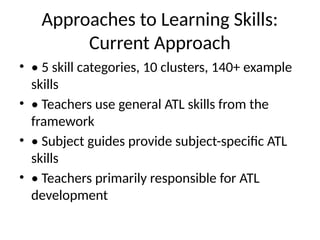
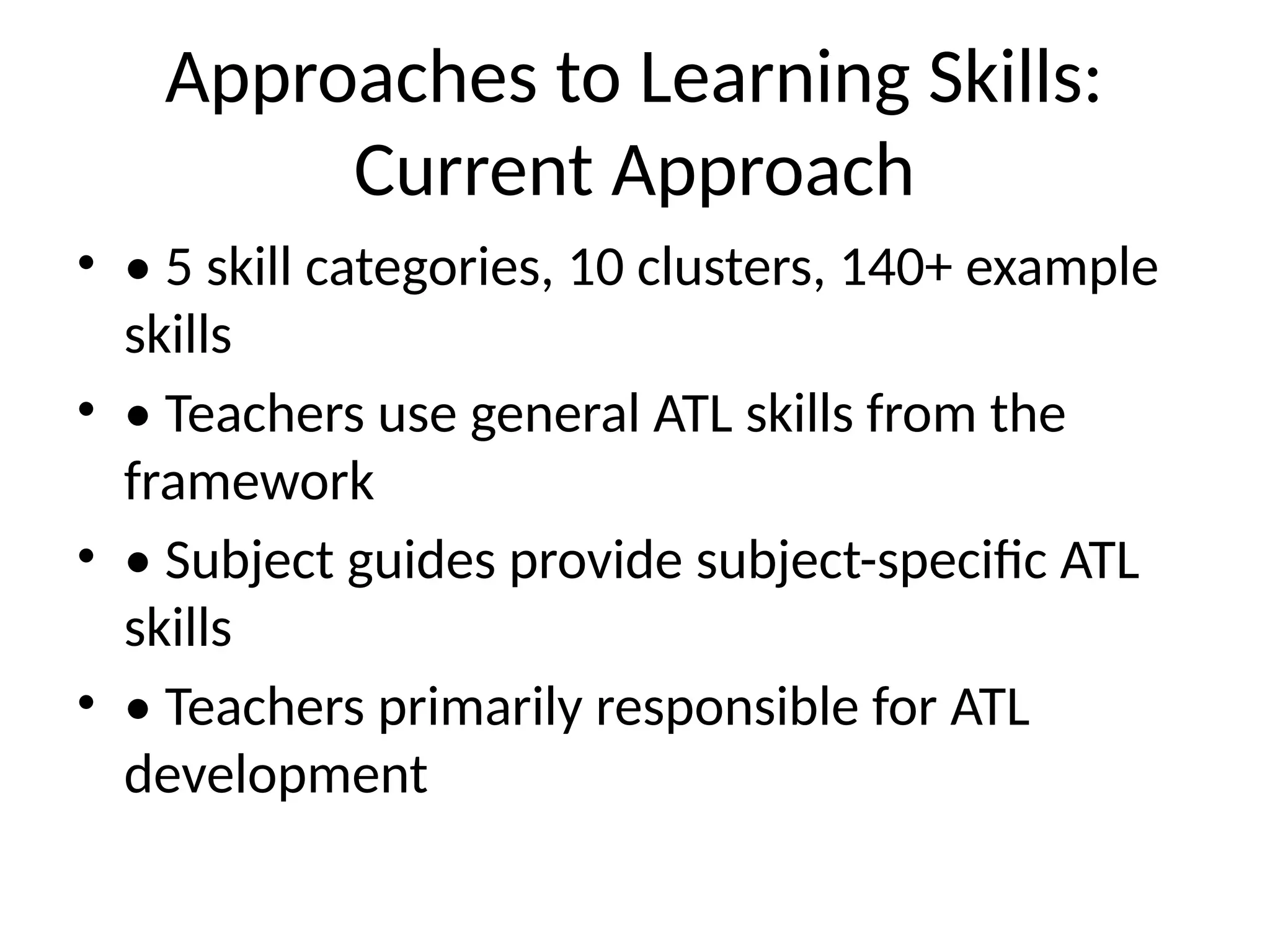
Approaches to LearningSkills:
Current Approach
• • 5 skill categories, 10 clusters, 140+ example
skills
• • Teachers use general ATL skills from the
framework
• • Subject guides provide subject-specific ATL
skills
• • Teachers primarily responsible for ATL
development
2.
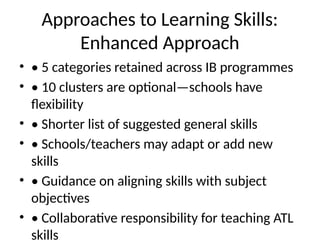
Approaches to LearningSkills:
Enhanced Approach
• • 5 categories retained across IB programmes
• • 10 clusters are optional—schools have
flexibility
• • Shorter list of suggested general skills
• • Schools/teachers may adapt or add new
skills
• • Guidance on aligning skills with subject
objectives
• • Collaborative responsibility for teaching ATL
skills
3.
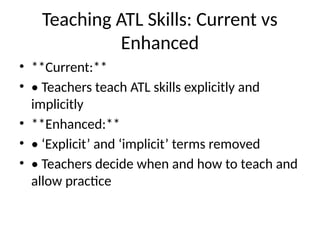
Teaching ATL Skills:Current vs
Enhanced
• **Current:**
• • Teachers teach ATL skills explicitly and
implicitly
• **Enhanced:**
• • ‘Explicit’ and ‘implicit’ terms removed
• • Teachers decide when and how to teach and
allow practice
4.
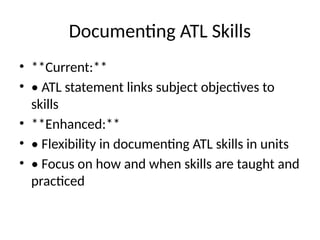
Documenting ATL Skills
•**Current:**
• • ATL statement links subject objectives to
skills
• **Enhanced:**
• • Flexibility in documenting ATL skills in units
• • Focus on how and when skills are taught and
practiced
5.
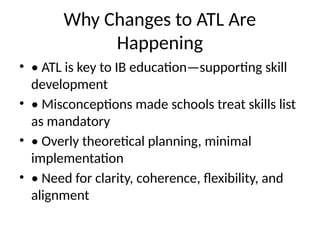
Why Changes toATL Are
Happening
• • ATL is key to IB education—supporting skill
development
• • Misconceptions made schools treat skills list
as mandatory
• • Overly theoretical planning, minimal
implementation
• • Need for clarity, coherence, flexibility, and
alignment
6.
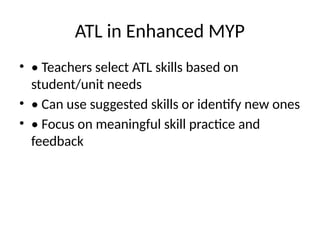
ATL in EnhancedMYP
• • Teachers select ATL skills based on
student/unit needs
• • Can use suggested skills or identify new ones
• • Focus on meaningful skill practice and
feedback
7.
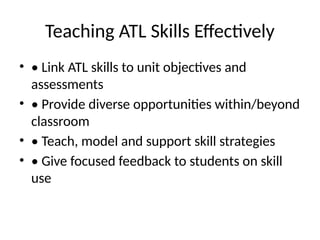
Teaching ATL SkillsEffectively
• • Link ATL skills to unit objectives and
assessments
• • Provide diverse opportunities within/beyond
classroom
• • Teach, model and support skill strategies
• • Give focused feedback to students on skill
use


![Download Adobe AIR Crack Latest [2025-MAY]](https://cdn.slidesharecdn.com/ss_thumbnails/mypppapplyingskillspresentatione-250501142750-77e38fd8-250501150340-f082802c-thumbnail.jpg?width=640&height=640&fit=bounds)
![Download DriverPack Solution Crack Latest [2025-MAY]](https://cdn.slidesharecdn.com/ss_thumbnails/mypppapplyingskillspresentatione-250501142750-77e38fd8-250501162023-8ba17d4b-thumbnail.jpg?width=640&height=640&fit=bounds)
![Download Driver Talent Pro Crack Latest [2025-MAY]](https://cdn.slidesharecdn.com/ss_thumbnails/mypppapplyingskillspresentatione-250501142750-77e38fd8-250501150154-b35ec80d-thumbnail.jpg?width=640&height=640&fit=bounds)

![Download BackUp Maker Crack Latest [2025-MAY]](https://cdn.slidesharecdn.com/ss_thumbnails/mypppapplyingskillspresentatione-250501142750-77e38fd8-250501150148-808fc928-thumbnail.jpg?width=640&height=640&fit=bounds)


