English for Career
Development
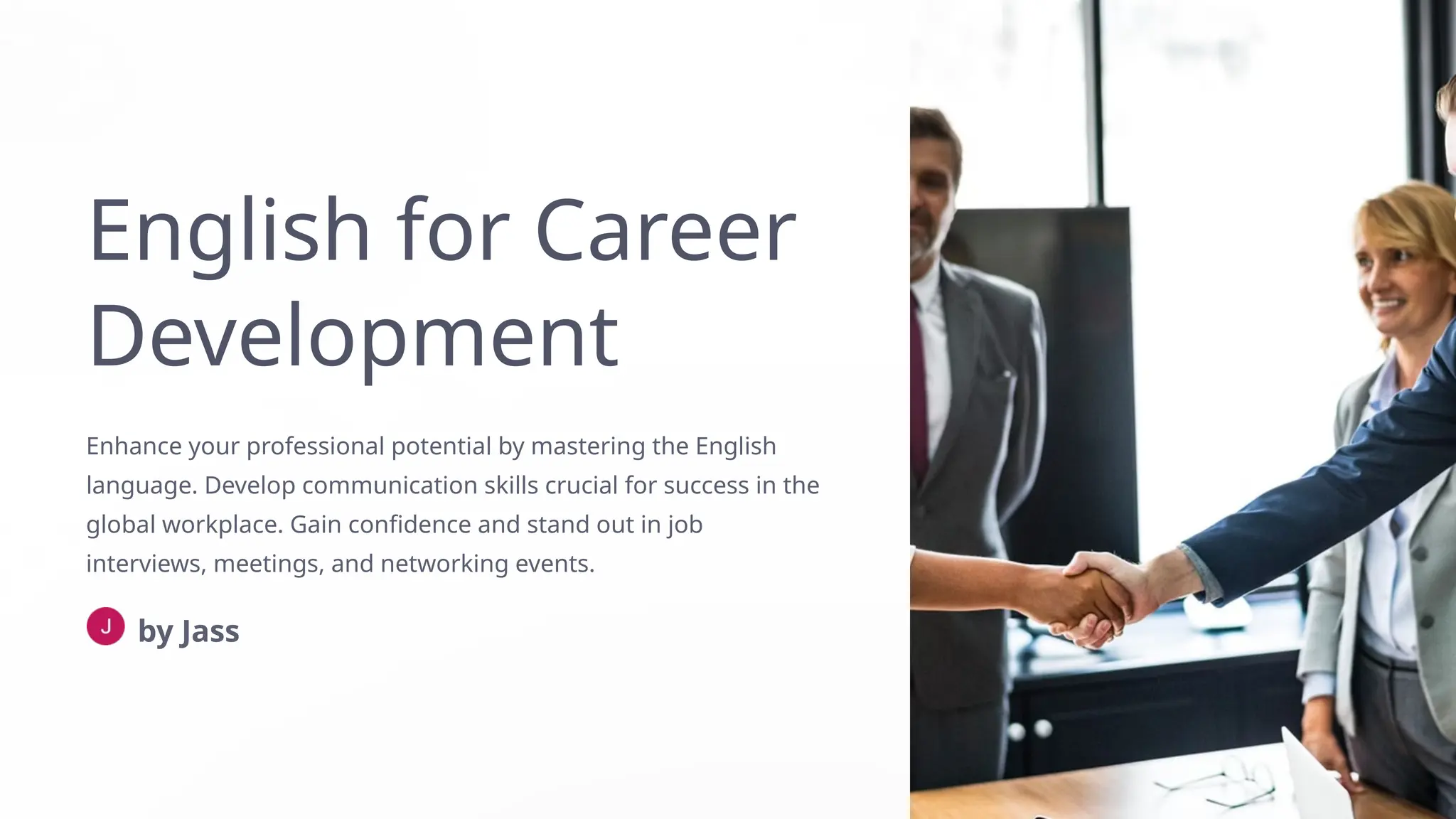
Enhanceyour professional potential by mastering the English
language. Develop communication skills crucial for success in the
global workplace. Gain confidence and stand out in job
interviews, meetings, and networking events.
by Jass
2.
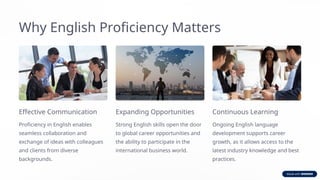
Why English ProficiencyMatters
Effective Communication
Proficiency in English enables
seamless collaboration and
exchange of ideas with colleagues
and clients from diverse
backgrounds.
Expanding Opportunities
Strong English skills open the door
to global career opportunities and
the ability to participate in the
international business world.
Continuous Learning
Ongoing English language
development supports career
growth, as it allows access to the
latest industry knowledge and best
practices.
3.
Common Workplace Communication
Challenges
LanguageBarriers
Employees with different native languages can
struggle to understand each other, leading to
miscommunication and misunderstandings.
Cultural Differences
Diverse teams may have varying communication
styles and social norms, complicating effective
collaboration and teamwork.
Unclear Expectations
Ambiguous instructions or lack of clear roles and
responsibilities can create confusion and hinder
productivity.
Nonverbal Cues
Difficulties in interpreting body language, tone,
and facial expressions can lead to
misunderstandings, especially in virtual settings.
4.
Improving Listening andSpeaking Skills
Active Listening
Pay close attention, ask clarifying
questions, and rephrase key points
to ensure full understanding.
Clear Pronunciation
Enunciate words clearly, avoid
slang, and adjust your pace to aid
comprehension.
Positive Body Language
Make eye contact, nod, and use
hand gestures to convey
engagement and interest.
5.
Effective Email andWritten Communication
Write Clearly and
Concisely
Organize your thoughts,
use simple language,
and get to the point.
Avoid jargon and long-
winded sentences that
can confuse the reader.
Mind Your Tone
and Politeness
Choose a friendly yet
professional tone. Use
courteous phrases like
"please" and "thank
you" to build rapport
and demonstrate
respect.
Pay Attention to
Grammar and
Spelling
Proofread carefully to
eliminate errors that
can undermine your
credibility. A polished,
error-free message
leaves a positive
impression.
Tailor Your
Communication
Adapt your writing style
to the recipient and the
context. For example,
emails to colleagues
may be more casual
than those to clients or
superiors.
6.
Mastering Business Presentations
Engagethe Audience
Captivate your audience with a dynamic delivery,
making eye contact, using gestures, and varying
your tone and pace to maintain their interest.
Tell a Compelling Story
Structure your presentation with a clear
narrative arc, using anecdotes, analogies, and
visual aids to convey your key messages in a
memorable way.
Master Slide Design
Create visually appealing slides with minimal
text, high-quality images, and thoughtful use of
color, fonts, and formatting to support your
spoken content.
Handle Q&A Skillfully
Anticipate potential questions, stay composed,
and respond clearly and concisely, using the
Q&A session to further demonstrate your
expertise.
7.
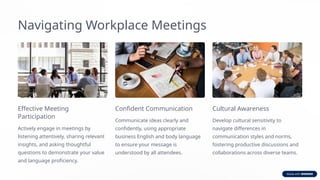
Navigating Workplace Meetings
EffectiveMeeting
Participation
Actively engage in meetings by
listening attentively, sharing relevant
insights, and asking thoughtful
questions to demonstrate your value
and language proficiency.
Confident Communication
Communicate ideas clearly and
confidently, using appropriate
business English and body language
to ensure your message is
understood by all attendees.
Cultural Awareness
Develop cultural sensitivity to
navigate differences in
communication styles and norms,
fostering productive discussions and
collaborations across diverse teams.
8.
English for Interviewsand Networking
1 Prepare with Confidence
Practice common interview questions and role-
play to boost your fluency and poise when
communicating in English under pressure.
2 Showcase Your Skills
Describe your background, strengths, and
relevant experience clearly and concisely to
make a strong impression.
3 Make Connections
Engage in small talk, ask thoughtful questions,
and actively listen during networking events to
build meaningful relationships.
4 Follow Up Effectively
Send polished emails and messages to thank
contacts, follow up on leads, and keep the
conversation going after the initial meeting.
9.
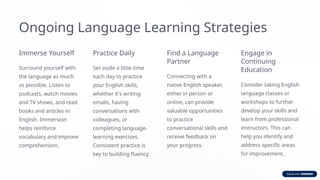
Ongoing Language LearningStrategies
Immerse Yourself
Surround yourself with
the language as much
as possible. Listen to
podcasts, watch movies
and TV shows, and read
books and articles in
English. Immersion
helps reinforce
vocabulary and improve
comprehension.
Practice Daily
Set aside a little time
each day to practice
your English skills,
whether it's writing
emails, having
conversations with
colleagues, or
completing language-
learning exercises.
Consistent practice is
key to building fluency.
Find a Language
Partner
Connecting with a
native English speaker,
either in person or
online, can provide
valuable opportunities
to practice
conversational skills and
receive feedback on
your progress.
Engage in
Continuing
Education
Consider taking English
language classes or
workshops to further
develop your skills and
learn from professional
instructors. This can
help you identify and
address specific areas
for improvement.
10.
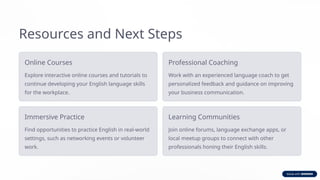
Resources and NextSteps
Online Courses
Explore interactive online courses and tutorials to
continue developing your English language skills
for the workplace.
Professional Coaching
Work with an experienced language coach to get
personalized feedback and guidance on improving
your business communication.
Immersive Practice
Find opportunities to practice English in real-world
settings, such as networking events or volunteer
work.
Learning Communities
Join online forums, language exchange apps, or
local meetup groups to connect with other
professionals honing their English skills.