FUTURE CITY
SECURITY
Jason Goh
BIOMETRIC SCANNERS
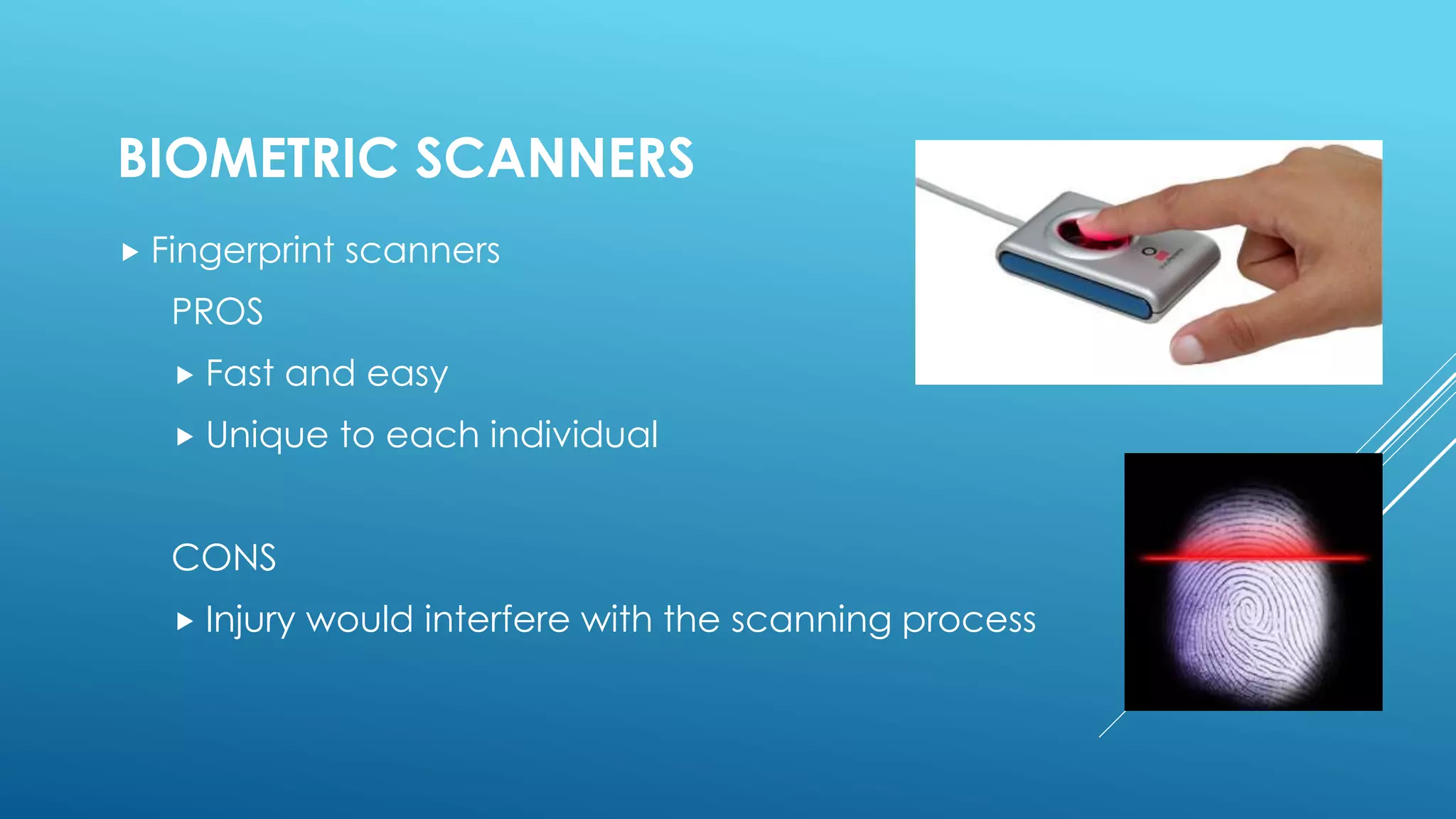
 Fingerprint scanners
PROS
 Fast and easy
 Unique to each individual
CONS
 Injury would interfere with the scanning process
BIOMETRIC SCANNERS
 Iris scanners
PROS
 Well protected
 Stable and remains consistent over many years
CONS
 Slow
 Not accepted in society yet
BIOMETRIC SCANNERS
 Voice
PROS
 Reliable and easy to use
 Difficult to recreate
CONS
 Possible to steal an example
 Requires a big file storage
CRIME CONTROL
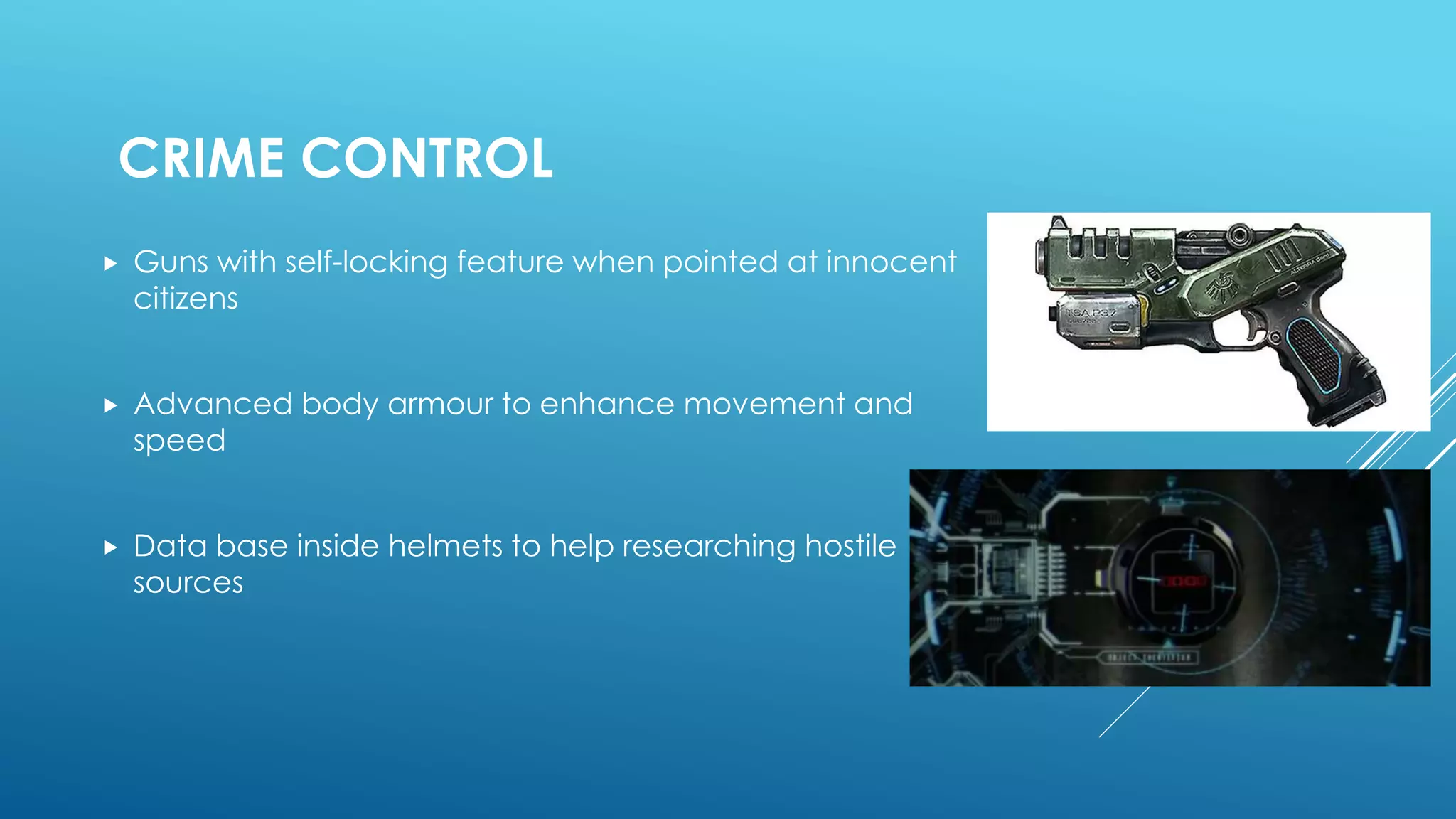
 Guns with self-locking feature when pointed at innocent
citizens
 Advanced body armour to enhance movement and
speed
 Data base inside helmets to help researching hostile
sources
SCOUTING DRONES
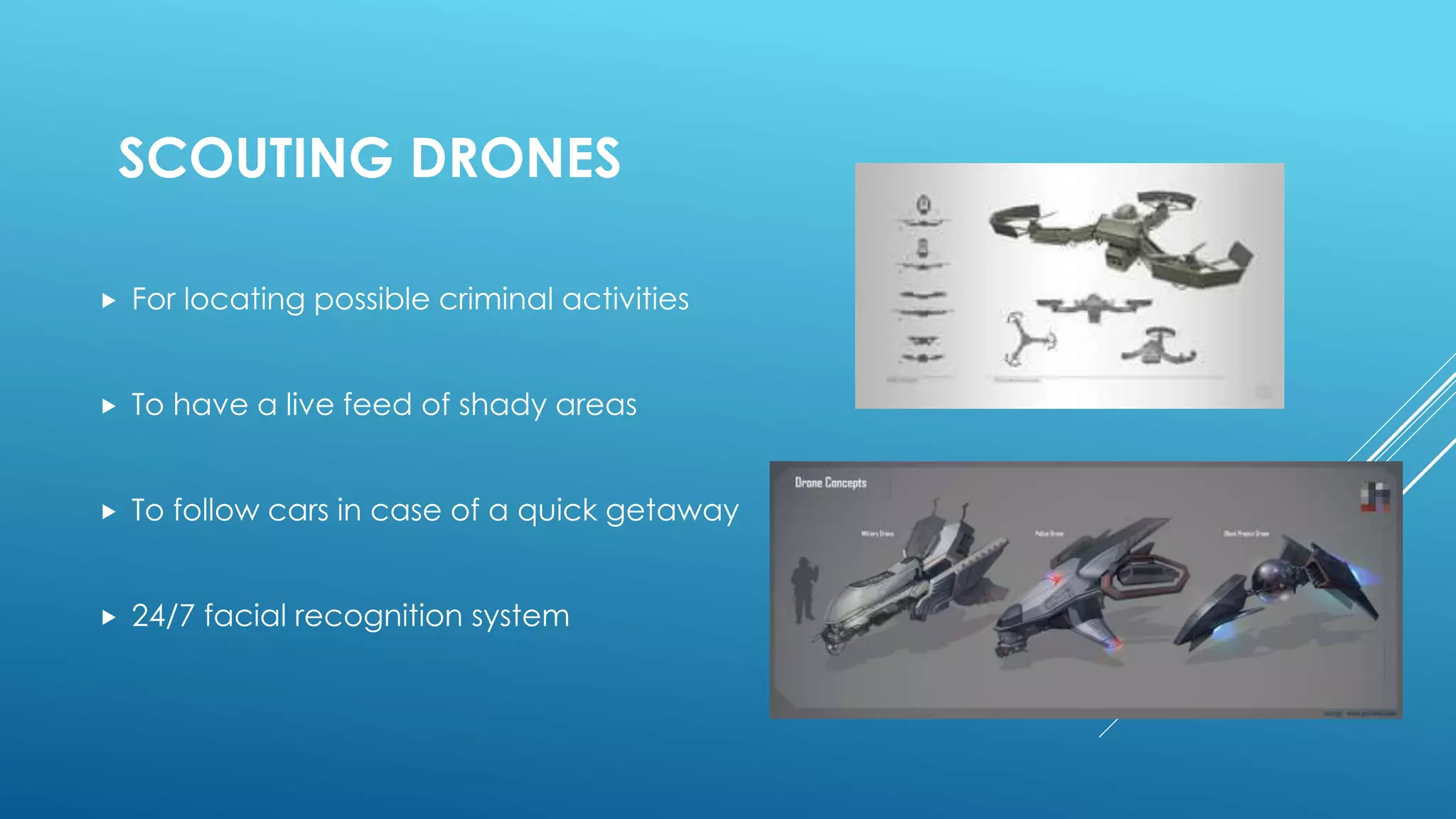
 For locating possible criminal activities
 To have a live feed of shady areas
 To follow cars in case of a quick getaway
 24/7 facial recognition system
WATER AND WASTE
MANAGEMENT
Jack
WASTE MANAGEMENT
Trash
Recycle paper
Recyle container
Organic food
Organic paper
towels
Organic other
Plastic film
Cardboard
Styrofoam
eWaste and others
WASTE MANAGEMENT
WASTE MANAGEMENT
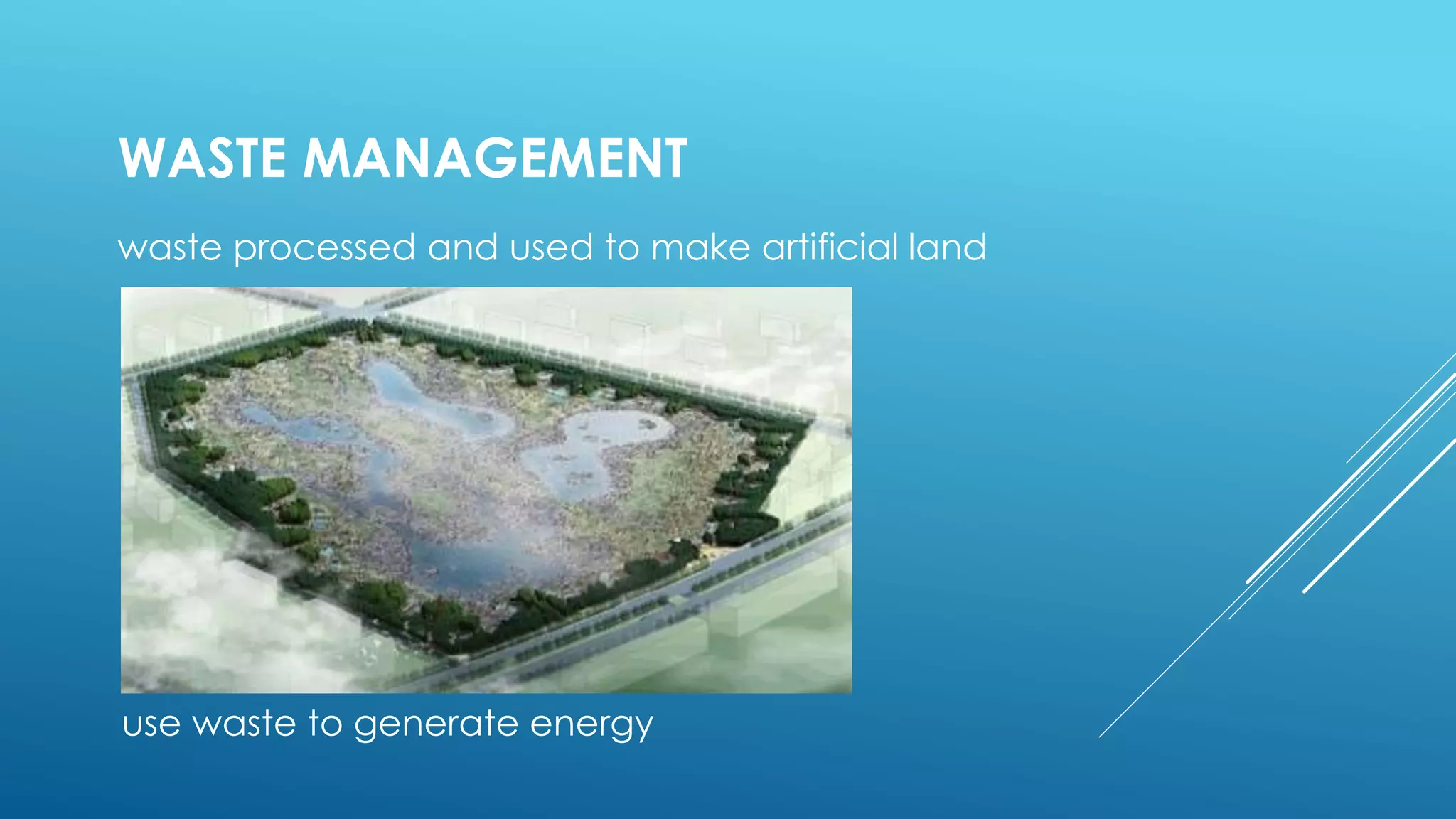
waste processed and used to make artificial land
use waste to generate energy
WASTE MANAGEMENT
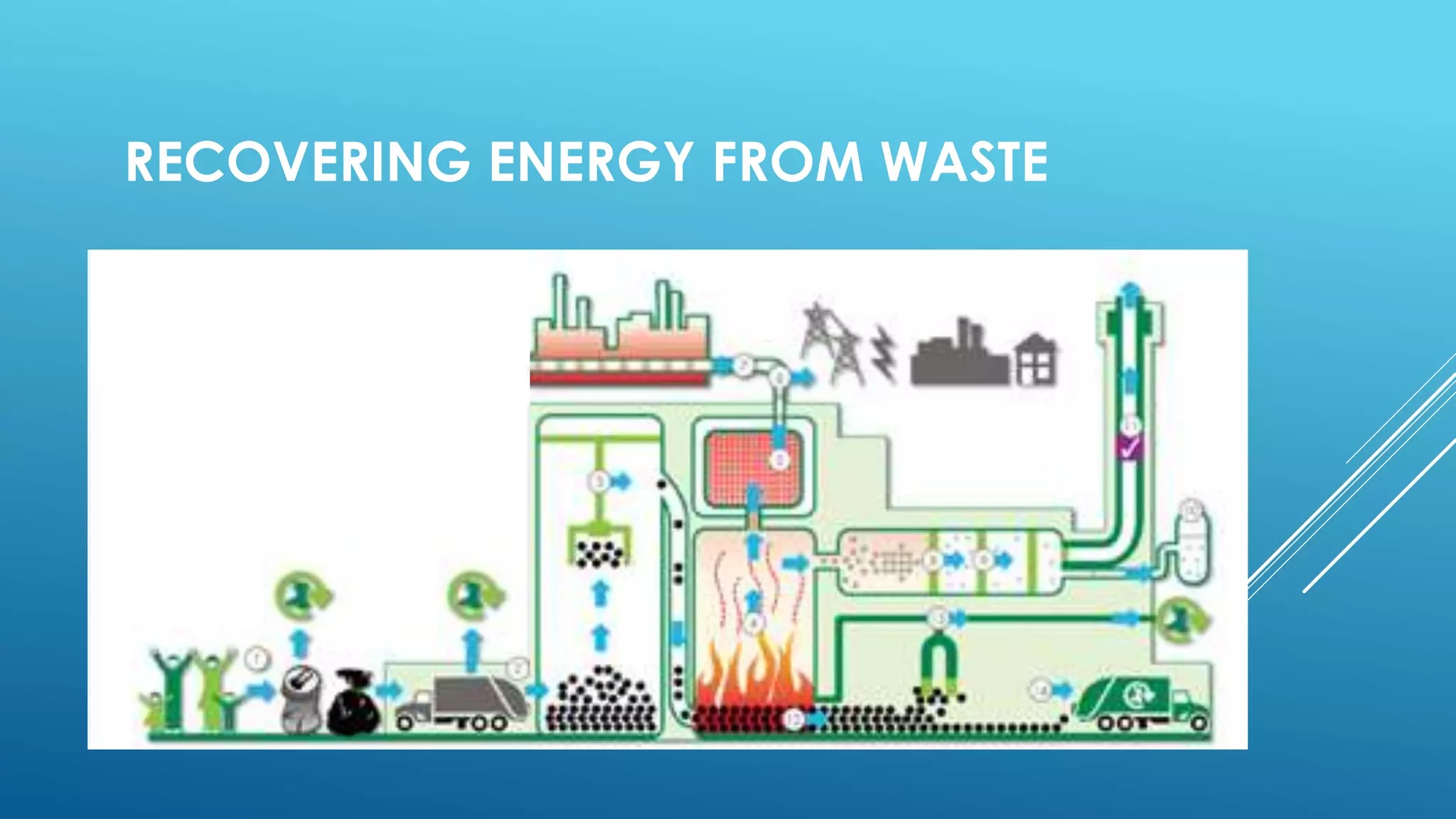
1. We all recycle and compost as much as we can.
2. Waste can be pre-sorted to collect any recyclable materials left
over.
3. The waste is fed into incinerator.
4. It burn at temperatures over 850°C.
5. Heat enter a boiler to produce steam.
6. Steam powers a turbine that generates electricity for homes and
businesses.
7. Excess heat can be piped to neighbouring buildings for heating.
8. Harmful gases are removed.
9. Particles are filtered
10. Material collected by the air clean up system is sent for treatment.
11. All emissions are monitored to strict environmental standards.
12. Ash is collected at the bottom of the incinerator.
13. Magnets remove any remaining metal for recycling
14. Ash left over can be used for construction projects such as new
roads.
RECOVERING ENERGY FROM WASTE
WATER MANAGEMENT
Where does water come from?
WATER MANAGEMENT
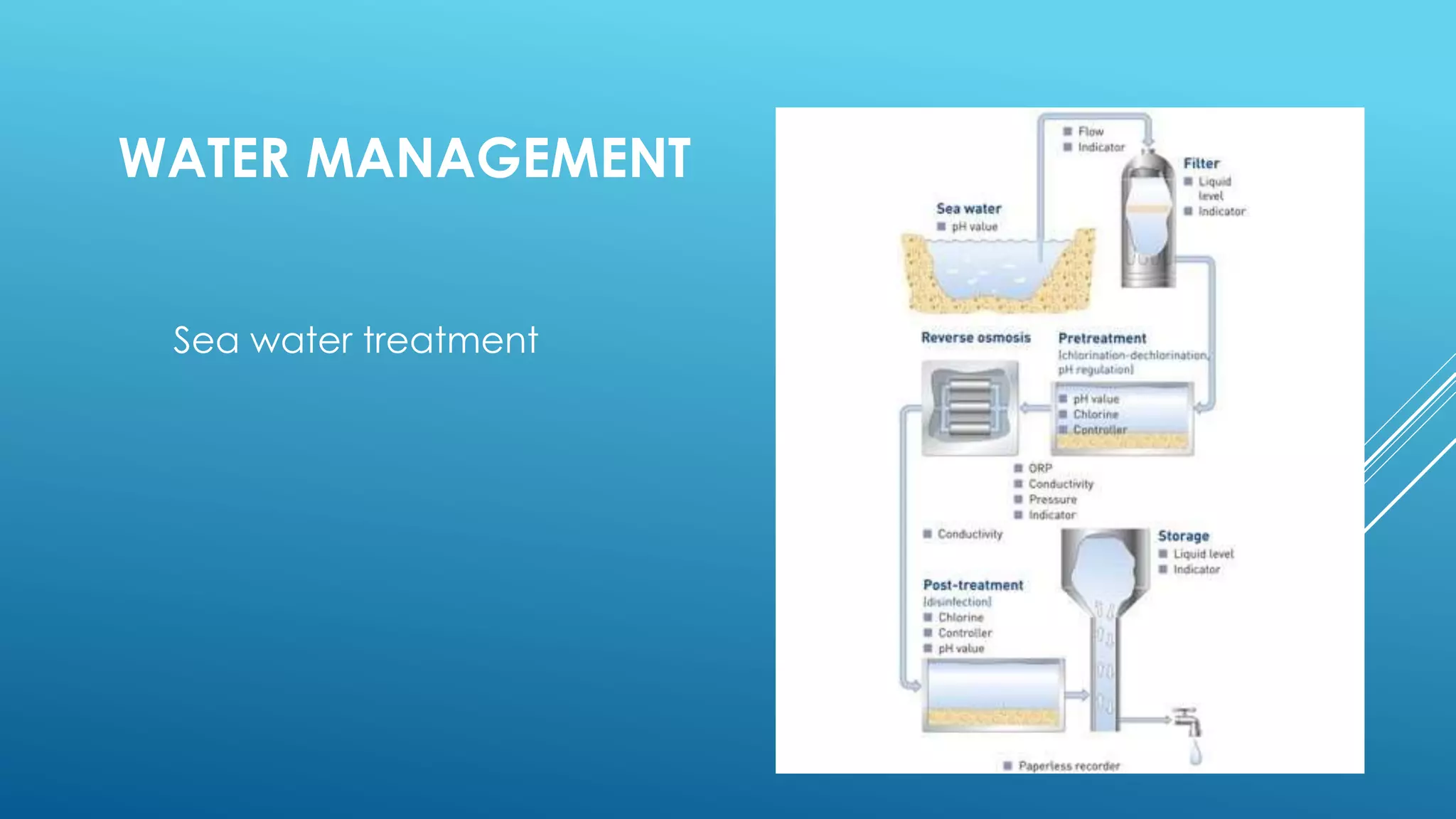
Sea water treatment
WATER MANAGEMENT
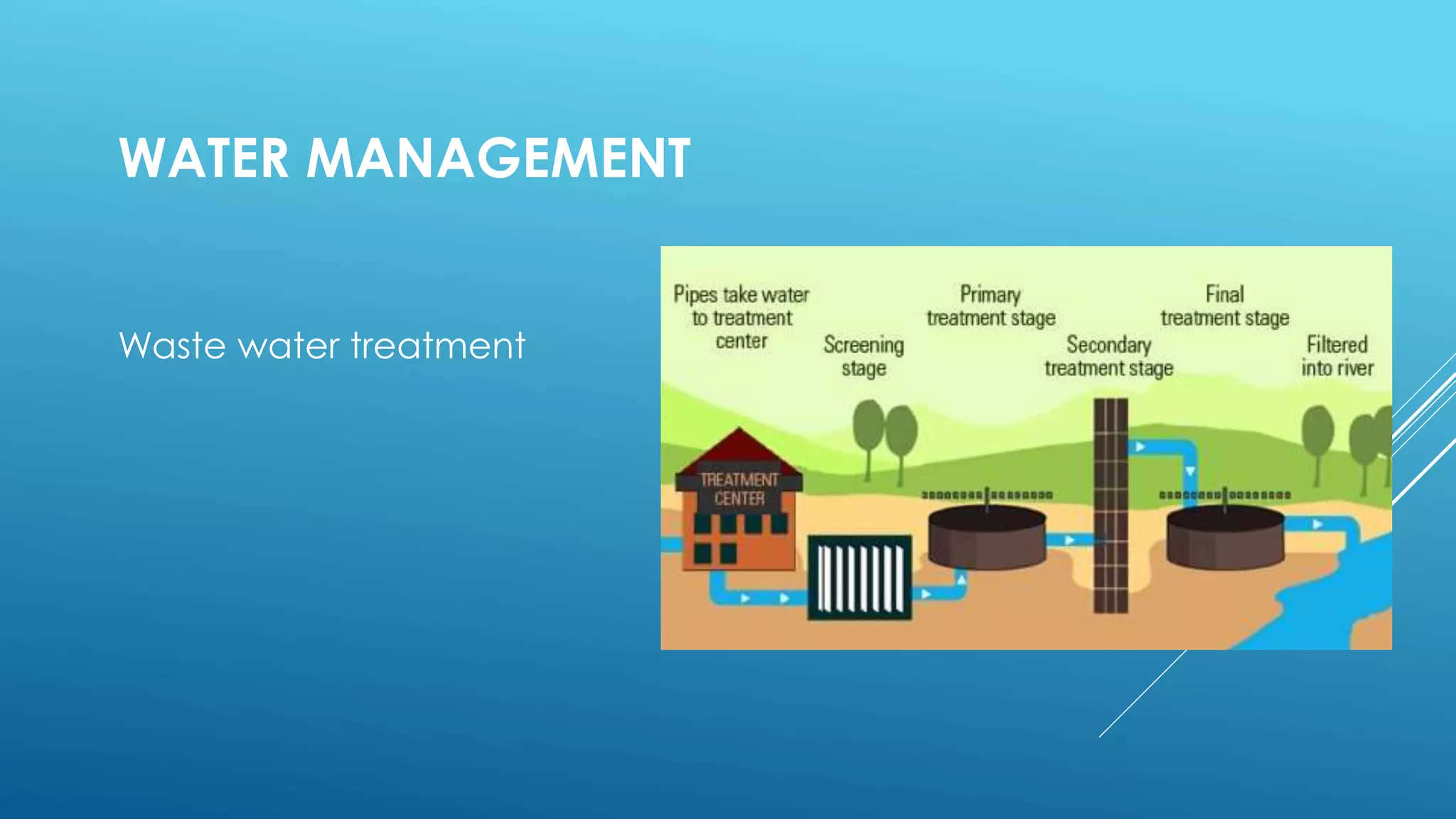
Waste water treatment
WATER MANAGEMENT
1. Screening
to removes large objects like, diapers, nappies, sanitary items, cotton buds, face wipes and even broken
bottles, bottle tops, plastics and rags that may block or damage equipment.
2. primary treatment
involve the separation of organic solid matter (or human waste) from the wastewater. This is done by
putting the wastewater into large settlement tanks for the solids to sink to the bottom of the tank.
3. secondary treatment
The water, at this stage is put into large rectangular tanks. These are called aeration lanes. Air is pumped
into the water to encourage bacteria to breakdown the tiny bits of sludge that escaped the sludge
scrapping process.
4. final treatment
the ‘almost’ treated wastewater is passed through a settlement tank. Here, more sludge is formed at the
bottom of the tank from the settling of the bacterial action. Again, the sludge is scrapped and collected
for treatment. The water at this stage is almost free from harmless substances and chemicals. The water is
allowed to flow over a wall where it is filtered through a bed of sand to remove any additional particles.
then the filtered water released into the river
WATER MANAGEMENT
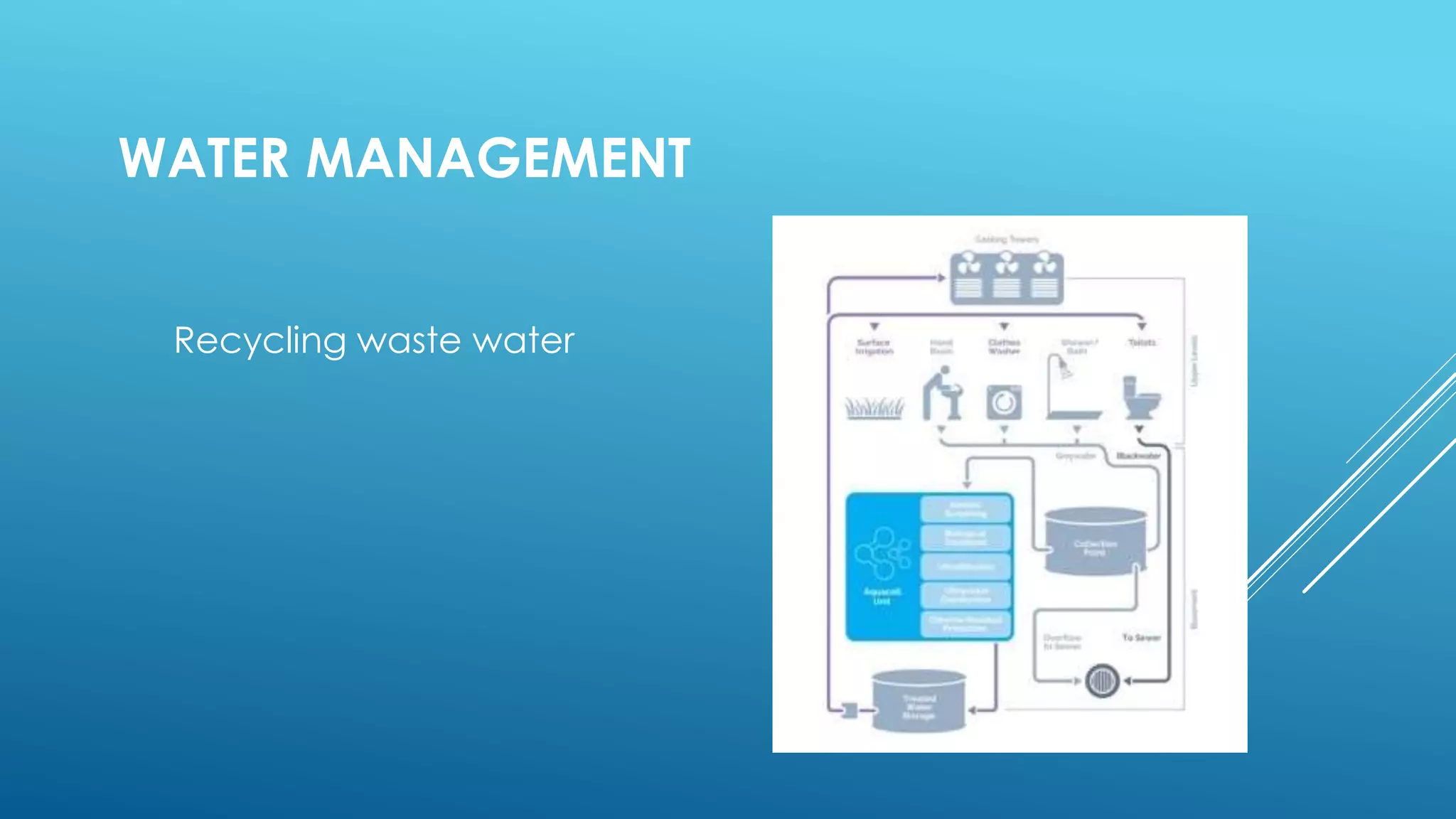
Recycling waste water
WATER MANAGEMENT
Benefits of water reuse include:
• Increasing water resource availability
• Making scarce potable water previously used for non potable applications
available for drinking
• Reduced consumption of expensively treated potable water supplies (cost
saving where there is water metering)
• Reduced effluent flow loads to sewers
• Reduced nutrient discharge to water bodies
• Flood prevention potential (storage)
• A less drought sensitive water resource
• Enhanced recreation and tourism opportunities and biodiversity benefits
through the restoration/creation of wetlands
TOURISM AND
HOSPITALITY
Mun Tong
TOURISM
• Initiate holiday resorts.
• Mainly composed of theme
park, safari, water park,
international circus, crocodile
park and golf centre.
HOSPITALITY
• The holiday resort also
provides a hotel for
convenience.
• In addition, the city will
capsule hotel for budget
travellers or tourist.
TRANSPORTATION
Janette
WHAT IS HYDROGEN TRANSPORTATION?
A hydrogen vehicle is a vehicle that uses hydrogen as its
onboard fuel for motive power. Hydrogen
vehicles include hydrogen fueled space rockets, as well as
automobiles and other transportation vehicles.
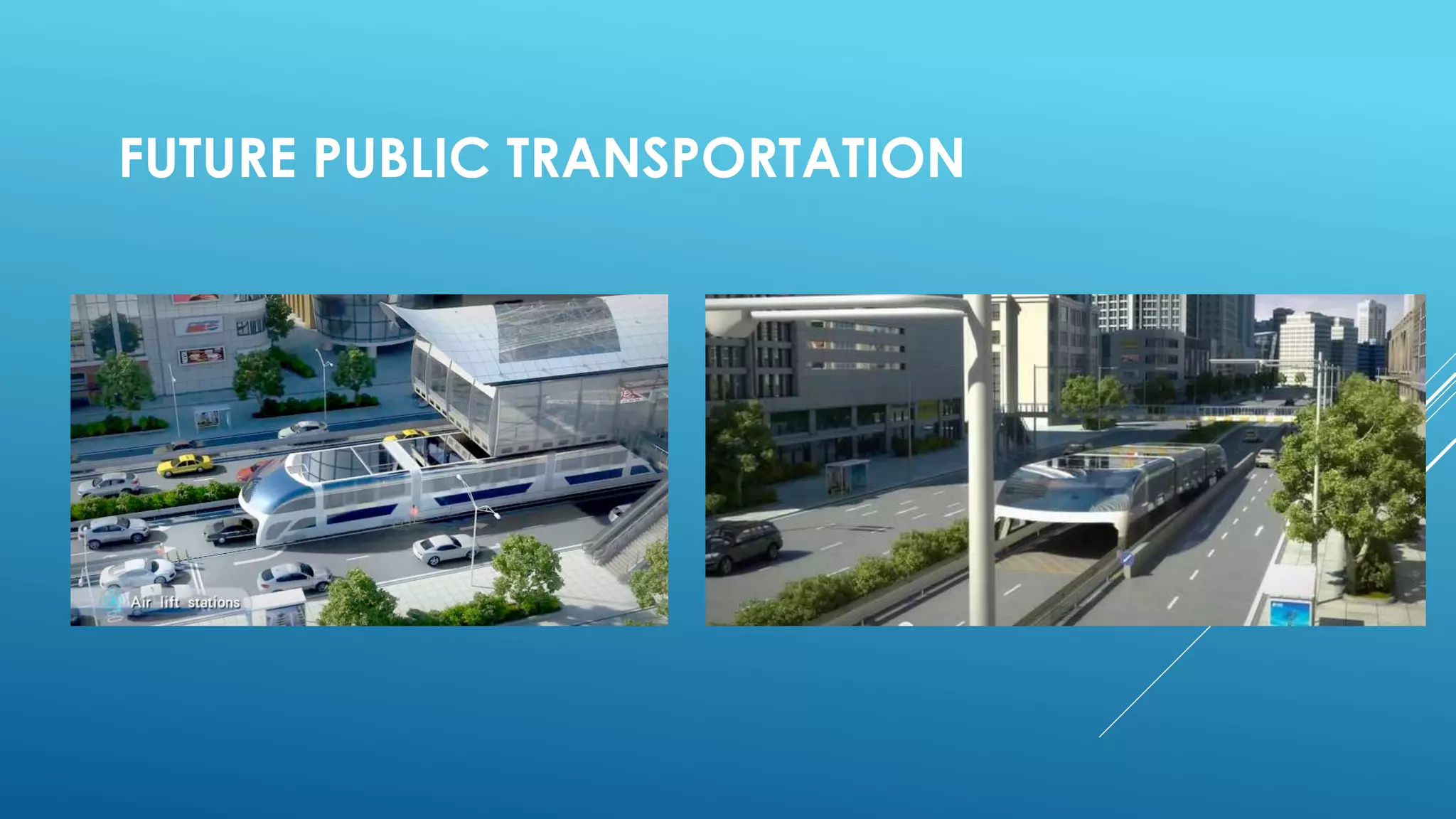
FUTURE PUBLIC TRANSPORTATION
FUTURE CARS
• A future personal air-borne
transportation.
• The Reconnaissance Copter is a
single seater flyer that utilizes two
props on either side of the vehicle
along with the rudders mounted on
the wing section to maneuver itself.
• The copter aims mainly at becoming
something of a daily transport option
for the masses.
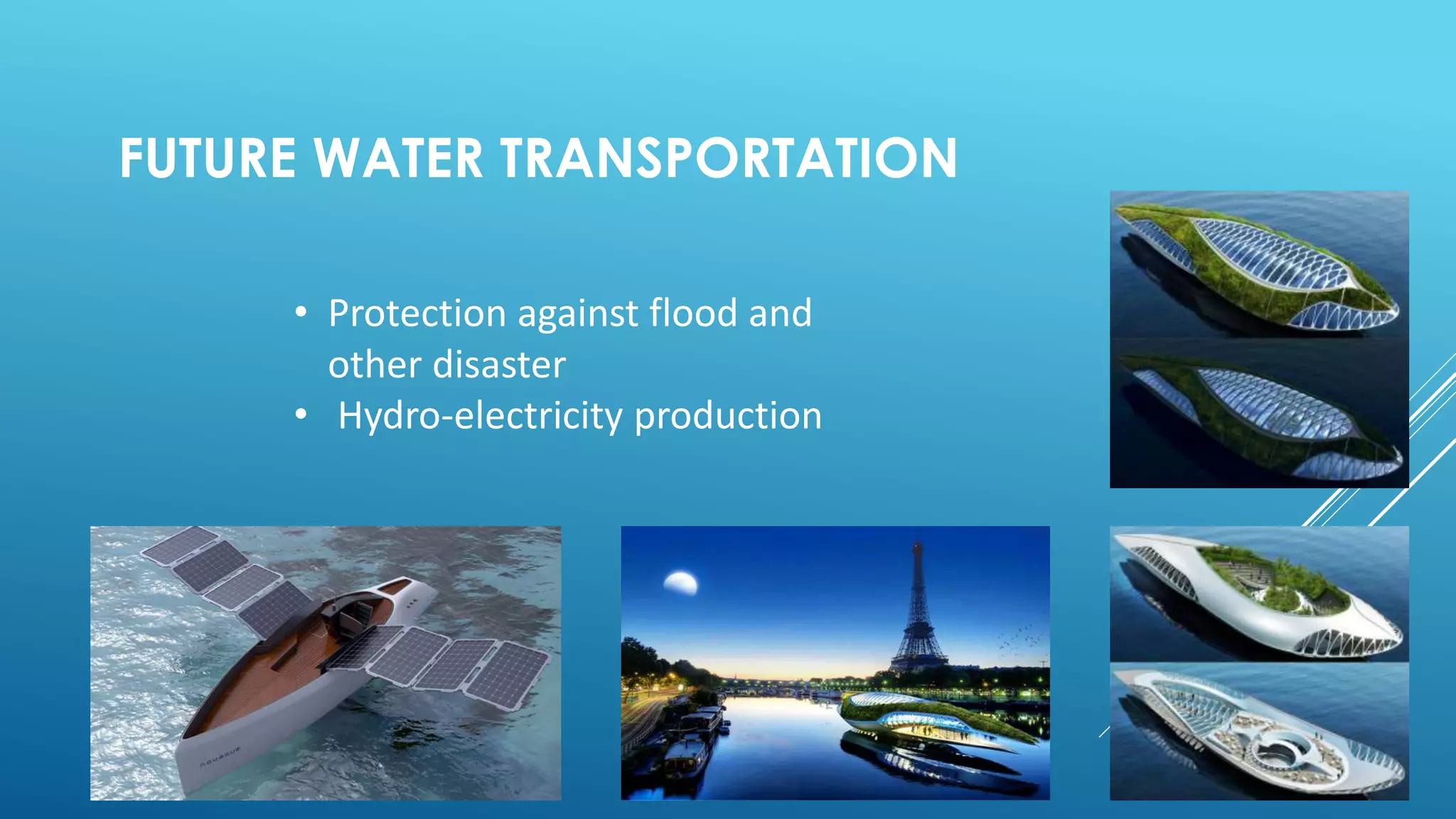
FUTURE WATER TRANSPORTATION
• Protection against flood and
other disaster
• Hydro-electricity production
FUTURE AIR TRANSPORTATION
ENERGY
MANAGEMENT
Joey Lau
POWER GENERATED BY RENEWABLE ENERGY
SUN WIND
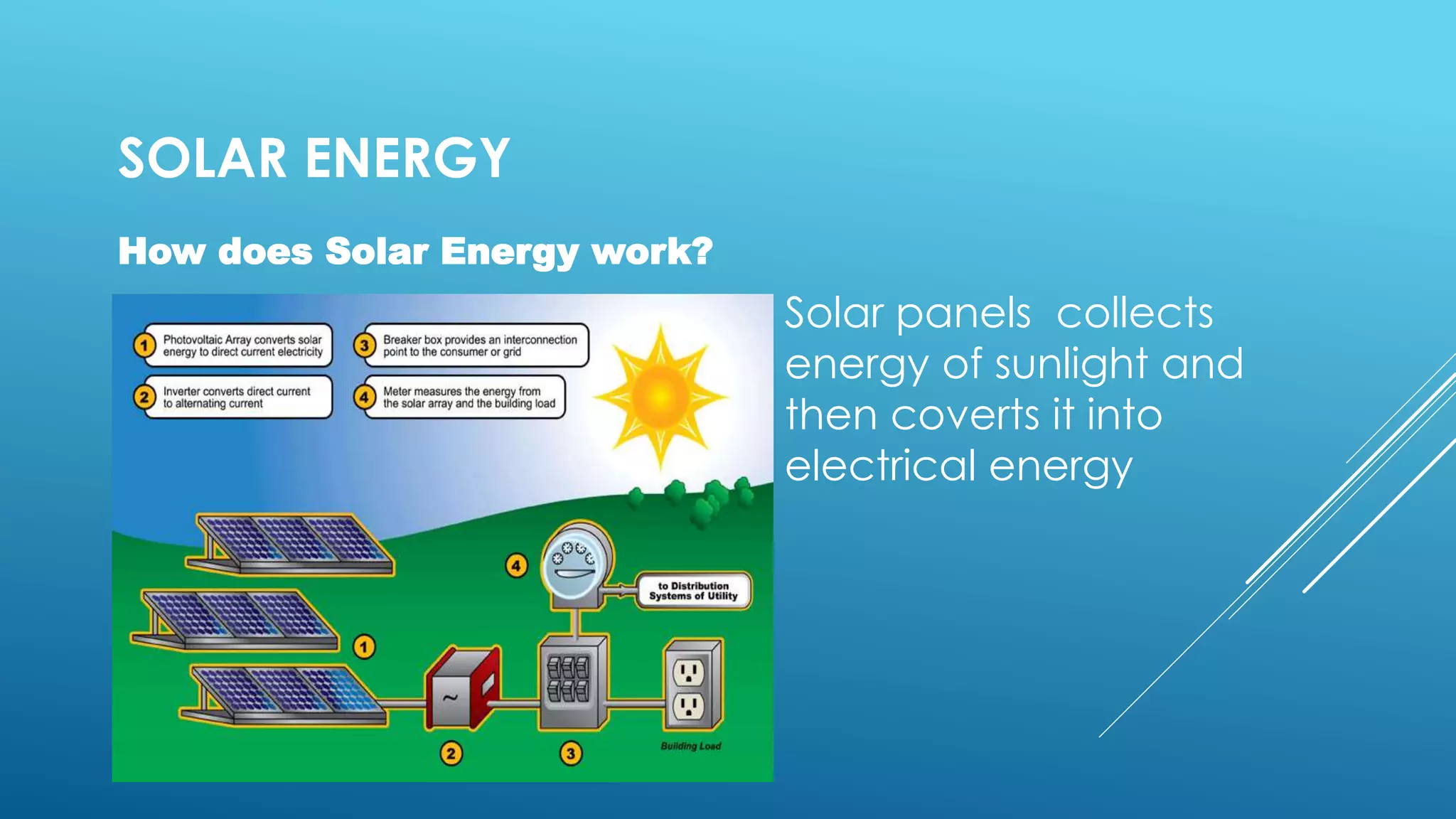
SOLAR ENERGY
How does Solar Energy work?
Solar panels collects
energy of sunlight and
then coverts it into
electrical energy
WIND ENERGY
How does Wind Energy work?
Wind Turbines
- When wind passes by, the
blades turn around a rotor
which is connected to the
main shaft, spins a
generator to create energy
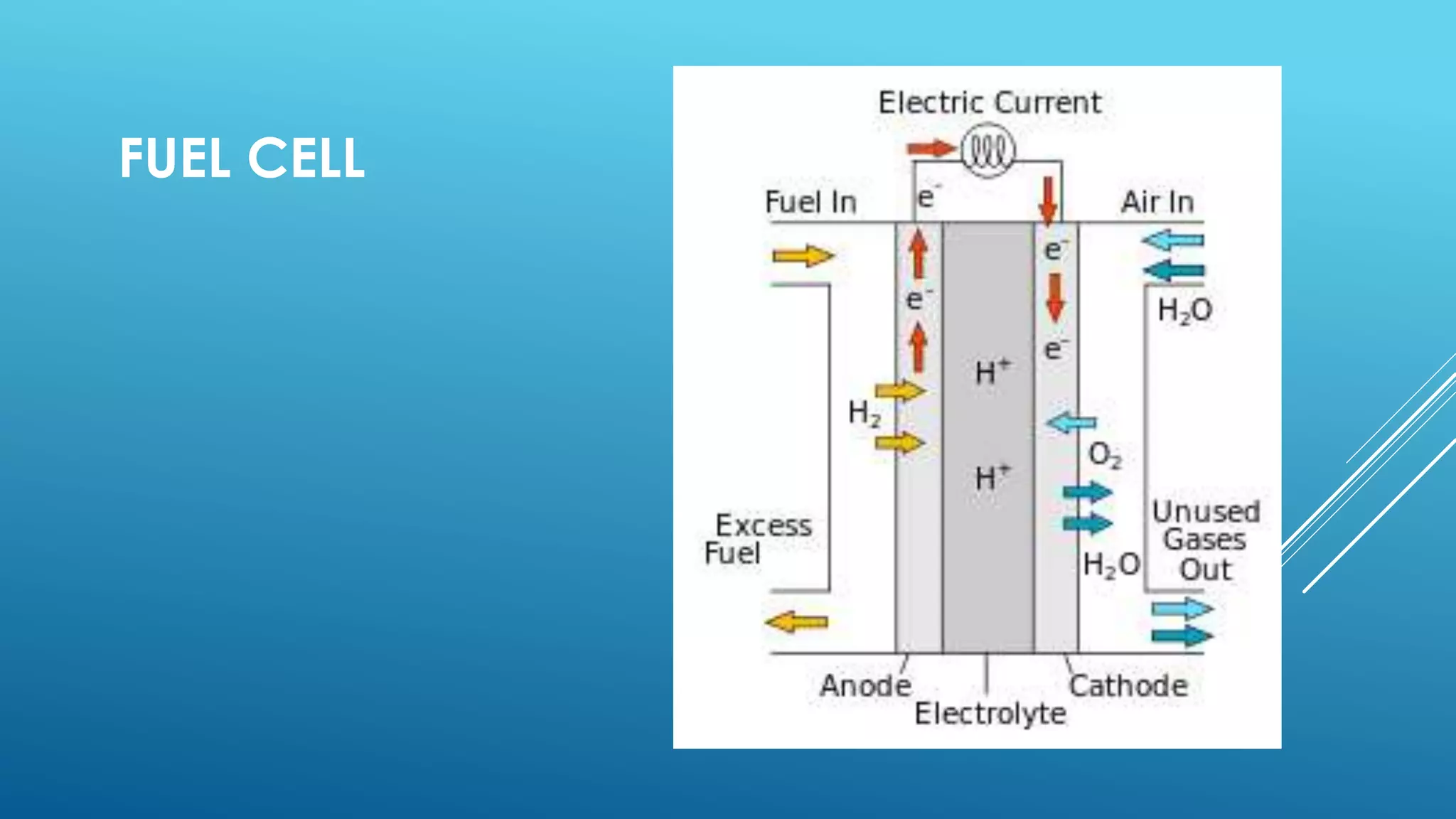
FUEL CELL
DISASTER RELIEF
Isaac
HORIZONTAL FOUNDATION WITH
REINFORCED JOINTS.
STEEL WIRE FABRIC REINFORCEMENT AT
GROUND LEVEL.
WALLS AND BEAMS MUST NEVER BE HOLLOW.
ELEVATOR SHAFTS MUST BE REINFORCED.
WELL PLACED EMERGENCY EXITS.
WALLS AND PARTITIONS SHOULD NOT EXCEED
16 1/2 FEET WITHOUT BEING FRAMED IN
REINFORCED CONCRETE.
WALL THICKNESS SHOULD NEVER BE LESS THAN
15 1/2 INCHES.
FLOORS MUST BE SOLID WITH A MINIMUM
THICKNESS OF 4 INCHES.
GREEN BUILDINGS
Gillian
ENERGY EFFICIENT
RENEWABLE ENERGY GENERATED FROM THE
BUILDING
INDOOR ENVIRONMENT QUALITY
ENHANCEMENT
WATER EFFICIENT
WASTE REDUCTION
ECO-GARDEN AREAS
MATERIALS EFFICIENT
ELEVATED PARKS AND RECREATIONAL AREAS

Eng future city

  • 1.
  • 2.
  • 3.
    BIOMETRIC SCANNERS  Fingerprintscanners PROS  Fast and easy  Unique to each individual CONS  Injury would interfere with the scanning process
  • 4.
    BIOMETRIC SCANNERS  Irisscanners PROS  Well protected  Stable and remains consistent over many years CONS  Slow  Not accepted in society yet
  • 5.
    BIOMETRIC SCANNERS  Voice PROS Reliable and easy to use  Difficult to recreate CONS  Possible to steal an example  Requires a big file storage
  • 6.
    CRIME CONTROL  Gunswith self-locking feature when pointed at innocent citizens  Advanced body armour to enhance movement and speed  Data base inside helmets to help researching hostile sources
  • 7.
    SCOUTING DRONES  Forlocating possible criminal activities  To have a live feed of shady areas  To follow cars in case of a quick getaway  24/7 facial recognition system
  • 8.
  • 9.
    WASTE MANAGEMENT Trash Recycle paper Recylecontainer Organic food Organic paper towels Organic other Plastic film Cardboard Styrofoam eWaste and others
  • 10.
  • 11.
    WASTE MANAGEMENT waste processedand used to make artificial land use waste to generate energy
  • 12.
    WASTE MANAGEMENT 1. Weall recycle and compost as much as we can. 2. Waste can be pre-sorted to collect any recyclable materials left over. 3. The waste is fed into incinerator. 4. It burn at temperatures over 850°C. 5. Heat enter a boiler to produce steam. 6. Steam powers a turbine that generates electricity for homes and businesses. 7. Excess heat can be piped to neighbouring buildings for heating. 8. Harmful gases are removed. 9. Particles are filtered 10. Material collected by the air clean up system is sent for treatment. 11. All emissions are monitored to strict environmental standards. 12. Ash is collected at the bottom of the incinerator. 13. Magnets remove any remaining metal for recycling 14. Ash left over can be used for construction projects such as new roads.
  • 13.
  • 14.
  • 15.
  • 16.
  • 17.
    WATER MANAGEMENT 1. Screening toremoves large objects like, diapers, nappies, sanitary items, cotton buds, face wipes and even broken bottles, bottle tops, plastics and rags that may block or damage equipment. 2. primary treatment involve the separation of organic solid matter (or human waste) from the wastewater. This is done by putting the wastewater into large settlement tanks for the solids to sink to the bottom of the tank. 3. secondary treatment The water, at this stage is put into large rectangular tanks. These are called aeration lanes. Air is pumped into the water to encourage bacteria to breakdown the tiny bits of sludge that escaped the sludge scrapping process. 4. final treatment the ‘almost’ treated wastewater is passed through a settlement tank. Here, more sludge is formed at the bottom of the tank from the settling of the bacterial action. Again, the sludge is scrapped and collected for treatment. The water at this stage is almost free from harmless substances and chemicals. The water is allowed to flow over a wall where it is filtered through a bed of sand to remove any additional particles. then the filtered water released into the river
  • 18.
  • 19.
    WATER MANAGEMENT Benefits ofwater reuse include: • Increasing water resource availability • Making scarce potable water previously used for non potable applications available for drinking • Reduced consumption of expensively treated potable water supplies (cost saving where there is water metering) • Reduced effluent flow loads to sewers • Reduced nutrient discharge to water bodies • Flood prevention potential (storage) • A less drought sensitive water resource • Enhanced recreation and tourism opportunities and biodiversity benefits through the restoration/creation of wetlands
  • 20.
  • 21.
    TOURISM • Initiate holidayresorts. • Mainly composed of theme park, safari, water park, international circus, crocodile park and golf centre.
  • 22.
    HOSPITALITY • The holidayresort also provides a hotel for convenience. • In addition, the city will capsule hotel for budget travellers or tourist.
  • 23.
  • 24.
    WHAT IS HYDROGENTRANSPORTATION? A hydrogen vehicle is a vehicle that uses hydrogen as its onboard fuel for motive power. Hydrogen vehicles include hydrogen fueled space rockets, as well as automobiles and other transportation vehicles.
  • 25.
  • 26.
    FUTURE CARS • Afuture personal air-borne transportation. • The Reconnaissance Copter is a single seater flyer that utilizes two props on either side of the vehicle along with the rudders mounted on the wing section to maneuver itself. • The copter aims mainly at becoming something of a daily transport option for the masses.
  • 27.
    FUTURE WATER TRANSPORTATION •Protection against flood and other disaster • Hydro-electricity production
  • 28.
  • 29.
  • 30.
    POWER GENERATED BYRENEWABLE ENERGY SUN WIND
  • 31.
    SOLAR ENERGY How doesSolar Energy work? Solar panels collects energy of sunlight and then coverts it into electrical energy
  • 32.
    WIND ENERGY How doesWind Energy work? Wind Turbines - When wind passes by, the blades turn around a rotor which is connected to the main shaft, spins a generator to create energy
  • 33.
  • 34.
  • 35.
    HORIZONTAL FOUNDATION WITH REINFORCEDJOINTS. STEEL WIRE FABRIC REINFORCEMENT AT GROUND LEVEL. WALLS AND BEAMS MUST NEVER BE HOLLOW. ELEVATOR SHAFTS MUST BE REINFORCED.
  • 36.
    WELL PLACED EMERGENCYEXITS. WALLS AND PARTITIONS SHOULD NOT EXCEED 16 1/2 FEET WITHOUT BEING FRAMED IN REINFORCED CONCRETE. WALL THICKNESS SHOULD NEVER BE LESS THAN 15 1/2 INCHES. FLOORS MUST BE SOLID WITH A MINIMUM THICKNESS OF 4 INCHES.
  • 37.
  • 38.
    ENERGY EFFICIENT RENEWABLE ENERGYGENERATED FROM THE BUILDING INDOOR ENVIRONMENT QUALITY ENHANCEMENT WATER EFFICIENT
  • 39.
    WASTE REDUCTION ECO-GARDEN AREAS MATERIALSEFFICIENT ELEVATED PARKS AND RECREATIONAL AREAS